


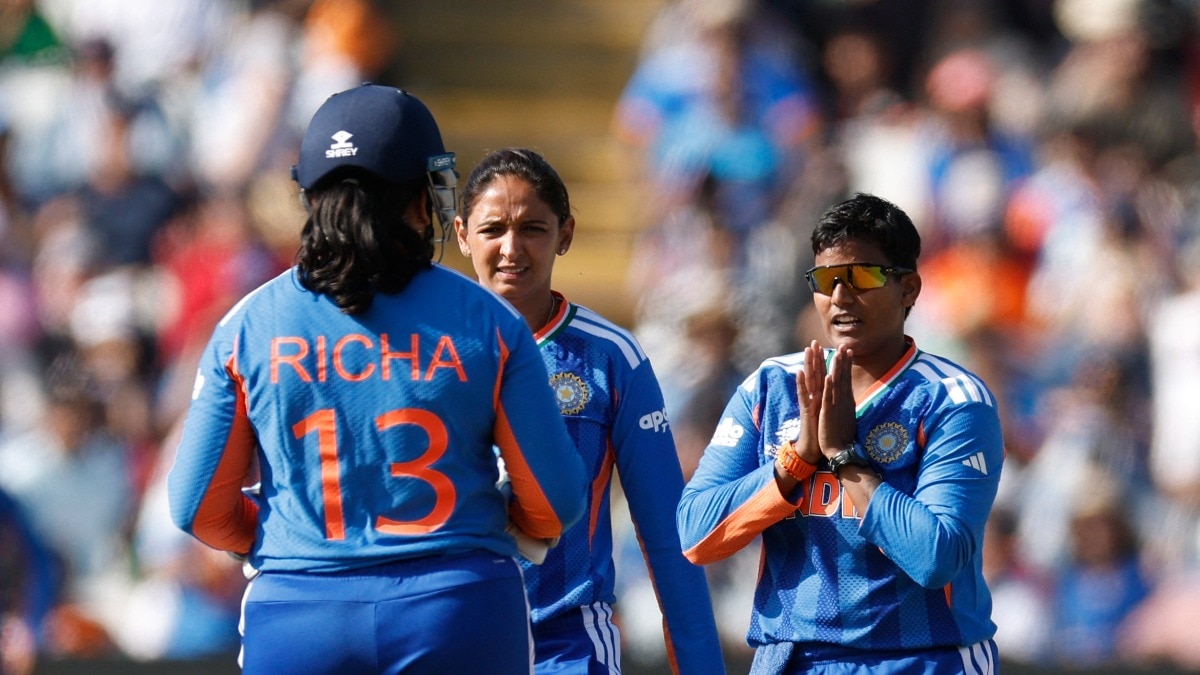
The hype was inevitable heading into the Women’s T20 World Cup. India arrived at the tournament carrying the momentum of their historic maiden ICC title, having lifted the ODI World Cup the previous year. That triumph in the 50-over format was widely viewed as a turning point for women’s cricket in the country, raising expectations that the team could build on its success and establish a period of sustained dominance. As a result, all eyes were on India when the Women’s T20 World Cup began.
India started their campaign with two thumping wins over the Netherlands and Pakistan. However, everyone knew those matches didn’t truly test them. The two games were more like a honeymoon phase for the Indian team.
But India were brought back to reality when South Africa handed them a six-wicket defeat. The mistakes that India didn’t have to pay for against Pakistan and the Netherlands came back to haunt them against the Proteas.
It was as if South Africa held up a mirror to Harmanpreet Kaur’s team, while Laura Wolvaardt’s side showed others the blueprint for beating India by exposing their shortcomings. It seems that while India have mastered the ODI format, they are yet to find the right formula for success in T20Is.
INDIA THROWING AWAY GOOD STARTS
India were guilty of throwing away good starts during their tour of South Africa, a recurring issue that led to them conceding a 3-0 lead and eventually slumping to a 4-1 defeat. In the World Cup match against the Proteas, India again got off to a flying start, scoring 59 runs in the first six overs, even though they lost both openers Shafali Verma and Smriti Mandhana early.
However, with eight wickets in hand, India were expected to reach around the 180-run mark, especially with a strong middle order and a power-hitter like Richa Ghosh in prime form. Instead, they managed only 99 runs in the last 14 overs.
Most batters got into double digits and looked set for meaningful contributions, but none could convert their starts into substantial innings. Richa had provided the finishing kick against Pakistan and the Netherlands, but she failed to replicate that impact against a stronger bowling attack.
India still have two matches left, and they will need their middle order to build on the platform laid by the top order if they are to recover.
SPINNERS CAN’T SAVE YOU EVERYTIME
India’s spinners have been in outstanding form throughout the tournament. Deepti Sharma did concede 16 runs in the penultimate over of South Africa’s chase, but such occasional setbacks are part and parcel of the game and do not take away from her overall impact.
Shree Charani has emerged as the leading wicket-taker with 10 wickets at an exceptional average of 6.40, and her remarkable consistency could soon propel her up the ICC T20I rankings, potentially overtaking Linsey Smith.
However, India’s pace attack has struggled to make a meaningful impact. Since the tour of South Africa, the seamers have lacked both consistency and penetration with the ball.
Arundhati Reddy has conceded 50 runs at an economy rate of 10 without managing a wicket, while Kranti Gaud went wicketless against Pakistan and the Netherlands. Nandni Sharma showed early promise against the Dutch but faltered against South Africa.
With limited contributions from the fast-bowling unit, India will need significantly greater support from their pace attack to maintain balance when the spinners come under pressure.
CATCHES WIN MATCHES
India’s fielding has been a major concern in the World Cup, and it has played a significant role in their struggles so far. On Sunday, Radha Yadav dropped Marizanne Kapp twice, and Kapp went on to make India pay a heavy price. As one of India’s most reliable fielders, Radha is usually expected to set the standard, but she faltered at a crucial moment when India needed her most.
Against Pakistan, Richa Ghosh and Arundhati Reddy also put down a catch each, giving multiple lifelines to Muneeba Ali. However, Muneeba, unlike someone of Kapp’s calibre, failed to fully capitalise on those chances. Kapp, on the other hand, is a powerful batter who made India suffer once again when given opportunities.
Against top sides, dropped catches are often decisive, and they leave very little room for recovery. After the match, Harmanpreet Kaur admitted that the missed chances proved costly for India. Veteran commentator Harsha Bhogle also observed that India’s fielding has been below standard throughout. If such lapses continue against stronger teams like Australia, the consequences could be far more severe.
TIME RUNNING OUT FOR INDIA
Even before the tournament began, Group A was widely viewed as a virtual tri-series between India, Australia and South Africa. Bangladesh, Pakistan and the Netherlands are also part of the group, but given their experience and firepower, it would take something truly extraordinary for the lower-ranked sides to consistently challenge the top three. With Australia having already beaten both India and South Africa, they are strongly placed to secure a semi-final berth.
As a result, India and South Africa are effectively competing for the remaining qualification spot, unless Bangladesh produce an exceptional performance in their final two matches. Following South Africa’s win over India, the upcoming clash between India and Australia on June 28 at Lord’s becomes even more crucial.
If India win, they will place themselves in a strong position to progress, provided South Africa do not overtake them on net run rate. However, a defeat would leave India with a high probability of elimination. Beyond results, what India need most is to address the shortcomings that were exposed against South Africa.
If India can tighten their basics and avoid crumbling under pressure, they are more than capable not only of reaching the semi-finals but also of lifting the World Cup at Lord’s next month, a vision previously spoken about by Shreyanka Patil, who had the heartbreak of getting knocked out of the competition.
– Ends



