


India are the reigning ODI world champions, but their wait for a maiden Women’s T20 World Cup title continues. On Sunday, June 28, India crashed out of the tournament after suffering a six-wicket defeat to Australia in a virtual knockout clash. Harmanpreet Kaur’s side were playing their first-ever T20I at the iconic Lord’s Cricket Ground in London, but the historic occasion ended in heartbreak.
Chasing 171, Australia found themselves under pressure as India pushed the required run rate close to 10. However, inconsistent bowling, missed chances in the field and an inability to hold their nerve under pressure allowed the defending champions to wrest back control. It was another painful exit for India at the hands of Australia, having also bowed out of the 2024 Women’s T20 World Cup after losing to the same opponents in the group stage.
India vs Australia, Women’s T20 World Cup: Updates | Scorecard
Sunday’s result felt like deja vu for India, while Australia gained a measure of revenge. After India had knocked them out in the Women’s ODI World Cup semifinal last November, the Australians responded by ending India’s T20 World Cup campaign and extending their wait for the coveted title.
India’s defeat also confirmed South Africa’s place in the semifinals. After opening their campaign with a loss to Australia, the Proteas bounced back impressively with four consecutive victories to qualify. Australia, meanwhile, marched into the last four with a perfect record, making it five wins from five matches in the group stage.
SHAFALI, SMRITI GIVE INDIA FLYING START
Smriti Mandhana and Shafali Verma gave India the perfect platform with a composed yet positive start in the powerplay. After a cautious opening over from Lucy Hamilton yielded just three runs, Mandhana shifted gears in style, striking Kim Garth for two successive boundaries to get India’s innings moving.
While Shafali had limited opportunities early on, she made an immediate impact once she found her rhythm. The aggressive opener took on Ashleigh Gardner, lofting her for a boundary before launching a magnificent six over extra cover to put the Australian attack under pressure. Her fearless strokeplay complemented Mandhana’s elegant timing, with the left-hander regularly finding gaps through the leg side to keep the scoreboard ticking.
Australia introduced Ellyse Perry before the end of the powerplay in a bid to break the partnership, but the Indian openers remained untroubled. Mandhana continued to accumulate with crisp boundaries, while Shafali blended aggression with smart placement as India reached 43 without loss after six overs, laying a strong foundation for the middle order.
INDIA LOSE MOMENTUM
India’s impressive start unravelled in the space of seven deliveries as Australia struck twice in quick succession to wrest back the momentum. After Mandhana and Shafali had put together a 66-run opening stand in 9.1 overs, the defending champions fought back through Sophie Molineux and a costly mix-up between the wickets.
The breakthrough came when Molineux dismissed Shafali, who lost her footing while attempting an inside-out shot over the covers and saw her off stump knocked back. The opener departed after a fluent 34 off 26 balls, laced with three fours and two sixes.
India suffered another major setback two overs later when Mandhana was run out following a communication breakdown with Jemimah Rodrigues. Jemimah’s reverse sweep went straight to backward point, but Mandhana had already committed to the run and was left stranded as Georgia Wareham completed the dismissal. Mandhana’s composed 38 off 37 balls, featuring six boundaries, came to an unfortunate end.
As she walked back, Mandhana was seen exchanging a few words with Jemimah before patting her teammate on the shoulder, reassuring her after the costly mix-up.
HARMANPREET TAKES CHARGE
After India lost both openers in quick succession, captain Harmanpreet Kaur and Jemimah Rodrigues rebuilt the innings before launching a timely assault in the death overs. The pair added 85 runs for the third wicket, with Jemimah playing the perfect supporting role through a composed 34 off 28 balls, including a four and a six, to keep the scoreboard moving.
Harmanpreet, meanwhile, shifted through the gears brilliantly. The skipper found boundaries at regular intervals before unleashing a stunning hat-trick of sixes off Sophie Molineux in the final over. She first danced down the track to loft the spinner straight back over her head, then cleared long-off with another authoritative strike before launching a third successive maximum over the same region.
The breathtaking burst of power-hitting helped Harmanpreet race to a 25-ball half-century, the fastest by an Indian in Women’s T20 World Cup history, eclipsing her own 27-ball effort against Sri Lanka in 2024.
Harmanpreet eventually fell for a blistering 56 off 27 deliveries, an innings studded with six fours and three sixes, as India finished on a challenging 170/6, setting Australia a target of 171 for victory.
INDIA CHIP IN WITH REGULAR WICKETS
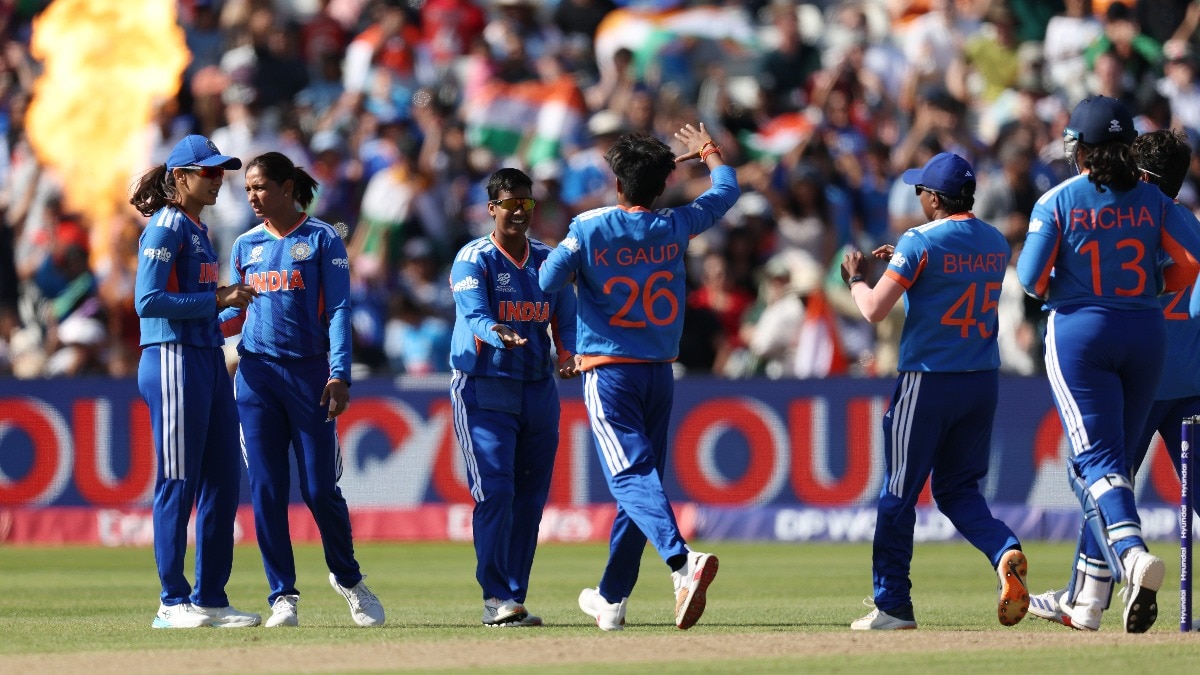
India steadily tightened their grip on the chase through the first 10 overs with disciplined bowling and sharp fielding, reducing Australia to 72 for 3 while pushing the required run rate up to 9.90. The breakthrough came early when Renuka Singh dismissed Georgia Voll, who edged a rising delivery through to the wicketkeeper, handing India the ideal start.
Australia responded with a 50-run partnership between Phoebe Litchfield and Beth Mooney, but India’s spinners wrestled back control during the middle overs. Shree Charani broke the stand by removing Litchfield for 24 off 25 balls, inducing a mistimed lofted drive that was comfortably caught by Smriti Mandhana at long-off.
Deepti Sharma then delivered another decisive blow by dismissing Beth Mooney for 22 off 20 balls. Attempting to clear the leg side, Mooney only managed to sky the ball towards long-on, where Radha Yadav completed a safe catch.
The wicket was Deepti’s 356th in international cricket, taking her past Jhulan Goswami to become India’s highest wicket-taker in international cricket across all formats. Those three wickets ensured Australia struggled to build sustained momentum and remained firmly behind the required rate throughout the first half of their chase.
More to follow…
– Ends



