


Asian Games silver medallist Deepak Punia has said the prolonged disruption caused by the wrestlers’ protest and the administrative uncertainty that followed hurt the progress of Indian wrestlers by severely limiting international exposure.
Deepak, who won the National Open Ranking Tournament in Gonda on Monday, said the lack of regular overseas competition made it harder for wrestlers to identify shortcomings and improve consistently. The 26-year-old, once considered one of India’s most dependable medal prospects in the 86kg category, has struggled to regain momentum since narrowly missing an Olympic bronze in Tokyo.
WRESTLERS’ PROTEST EXPLAINED
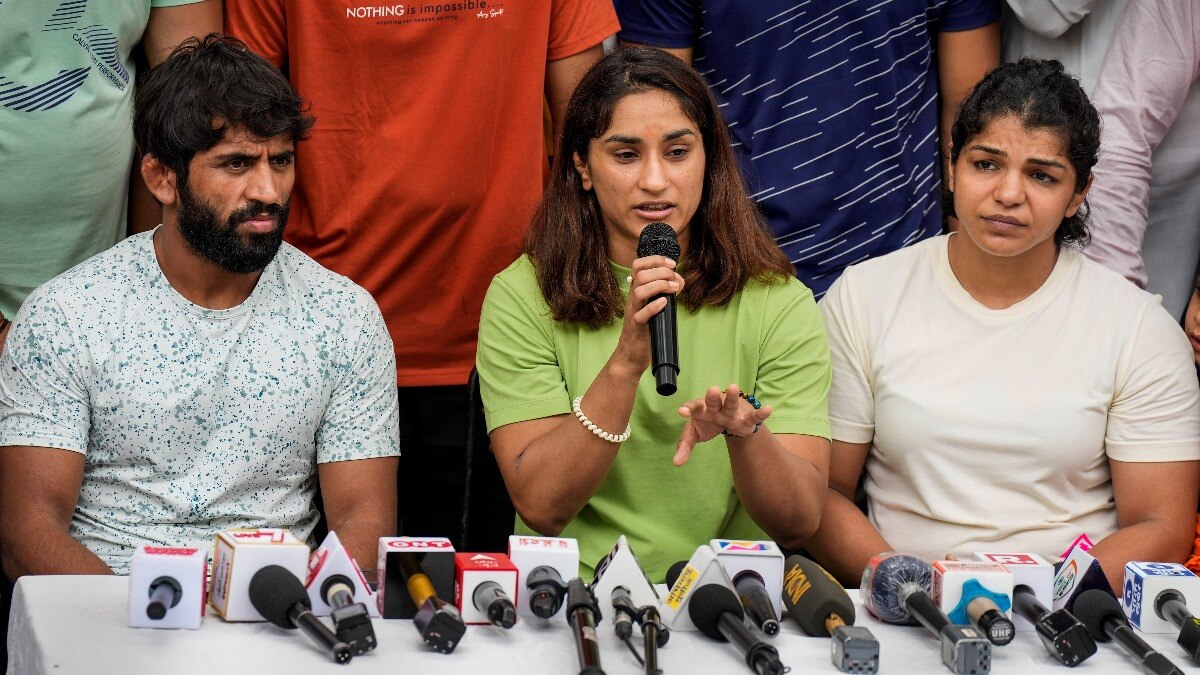
The wrestlers’ protest emerged as one of Indian sport’s biggest controversies in 2023, when Olympic medallists and leading wrestlers including Vinesh Phogat, Bajrang Punia and Sakshi Malik accused then Wrestling Federation of India chief Brij Bhushan Sharan Singh of sexual harassment and misconduct.
The athletes first protested in January 2023, demanding action against Brij Bhushan and reforms within the federation. Although the matter initially appeared to settle, the protest resumed later that year, with wrestlers staging a high-profile sit-in at Jantar Mantar in New Delhi.
The issue soon escalated into a governance crisis. The Sports Ministry suspended the Wrestling Federation of India, while an ad hoc committee temporarily managed the sport. The disruption affected domestic competitions, national camps, training schedules and international participation.
The legal matter remains unresolved, though the Wrestling Federation has resumed functioning under new leadership. However, several wrestlers now believe the prolonged uncertainty had a direct impact on athlete development.
HOW HAS IT AFFECTED WRESTLERS?
“After 2023, many tournaments stopped because of the protest and all that happened. We did not get chances to compete abroad like we used to earlier,” Deepak told PTI.
He said regular international competition is essential for wrestlers to stay competitive and improve.
“When you are competing internationally every second or third month, your shortcomings come out and you improve. But if you get only one World Championships or one Asian Championships in a year, there is a huge difference in performance,” he said.
Deepak also linked his disappointing 11th-place finish at the 2025 World Championships to inadequate preparation, including the absence of quality sparring partners and limited overseas exposure.
“I accept that I made mistakes in training. I did not get a sparring partner of that level before the World Championships. Sparring partners play a huge role,” he said.
He added that Indian wrestling has also lacked structured training support in recent years, saying foreign coaching systems focus more on technical details, recovery and tactical improvements.
The impact may have extended beyond senior wrestlers, with younger athletes also losing valuable competition opportunities during the period of uncertainty.
CURRENT SITUATION
Deepak’s own circumstances reflect the continued complications within Indian wrestling.
Despite winning the National Open Ranking Tournament in Gonda, he remains ineligible for the May 31 Asian Games selection trials under current Wrestling Federation policy, which does not consider the tournament as qualification criteria.
Deepak, who competed in the 92kg category in Gonda, said he would request the federation to consider his case, as his target remains the Asian Games, where he hopes to improve on his silver medal.
“I am here to earn a chance for the Asian Games only, otherwise why am I here? I will request the federation to consider me,” he said.
The 26-year-old also said his long-term target remains unchanged.
“My target is to change the colour of my medal at the Asian Games.”
While Indian wrestling has moved towards greater stability with the return of federation operations and foreign coaching support, the after-effects of the past two years remain visible.
Deepak’s comments suggest that beyond the administrative and legal battle, the disruption may have had lasting sporting consequences for athletes trying to compete consistently at the highest level.
– Ends



