


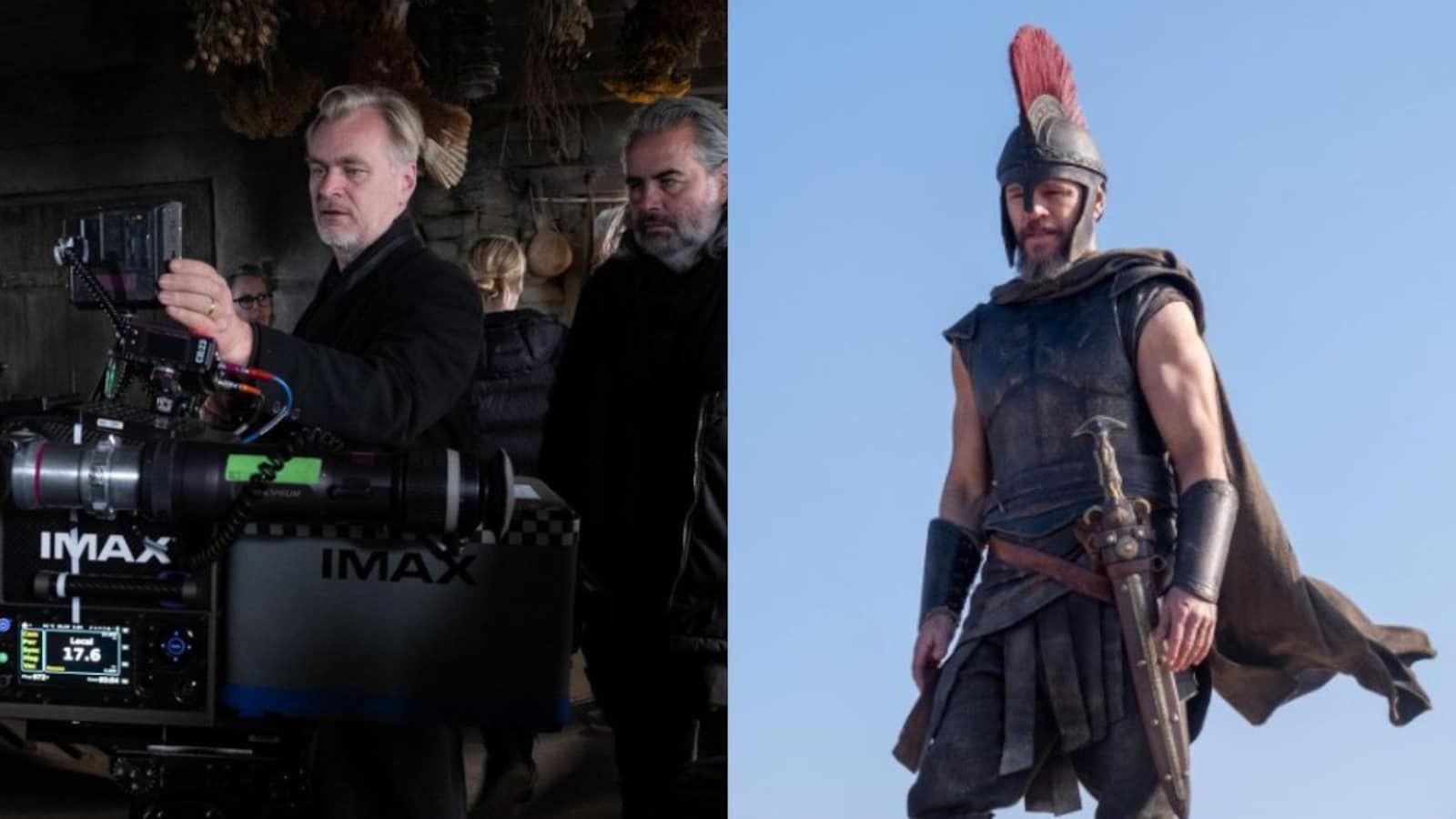
The best way to hype an already majectic project mounted on an unimaginable scale is to ease the audience into what went on behind building that world. Master filmmaker Christopher Nolan had just one vision for his epic The Odyssey – create a world not seen before, make a film not experienced before.
The makers of The Odyssey have unveiled a behind-the-scenes documentary titled The Odyssey: The Making of an Epic, which premiered exclusively on The Peacock Hub on JioHotstar on July 14. And indeed, it is epic.
That it is a large-scale spectacle was apparent from the trailer and the recent glimpses on our screens. What viewers perhaps weren’t ready for was the satisfying indulgence it took from the Academy-award-winning filmmaker to bring the world of Ancient Greece, set during the Bronze Age (around the 12th or 13th century BCE), to fruition.
It is the story of Greek hero Odysseus (Matt Damon) and the 10-year journey he must traverse to return home after the Trojan War. He battles mythical monsters and angry gods at sea, while his wife (Anne Hathaway) and son (Tom Holland) fight another battle on land to safeguard their kingdom.
The film is said to be mounted on a budget of over $250 million.
Here are 8 key takeaways from the incredible production of The Odyssey and the gigantic efforts – intricate craftsmanship, attention to detail and creativity – that make it a must-watch for audiences eager for Nolan’s next spectacle.
1. Bigger The Ambition, Bigger The Film
What propels the passion behind The Odyssey is the ambition with which it was envisioned. Christopher Nolan reiterates throughout the 22-minute documentary how he wanted to create something never seen before. Films have been made on such grand classics before, but Nolan wanted to steer clear of familiar territory. Every tiniest detail had to be unique – one of a kind.
Cast members such as Tom Holland, Matt Damon, Anne Hathaway and Zendaya speak highly of the magician that is Nolan and his ever-expanding vision. This film is not just about action; it is also the rawness, heart and humanity with which Nolan fills the canvas that make it as grandiose as it appears.
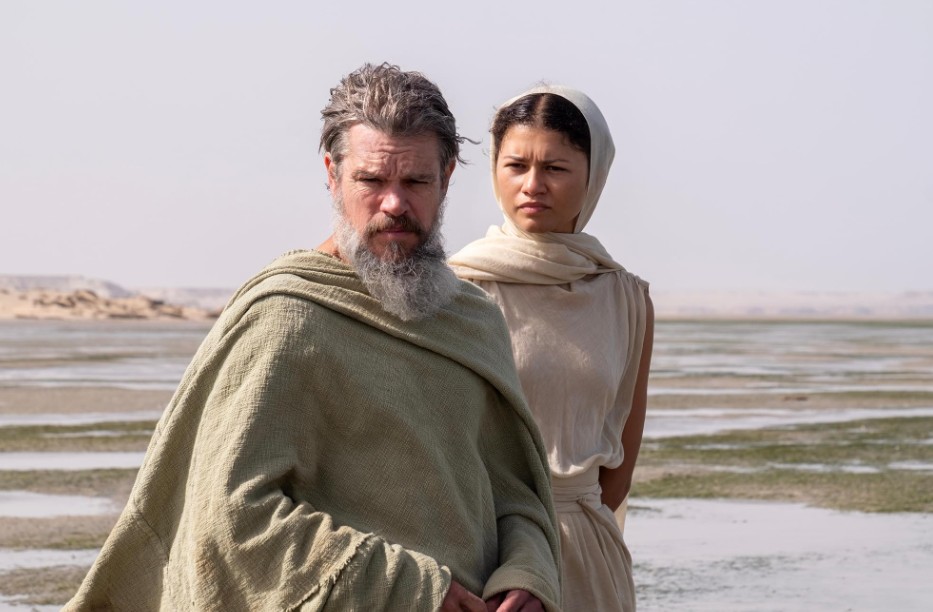
It was a mammoth task, as Nolan explains, and he gave fair warning to his cast.
2. How Nolan Wanted The Odyssey To Connect With Audiences
Nolan makes his ideology clear to viewers who may have different expectations. He says that in all his previous films – The Dark Knight, Inception, Interstellar – he has always aimed to take fanciful ideas and ground them in something recognisable to audiences.
Doing that in the mythological world of Odyssey was a huge task – find reality and make it happen in front of the camera. That is where the incredible production team – from visual effects supervisors to stunt coordinators – worked magic and were literally unstoppable.
3. A Really Hard Film – But Why?
Setting the premise of what made The Odyssey both a passion project and the toughest challenge, Matt Damon recalls Nolan telling him this was going to be “really” hard. And indeed it was.
The documentary shows The Odyssey as an amalgamation of six or seven films stitched together. Nolan was clear: he wanted to incorporate the biggest stars, techniques and solutions – things unseen in Hollywood production before.
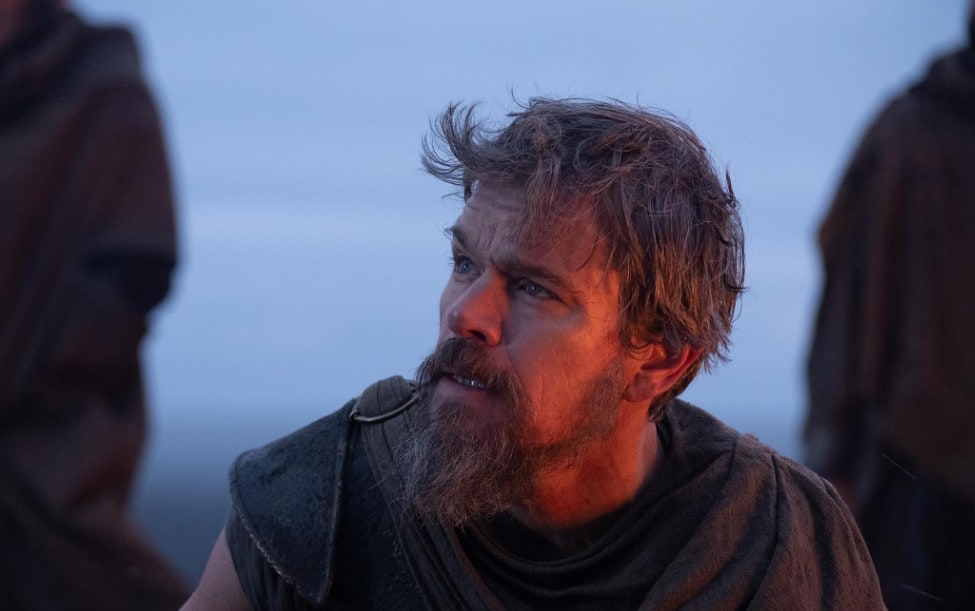
That’s where the biggest challenge lay. The documentary largely covers the production and the locations that played a key role. Building sets on original sites was an unimaginable vision brought to life.
4. Travelling The World – A Global Feat
From Morocco, Italy, Greece, Iceland to Scotland, The Odyssey crew traversed far and wide.
The documentary reveals how Nolan loves to move countries when shooting on location, as it adds momentum. Anne Hathaway notes how these varied, often unfamiliar locations add layers to the storytelling.
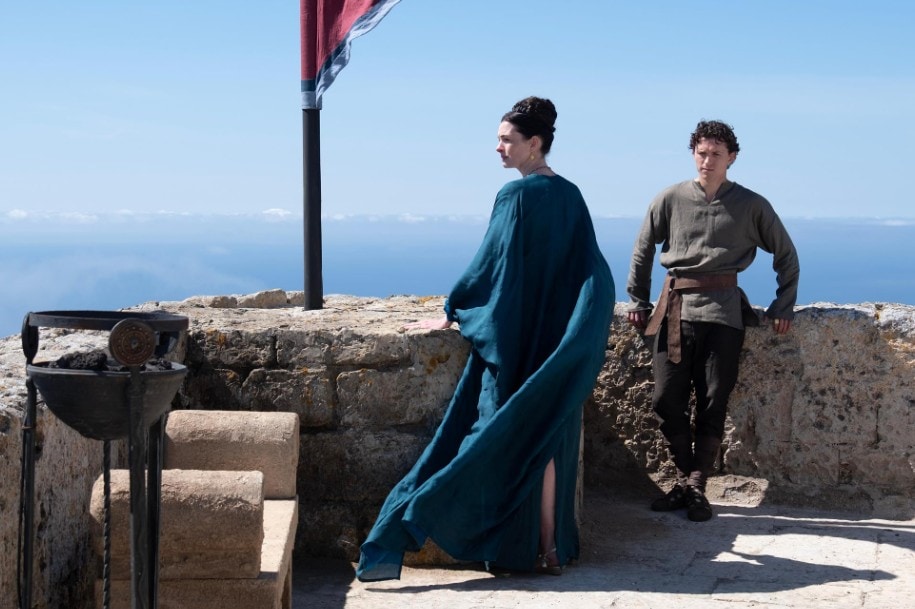
Beautiful shots of expansive oceans, Scotland’s rolling greenery, filming in Nester’s Cave of Greece – where Zeus is said to have been born – to creating a terrace town of At Benhaddou from scratch, the makers really did not hold back.
Robert Pattinson jokes about reaching locations only to be told of a 45-minute hike in sandals and full costume to reach the set. The cast and crew’s experiences elevate the weight of the film by leaps and bounds.
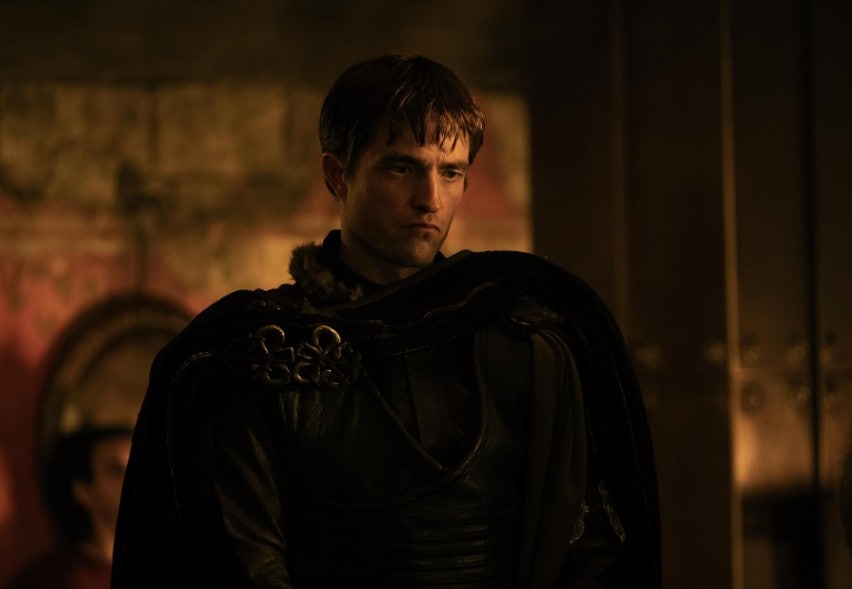
5. The Trojan Horse
One of the most important “characters” in The Odyssey is the Trojan Horse.
History tells us it was a giant hollow wooden horse built by the Greeks – a clever trap by Odysseus to end the war. The Greeks pretended to hide inside it and sailed away.
The production team wanted a sophisticated, realistic Trojan Horse. Key design points included no wheels, human-power operation, and manageability. About 35 feet tall and roughly 8,000 pounds, the team focused on moulds, fibreglass panels and infrastructure, and actually moved it from the shore into the town and ejected it into a temple of Athena.
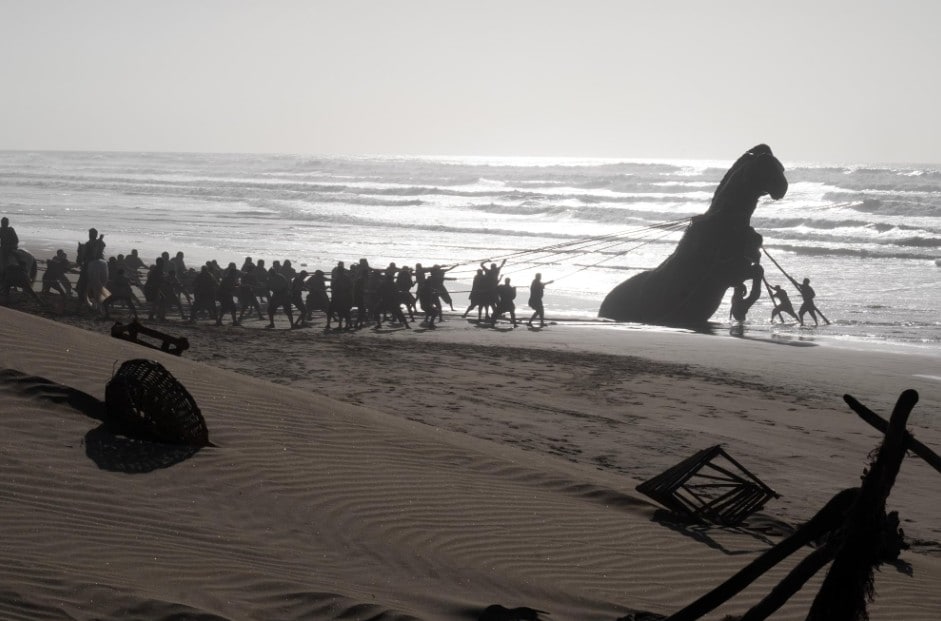
As the visuals cut between story and making-of, the Trojan Horse evokes an emotion that is hard to put into words.
6. The Costume Language
As befits any period film, costumes played a vital role. The brief was simple – nothing flat. Lots of texture and meticulous detailing had to be incorporated so the clothing suited the characters and transported viewers to the bygone era and its style language.
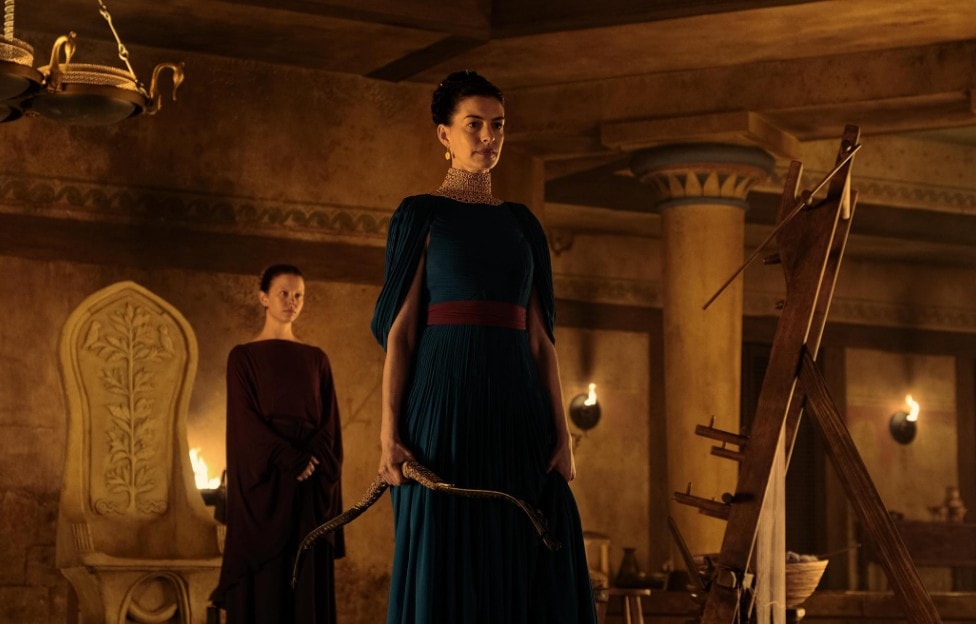
7. At Sea, On Land
The story of Odysseus is divided between war at sea and on land.
Period wooden ships were used, and the director, as he says, tried to reduce filming at sea but knew many days would be spent there.
The ships had to be partly stunt platforms and partly functional for cast. Rowing camps were set up and men had to learn to row a 100-ton vessel. Initially difficult, within days it became second nature – oars in, oars out, rowing away.
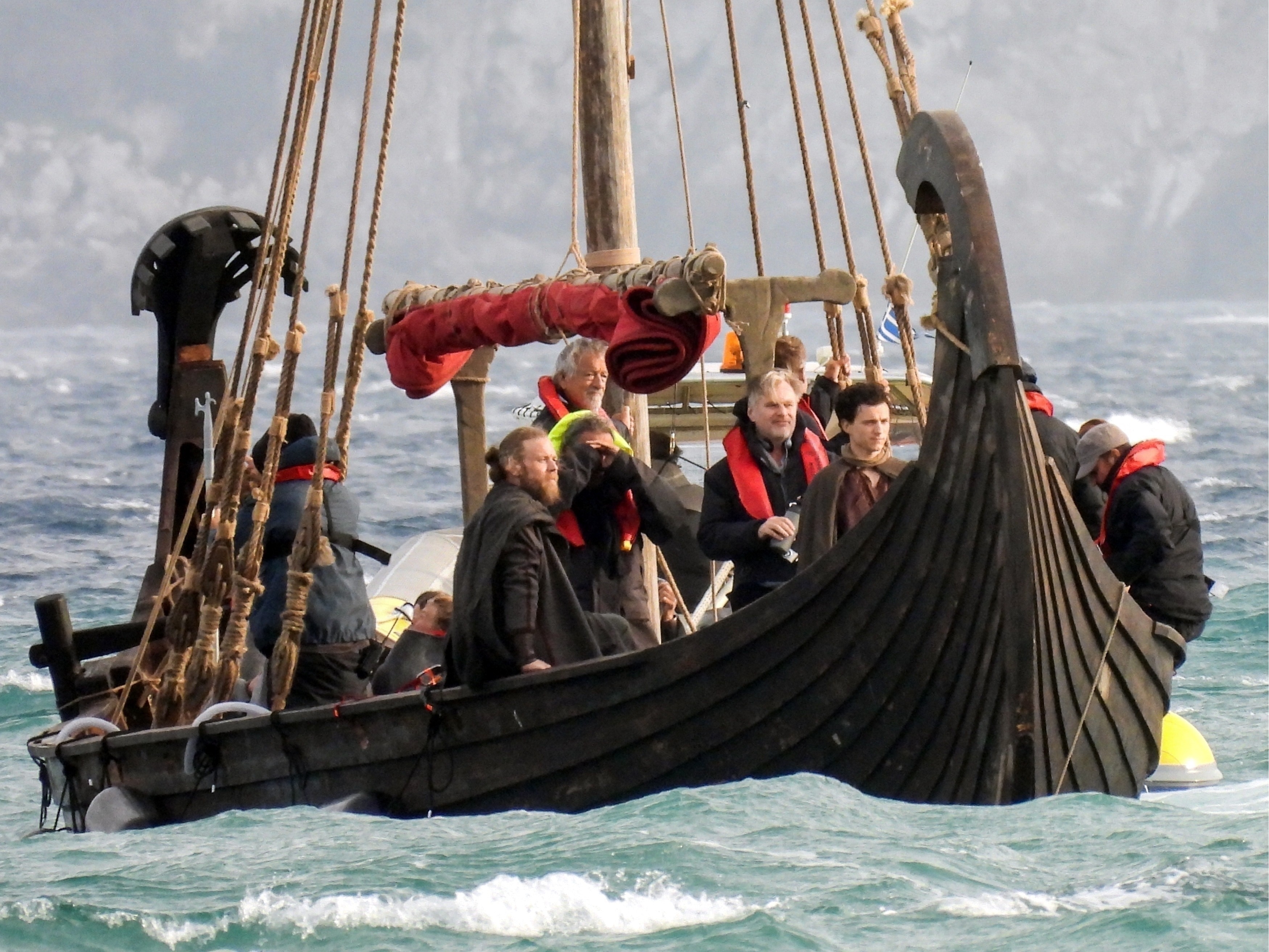
This realistic approach was simply non-negotiable in this Nolan epic.
8. The Musical Touch
The music had to sound like a “big cinematic orchestra”. Once again, Nolan told the music team it had to be something never heard before: ancient Greece, but recognisable.
Composer Ludwig Goransson spent time researching instruments from that era. Audiences are introduced to ancient instruments like the aulos, the most celebrated rockstar instrument of the time.
In tandem with recreating Bronze Age sounds, the team used techniques such as hitting walls and railings to let humanity and intimacy seep into the tracks, creating a distinct musical language.
The Odyssey: The Making of an Epic concludes that it is an epic of epic proportions. Thousands of cast, extraordinary locations, and painstaking craft form a passage back to the old-school, true-blue Hollywood filmmaking. The documentary leaves viewers with growing anticipation to be completely immersed in the new world Nolan has been building.
The film releases in theartes in India on July 17.
ALSO READ | The Odyssey: IMAX Ticket Prices Soar To Rs 3,100 In Mumbai, Rs 2,500 In Delhi NCR



