


The recent escalation between the US and Iran has a major actor missing – the Kingdom of Saudi Arabia (KSA). Iran pounded US bases in Bahrain and Kuwait and surprisingly even in Oman, the friendliest Gulf countries to Iran and ones where a majority of the mediation between Iran and the US has taken place – not only during the current conflict but decades ago, too. But, conspicuously, Saudi Arabia is not in the picture. Instead, it sent a delegation to the funeral of Iran’s late Supreme Leader Ayatollah Ali Khamenei, who was killed in a joint US-Israel strike (much of the West had stayed away from the funeral), while Saudi Arabia’s Foreign Minister, Prince Faisal bin Farhan, and the Iranian Foreign Minister, Abbas Araghchi, are regularly speaking to each other.
In fact, recent Saudi posturing has been a far cry from the initial days of the war. Soon after the US and Israel launched joint attacks on Iran on February 28, reports appeared that Saudi Arabia had been urging for a war against Iran. To an extent, this was surprising, considering that just a couple of years ago, in 2023, Saudi Arabia had entered a China-brokered “truce” with Iran. The two had reestablished diplomatic ties and even exchanged some high-profile visits.
Advertisement – Scroll to continue
The Many Fears In The Kingdom
Yet, it was also true that Iran remained the regional hegemon, and its nuclear and ballistic missiles programme was viewed with deep suspicion across the region. Its proxies, scattered around the region, had challenged almost all regional powers. In fact, the Saudis had waged a war for almost a decade with one of them – the Houthi militias in Yemen, with which the Kingdom shared a border. The Houthis did not hesitate to target strategic facilities inside the Kingdom, including the facilities at Saudi Aramco. With the war going nowhere, the Saudis were compelled to enter into a ceasefire agreement with the Houthis; it was also partially to extricate themselves from Yemen that the Saudis agreed to enter into an agreement with Iran.
Given the fragile balance of power in the region, the Saudis, like a number of other Gulf states, could not have not welcomed a regime change in Iran, and expected Israel and the US to execute their goals. It was thus not surprising when reports emerged that even while calling for cessation of hostilities in public, the Saudis, in private, were rooting for war.
Iran, however, changed the equation.
Learning From Losses
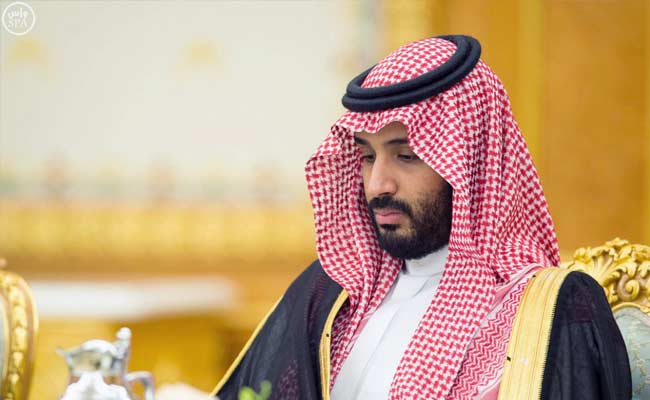
On the eve of war, Iranian Foreign Minister Abbas Araghchi had made a round of all the Gulf states to drum up support in case of any military intervention by Israel or the US. Saudi Crown Prince Mohammed bin Salman (MBS) even spoke to Iranian President Masoud Pezeshkian over the phone. When war did ultimately break out, Iran hit back hard at the US – at its bases across the Gulf region, including in Saudi Arabia, seriously damaging them, to the extent that the US is now reportedly mulling removing them further away from Iran and relocating them to Israel. Iran targeted not just American military bases, but even strategic facilities like the Ras Tanura Refinery, the East-West Pipeline, the Manifa and Khurais oil Fields, and several other such sites. In using asymmetrical warfare, Iran further closed the Strait of Hormuz within a few days of the war, on March 4, 2026. This was the first time in all its history of conflicts that Iran had taken such a step. A fifth of the world’s oil and gas disappeared from the markets, sending oil prices soaring. The Saudis expelled the Iranian military attache and covertly hit back at Iran.
But what did all of this mean for the Kingdom?
Iran’s moves were catastrophic for Saudi Arabia. Not only did it bring in millions of dollars of losses, resulting in a first-quarter fiscal deficit, but it simultaneously showed that US defence and security protection was not foolproof. The Saudis had spent billions of dollars on defence deals with the Americans. Just last year, a year into President Donald Trump’s second term, the Saudis signed a defence agreement with the US, worth a whopping $142 billion. Ultimately, however, American bases on Saudi territory turned out to be a liability. Saudi Arabia lost out on energy exports and imports through the Strait of Hormuz. Worse, investor confidence has been dented in its NEOM mega-project, as a number of contracts had to be put on hold. The project is central to the implementation of the Kingdom’s Vision 2030 plan to diversify its economy beyond oil and gas.
A Cautious U-Turn?
It was thus not surprising that when the US launched Project Freedom to reopen the Strait of Hormuz, the Saudis refused to join its forces. Their threshold for further attacks by Iran was low. It has also constantly been calling for de-escalation and restraint.
They face other constraints as well.
Following the closure of Hormuz, Saudi Arabia ramped up production of its East-West Pipeline, which connects to its Red Sea port of Yanbu on its western coast. Through Yanbu, it shipped crude both to Europe as well as to its other major markets in Asia, following a longer route via the (in)famous Bab Al-Mandeb Strait through the Gulf of Aden. But here’s the catch: if Iran could close Hormuz, its proxies in Yemen, the Houthis, can similarly close off the Bab Al-Mandab chokepoint and target commercial shipping in the Red Sea, if the conflict escalates. They had already demonstrated the leverage they have over this route soon after the Israel-Hamas war in Gaza broke out in October 2023. In case they were to repeat their action now, it would be nothing short of catastrophic for the Saudis.
Moreover, when the Saudis had intervened in the Yemen civil war in 2015, the Houthis had not hesitated to demonstrate that they could strike inside Saudi territory when they attacked Saudi Aramco’s facilities. Just a day ago, by targeting Saudi territory, they demonstrated that they can and are prepared for a direct confrontation with the Saudis again.
Saudi’s Place In The Muslim World
Another major constraint is Saudi Arabia’s elevated position in the Muslim world as the custodian of Islam’s two holiest shrines at Mecca and Medina. It also leads the world’s Sunni Muslims, who comprise almost 80% of the world’s Muslims, while Iran is the leader of Muslims belonging to the other major sect, the Shiites, comprising almost 14% of the world’s muslims. This rivalry has characterised bilateral relations since at least the 1979 Iranian revolution. With the war, Iran has now emerged as a winner in much of the Muslim world, as also in much of the Global South. Here was an embattled country, constrained by years of sanctions, with diminished military power, standing up to two major nuclear powers in the world. It has even managed to drive a wedge between the US and its closest ally, Israel. While the recently concluded MoU with the US for a ceasefire, though now in tatters, also demonstrated that Iran would retain the balance of power in the region.
Saudi Arabia cannot not be aware of this; neither can it ignore it. It has faced a number of challenges to its leadership of the Muslim world, and not all of them have been mounted by Iran, but by fellow Sunni countries.
Challenges mounted domestically, too. Osama bin Laden had turned against his native country precisely because US bases had remained on Saudi territory. The Kingdom has a large youth population. At around 35 million people, its population is the largest amongst all Gulf countries, with the majority being under the age of 35. The Crown Prince has undertaken a slew of measures to modernise the country, which includes its ambitious NEOM project, with the aim to keep in step with the growing demands of a young population – both in economic and ideological terms. Iran’s growing popularity has been noted in other Sunni countries like Egypt, too. The Saudis cannot but configure all this in their war calculations.
It Was All In The Making
The current Saudi refusal to support escalation by the Americans and overtures to Iran are, therefore, not surprising. They have also been calling for de-escalation, restraint, and a return to talks as the conflict flared again. It has actively supported its defence partner Pakistan’s efforts at mediation between Iran and the US. The Saudi presence at the Ayatollah’s funeral was in the same spirit, as is the current Saudi refusal to join the Abraham Accords, even though reports in the Israeli media speak of covert Israeli support to the Kingdom during the war. So, while covert cooperation may continue, the Saudis will simply not risk anything by openly aligning with Israel, at least as long as no solution to Gaza is in sight.
In fact, what we will probably see is a rerun of the same kind of “truce” that China helped broker between the Saudis and Iranians in 2023, which will help Riyadh hedge its economic and security risks by rooting for a regional security architecture.
(The author is a senior journalist)
Disclaimer: These are the personal opinions of the author



