


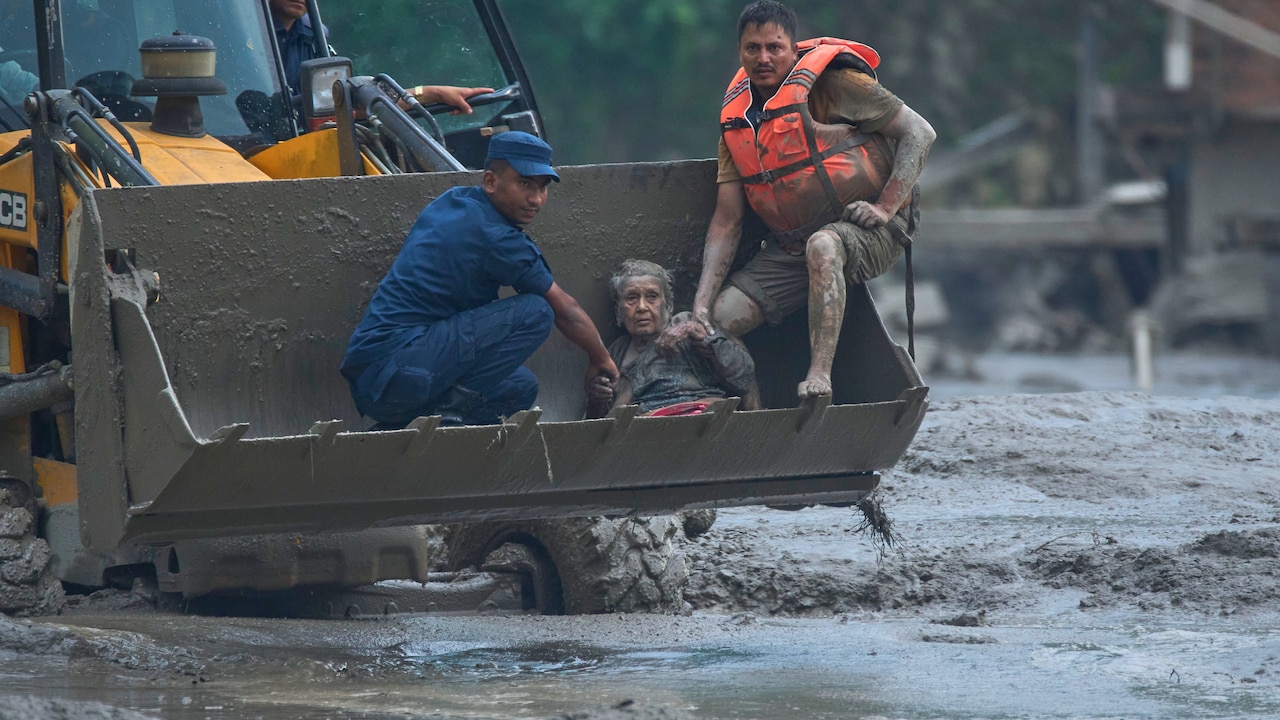
Nepal on Monday concluded the search and rescue operation launched after the devastating August 26 flash floods, which claimed at least 1,455 lives, and is now shifting its focus to rehabilitation and reconstruction, officials said.
The decision was taken at the 21st meeting of the National Council of the NDRRMA chaired by Prime Minister Balendra Shah at the Singha Durbar Secretariat here, the Prime Minister’s Office said.
The government decided to wind up the 40-day search and rescue operation, except for essential activities.
The meeting directed concerned agencies to expedite rehabilitation and reconstruction works in the areas affected by the Bhotekoshi-Trishuli floods.
“The decision was taken based on recommendations from the District Security Committee, District Disaster Management Committees, the Executive Committee of the NDRRMA, as well as findings from field inspections,” it said.
The National Disaster Risk Reduction and Management Authority (NDRRMA) has confirmed 1,455 deaths, 5,285 people missing and 13,795 rescued in the disaster.
The meeting also recommended that the Ministry of Finance approve a budget of NPR 559.17 billion for 504 plans and programmes submitted by various ministries and agencies for reconstruction and rehabilitation in the affected areas.
The resources required for the approved plans will be managed through the Ministry of Finance in accordance with the Financial Procedures and Fiscal Responsibility Regulations, 2020.
The NDRRMA was also directed to recommend additional budget allocations to the Finance Ministry once details are received for projects whose cost estimates have not yet been determined or which are yet to be prioritised.
Addressing the meeting, Prime Minister Shah said disaster management efforts had been carried out through coordination among the federal, provincial and local governments, and that reconstruction and rehabilitation would also proceed through the same mechanism.
Opposition leaders, the parliamentary party leader of the Nepali Congress and chief ministers of Bagmati, Gandaki, Madhes and Koshi provinces expressed support for the reconstruction and rehabilitation efforts during the meeting.
The council expressed grief over the loss of lives and property caused by the Bhotekoshi-Trishuli floods and other monsoon-related disasters and paid tribute to those who died, while conveying condolences to their families.
It also thanked security personnel, elected representatives, civil servants, private-sector organisations, volunteers and journalists who were involved in search, rescue, relief and rehabilitation efforts under difficult circumstances.
The council also expressed gratitude to donor countries and development partners for their assistance.
Meanwhile, authorities have arranged temporary accommodation for 1,226 affected people at different holding centres.
Flash floods originating near the Nepal-Tibet border on August 26 devastated towns and villages in northern and central Nepal.
The Bhotekoshi River, which flows south from the Himalayan border region, carried the floodwaters downstream, sweeping away homes, vehicles, roads and bridges and damaging hydropower projects.
The disaster also killed 43 people in Tibet, while more than 500 still remain unaccounted for, according to Chinese media.
(Except for the headline, this story has not been edited by NDTV staff and is published from a syndicated feed.)


