


Washington:
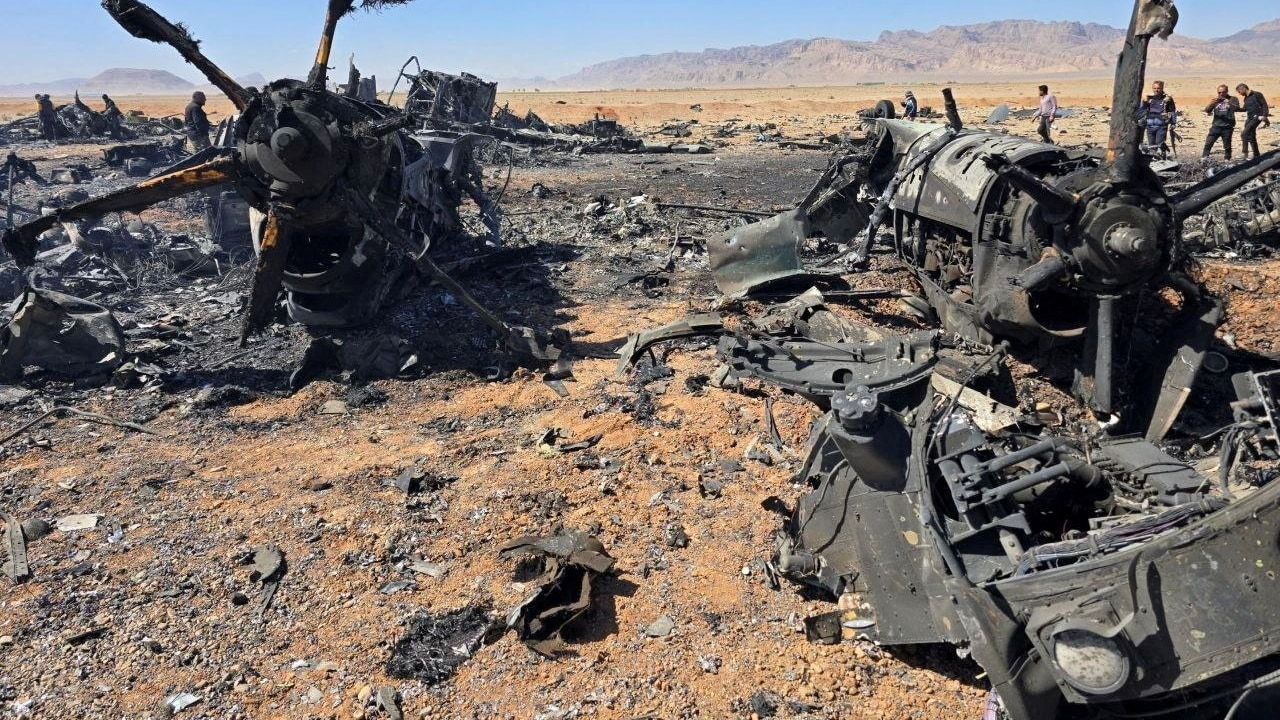
On April 2, the US military launched one of its largest search and rescue operations in history after an F-15E Strike Eagle was shot down by an Iranian shoulder-fired missile, forcing two officers on board to eject onto enemy land. While the pilot– the ‘Alpha’– was rescued quickly within hours, his ‘Bravo’, the weapons systems officer, was trapped inside the enemy lines for nearly 50 hours — wounded, hiding in a rugged mountain crevice of Iran — before being extracted.
The non-flying official, identified only by the mission call sign Dude 44 Bravo because of security concerns, has spoken publicly for the first time, sharing his “most terrifying moment” of surviving a near-free fall, climbing a 7,000-foot ridgeline with a broken back and hiding for two days from Iranian forces before American forces brought him home.
The Miracle
In an interview with CBS’ 60 Minutes, Bravo called his survival story a “modern-day miracle”.
His mission that night was to target industries near a mountainous area south of Isfahan, close to where Iran is believed to keep much of its highly enriched nuclear material, according to Admiral Brad Cooper, the American commander of US Central Command leading US forces.
“That day was just another day in the war for us, until the moment when we got hit by an Iranian weapon,” Bravo said, recalling the moment when America’s $30 million two-seat F-15E, a workhorse of American air combat operations for decades, was brought down by a shoulder-fired missile, which can cost around $100,000.
Bravo recalled the moment when the missile hit the plane as “getting hit by a freight train”. He said Alpha did everything they could to try to save the fighter jet, but they quickly realised the plane couldn’t be saved, so the pair ejected.
Alpha, who ejected safely, was rescued within hours. But Bravo landed hard, about 5 miles away from Alpha after struggling with his damaged parachute.
“At one point when I looked up and saw no parachute, that was the most terrifying thing I’ve ever seen,” Bravo said.
“So I paused, right then, and I prayed, ‘Lord, your will be done. But if I’m getting through this, I need help.'” He broke his back, an arm and a shoulder after hitting the ground at such high speed.
As the dark cleared, Bravo discerned his surroundings on enemy ground and started planning his escape. He found himself in a valley with cliffs on either side and decided the safest place to go was up. Despite his broken bones, he hiked and climbed up a 7,000-foot ridgeline.
“I had injuries, but we all train to adapt and overcome the things that we’re faced with. I moved as quickly as I could, despite the injuries, away from the place that I landed,” he said while talking to CBS.
“Never let a lack of motivation put you on Iranian TV,” Bravo joked.
US Mission
Back in the United States, Defence Secretary Pete Hegseth was woken in the middle of the night with the news about the crash. It was quickly decided that the US military was going to get its troops back, whether they were alive or not.
Soon, a massive mission — involving hundreds of troops in the air and thousands more supporting the mission — was launched to find the two personnel, according to Cooper.
Over 90 US service members were sent on the ground in Iran, marking the first deployment of US ground troops there in 46 years, the CENTCOM chief added.
Alpha was found within six hours. Bravo, however, could not be located and had to spend another day alone in the mountains with almost no food or water. He eventually managed to send a message to the US about his location.
The US military had to use bombers and drones to strike IRGC forces near his hiding place before sending in the final rescue team.
The CIA also played an important role in the mission by using a deception campaign to confuse Iranian forces and employing classified technology to locate the downed officer.
After nearly 50 hours of search using planes worth millions, Bravo was finally found. He described the moment he was rescued as “One of the greatest moments of my life”


