


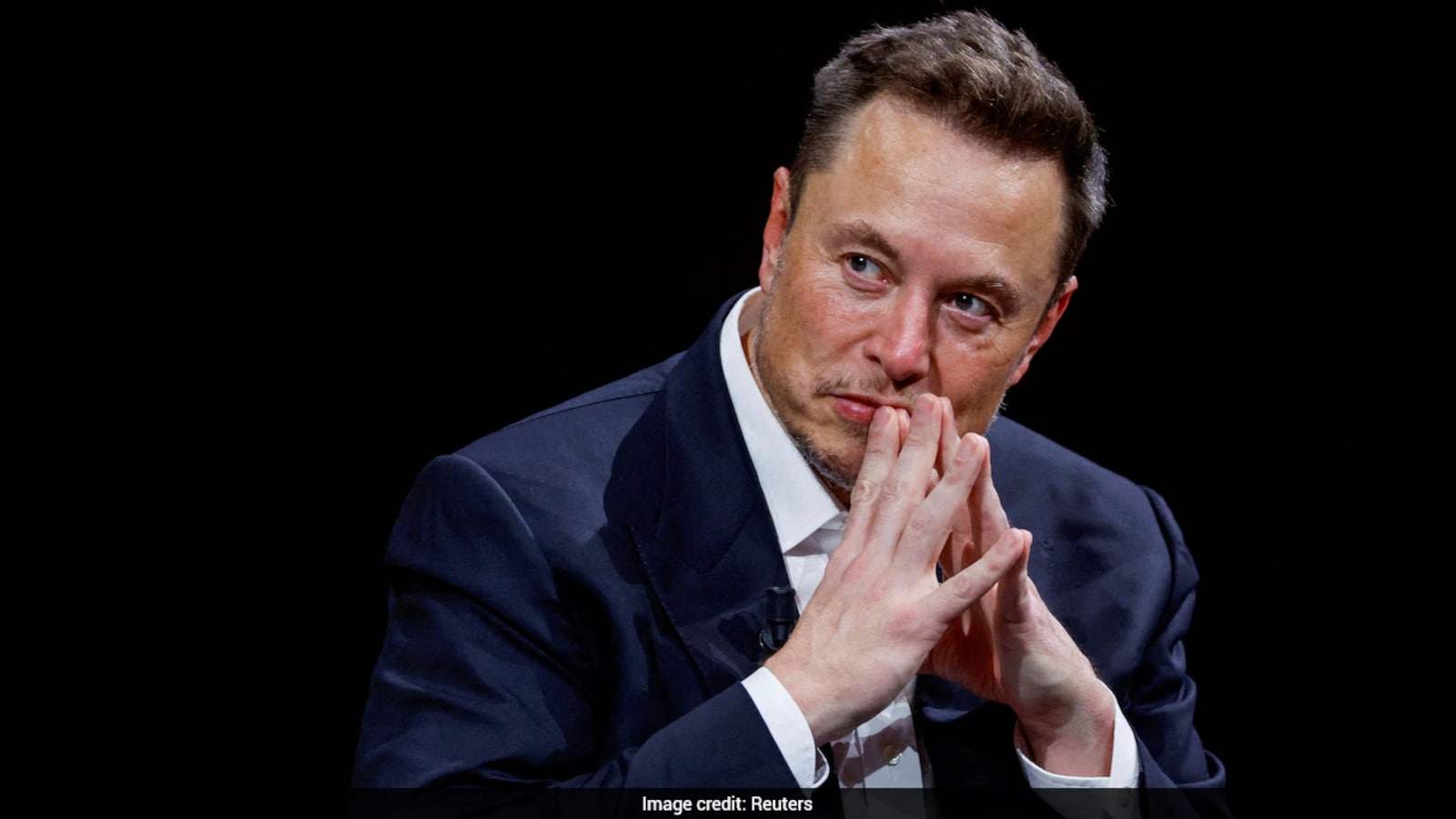
Elon Musk has experienced many setbacks in his extraordinary career. His rockets have exploded, his Tesla cars have malfunctioned, regulators in several countries have confronted him, investors have sued him, and, more recently, he had a huge public falling out with President Trump. Yet, somehow, through every trouble, Musk has come out even more valuable than money, and that is an image of inevitability.
That image has now taken a hit.
His recent courtroom defeat against OpenAI and Sam Altman will, of course, not damage Tesla or slow SpaceX. But symbolically, it could become one of the defining moments in the history of the artificial intelligence industry. During the month-long, daily hearings, it became increasingly clear that the trial was about who gets to control and then shape the future of AI. In terms of long-term importance, I would place it alongside the Strait of Hormuz crisis, though in very different ways. Hormuz represents the fragility of the present global economy because oil still powers the modern world. Artificial intelligence, meanwhile, represents the architecture of the future economy because data, algorithms and machine intelligence may soon shape everything from jobs and warfare to education, medicine and political power. One chokepoint controls the energy of today. The other may determine the AI systems of tomorrow.
Advertisement – Scroll to continue
On Monday, a California court rejected Musk’s claims against OpenAI, dealing a major legal and reputational blow to the world’s richest man. Musk had argued in his suit that OpenAI abandoned its founding mission as a non-profit organisation dedicated to building artificial intelligence for the benefit of humanity. According to Musk, Sam Altman and OpenAI effectively transformed a charity into a commercial empire closely tied to Microsoft. He wanted damages worth $150 billion, restrictions on OpenAI’s transition into a for-profit structure, and Altman removed from the board.
The court was unconvinced. I followed the trial almost daily, sometimes siding with Musk, other times siding with Altman. I knew the ruling could shape how the AI industry evolves over the next decade.
In the short term, the tech world is probably breathing a sigh of relief. Beneath the public fascination with Musk versus Altman lay genuine industry anxiety. Had Musk succeeded, OpenAI’s corporate structure could have been destabilised just as the global AI race enters its most commercially explosive phase.
Remember What OpenAI Has Become
ChatGPT is not just a clever chatbot. OpenAI sits at the centre of a technological arms race involving governments, corporations, militaries, educational institutions, media and financial markets. AI is now viewed as potentially as transformative as electricity, the internet or the industrial revolution itself. Whoever dominates foundational AI systems could shape everything from healthcare and education to defence, finance, media and labour markets, no doubt about that.
The numbers involved are staggering. Microsoft alone has invested billions into OpenAI. Nvidia’s valuation in recent months has exploded because of AI demand. Google is reorganising itself around AI. Amazon, Meta, Apple and even governments from Washington to Beijing are pouring extraordinary resources into the sector.
Against this backdrop, the last thing investors wanted was legal uncertainty surrounding the most influential AI company on the planet.
The verdict has given OpenAI breathing room. It has reassured markets that the company’s structure and commercial trajectory are unlikely to be derailed immediately by courtroom battles. That matters enormously because AI development depends on staggering amounts of capital. It is estimated that building frontier models requires vast computing infrastructure, energy consumption, talent acquisition and data processing. This is no longer a garage-startup industry. It is industrial-scale technology, which demands investor confidence.
That is why many within Silicon Valley quietly preferred stability over Musk’s legal crusade, even if some privately sympathised with parts of his argument. Because Musk was not entirely wrong about the broader issue he raised.
How It All Began
OpenAI began in 2015 as a non-profit initiative with lofty language about benefiting humanity and avoiding a dangerous concentration of AI power. Musk himself helped launch it partly out of concern that Google could monopolise advanced artificial intelligence. But over time, OpenAI evolved into something very different: a heavily commercialised enterprise deeply integrated with Microsoft and increasingly centralised around immense corporate power.
The organisation, founded partly to prevent AI concentration, may now represent one of the largest concentrations of AI capability in human history. That tension is not going away simply because Musk lost. In fact, the case exposed something much deeper about the future of AI. The public conversation around artificial intelligence still revolves around ethics, safety and existential risks. Politicians talk about regulation. Executives speak about responsibility. Researchers warn about bias and misinformation.
But what about the ownership? Who owns the future? Who controls the models? Who controls the data? That is the real battle now unfolding.
For all his eccentricity and theatrics, Musk recognised early that AI would become the defining economic and geopolitical force of the 21st century. His warnings about AI were never merely rhetorical. He understood that whoever dominates advanced AI systems could eventually shape entire industries, labour markets, political systems and even military capabilities.
Which explains why he later launched xAI, his own artificial intelligence company.
Musk And His Fear Of Losing Influence
Musk projected himself in court as a betrayed idealist trying to defend OpenAI’s original mission. But he is also now a direct competitor to OpenAI through xAI. That duality complicated his case politically and morally. Critics argued he was less concerned about humanity and more concerned about losing influence over the most important technology platform of the future.
And both things are true simultaneously. The courtroom battle revealed something uncomfortable about modern Silicon Valley: even its ideological wars increasingly revolve around market dominance. A decade ago, technology leaders spoke like evangelists about liberal values, openness, democratisation and changing the world. Today, AI increasingly resembles a geopolitical resource similar to oil, nuclear technology or semiconductor manufacturing. Nations want control over it. Corporations want monopolies around it. Investors want exposure to it.
Open-source idealism is slowly colliding with trillion-dollar incentives. The Musk-Altman feud symbolises that transformation perfectly. And what about Musk himself? In the short term, this is clearly a setback. The loss adds to a growing list of courtroom defeats and legal frustrations. Recent years have seen Musk lose cases involving Twitter investors, advertisers and former executives while regulators continue scrutinising aspects of his business empire. The aura of legal invincibility around him has weakened.
Don’t Write Him Off – Yet
However, one lesson repeated endlessly throughout his career is that he rarely retreats after defeat. If anything, setbacks seem to energise him. Legal experts already expect appeals, and Musk himself has publicly attacked the ruling and signalled he intends to continue fighting.
Could he eventually knock on the doors of the US Supreme Court?
Possibly, though success there appears uncertain. The bigger challenge for Musk is not merely legal but structural. OpenAI today is no longer a vulnerable startup. It sits inside a vast ecosystem of corporate alliances, government relationships and financial backing. Challenging it now means challenging a growing AI establishment rather than one company.
The verdict also marks the end of AI innocence. The early AI conversation carried traces of idealism. There were debates about humanity, ethics and scientific collaboration. Today, the mood feels different. AI has become strategic infrastructure. The language of public good increasingly coexists with shareholder value, geopolitical rivalry and market capture.
OpenAI itself symbolises this transition. It moved from a research-oriented non-profit to one of the most commercially valuable organisations in the world within less than a decade. The speed of that transformation is astonishing – and frightening.
The tech world may feel relieved today because the verdict preserves stability. Investors dislike chaos. Markets prefer continuity. But the deeper anxieties exposed during this trial have not disappeared. Elon Musk, despite losing in court, has ensured these questions will linger.
(Syed Zubair Ahmed is a London-based senior Indian journalist with three decades of experience with the Western media)
Disclaimer: These are the personal opinions of the author



