


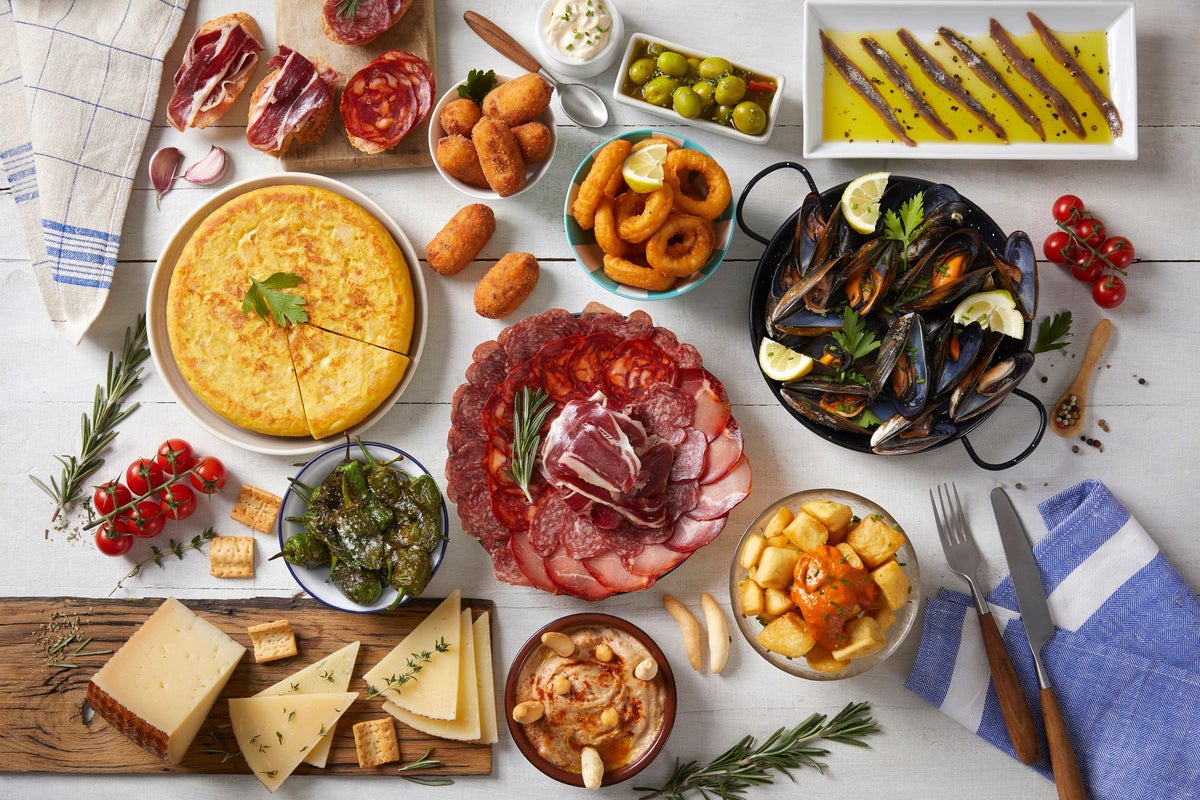
We’re all familiar with the millennial picky-bit tea: Babybels, olives, leftover roast chicken, mystery charcuterie, more cheese, definitely more pickles than necessary and whatever else can be assembled with minimal effort. Eventually, someone rebranded the whole thing as “girl dinner”, which made eating half a baguette, six cornichons and a family-sized tub of hummus sound less like giving up and more like a lifestyle choice.
Now, though, it has evolved into something else entirely and invariably involves burrata, giant butter beans with chorizo and £50-a-kilo Serrano and Iberico cheese “rollitos”.
Somewhere along the way, the humble picky tea has had a middle-class rebrand. It has also, like any Great British pastime, become a bit unhinged.
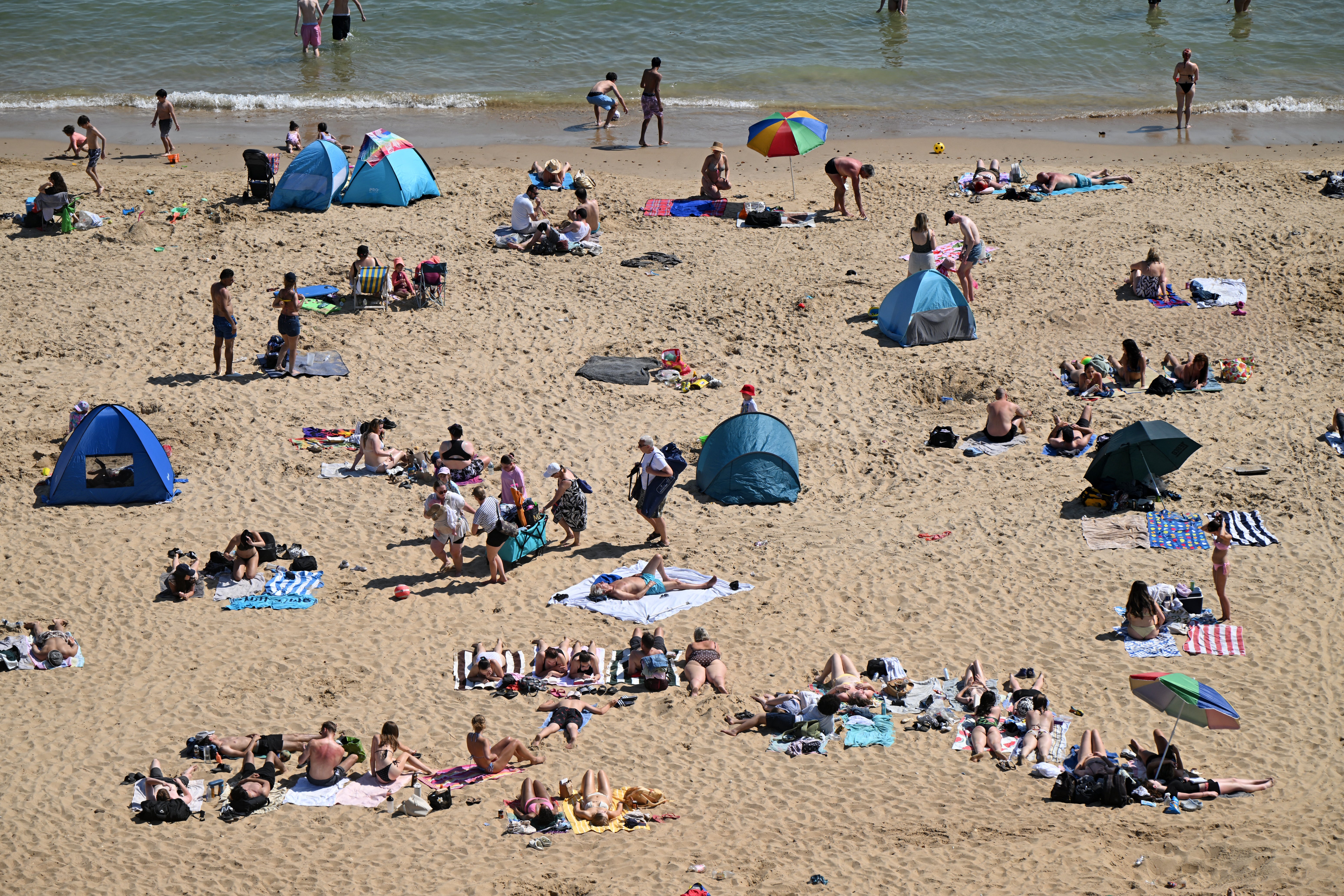
After record-breaking May temperatures last week that saw parts of the UK hotter than Spain, Greece and Portugal – where this kind of slothful grazing is, ironically, completely normal – supermarkets are engaged in what increasingly looks like a full-scale picky bits arms race.
Waitrose has a dedicated “Picky Bits” section on its website for middle-class picnickers with John Lewis blankets who neither notice nor care that the olives they’re eating work out at nearly £27 a kilo. M&S and Sainsbury’s offer deli-style three-for-£8 deals aimed squarely at the after-work, al fresco girl-dinner-with-tinnies crowd. Morrisons, meanwhile, has decided “British tapas” means aggressively miniaturised foods – “dinky” this, “dinky” that – hot honey in everything that doesn’t need it and a cheeseburger in empanada form. Rule Britannia, indeed.
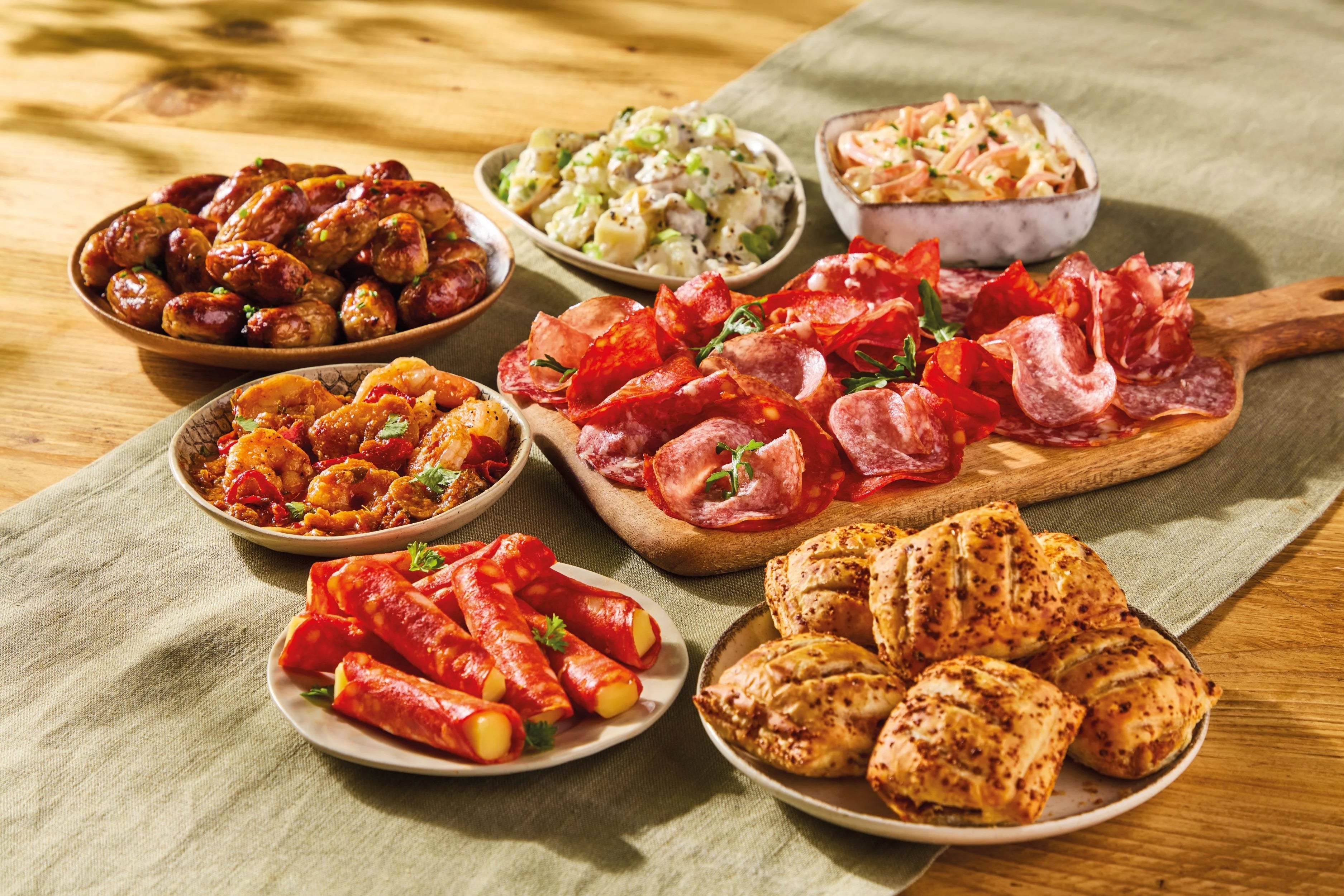
Summer, it seems, has become its own commercial – and, frankly, absurd – supermarket season, alongside Easter, Christmas, Halloween and Valentine’s Day. Anyone else remember M&S’s heart-shaped “love sausage”?
The thing is, what they’re selling isn’t really dinner at all. It’s literally in the name: “bits”. It’s the fantasy of the sort of low-effort holiday eating that only happens somewhere between swimming, sunbathing and actual lunch: tearing into hunks of bread and sweating cheese, refilling crisp bowls for the third time and spitting out olive pips into an ashtray. Only it’s reconstructed in plastic tubs with peel-off lids in the refrigerated aisle of a British supermarket.
Naturally, Britain has responded to this simple concept with complete and total overkill. There are olives from every vaguely aspirational corner of southern Europe. Olives stuffed with things. Vine leaves stuffed with things! Filo pastry stuffed with things! Not quite sure what things, but here we are.
There is every Mediterranean-adjacent cheese imaginable, often stuffed into yet more things! Entire shelves are devoted to cured meats folded into neat ribbons of continental sophistication. There are olive, cheese and cured meat platters for people who want all three but can’t make decisions. There are dips for every occasion, of which, apparently, there must be many.
Threaded through it all is the strange modern belief that every food becomes infinitely more desirable once shrunk to canapé size. Paellas. Empanadas. Quiches. Entire meals reduced to bite-sized fragments, as though Britain in summer no longer wants dinner, but teeny tiny versions of dinner. The overall effect sits somewhere between an overpriced Mediterranean beach club, an Ottolenghi-coded dinner party and a group chat trying to organise “just a chill picnic” that somehow costs everyone £28.
The message, ultimately, is clear: Britain wants to eat like it’s on holiday. Or at least supermarkets want them to. And thanks to climate change, we increasingly can.
British summers have become hotter, stickier and more Mediterranean in feel. Nobody wants to stand over a hob in 35.1C heat cooking a roast chicken. But what makes the supermarket picky bits phenomenon especially funny is that beneath all the Mediterranean aspiration, the offering remains unmistakably British.
Alongside the Halkidiki olives and tzatziki sit cocktail sausages, scotch eggs, pork pies and cheesy pinwheels. One minute, you’re in southern Europe with your whipped feta and olive tapenade; the next, you’re essentially eating a children’s birthday buffet circa 1998.
And supermarkets are making a fortune from it.
Because while picky bits are psychologically marketed as harmless little treats – a few quid here, a 3-for-£8 offer there – the actual pricing can be extraordinary. Morrisons’ cheddar pinwheels work out at almost £40 per kilo. M&S sells tapas bites at nearly £48 per kilo. Waitrose is charging £50 per kilo for tiny chorizo involtinis. Sainsbury’s Parma ham comes in at more than £53 per kilo.
For that price, you could arguably just fly to Spain.
But this is treatonomics in action. Consumers who might baulk at buying a £30 steak at the butcher or spending £150 in a restaurant will happily spend £20, maybe even £40, to assemble an aesthetically pleasing selection of “dinky” bits. Luxury no longer arrives as a single extravagant purchase; it comes in little refrigerated packets of olives, charcuterie and hot honey halloumi rolls.
If anyone still doubted the idea that British people collectively lose their minds the second the temperature rises above 24C, the picky bits aisle is probably the clearest evidence yet. Part of it is practical. Britain was not built for heat. Our homes trap it, our trains break down in it and most restaurants become unbearable by 7pm. So we head outdoors: to parks, balconies, fields, pavements, canal sides, folding camping chairs outside someone’s flat. And once you’re eating outdoors, picky bits start to make a certain kind of sense. No, it probably does not taste like tapas in San Sebastián or a food market in Thessaloniki. But it is ours.
And perhaps that’s the real appeal. Britain hasn’t suddenly become Mediterranean; it has simply become hotter, more expensive and increasingly obsessed with small luxuries. The modern picky tea offers all the aesthetics of a European summer – cheese, meats, olives, little glasses of something cold – without the cost of an actual holiday. Who needs a flight to Alicante when you can eat “British tapas” on Clapham Common with 20,000 other people in a heatwave?
Still, there’s something oddly charming about the whole thing. The British buffet table has survived every food trend thrown at it – clean eating, low-carb diets, sourdough snobbery, small plates, wellness culture, Ozempic – and emerged wearing linen trousers and calling itself antipasti.



