


Since Iran entered the war on February 28, the Strait of Hormuz, one of the world’s most critical oil routes, has effectively been under blockade. The narrow passage between Iran and Oman carries nearly 20 per cent of global oil and natural gas supplies, and the disruption has rattled energy markets, pushed up fuel prices, and raised fears of wider economic instability across Asia and beyond.
Even after the April 9 ceasefire halted active fighting, the Strait itself remained largely shut, with maritime movement still heavily affected by the conflict.
Yet amid the uncertainty, several Indian-linked ships have continued to pass through the risky stretch, helping India maintain energy supplies despite severe disruptions in the region.
The movement is significant because Iran holds a major geographical advantage over the Strait and has repeatedly targeted vessels in retaliation for the US-Israeli strikes on February 28 that triggered the war.
Behind-The-Scenes Coordination
Speaking at an inter-ministerial briefing on Friday, officials from the shipping ministry shed some light on how India has been managing ship movements through the tense waterway, though they did not reveal operational details.
“In terms of how we coordinate with India, Iran, how do we decide the priority, I would not like to, you know, tell you how we coordinate for obvious reasons. So we coordinate through MEA, and that is where we are,” said Opesh Kumar Sharma, director of shipping at the Ministry of Ports.
He said vessel priority is worked out jointly with key ministries handling energy and essential supplies.
“He added that in terms of priority, it is decided in coordination with MOPNG (Ministry of Petroleum and Natural Gas), Ministry of Fertilisers, and thereafter the coordinated priorities prepared and through which we try and get the ships out.”
13 Indian Vessels Still In Hormuz
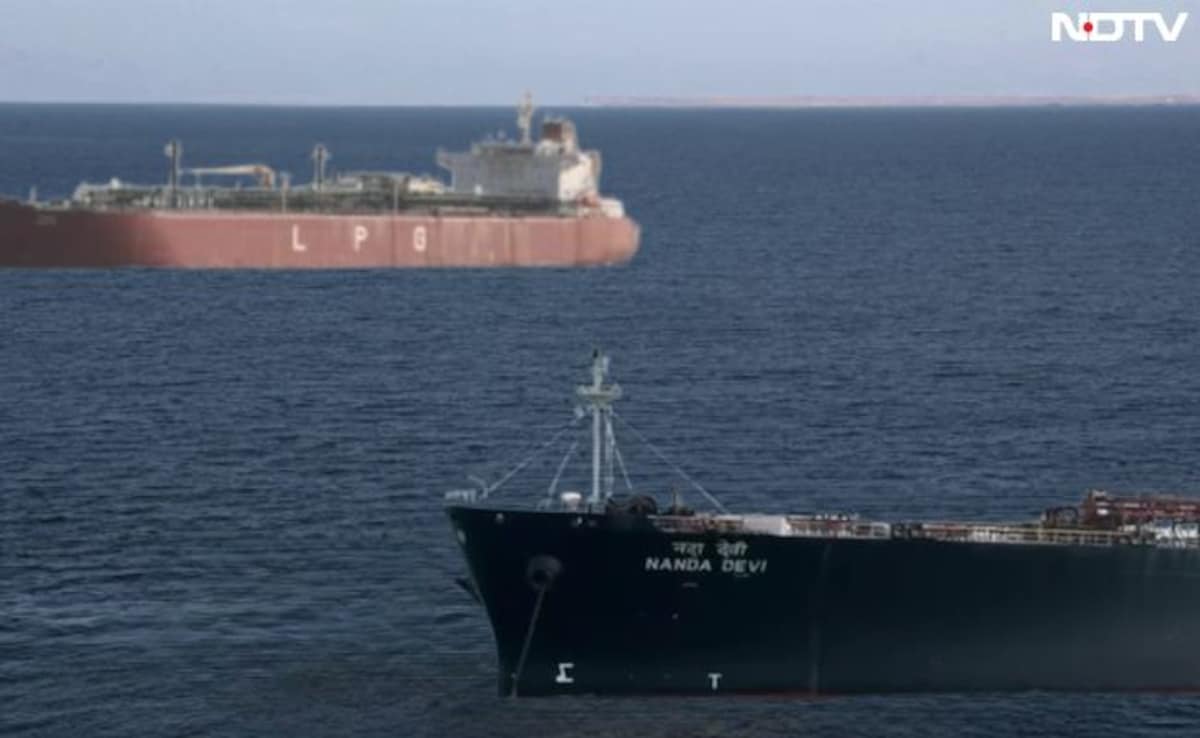
According to Sharma, around 13 Indian-flagged vessels are currently in the Strait of Hormuz region. These include one LPG tanker, five crude oil tankers, one chemical or product tanker, three container ships, two bulk carriers and one dredger.
Despite the danger, India has continued to maintain maritime traffic through the route and remains among the countries with the highest number of vessels transiting the Strait.
The Indian-linked ships that have crossed the waterway since February 28 include Shivalik, Nanda Devi, Jag Laadki, Pine Gas, Jag Vasant, BW Tyr, BW Elm and Green Sanvi.
Public Ship Trackers Under Spotlight
Officials were also asked whether publicly available ship-tracking data could compromise vessel safety during such a sensitive period.
“With respect to ship data tracker, these are commercial applications. I believe people can take subscription and it’s open to all,” Sharma said.
On whether such information could be misused, he added, “It’s very difficult to answer that. Any data which is public domain can be used either way by the person. It depends on his intention. But as of now, the data is helping us and you also to track the ships.”
Ship movement through Hormuz has slowed dramatically since Iran’s retaliation against the February 28 US-Israeli strikes, with several global shipping operators avoiding the route altogether due to fears of escalation.



