


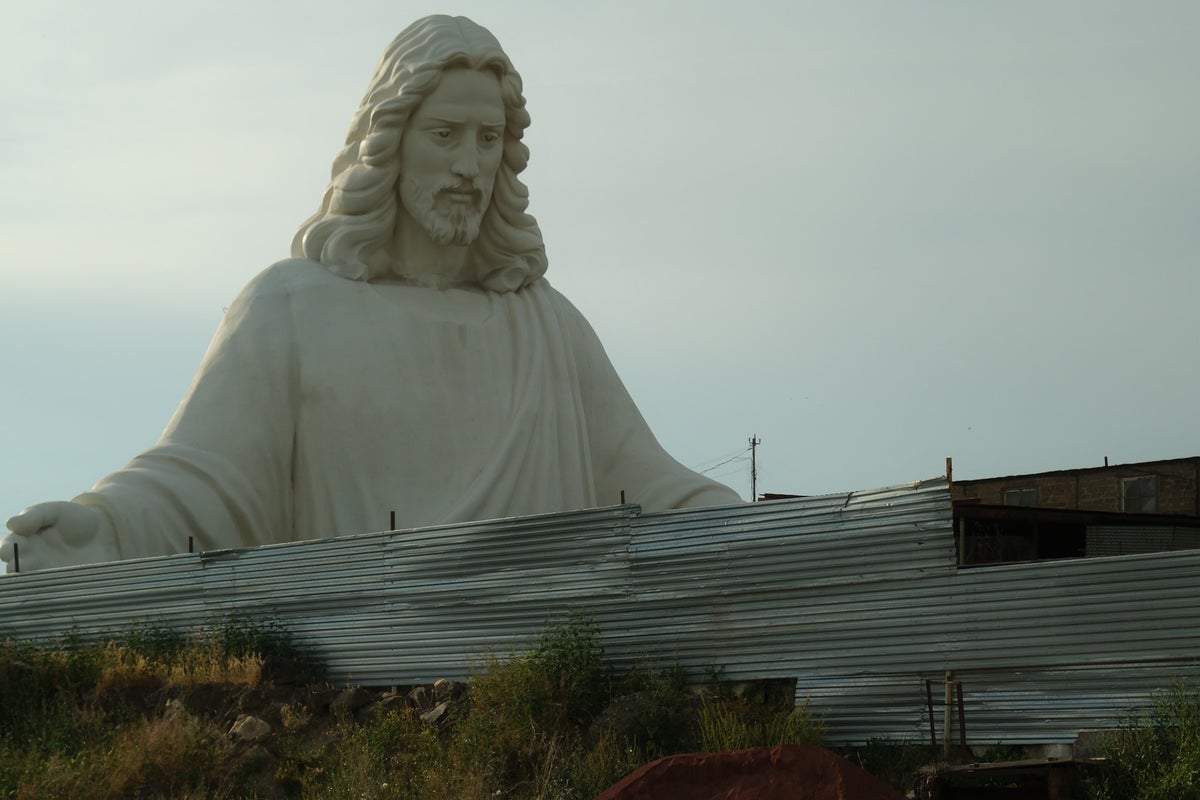
On the edge of a dusty construction site, 30 minutes outside Yerevan, stands what may become the world’s tallest statue of Jesus Christ – although, for now, it remains in pieces.
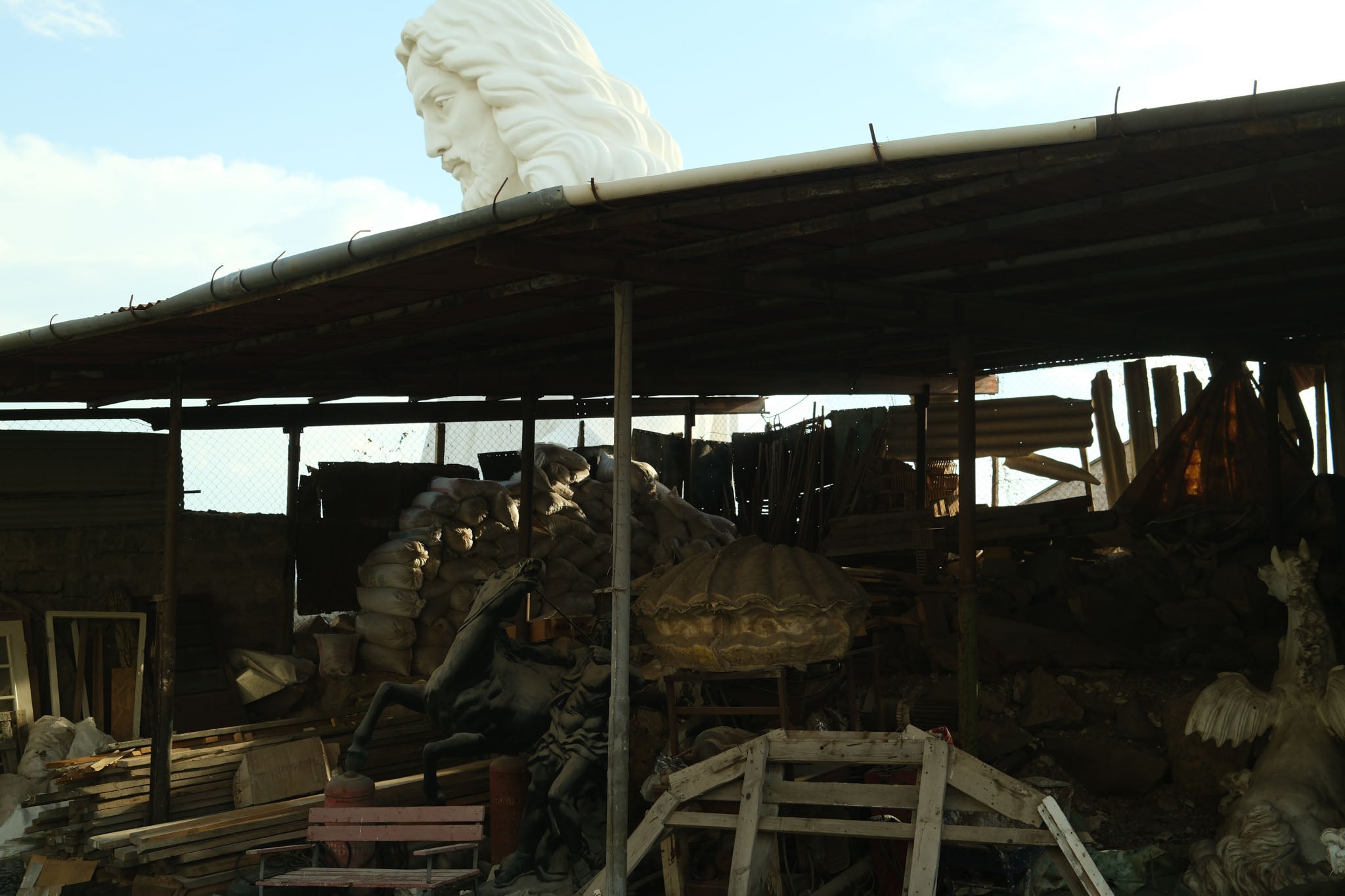
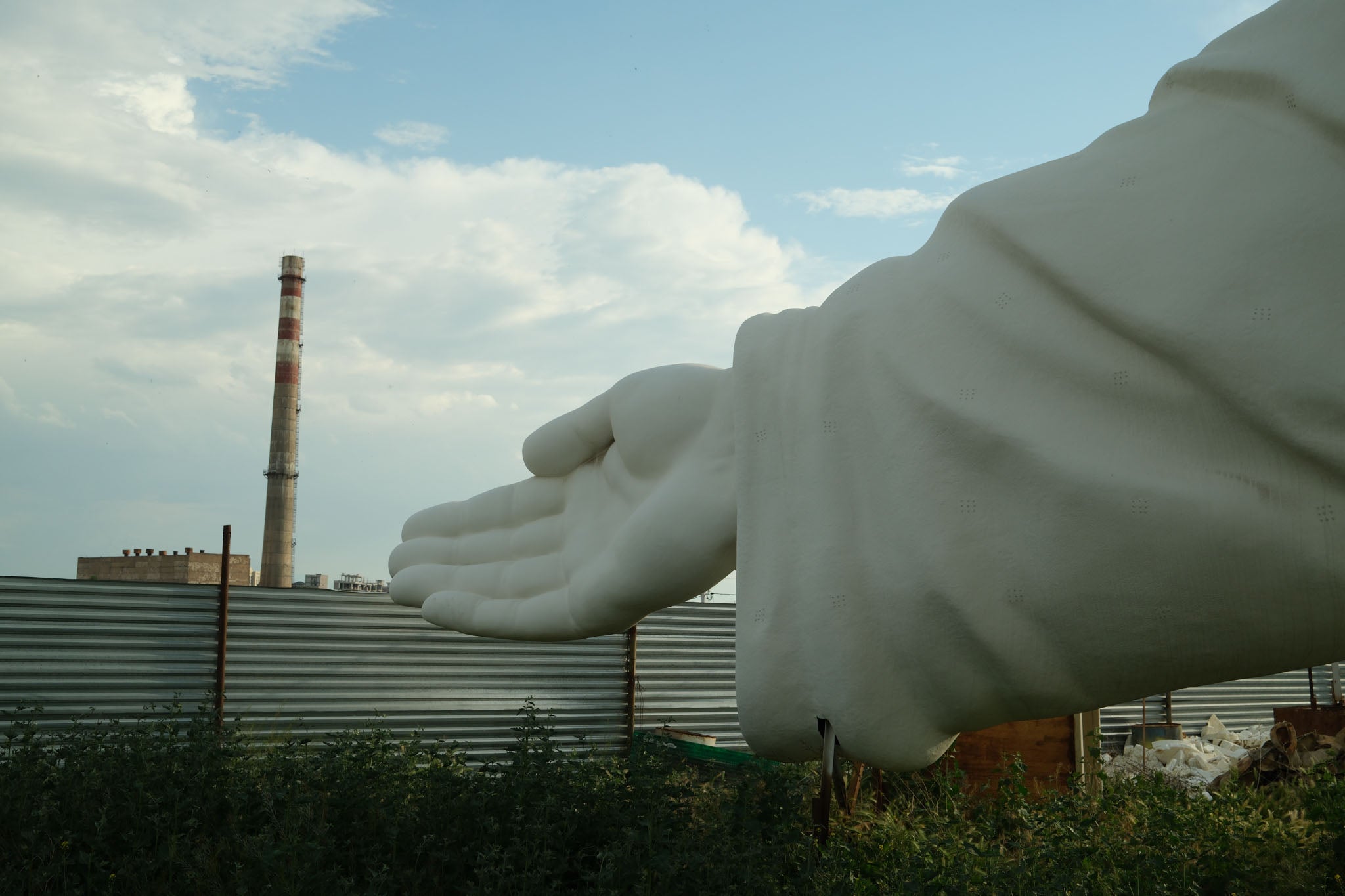
Part unfinished monument, part accidental tourist attraction, the giant aluminium figure lies behind a corrugated iron fence in the village of Zovuni, on the outskirts of the Armenian capital, waiting for the day it might finally be lifted into place by helicopter on a nearby mountain.
When The Independent visited the site on a warm June afternoon, a group of Russian tourists had just pulled over to peer through the fence and pose for selfies. Locals watched with amusement as they photographed what is becoming one of Armenia’s most curious attractions, marked on Google Maps as ’Statue de Jesus Christ en construction’.
The scale of the project becomes apparent long before entering the yard.
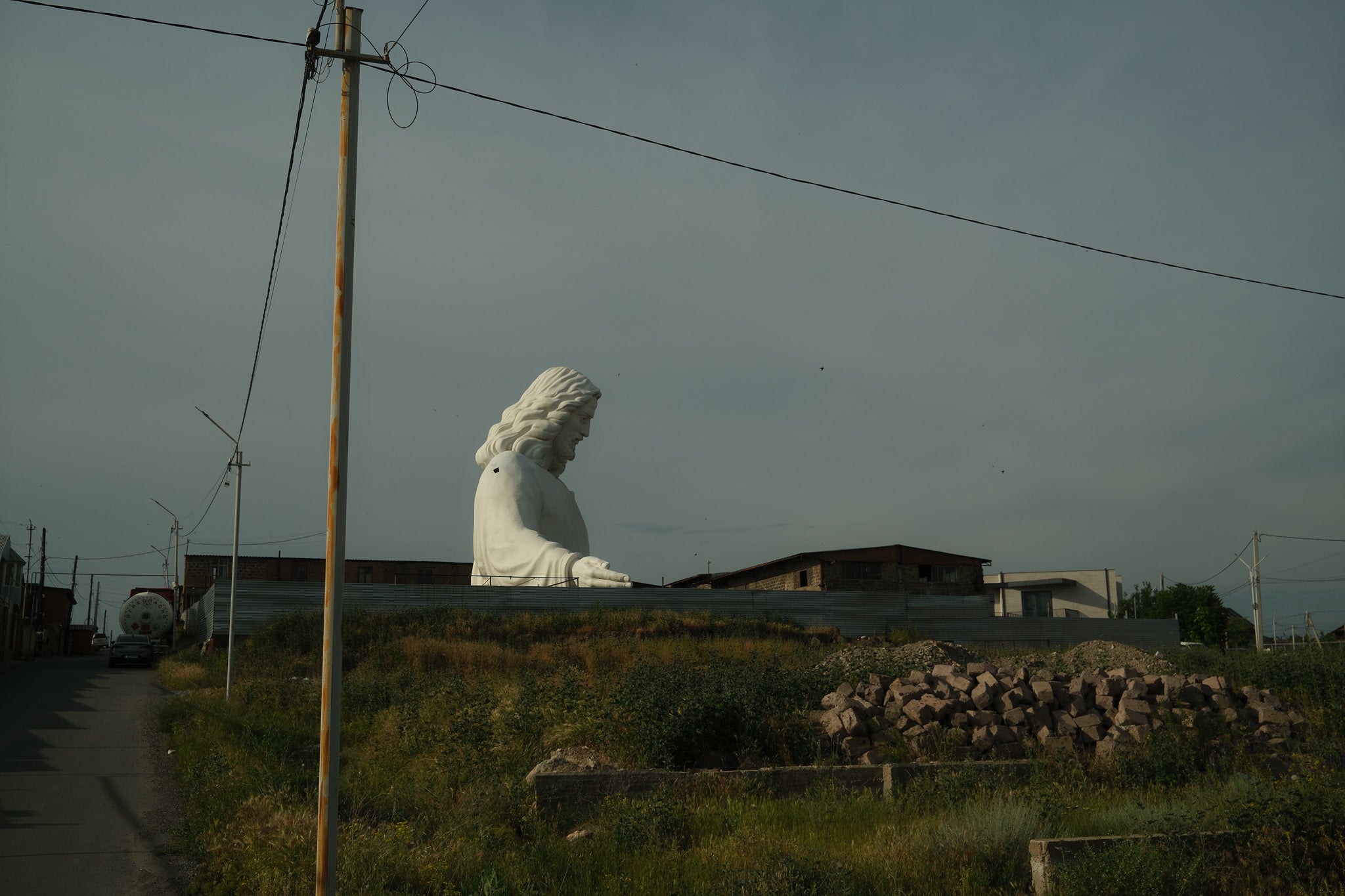
Emerging from an otherwise unremarkable landscape of garages, wasteland and scattered homes, the top section of the colossal figure towers above the surrounding buildings.
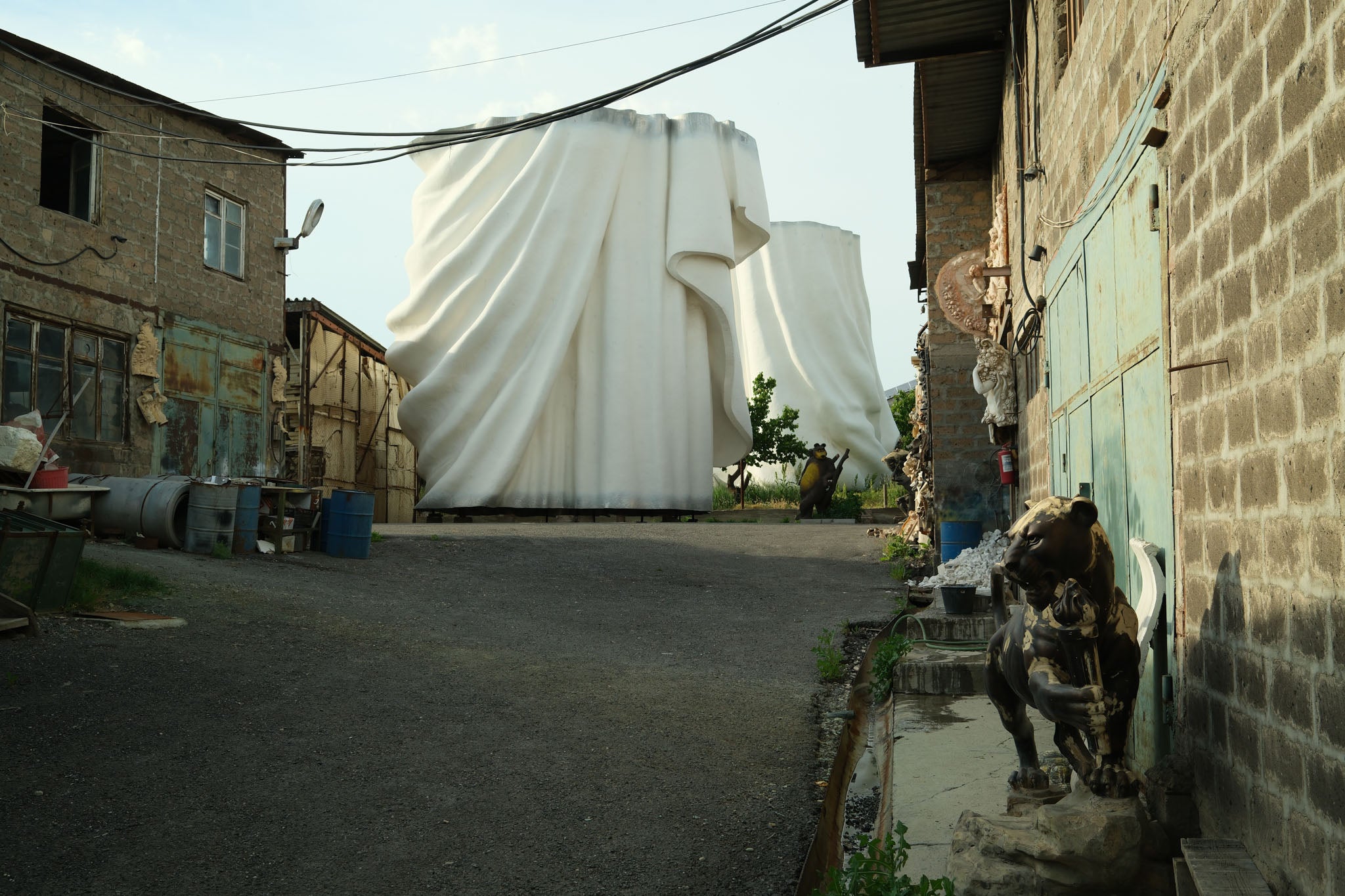
Inside, smaller sculptures of historic figures, horses and cartoon characters are found from previous, much smaller, jobs. Dominating everything is the vast three-piece Christ, destined, if plans proceed, to become a new national landmark.
The project is the brainchild of former armwrestling champion turned businessman and politician Gagik Tsarukyan, one of Armenia’s wealthiest and most controversial public figures.
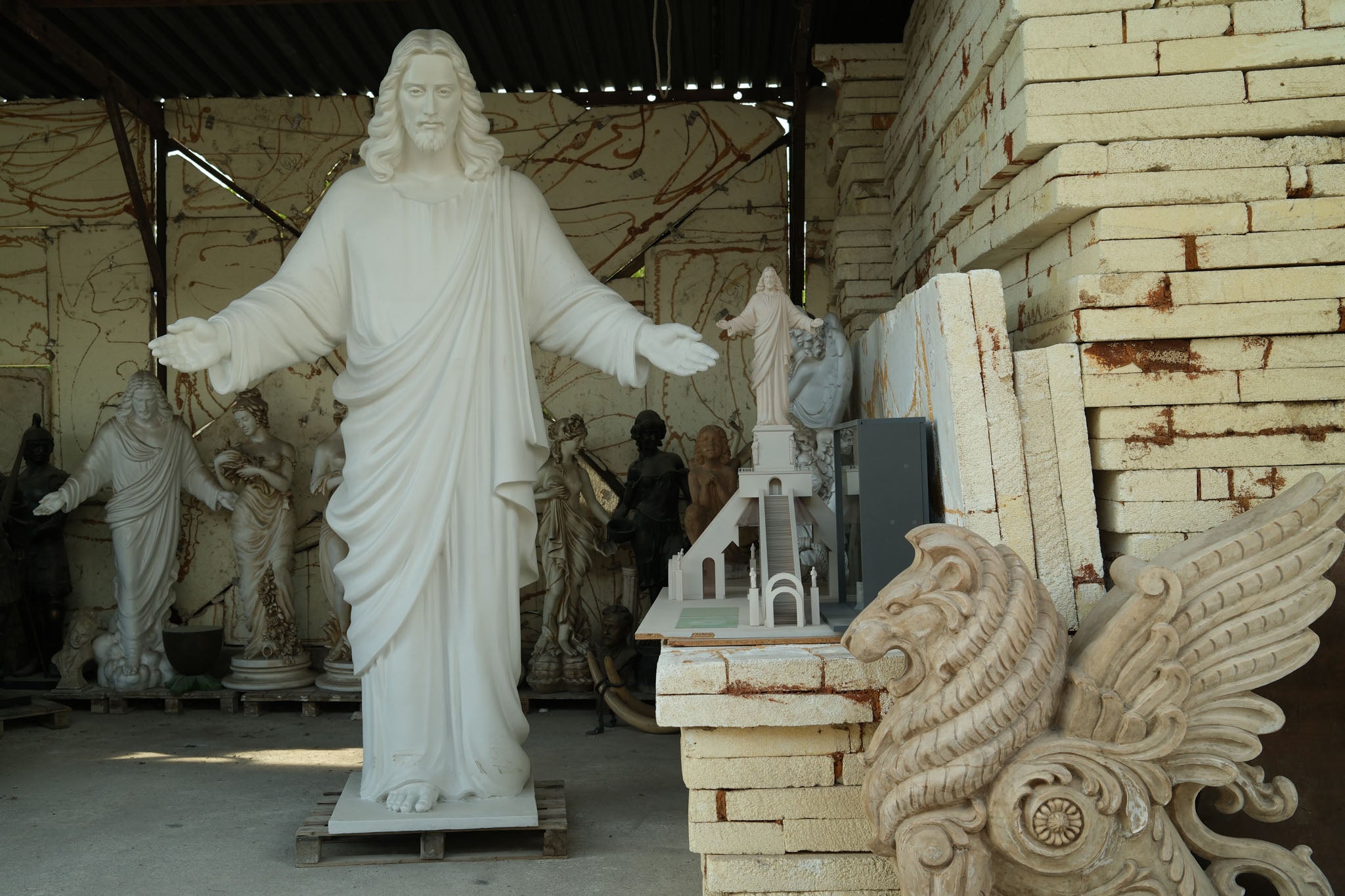
First revealed in 2022, the monument will consist of a 33-metre aluminium statue of Jesus standing atop a 44-metre pedestal on Mount Hatis, around 20 miles north-east of Yerevan. Work is also well underway on the pedestal.
At a combined height of 77 metres (253ft), the completed structure would surpass Brazil’s Christ the Redeemer and overtake existing record-holding Christ monuments in Poland and Indonesia.
Tsarukyan previously said the statue represents hope and national renewal following years of political upheaval and Armenia’s losses in the Nagorno-Karabakh conflict. Announcing the plan In January 2022, he said it will serve as a “guardian of our country and people” and impress the outside world.
In mid-June, Armenia’s governing Civil Contract party won an election seen as a test of its handling of a peace deal with Azerbaijan and its growing turn to the West. International election monitors said the run-up to voting was marked by efforts by traditional patron Russia to influence the outcome.
Tsarukyan’s opposition party narrowly failed to secure representation in parliament. His ‘Prosperous Armenia party’ finished fourth in the elections.
Supporters of the statue argue that the monument could become a major tourist draw, helping boost visitor numbers to a country increasingly seeking to market itself internationally. Armenia has recently expanded its tourism links with western Europe; the first-ever direct flights have just launched from London Luton.
Yet the project has ignited a fierce debate about religion and wealth.
Armenia holds a unique place in Christian history as the first nation to adopt Christianity as a state religion in the early fourth century. But despite its deep Christian roots, monumental statues of Jesus have never been part of religious tradition.
The Armenian Apostolic Church has repeatedly opposed the project, arguing that it sits uneasily with centuries of culture. Instead, church leaders point to khachkars – carved stone crosses unique to Armenia – as the country’s traditional expression of Christian faith.
In March, the Church’s Supreme Spiritual Council reaffirmed its objections while acknowledging Tsarukyan’s longstanding support for church construction projects.
“The Church does not consider the installation of a statue of Our Lord Jesus Christ to be acceptable,” the council said in a translated statement, arguing that the proposal was inconsistent with the Church’s historical iconographic traditions.
It suggested that a monument drawing upon the khachkar tradition would be more appropriate.
Critics have also questioned whether the enormous sums required for the project could be better spent elsewhere in a country facing uncertainty and security concerns.
The proposal has attracted attention beyond Armenia’s borders. Earlier this year, former UFC champion Conor McGregor said he wanted Ireland to build an even larger statue of Christ. Posting an AI-generated image on Instagram, he praised Armenia’s project as “magnificent” and called for “a massive monument to our nation’s faith”.
For now, however, Armenia’s giant Jesus remains incomplete. The pedestal on Mount Hatis is under construction, while the figure itself waits in pieces.
Whether it ultimately becomes a symbol of national pride, a religious landmark or unfinished monument to division remains uncertain. What is already clear that there is an international interest for the statue among the dusty roads – complete or otherwise.



