


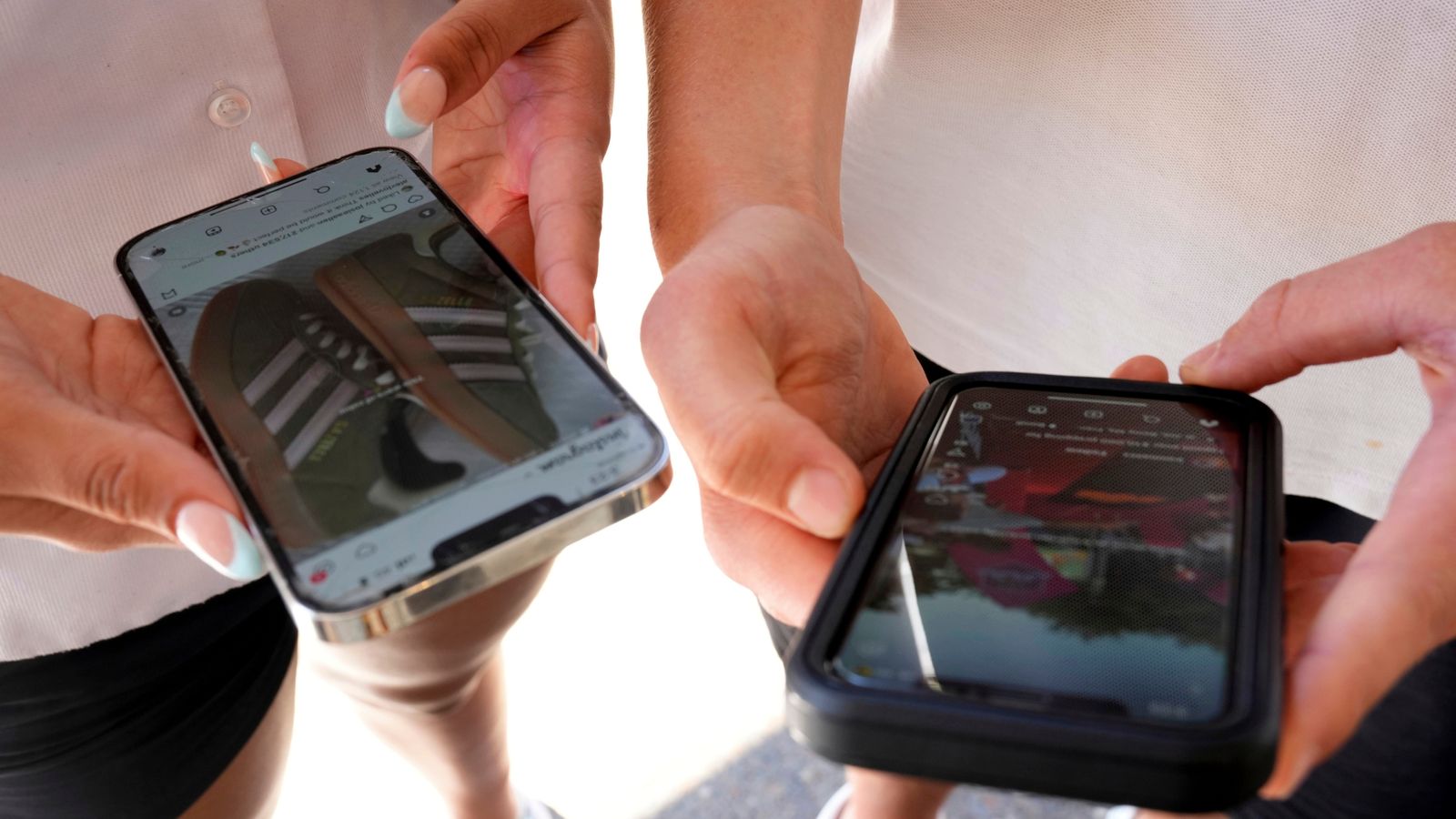
Some 85% of under-16s are still using social media in Australia despite a ban being put in place in December, a major new study suggests.
Not only were the vast majority of underage users still on social media, there was little difference in the amount of time they spent on it, according to research published in The BMJ.
Daily social media use stayed the same among 12-13 year olds, reduced from 78% to 69% in 14-15 year olds, and increased by 9% in those aged over 16.
The research suggests that Australia’s world-first social media ban has not made “any meaningful difference to how long teenagers spend using high-risk sites”, according to Andy Burrows, chief executive of the Molly Rose Foundation.
One of the central requirements of the ban was that social media companies take “reasonable steps” to remove underage users from their platforms.
However, the researchers at the University of Newcastle, Australia, found that between 54 and 68% of the underage users were still using their own accounts, and 66% of them had even been asked to verify their ages by the platforms.
One of the concerns around introducing bans like this was that young people would get around them using VPNs, as seemed to be the case last July when the UK started enforcing age verification on adult content.
That doesn’t seem to have happened, however, with VPN use “rarely reported” to the researchers.
Instead, the most common way for teenagers to circumvent restrictions, aside from continuing to use their own account, was by using someone else’s account or a new account with a fake age.
There had already been some research suggesting Australia’s ban wasn’t as effective as hoped.
Three months after the ban came into force, 7 in 10 parents told the country’s eSafety commissioner that their underage child still had a social media account.
Sky News recently asked the online safety minister why the UK was following Australia’s example by introducing a social media ban when the evidence suggested it didn’t work.
Kanishka Narayan MP said the UK government will “go further” in what it requires from platforms, asking for “highly effective age assurance” rather than just “reasonable steps” being taken by companies.
That could look like the kind of age verification used in the UK currently to stop children accessing adult content online, or it could be in the form of device-level verification, which the researchers in this latest study suggest “may be needed” to make bans more effective.
Writing separately in The BMJ, Louise Holly, policy and research coordinator at the University of Geneva, called the latest research findings “worrying”.
“[The research] should make other countries considering blanket restrictions on children’s social media use pause for thought,” she argued.
However, Ms Holly pointed out that “these findings should not be interpreted as a failure of children’s compliance”.
She said: “The law was not designed to change the habits of children, but the practices of selected social media platforms.”
The fact that the platforms have not effectively implemented the ban is the cause for concern, she argued – not the fact that children continued to use them.



