


















For almost an hour, Cristiano Ronaldo looked as frustrated in Toronto as he has at any point during this World Cup.
Croatia crowded him out of the contest; his movement rarely found the pass he wanted, and the chances that did come his way ended either inches wide or with the offside flag raised. Portugal’s captain managed only 17 touches in the first half and, despite his side dominating possession and territory, failed to register a shot from open play or a single touch inside Croatia’s penalty area.
And yet, by full-time, he had finally achieved something he had spent two decades chasing.
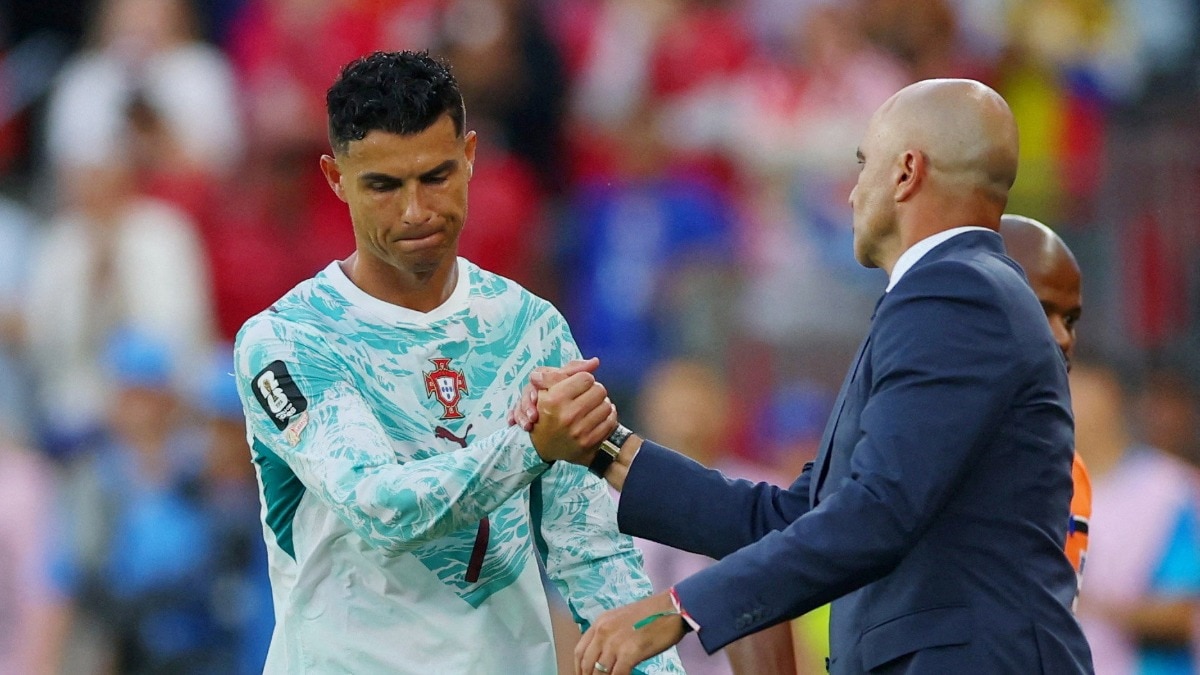
Ronaldo’s calmly taken penalty helped Portugal overturn a deficit to beat Croatia 2-1 and, more importantly for him, erased the only remaining gap on his extraordinary World Cup run.
But while the 41-year-old finally ticked off the last statistical milestone that had eluded him, Portugal left Toronto with another conversation entirely.
Goncalo Ramos’ match-winning header and Roberto Martinez’s willingness to substitute his captain have suddenly made the build-up to a Round of 16 meeting with Spain far more intriguing than it looked a few hours earlier.
This is not necessarily a debate about whether Ronaldo should start. It is a debate about what gives Portugal their best chance against one of the strongest opponents left in the tournament.
THE GAME NEVER FOUND RONALDO
Portugal probably played some of their best football of the World Cup in the first half without ever really bringing Ronaldo into it.
Rafael Leao was relentless down the left, Pedro Neto constantly stretched Croatia’s defence and Bruno Fernandes repeatedly found space between the lines. Portugal created opportunities, but they rarely arrived in the areas Ronaldo wanted them.
A Neto cross drifted inches beyond his diving header. Another teasing delivery flashed across the six-yard box untouched. A trademark free-kick struck the wall before an offside flag denied what looked like his breakthrough.
Croatia deserved enormous credit for that.
Marin Pongracic and Josip Sutalo squeezed every yard around Ronaldo, while Luka Modric and Mateo Kovacic kept Portugal building through wide areas instead of feeding their captain through the middle.
The game was unfolding around Ronaldo rather than through him, a sign of age and time passing for a player who has spent two decades being the centre of almost every Portugal attack.
The numbers reflected it. Ronaldo completed 19 of his 20 passes but created no chances, attempted no dribbles and finished with only one shot across 81 minutes, the penalty itself.
RONALDO’S 1ST WORLD CUP KNOCKOUT GOAL
Portugal’s equaliser arrived after Renato Veiga was pulled down inside the box during a corner, with VAR eventually awarding the penalty after a lengthy review. And from the moment of the decision to the time when the cameras cut to the 12-yard spot, there existed no doubt in the whole world about who would take it.
Ronaldo drove the penalty straight down the middle, scoring his 11th World Cup goal and, finally, his first in the knockout stages. A moment that had somehow escaped him across six tournaments despite everything else he had achieved in international football.
The goal changed the mood around the stadium, but it did not immediately change the pattern of the game.
Martinez’s quadruple attacking substitution after Ivan Perisic had put Croatia ahead left Portugal alarmingly open through midfield. Kovacic repeatedly drove into huge spaces, struck the post and forced Diogo Costa into another outstanding save as Croatia looked the more dangerous side.
With nine minutes remaining, Ronaldo’s number was up.
The Portugal coach introduced Rben Neves, sacrificing his captain for greater control in midfield. Ronaldo did not hide his frustration, but the substitution was probably first real right decision from the manager in this World Cup.
Portugal needed another midfielder far more than they needed another forward.
Martinez made THE big call.
Fortunately for him, it worked.
ENTER: SUPER SUB RAMOS
Neves helped restore balance, Portugal regained control and then came the decisive moment.
Leao, Portugal’s brightest attacker throughout the evening, floated a cross towards the far post where Goncalo Ramos rose above two Croatian defenders to head home the winner with virtually his first meaningful involvement.
Ronaldo was the first player off the bench to celebrate with him.
It was a fitting image. One striker had finally completed his World Cup story. The other had just ensured it would continue.
Ramos’ contribution should not automatically turn this into a baseless Ronaldo-versus-Ramos debate. The two offer completely different qualities.
Ronaldo remains the biggest presence in this Portugal side. His movement inside the box, composure in decisive moments and sheer aura continue to make him a player opponents must account for.
Ramos, meanwhile, brings something different.
He presses relentlessly, stretches defensive lines with his running and gives Portugal greater mobility without the ball. Against Croatia, he needed only one genuine chance to show why Martinez continues to trust him.
That difference suddenly matters a lot more with Spain waiting.
SPAIN POSES A DIFFERENT TEST
Croatia exposed a weakness Portugal cannot afford to carry into the Round of 16.
Once Martinez chased the game by flooding the pitch with attackers, Portugal lost complete control of midfield. Kovacic repeatedly burst through the centre, Perisic found space to create from wide areas and Croatia thought they had forced extra time on three separate occasions before VAR denied them each time.
Spain are unlikely to be so forgiving.
Luis de la Fuente’s side have looked the most balanced team at this World Cup, next to France of course.
The tiki-taka show of controlling matches through midfield before squeezing opponents without the ball. If Croatia could create those spaces, Spain will believe they can exploit them even more ruthlessly.
That is why the biggest question before the Round of 16 is not simply whether Ronaldo starts.
It is whether Martinez prioritises experience or balance.
He has already shown against Croatia that sentiment will not dictate his decisions. Substituting Ronaldo with the game hanging in the balance required conviction, although we have seen very little of that from either the boss or the team.
Whether he goes a step further against Spain is a different question, but Ramos’ winner has at least shown him the unavoidable existence of an option.
Ramos has not displaced Ronaldo with one header, nor should one performance erase everything the captain still offers.
But against a Spain side that, on paper, seem one of the favourites for the tournament, Martinez now has a tactical decision that did not feel quite as complicated before Croatia.
FIFA World Cup | FIFA World Cup Schedule | FIFA World Cup Points Table | Football News
– Ends