
















As we were waiting to be let into the Boloria show, there was a single butterfly dancing over the garden of the Lycée Carnot in Paris. It flitted away two or three times, but kept coming back, apparently flying higher each time to catch the sunshine.
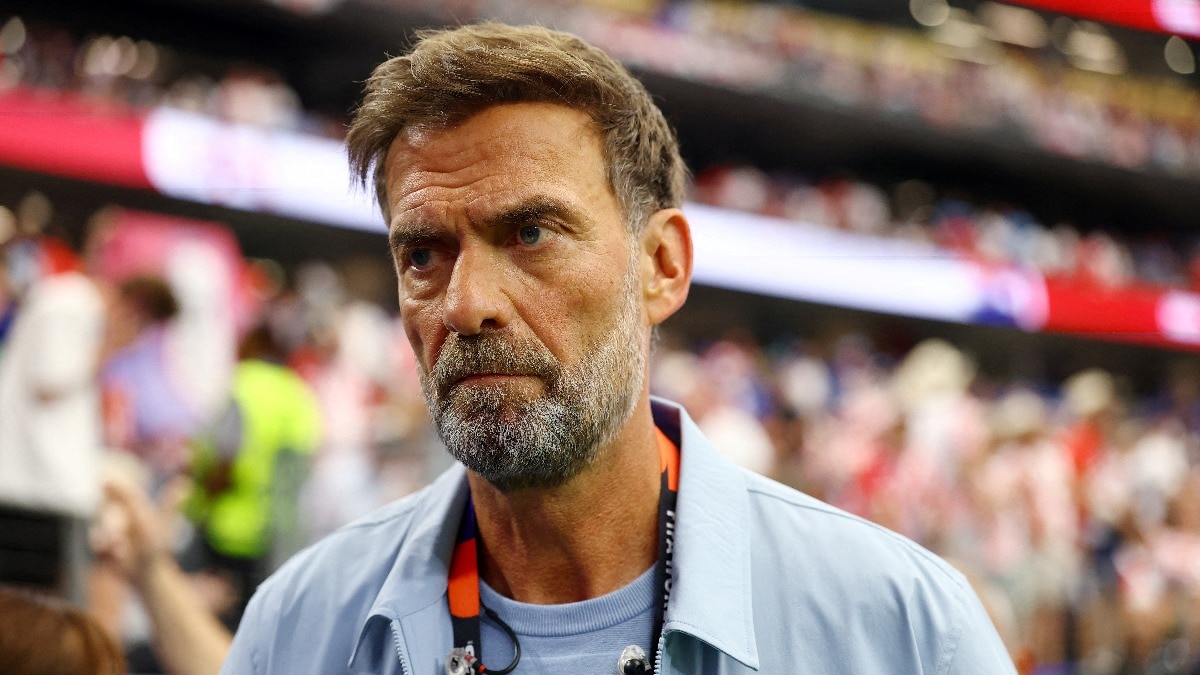
Olivier Theskeyns couldn’t possibly have contrived that as a prelude to his debut Boloria show, but the synchronicity was spookily apt. The brand is named after a butterfly which was identified in 1899. Also: ever since Theyskens emerged as a dazzling dropout from La Cambre school in Brussels 1998, his career has seen him serially alight at Rochas, Nina Ricci, Theory, and Azzaro. His true habitat, though, is known to be the particular gothic-poetic corner of Belgian aesthetics Theyskens made up for himself.
The Boloria show plunged us fully back into that state of night-tinged romance, with huge dresses and wraith-like bias-cut slips trailing tendrilly scarves. “The big gowns were allegories of vastness and space and emotion,” Theyskens related. “Like a dream that is going beyond every dimension—and then you wake up and you are in the reality of life.” Gigantic-skirted, tiny-waisted black and midnight blue taffeta ball gowns swept along, showing that their panniers were only a frontal frame—a semi-illusion—as they passed. Tulle bustiers were bound like bandages. A dark blue dress had a deep-sea whirlpool of a skirt with a shoal of silver fish caught in it.
After the opening dresses—which will be made to order—came the ‘waking’ day clothes. Men and women with their suits, shirts, and ties slightly skew-whiff, trousers tucked into socks as if in haste. “I always figured that these looks were like (they) were about to leave their apartment, but that it will be very unsure; are they in the ’30s, the ’20s, the ’40s, the ’70s?” The stygian color gave way to pale stone and khaki, wardrobes of well-tailored classic men’s overcoats, raincoats, and shiny leather pants. Bias-cut slip dresses came and went in many forms. Tailoring for women took a brilliant turn when three skirt suits appeared, long columnar skirts—in tweed or white lace each matched with a collarless jacket and a high-neck blouse.
With their tousled hair and ‘undone’ makeup the models were living throwbacks to the Belgian look that shifted fashion towards a cool street elegance in the 1990s.
Theyskens said he was consciously celebrating that psychology, the way of life that emanated from Antwerp, and in his own case, Brussels. “Like a Belgian milieu, somehow familiar, from which so many artists emerged, and a philosophy, a sense of things.”
He was right: without directly quoting, the spirit of the show somehow awoke memories of the great days of Ann Demeulemeester, Veronique Branquinho, even early Haider Ackermann. But perhaps that’s just because everyone was drinking from the same pool of cultural references and attitudes at the same time. “I grew up there. I think of my parents. I think of the Flemish flat lands. I think about Brussels. I think about a sense of the royalty. There is a certain bourgeoisie that is very different from the French bourgeoisie,” Theyskens tried to explain, though he’s more interested in anonymously-made, ordinary clothes in museums, he said (Momu in Antwerp excels in that).
But what exactly is Boloria? It turns out to be backed by the Belgian Tomorrowland festival group, which has spin-offs all over the world. Theyskens has a studio in their headquarters in Antwerp. “It’s a very creative environment, very modern, very forward-looking, very ambitious in terms of, like, let’s do it!” he said. Quietly, he is also continuing his own-name business too, making one-offs for private clients.
His coming out with a big show in Paris on the eve of the couture shows made a welcome comeback for a major talent. “I thought the brand should be evocative of something, and also we should deliver a message of freedom and independence,” he said. “Showing our spirits, showing something that is poetic, that we believe in. What we love, that excites us.”





