




















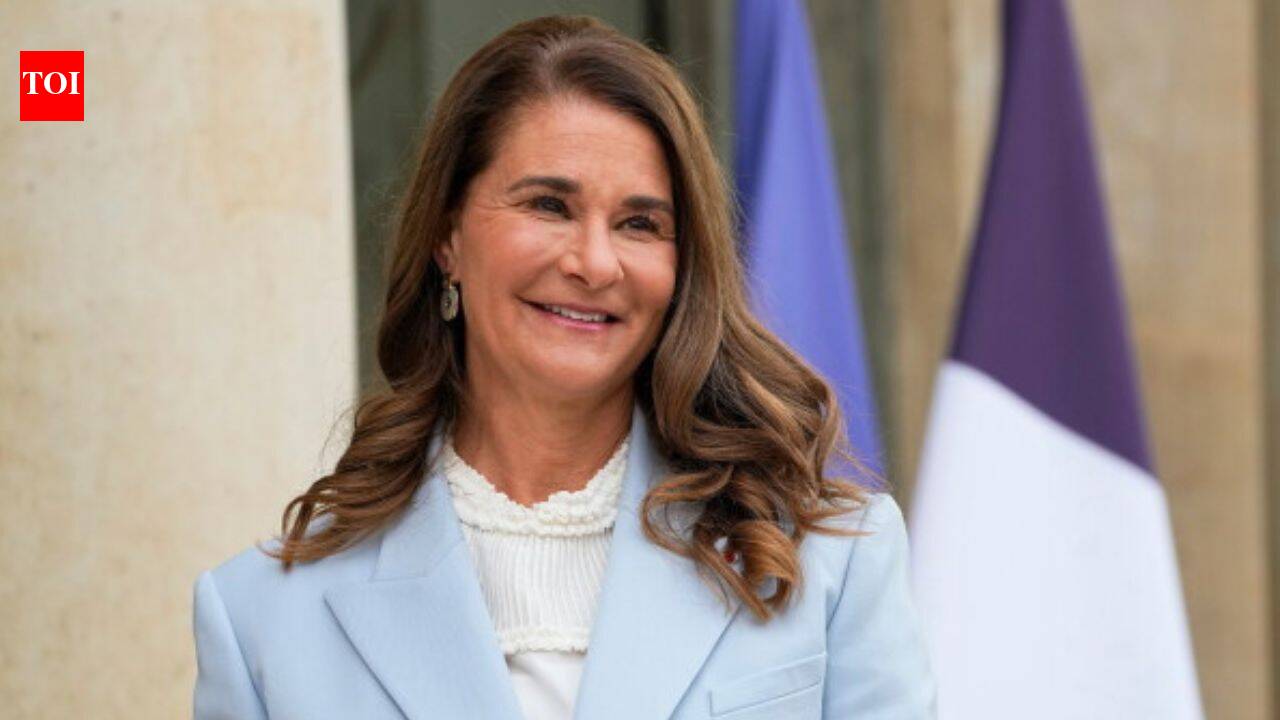

Handing away money you were never going to spend anyway is easy to praise and, according to the person doing it, not actually all that impressive. Melinda French Gates, one of the most prominent philanthropists in the world, said exactly that about her own giving. “It’s important to acknowledge that giving away money your family will never need is not an especially noble act,” she wrote. “The real standard for generosity is set by the people who give even when it means going without.” Coming from someone with a personal fortune in the billions, the line reads less like false modesty and more like an honest correction aimed at how the word generosity usually gets applied to people like her.
Quote of the day by Melinda French Gates
“It’s important to acknowledge that giving away money your family will never need is not an especially noble act.”
Who is Melinda French Gates
French Gates co-founded the Gates Foundation with her then husband Bill Gates in 2000, and helped establish the Giving Pledge a decade later, a commitment among some of the world’s wealthiest people to give away the majority of their fortunes. This quote comes from a letter she published in November 2021, reaffirming her commitment to the pledge following her divorce from Bill Gates earlier that year.In the same letter, she described the concentration of so much wealth in one person’s hands as an absurdity, and stated that the only responsible response to a fortune of that size was to give it away as thoughtfully as possible. Her philanthropic focus in recent years, largely through her firm Pivotal, has centred on advancing opportunities for women and families in the United States and internationally.The letter marked a notable shift from her earlier commitment. When she and Bill Gates first signed the Giving Pledge in 2010, the promise was tied specifically to the Gates Foundation the two had built together. Following their divorce, French Gates’s reaffirmed pledge no longer named the foundation as the sole destination for her giving, opening the door to a broader, more independent philanthropic path built around causes she has chosen to prioritise on her own terms.
What is the meaning of the quote by Melinda French Gates
French Gates is drawing a distinction between two things that often get treated as the same: the size of a donation and the actual sacrifice behind it. Giving away money that would otherwise sit unused costs the giver very little in any practical sense. Their standard of living does not change. Nothing they need goes unmet.The comparison she draws is with people who give despite having far less to spare, where the donation genuinely reduces what they have available for themselves. In her framing, that second kind of giving reflects a higher standard of generosity, because it involves an actual cost the first kind does not. Scale and sacrifice, in other words, are not the same measurement, and only one of them tells you much about character.
Why this quote is especially relevant today
Billionaire philanthropy has faced growing public scrutiny in recent years, with critics questioning whether enormous, headline-generating donations meaningfully offset the scale of wealth concentrated at the very top. French Gates’s quote reads as a response to that scrutiny from inside the world of major philanthropy rather than from its critics.Her Giving Pledge colleague MacKenzie Scott made a strikingly similar point in her own public writing around the same period, arguing that the label “philanthropist” too often centred wealthy donors rather than the people actually doing the harder, more constrained giving. The two women, both prominent figures in modern philanthropy, arrived independently at the same uncomfortable observation about their own position.
Why sacrifice is a better measure of generosity than scale
A large donation from a large fortune requires very little of the giver beyond the decision to make it. A modest donation from someone with limited means requires an actual trade-off, something else that will now go without. French Gates is arguing that this trade-off, not the number attached to the gift, is the real test of generosity.This standard is uncomfortable precisely because it is harder to meet. It is far easier to write a large cheque from surplus wealth than to give up something genuinely needed. French Gates’s own honesty about which category her giving falls into is part of what makes the quote land as self-aware rather than self-congratulatory.
How to apply the quote in daily life
You do not need billions of dollars to apply this standard. The relevant question, at any scale, is whether a given act of generosity, time, money, effort, actually costs you something, or whether it comes entirely from genuine surplus you were never going to use regardless.A useful habit is to notice the difference between giving that changes nothing about your own week and giving that requires an actual adjustment, skipping something, rearranging a schedule, going without something you would otherwise have kept. Both forms of giving have value. Only one of them meets the higher bar French Gates is describing.
What the quote teaches about philanthropy
The quote pushes back against a tendency to measure philanthropic impact purely by the size of the number involved. A single, enormous donation can generate headlines without costing the donor anything they will notice. A modest, sacrificial gift rarely makes the news, despite representing a far greater personal commitment relative to what the giver actually has.This reframes what philanthropy should be judged on. Not simply how much moved from one account to another, but what that movement actually required of the person making it, a standard that is considerably harder to apply consistently, since it depends on knowing something about the giver’s circumstances rather than only the size of the gift itself.
The difference between giving from abundance and giving from need
Giving from abundance means parting with resources you were never going to use, at no real cost to your own life. Giving from need means parting with resources you could have used, at a real and immediate cost. Both are acts of generosity in the broadest sense, but French Gates’s quote insists they are not equivalent.The distinction matters because it changes who gets treated as the standard-bearer for generosity. Headlines tend to go to abundance-based giving because the numbers are larger and more dramatic. French Gates’s quote redirects attention to the second category, arguing that it deserves to be recognised as the more demanding, more genuinely generous act, even when it never makes the news.
Some other famous quotes by Melinda French Gates
- “A woman with a voice is, by definition, a strong woman.”
- “No matter what your cause, you have to be a diplomat.”
- “Philanthropy is not about the money. It’s about using whatever resources you have at your fingertips and applying them to problems that the world needs solved.”
- “I recognize the absurdity of so much wealth being concentrated in the hands of one person.”
The powerful idea behind Melinda French Gates’s message
French Gates was not describing an easy standard, and she applied it first to herself rather than only to others in her position. Real generosity, in her account, is measured by what it actually costs the giver, not by how large the number looks from the outside. That standard leaves very little room for large donors, herself included, to claim more credit than the sacrifice behind their giving actually earns.