






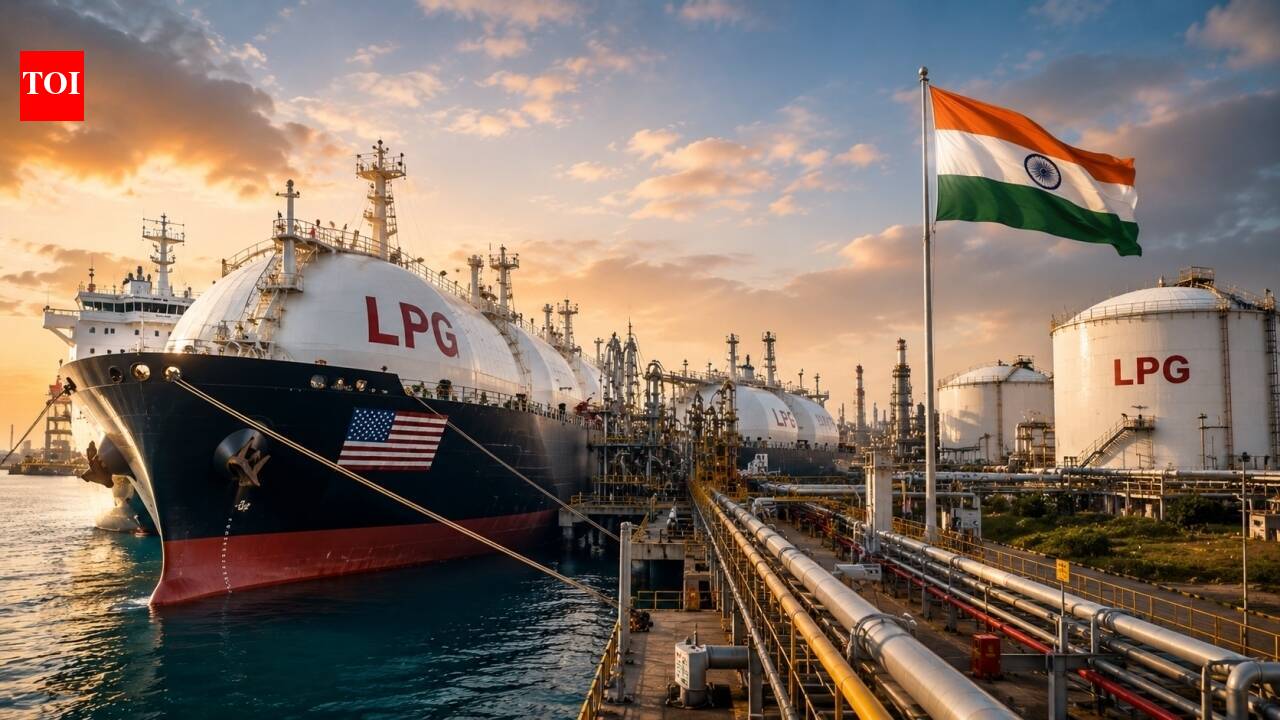














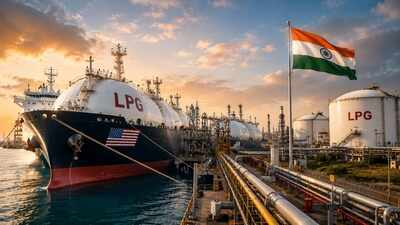
US-Iran war impact: India is actively looking to diversify the sources of its Liquified Petroleum Gas (LPG) supply and the US has emerged as the biggest supplier in the months since the Middle East conflict began. India is heavily dependent on the Middle East for its LPG supplies and the Strait of Hormuz closure since March hit the cooking gas imports more than crude oil procurement.Energy imports from the US have gained importance, particularly following the West Asia conflict, helping reduce the trade imbalance between the two countries. Besides the US, India has also sourced LPG from Argentina, Nigeria and Malaysia.Oil marketing companies are now planning to increase LPG imports from the United States beyond the current level of about 2.2 million tonnes annually, as they look to further diversify sourcing and reduce their reliance on supplies from the Gulf.Also Read | Oil slips to pre-Iran war levels: Is a petrol, diesel price cut coming?How will supplies from the US help India’s energy security? Can the US replace Gulf supplies substantially? Let’s dive in:
LPG Contract With US
TOI has reported that the contracted volume could be doubled. In addition to the US, oil companies are also evaluating alternative sourcing destinations, including Algeria.In November 2025, India signed a one-year structured agreement with the US to import nearly 10% of its annual LPG requirement during the 2026 contract year. However, during the West Asia conflict, the US emerged as one of India’s largest LPG suppliers, providing crucial support after shipments from the Gulf were disrupted.“During the conflict, we were not concerned about crude oil availability, but LPG supplies were a significant challenge. There are only a handful of LPG-producing countries outside the Gulf, so we had to identify alternative sources. We were able to secure supplies from the US, which helped meet our requirements during the crisis,” a senior oil company executive told TOI.“The US has considerable additional LPG export capacity, making it an attractive source for diversifying our import basket,” the executive said.
US Emerges As Key LPG Supplier
Data from Kpler, global real-time data and analytics provider shows that India’s LPG imports from America have grown substantially since the US-Iran war began. After a marginal dip in April, the supplies have steadily climbed. Compared to the levels seen in February, there is an almost 145% rise in the June numbers.In the meantime, supplies from the Middle East countries – UAE, Saudi Arabia, Qatar have plunged. At one time UAE was India’s largest supplier of LPG, which has come down drastically with the Strait of Hormuz closure.According to Kpler data, less than 8% of India’s imported LPG came from the US in 2025. After the structured supply agreement took effect, the US share rose to nearly 12% in January and 13% in February. It then climbed sharply to 37% in March after the war began and cargoes from West Asia stopped moving through the Strait of Hormuz. The US contribution increased further to 40% in April, 55% in May and 65% in June.Also Read | Hormuz oil shock sends India back to Russia: Is this a peak or the new normal?
How Much Reliance on the Gulf Can Be Cut?
Increasing purchases from the US would not only diversify India’s LPG import basket and reduce dependence on Gulf suppliers but also strengthen the country’s preparedness for future supply disruptions. But how much can US supplies help substitute LPG from the Middle East?Nikhil Dubey, Lead analyst at Kpler says that while supplies from the US are likely to go up as part of India’s diversification strategy, reliance on supplies from the Middle East will continue.“Before the conflict, the Middle East supplied around 90% of India’s LPG imports. That has come down due to the Strait of Hormuz closure, but is unlikely to go away meaningfully,” he tells TOI.“Cargoes from the US have longer transit times, hence adding to costs. But the US will likely emerge as a key supplier with regards to India’s strategy to reduce dependence,” he adds.In May, the petroleum ministry directed oil marketing companies to formulate a plan for building a 30-day strategic LPG reserve, and expanding imports from the US, along with sourcing from other countries, could help achieve that objective.The proposed 30-day strategic LPG reserve will be created over and above the existing 45-day rolling inventory that oil marketing companies maintain to cater to demand for both domestic and commercial LPG cylinders.



 supply and the US has emerged as the bigge.)