


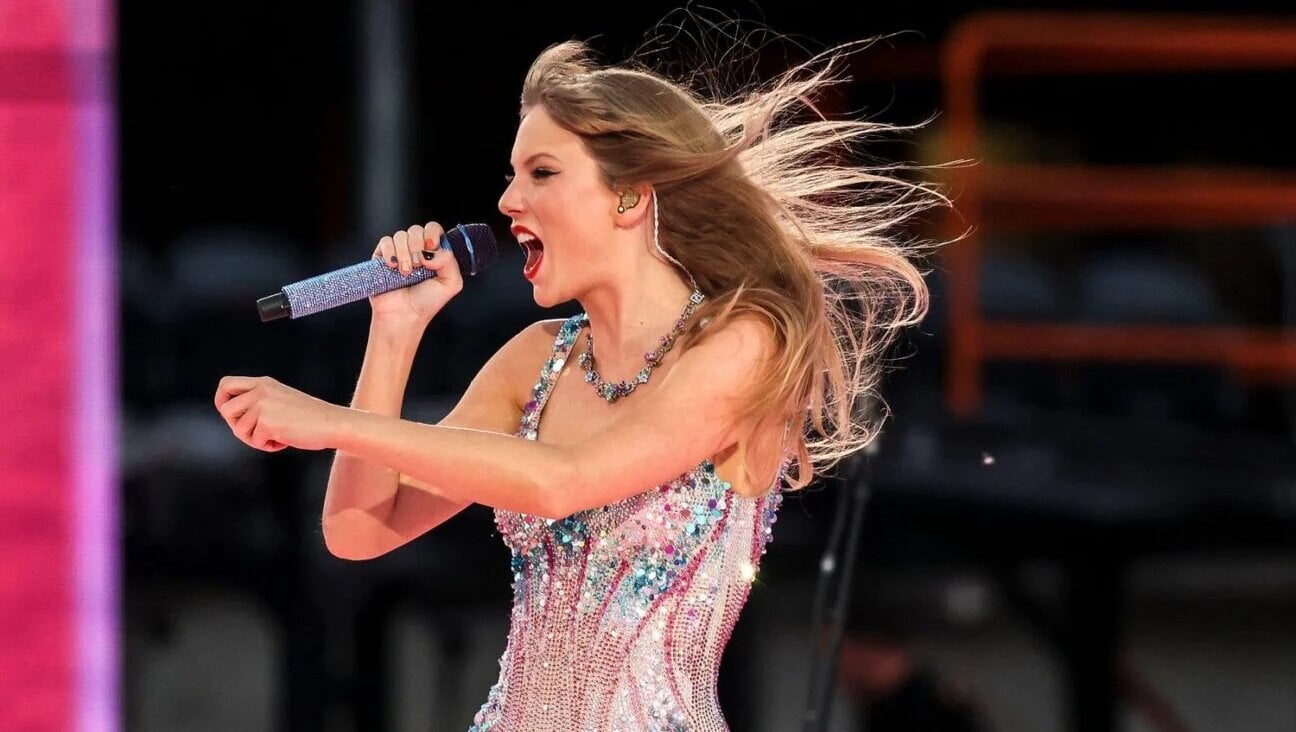
Taylor Swift has won the dismissal of a copyright lawsuit that accused her of copying a poet’s work in more than a dozen of her songs.
A federal judge in Florida threw out the case brought by Kimberly Marasco on Monday (July 6), ruling that the poems she says were copied do not contain expression that copyright law protects.
US District Judge Aileen Cannon dismissed the case with prejudice, which means Marasco cannot refile it. Marasco has said she intends to appeal.
In her ruling, first reported by Billboard, Cannon found that the only overlaps between Marasco’s poems and Swift’s songs were generic words, basic ideas such as the concept of gaslighting, and common metaphors.
“These are quintessential themes, concepts, and isolated words – exactly the kind of material copyright law does not protect,” Cannon wrote, according to the decision.
You can read the ruling in full here.
“These are quintessential themes, concepts, and isolated words – exactly the kind of material copyright law does not protect.”
Aileen Cannon, US District Judge
Marasco had claimed Swift copied her poems in tracks including The Man, My Tears Ricochet and I Can Do It With a Broken Heart, spread across five albums: Lover, Folklore, Evermore, Midnights, and The Tortured Poets Department.
Her filings pointed to shared metaphors, ideas and words rather than copied melodies, with Marasco mapping individual poems onto individual songs.
She claimed Swift’s The Man reused the metaphors in her poem Ordinary Citizen, with both describing a woman wronged by a patriarchal corporate system.
She alleged that Midnight Rain took a metaphor from a poem called Whirlwind, and that Who’s Afraid of Little Old Me? used a phrase from one she had titled Gaslight – gaslighting being the concept Cannon would cite as an idea no one can own.
Marasco, who is representing herself, first sued Swift in 2024 and filed a second complaint in February 2025 while the original case was still pending.
After a prolonged fight to serve the singer with papers, the first case was dismissed in September 2025, with Cannon ruling that the material Marasco pointed to wasn’t protectable expression.
The second complaint sought damages of no less than USD $25 million.
The second suit widened the net to include Universal Music Group, Republic Records and Swift collaborators Jack Antonoff and Aaron Dessner, though both were gone before the ruling: Marasco voluntarily dropped Antonoff, and Cannon dismissed Dessner over improper service.
Marasco was not the first poet to take Swift to court. In 2022, Teresa La Dart claimed the companion book to Swift’s album Lover copied elements of her own 2010 poetry collection, also titled Lover, before dropping the case in 2023.
Lawyers for Swift and Universal Music Group asked the court to end Kimberly Marasco’s complaint in a motion filed in December, calling it a “frivolous and harassing lawsuit.”
“Plaintiff’s claims are, as in her last lawsuit, absurd and legally baseless,” Swift’s longtime attorney Douglas Baldridge wrote in the filing.
The motion argued that a court had already told Marasco her allegedly infringed expressions were not protectable, and that words like “fire” or “love” cannot be owned by one person.
Cannon agreed, and refused to give Marasco another chance to reshape and refile her claims.
“Plaintiff has had ample opportunity to plead her claims,” Cannon wrote, adding that the shortcomings were “defects in the underlying works themselves, which consist of ideas, themes, metaphors, and isolated words that no amendment can transform into protectable expression.”
“I disagree with the decision and will be appealing it.”
Kimberly Marasco, plaintiff (via USA Today)
Marasco has vowed to fight on, telling USA Today: “I disagree with the decision and will be appealing it.”
The ruling in Swift’s case echoes a run of copyright battles in which pop songwriters have been accused of copying, only for courts to find the elements at issue were not protectable in the first place.
Ed Sheeran won a jury verdict in May 2023 clearing his single Thinking Out Loud of copying Marvin Gaye‘s Let’s Get It On, after his lawyers argued the two shared a chord progression that is a common building block of pop music.
Dua Lipa defeated a copyright suit over Levitating in March 2025, when a federal judge ruled the elements it shared with two older songs were not protectable, citing the Sheeran precedent.
In 2019, a Los Angeles jury found that Katy Perry‘s Dark Horse had infringed the Christian rap track Joyful Noise, ordering Perry, Capitol Records and her co-writers to pay $2.8 million.
That verdict was overturned the following year, when US District Judge Christina Snyder ruled that the eight-note musical phrase at the heart of the case was not protectable expression.
As Cannon put it in her order on Swift’s case, “none of Plaintiff’s twelve counts identifies any protected expression.”Music Business Worldwide



