


The French know how to do a national holiday. While Britain marks its big occasions with a flypast and an increasingly anxious conversation about the weather, Bastille Day comes with fireworks, wine and, inevitably, a very long dinner.
Held every 14 July, France’s fête nationale commemorates the storming of the Bastille in 1789, the uprising that helped ignite the French Revolution. You do not, however, need a working knowledge of revolutionary history – or even a tricolore – to join in. A bottle of something French and a willingness to use a slightly unreasonable amount of butter will do.
That is the approach at Bavette, the modern French bistro in Leeds co-founded by Sandy Jarvis and Clément Cousin, where Bastille Day has become an annual excuse to turn the Frenchness up another notch.
“Bastille Day is France’s most important holiday so it seemed right we honour and celebrate it here at Bavette,” says Jarvis. Guests are even encouraged to arrive in French fancy dress – a tradition that has apparently taught Cousin rather a lot about how the English imagine his countrymen.
But the real point, as with most good French celebrations, is the table. “As all good holidays, it’s a time for friends and family to get together, usually around the dinner table,” Jarvis says. “So if you’re not coming here, invite some friends around, open a couple of bottles and toast the ultimate French protest that turned into a revolution.”
Bavette has shared six recipes for doing exactly that. There is rich shellfish bisque and an elegant onion tart, monkfish with creamy Breton beans and a peach salad buried under ewe’s milk cheese. For a proper centrepiece, braised lamb shoulder comes with boulangère potatoes and salsa verde. Then, because restraint has no place in a French revolution, there is crème brûlée.
Vive la France – dinner is served.
Shellfish bisque
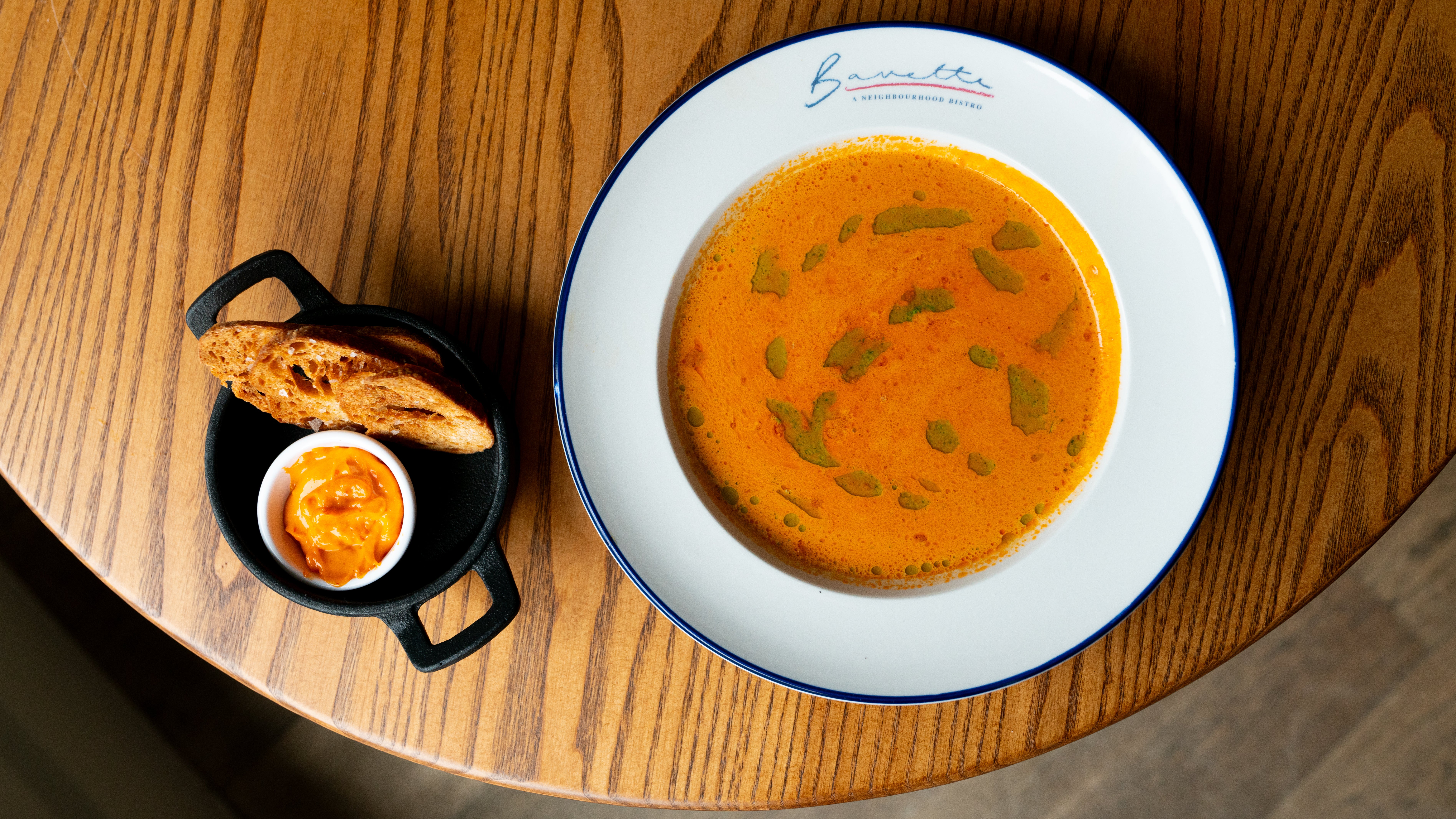
Deeply savoury and unapologetically rich, this classic French bisque makes the most of leftover langoustine or crab shells – no waste, maximum flavour. It’s luxurious enough to serve as a starter with warm bread but versatile enough to double up as a silky sauce for mussels or white fish. The trick is in the slow simmer and generous splash of cream, which gives it that unmistakably French decadence.
Serves: 8-10
Ingredients:
1kg shells of langoustine or crab
2 tbsp olive oil
2 onions diced
4 carrot cut into 1cm slices
1 fennel roughly chopped
1 bulb garlic in half
1 tbsp coriander seeds
1 tbsp fennel seeds
2 tbsp tomato puree
50ml brandy
1L double cream
Method:
1. Heat your oven to 180C.
2. Roast the langoustine or crab shells in the oven for 25 minutes.
3. Heat a large casserole pan and add 2 tablespoons of olive oil. Sweat the onions in the pan, then add the carrots and sweat further. Repeat with the fennel.
4. Add the garlic and seeds to toast, then add tomato puree and cook out for 2 minutes.
5. Add brandy and cook off the alcohol.
6. Cover with water and lightly simmer for 45 minutes, skimming off any scum or foam.
7. Pass through a sieve (you can get a stick blender in there to break things up if you like but it’s not necessary).
8. Reduce the stock until it’s rich and delicious.
9. Add an equal amount of cream.
10. Bring to the boil and let the flavours mix together for 5 minutes. Be careful not to reduce it too much – it should resemble the thickness of single cream.
Note: The stock is freezable before the cream is added.
Roast monkfish with beans in a cream and mushroom sauce
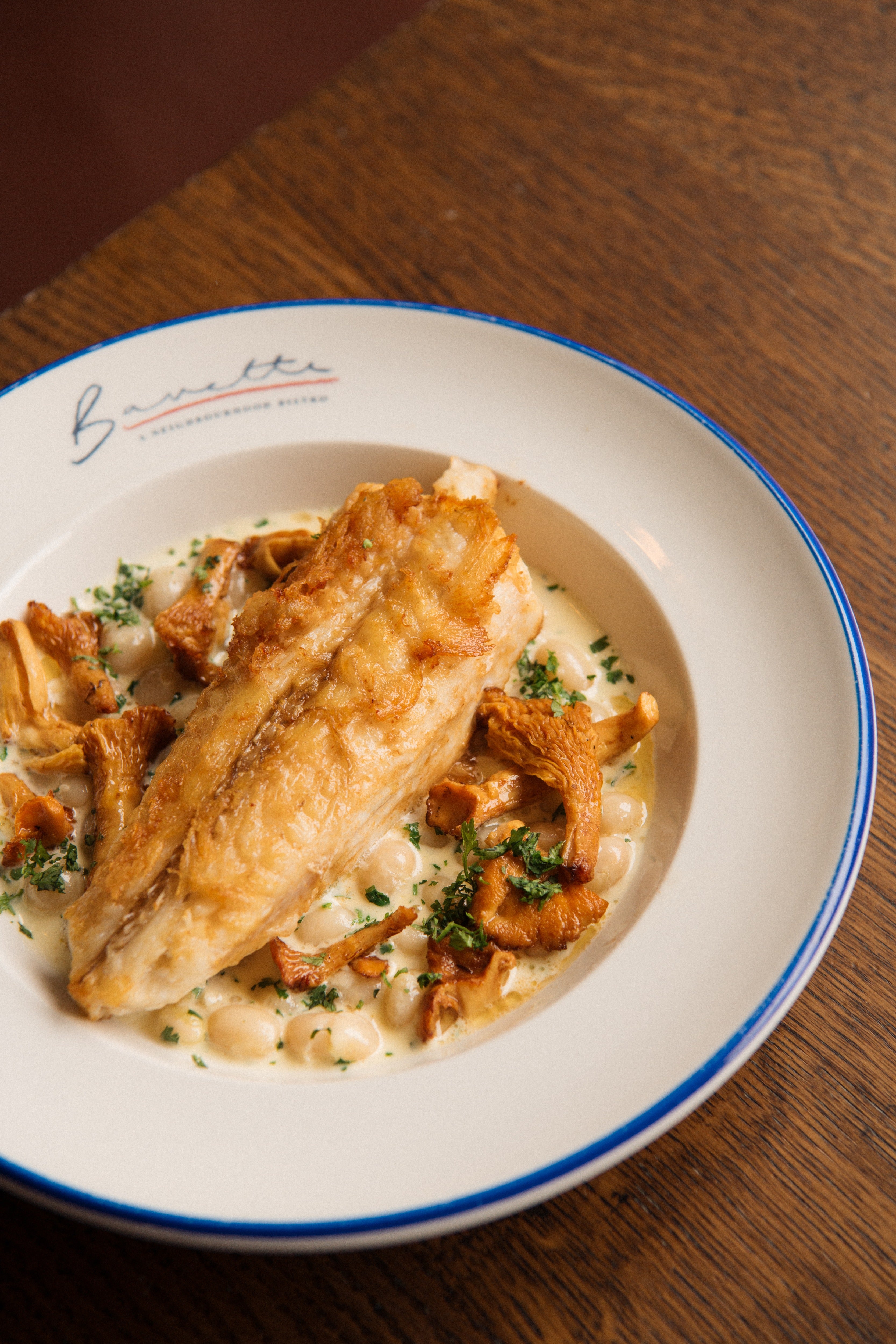
“Coco de Paimpol are a white bean grown in Brittany for over 100 years having been brought over from Latin America. They’re one of my favourite seasonal ingredients and I look forward to them coming round every year. This way of preparing them, in a cream sauce goes well with any light protein (fish, pork etc) or with a selection of roast vegetables.”
Serves: 4
Ingredients:
4 x 200g monkfish portion (or other white fish)
1kg Coco de Paimpol beans unpodded, yields around 350g podded beans
1L light chicken or vegetable stock
1L double cream
1 tbsp chopped tarragon
1 tbsp chopped chervil
Lemon juice
200g girolle mushrooms (other wild mushrooms or sliced button mushrooms will work too)
Method:
1. Pod the beans and cook then gently in stock with a little salt. You want them to still be slightly firm to bite but not chalky. Top up with water if the liquid reduced too much. Strain the beans, retaining the stock. Cover the beans with clingfilm to stop them splitting whilst they cool.
2. Reduce the stock to around 350ml. Add the cream and reduce to coating consistency.
3. Colour the monkfish in a pan and then in a 200C oven. The time will depend on the size and shape but it will be around 10 minutes. If you have a temperature probe you want an internal temperature of 55C and allow to rest for 10 minutes, this will finish the cooking gently without overcooking.
4. Sauté the mushrooms in a pan, add to the cream with the beans, a few drops of lemon and the herbs. Season if needed.
Onion tartlette with chicory
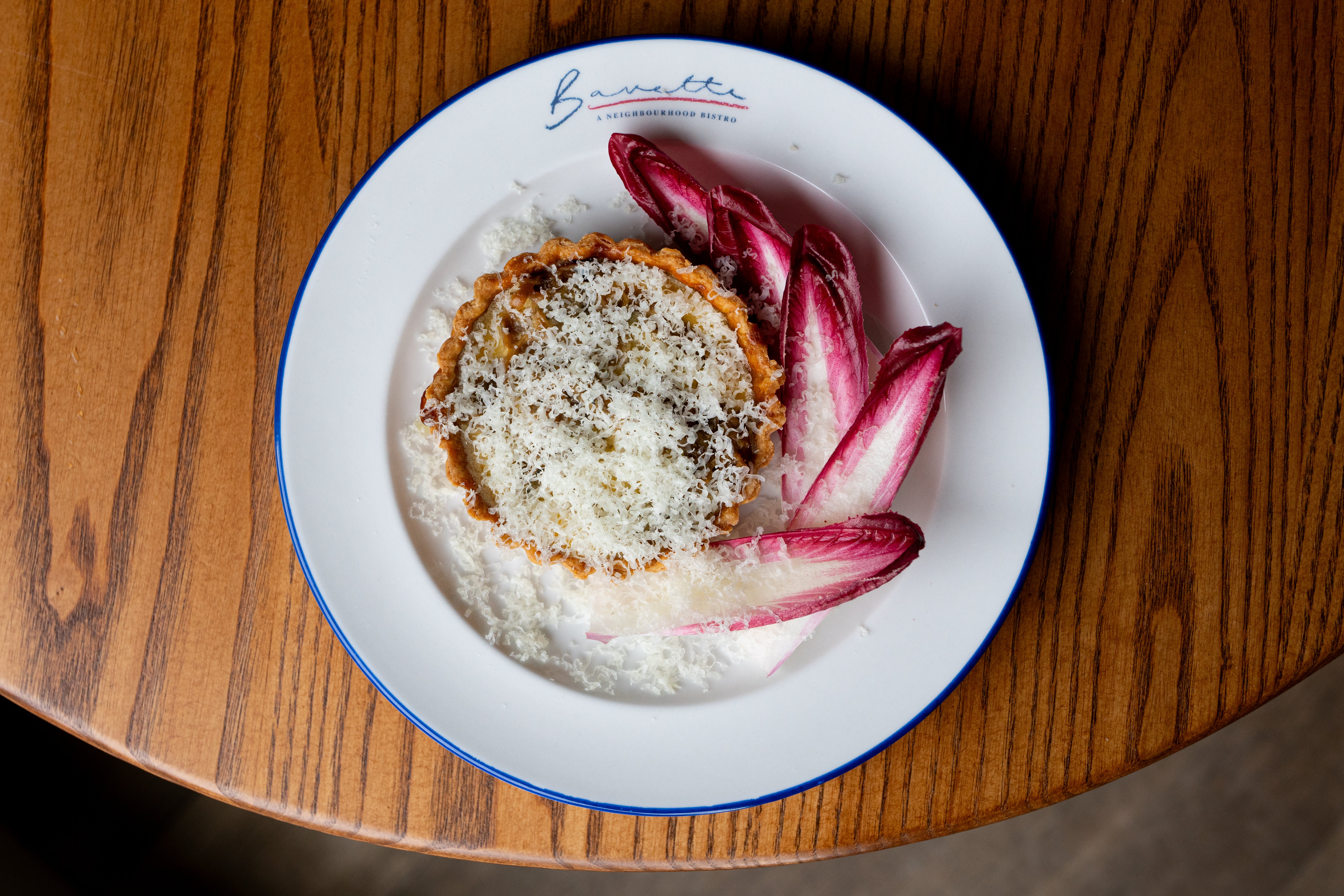
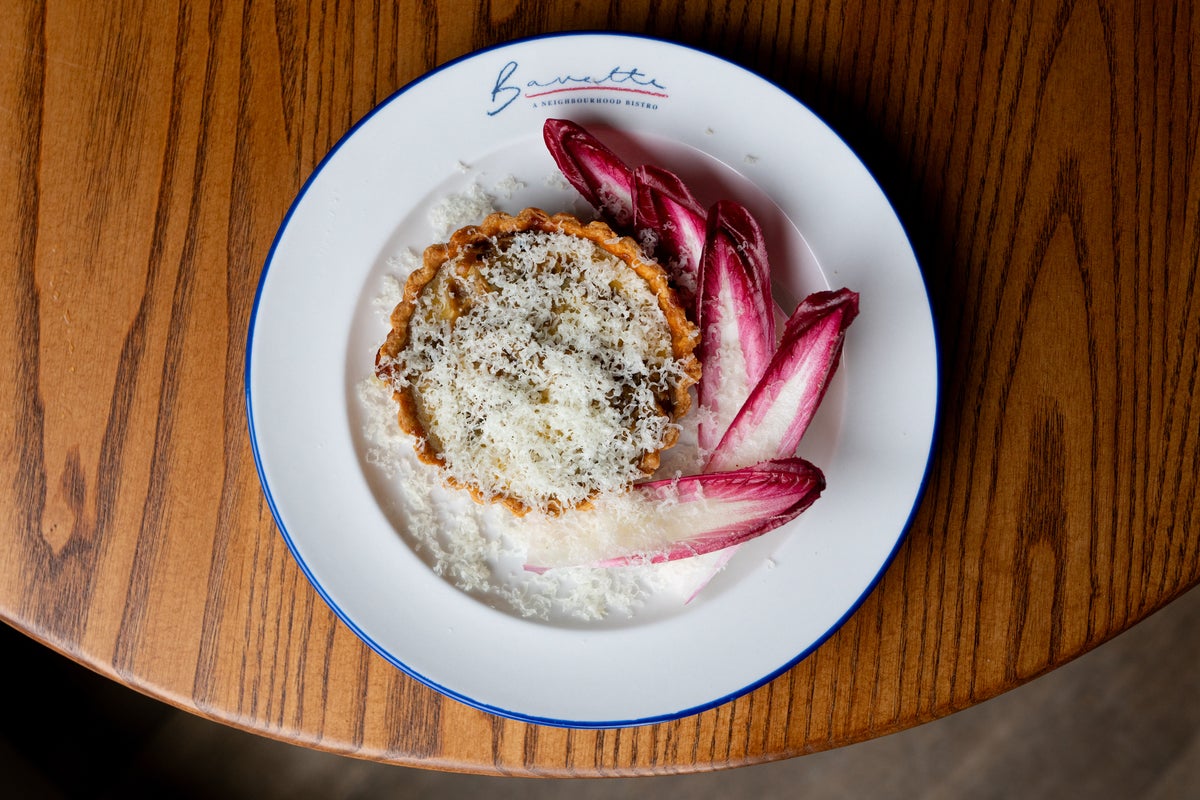
This is the sort of simple, elegant tart that French bistros do so well – buttery shortcrust pastry filled with slow-cooked onions and set in a savoury custard. The onions are gently sweated down until meltingly soft and sweet, offset by a hint of thyme. Served warm or cold with a bitter chicory salad and a good lick of mustard, it’s a love letter to French lunch tables.
Serves: 1 large tart (18cm ring) or 4 small tarts (6cm ring)
Ingredients:
For the shortcrust pastry:
300g plain flour
125g cold butter, diced
1 egg yolk
1 tbsp cold water
For the filling:
3 onions, sliced
6 sprigs thyme
75g butter
350ml d cream
2 yolks
1 egg
Method:
For the shortcrust pastry:
1. Mix the flour and butter, then add yolk and water. Bring together to form a dough, but don’t overwork it. Rest in the fridge in a flat round shape for 30 minutes.
2. When ready, roll out on well-floured work surface and line the party ring (reserve any extra pastry).
3. Blind bake (without the filling) for 30 minutes until the pastry is lightly coloured.
4. Fill any holes with the reserved pastry.
5. Egg wash and cook for 2 further minutes.
For the filling:
6. Sweat down onions very slowly in butter. Cook until soft and translucent. Add a splash of water if they colour before they’re soft. This should take 30 minutes.
7. Once soft, turn up the heat and add thyme.
8. Meanwhile, mix the cream and eggs. Add the cooked onion mixture into the cream and eggs and mix well.
9. Evenly fill the tart case with the filling mixture.
10. Cook in oven at 150C until there is light wobble on the filling, usually 25 minutes.
11. Allow to cool slightly.
12. Serve with a mustard-heavy salad or chicory.
Roast peach, endive, walnut and Ossau-Iraty salad
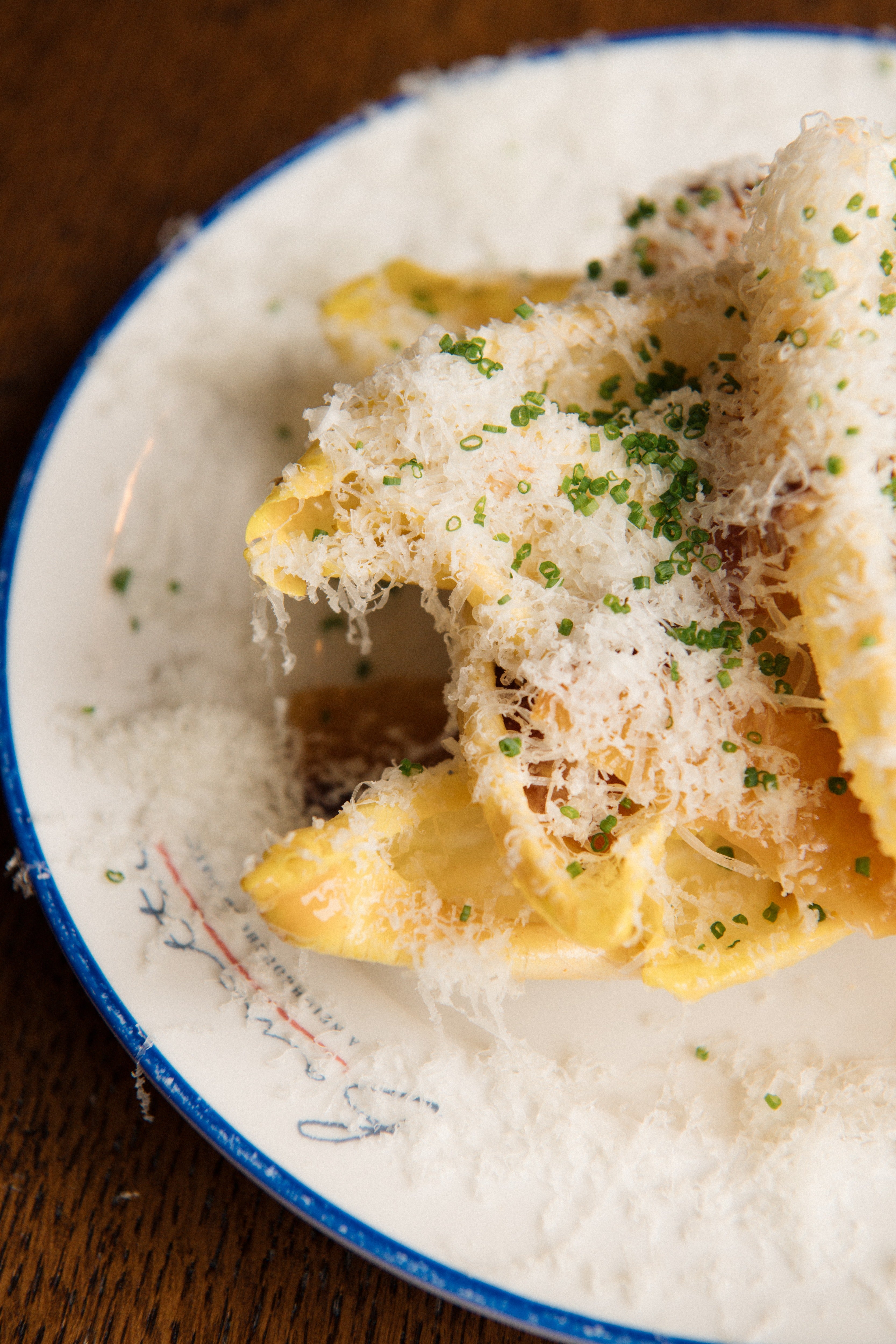
“I love the flavour and texture combination of sweet soft peaches, crisp salad, crunchy walnuts and salty ewe’s milk cheese. The dressing is a Thomas Keller recipe that I’ve used for years and absolutely love.”
Serves: 4
Ingredients:
4 slightly firm peaches
500ml olive oil
4 sprigs thyme
100g honey
2 heads endive or other crisp salad
100g Ossau-Iraty or other firm Ewe’s milk cheese.
50g walnuts
For the dressing:
50ml white wine vinegar
25g Dijon mustard
125ml vegetable oil
125ml walnut oil
1tbsp cider vinegar (or other sweet vinegar)
A few turns of black pepper
Method:
1. Half and destone the peaches. Roast in the oven with the olive oil, honey and thyme at 180C for 10 mins. Cool and cut into wedges
2. Break up and wash the salad.
3. For the dressing add all but oils to a food processor. Add the oils slowly to emulsify. If it seems a little loose, add a touch more Dijon to taste.
4. Dress the salad with the dressing. A good salad has consistent but light covering of dressing. Mix in the peaches and walnuts.
5. Arrange in oe gig plate or individual plates. Generously cover with finely grated cheese.
Braised lamb shoulder and boulangère potatoes
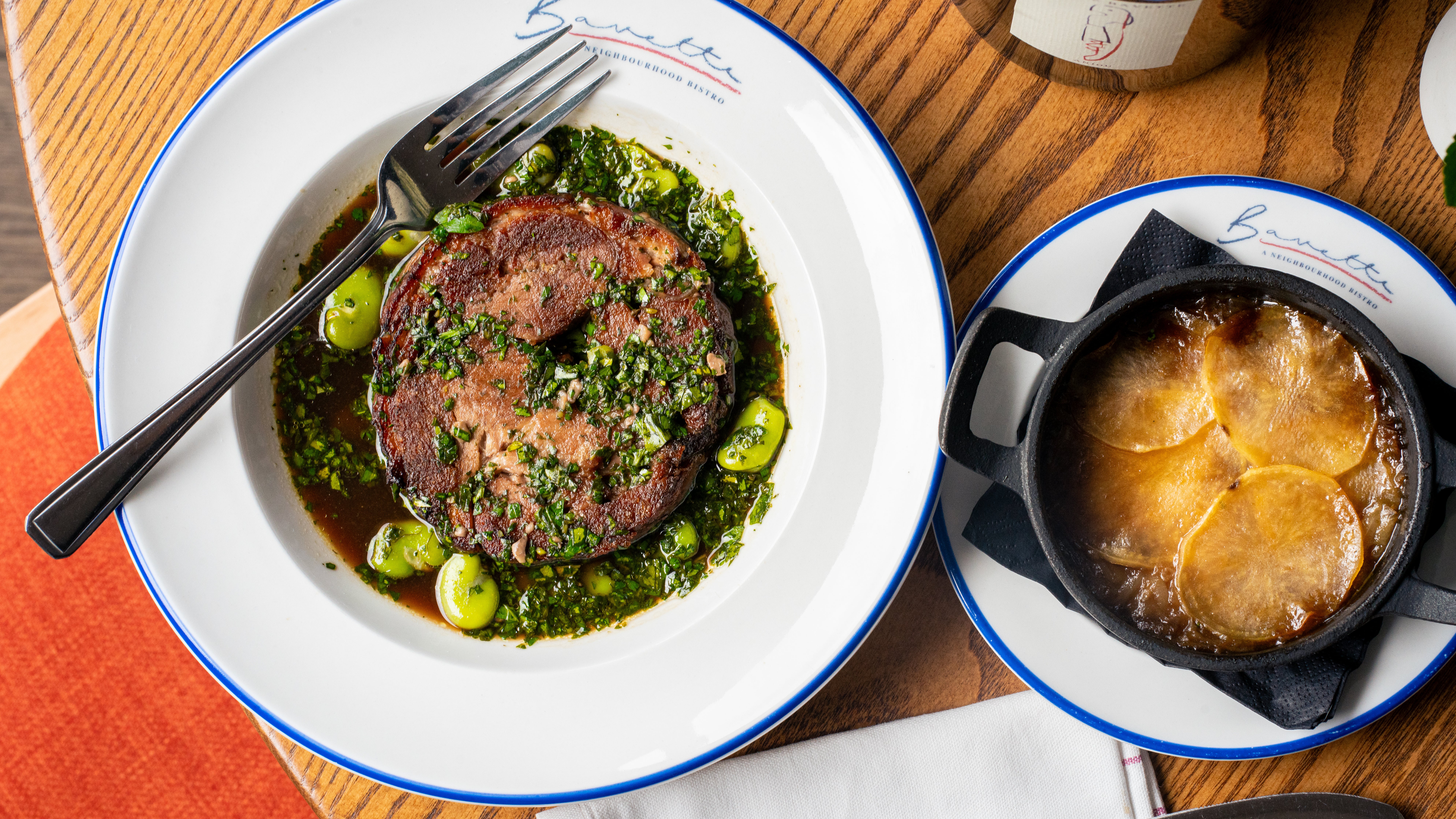
A showstopper of a sharing dish – proper French Sunday fare. The lamb is braised low and slow in wine and stock, then cooled, rolled and sliced into neat discs for reheating in its own reduced liquor. Boulangère potatoes – thinly sliced and layered with onions, butter and stock – soak up every bit of flavour. Spoon over the bright, herby salsa verde and pile on broad beans or peas for something that feels both rustic and celebratory.
Serves: 8
Ingredients:
For the braised lamb shoulder:
Whole shoulder of lamb (2.5-3kg with the bone)
1 bottle red wine
2L stock (beef, lamb or chicken)
1.5kg broad beans
For the salsa verde:
1 bunch basil
1 bunch tarragon
1 bunch mint
1 bunch flat-leaf parsley
6 salted anchovies
1 tbsp Dijon mustard
1 tbsp red wine vinegar
100ml extra virgin olive oil
For the boulangère potatoes (recipe for a 10cm diameter dish):
3 onions
3 sprigs thyme
3 potatoes (Désirée preferably)
Couple cubes of butter
Splash stock (beef, lamb or chicken)
Method:
1. Heat your oven to 220C.
2. Roast the lamb shoulder in the oven to get a good colour for 10-20 minutes.
3. Meawhile, bring the wine and stock to a boil, then pour over the lamb.
4. Lower the oven’s temperature to 150C and cook for 4 hours. When finished, allow to cool.
5. When the lamb has cooled, roll it into a large sausage shape in clingfilm. Allow to cool and set in the fridge.
6. Reduce the braising liquor to a rich broth.
7. Cut the lamb into discs 2cm thick. Remove the clingfilm and gently colour in the pan. Reheat in the oven.
8. Poach the pod broad beans, peas and/or other seasonal vegetables in broth until cooked.
For the salsa verde:
9. Finely chop all herbs and anchovies and mix. Add the mustard and olive oil. Add the vinegar, little by little, stirring and tasting as you go.
For the boulangère potatoes:
10. Thinly slice onions, then cook down slowly in vegetable oil until soft and gaining colour.
11. Thinly slice potatoes on a mandolin.
12. In a 10cm diameter dish, create a layer of potatoes, then a layer of onions and repeat until the final layer of potatoes.
13. Add butter and enough stock to just cover the potatoes, then bake in the oven at 150C for 45 mins.
Crème brûlée
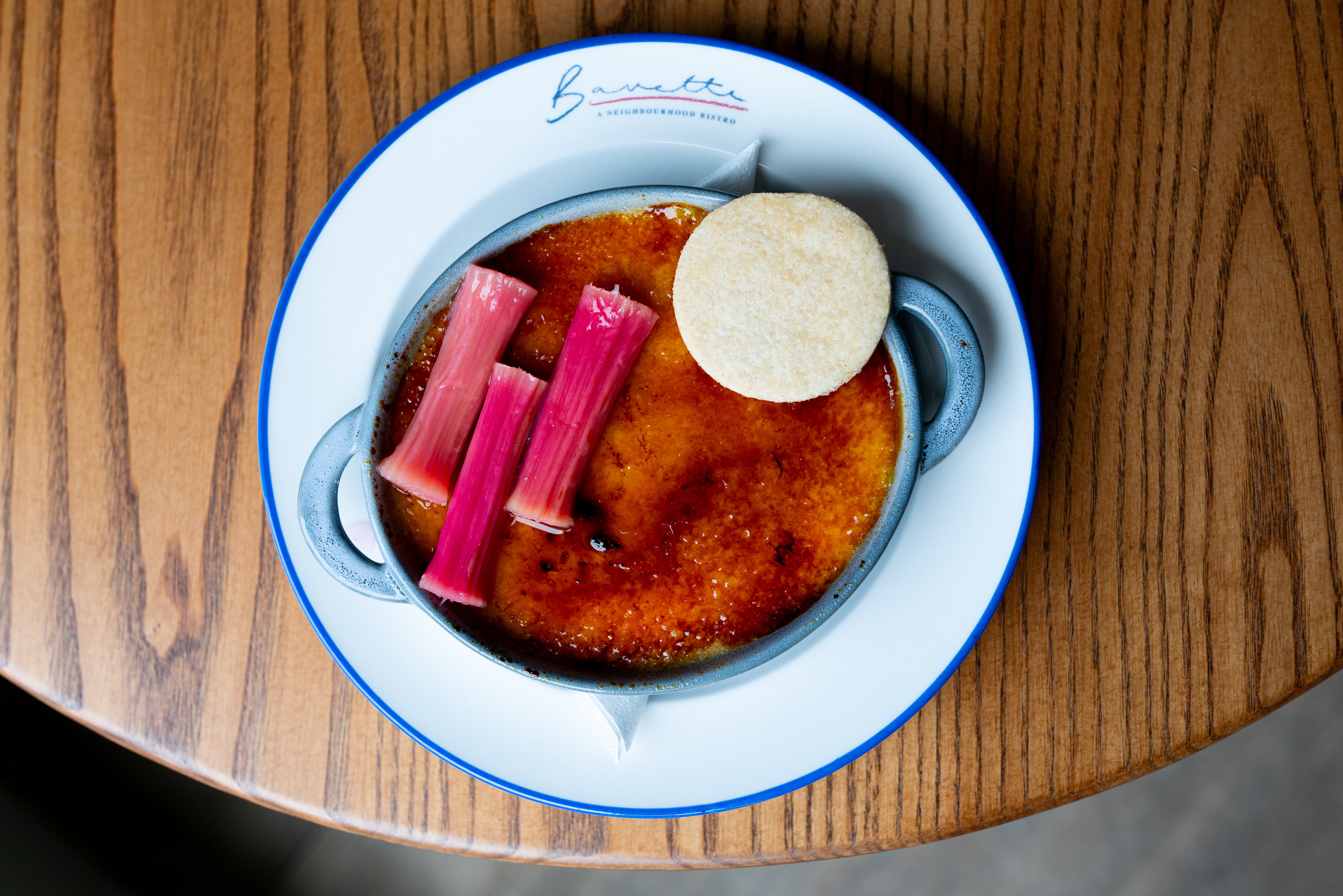
Is there a more iconic French dessert? Bavette’s version is textbook – smooth, custardy, lightly set and finished with a glassy lid of torched sugar that cracks at the touch of a spoon. A topping of poached rhubarb adds a splash of colour and tartness to cut through the richness. It’s the kind of pudding that never goes out of style – and rightly so.
Serves: 6 (large 200ml pots)
Ingredients:
10 egg yolks
150g sugar
1 tsp of Vanilla pods
500 ml whipping cream
500ml double cream
For the rhubarb:
500g rhubarb
500g sugar
500ml water
Method:
For the crème brûlée:
1. Pour the double cream and whipped cream into a medium pan to boil.
2. Add the yolk and sugar, and then the vanilla.
3. Cook out until the vanilla is suspended (or 78C with a thermometer).
4. Strain and cook in the oven at 95C until firm and wobbly (about 50mins).
5. Sprinkle a thin layer of sugar over the top of the custard, and shake the dish to distribute it evenly.
6. Use a grill torch to heat the sugar on top until it has a crunch.
For the rhubarb topping:
7. Add equal weights of sugar and water in a pan, and bring to the boil.
8. Cut the rhubarb into buttons and drop into the pan.
9. Turn the heat off and leave to poach for 2-4 minutes, depending on thickness (it should retain its shape but give to the touch).
Recipes from Bavette Bistro



