


There comes a point in every British heatwave when dinner stops being a pleasure and starts looking suspiciously like admin. The oven is out of the question, the hob feels aggressive and even the idea of standing over a pan seems faintly deranged.
This is the moment gazpacho was made for.
Not the thin, fridge-cold tomato soup that too often gives the genre a bad name, but the good stuff: sharp, savoury, deeply refreshing and far more versatile than it gets credit for.
In the right hands, gazpacho can be smoky and sweet, green and herbaceous, or almost pudding-adjacent without ever tipping into novelty.
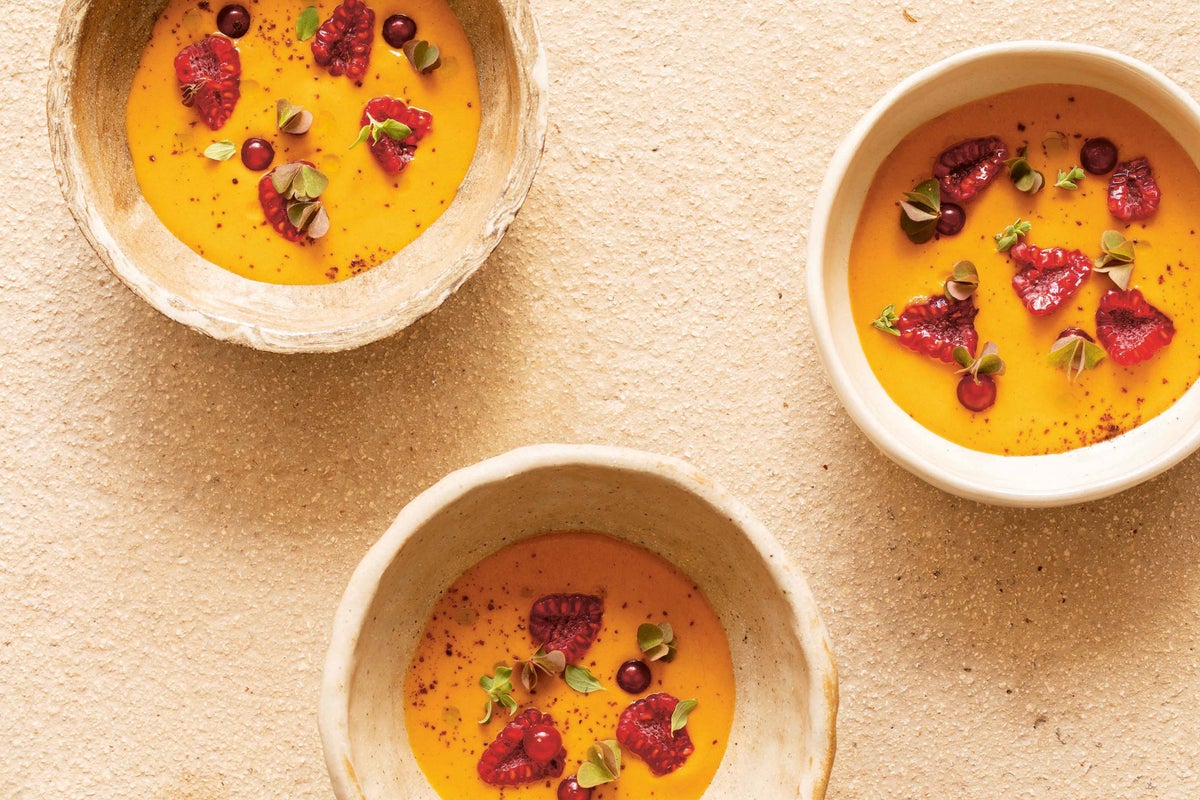
Here, three chefs take it well beyond the classic Andalusian template. At Masseria Moroseta in Puglia, Giorgia Eugenia Goggi roasts peppers, tomatoes, carrots and apricots before blending them into a plant-based starter finished with raspberries, currants, sumac and bay leaf oil.
Nathan Outlaw’s version goes green, with cucumber, courgette, spinach, herbs, walnuts and crab, a chilled bowl that does most of the work before anyone arrives.
José Pizarro, meanwhile, makes the case for cherries, folding the fruit into a bright, sherry-vinegar-spiked gazpacho inspired by the produce of Jerte, just north of his home village in Spain.
All three benefit from time in the fridge, which is exactly the sort of cooking a heatwave demands: make ahead, chill hard and serve when the idea of doing anything more ambitious feels frankly unreasonable.
Roasted vegetable gazpacho
“I have never liked the idea of a signature dish; whenever I was asked what mine was, I always replied that I didn’t have one; the idea of repeating the same thing over and over horrified me,” says Giorgia Eugenia Goggi, resident chef of design-led hotel Masseria Moroseta in Italy.
“However, I believe that if I asked our returning guests the same thing, they would answer, without a doubt, ‘Gazpacho!’ It has been a recurring item on our tasting menus since the very beginning, served in all possible variations and combinations from the early days of May until the first days of October. It is a dish I like to serve at the start of a meal, a preamble to the tasting menu; it is fresh, light and 100% plant-based, and can pack an unexpected level of complexity.”
Goggi says this dish tastes even better the day after you’ve made it, giving the flavours a chance to develop.
Serves: 6
Ingredients:
50g finely sliced red onion
3 tbsp red wine vinegar
3 tbsp water
15 basil leaves
3 tbsp extra virgin olive oil
1 tsp ground cumin
Salt, freshly ground black pepper
For the roasted vegetables:
400g peppers, cut into bite-sized pieces
700g San Marzano tomatoes, quartered
250g carrots, peeled and cut into rounds
350g apricots, stoned and halved
50g extra virgin olive oil
10g salt
To serve:
100g raspberries
60g currants
Pinch of sumac
Sorrel, or another aromatic herb of your choice
Bay leaf oil (see below)
For the bay leaf oil:
36g bay leaves
2 cups grapeseed oil
Method:
1. Make the bay leaf oil: bring a saucepan of water to the boil. Add the bay leaves and blanch for 50 seconds, then remove with a slotted spoon and transfer into a bowl of iced water. Drain, then blot the leaves well with paper towel. Pour the oil into a saucepan over a low heat. Heat to 65C (149F) and add the leaves. Keep the temperature constant for an hour. Transfer to a blender and blend at maximum speed for one minute, then strain through a piece of muslin. Transfer the bay leaf oil into a squeezing bottle and store in the fridge. It will keep for two weeks.
2. Roast the vegetables: preheat the oven to 200C fan (400F/gas 7).
3. Combine the peppers, tomatoes, carrots and apricots in a large bowl. Drizzle with the oil, then season with the salt and some freshly ground black pepper, and toss well. Tip into a large baking tray and spread out; they should not be packed too tightly together, otherwise they will steam instead of roasting and caramelising.
4. Roast for 25-30 minutes, stirring halfway through. The vegetables should be well cooked, soft and golden brown.
5. While the vegetables are cooking, place the onion slices in a small bowl and cover with the vinegar and water. Leave to marinate for half an hour.
6. Blend: tip the roasted vegetables into a blender, along with the onion and its marinating liquid. Add the basil leaves and three tablespoons oil, then blend for two minutes at high speed.
7. The consistency should be quite loose. Add water until the desired texture is reached. You may need to adjust the salt and vinegar, depending on how much water you have added.
8. Transfer the gazpacho to a container, cover with cling film and allow to cool completely for three to four hours.
9. Assemble: serve in individual bowls, allowing a generous ladleful per person. Garnish the top with raspberries, currants, a pinch of sumac, sorrel or the herb of your choice and a few drops of bay leaf oil.
‘Moroseta Kitchen’ by Giorgia Eugenia Goggi (Quadrille, £30).
Green gazpacho with crab and walnuts
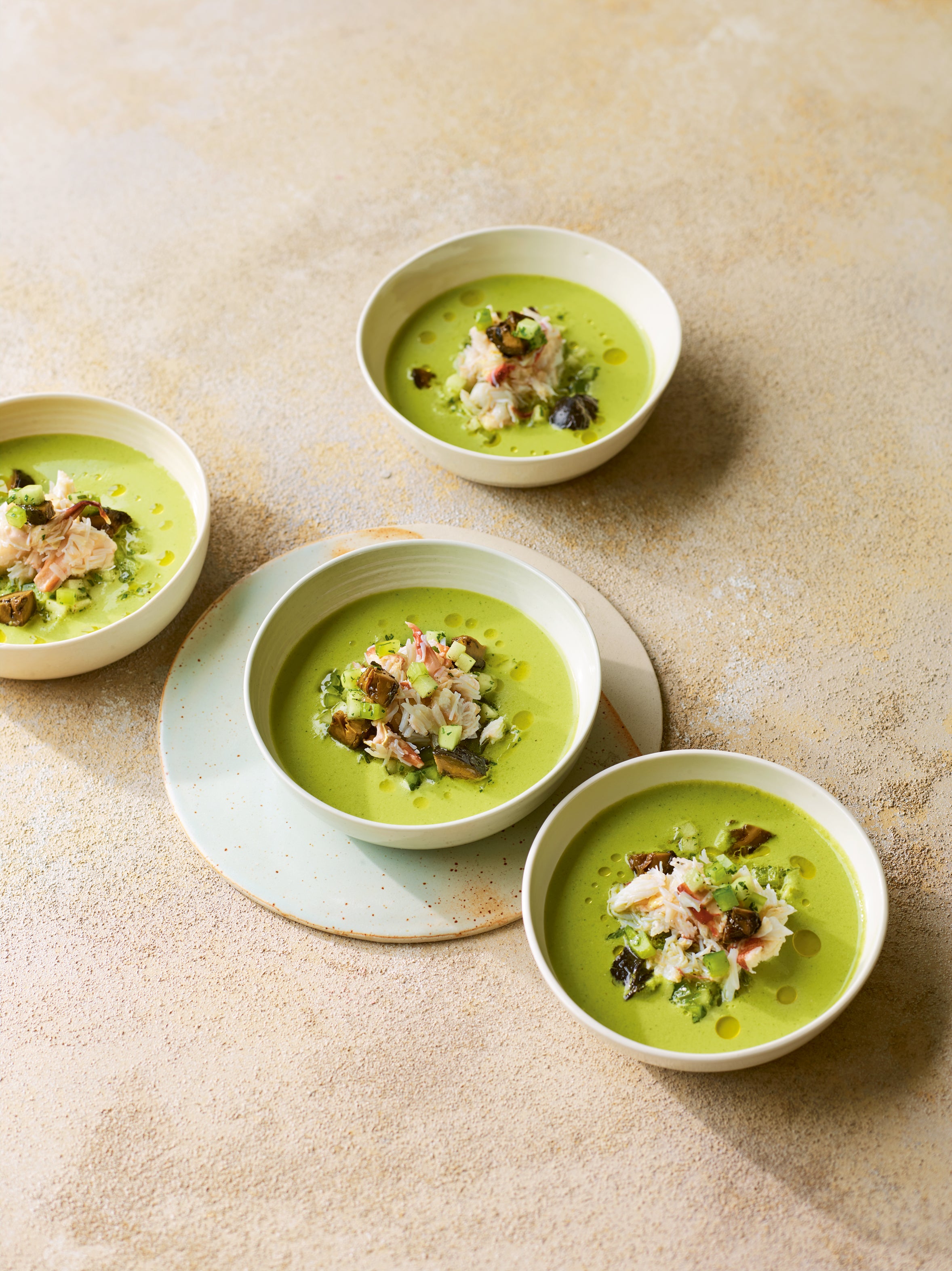
“The green gazpacho tastes so fresh and the flavours are so balanced, with each just showing enough of themselves when you give it a taste,” says chef Nathan Outlaw.
“As it is served chilled, it is also great for a party and actually benefits from being made well in advance so that the flavours have time to mingle.”
Alternative fish: poached lobster, raw scallops (or cooked if you want) or smoked mackerel.
Serves: 4
Ingredients;
200g (7oz) picked white crabmeat
Sea salt and freshly ground black pepper
For the green gazpacho:
1 celery stick, sliced
1 small green pepper, deseeded and chopped
150g cucumber, peeled and sliced
1 courgette, sliced
100g stale white bread, crusts removed
1 green chilli, deseeded and chopped
1 garlic clove, sliced
1 tsp sugar
50g walnut halves, lightly toasted
100g baby spinach, picked
30g tarragon
10g flat-leaf parsley, chopped
2 tbsp cider vinegar
100ml olive oil
60g full-fat Greek yogurt
200ml water
150g ice cubes
2 tsp sea salt
White pepper, to taste
To garnish:
4 pickled walnuts, chopped
½ cucumber, peeled and finely diced
1 green apple, peeled and finely diced
1 small green pepper, peeled, deseeded and finely diced
1 tbsp chopped tarragon
1 tbsp finely chopped flat-leaf parsley
6 tbsp olive oil
Method:
1. For best results, mix together all the ingredients for the gazpacho the day before and leave them to mingle and get to know one another in a bowl. Cover and refrigerate.
2. The next day, place all the gazpacho ingredients in a blender or food processor and blend for two minutes until smooth. Place a sieve over a bowl and pass the gazpacho through it, using the back of a ladle or large spoon to squeeze as much through the sieve as possible. Chill the gazpacho and discard any debris in the sieve.
3. To prepare the crabmeat, pick through your crab, checking for any shell or cartilage to discard. Place the white crabmeat in a bowl, season with salt and pepper to taste, then refrigerate.
4. Mix all the garnish ingredients together in a bowl and season with salt and pepper. Set aside.
5. Before serving, chill four bowls for 30 minutes in the freezer. To serve, divide the gazpacho between the chilled bowls and top with the crabmeat and a generous spoonful of garnish. Serve immediately.
‘Fish For Dinner’ by Nathan Outlaw (Kyle Books, £28).
Cherry gazpacho
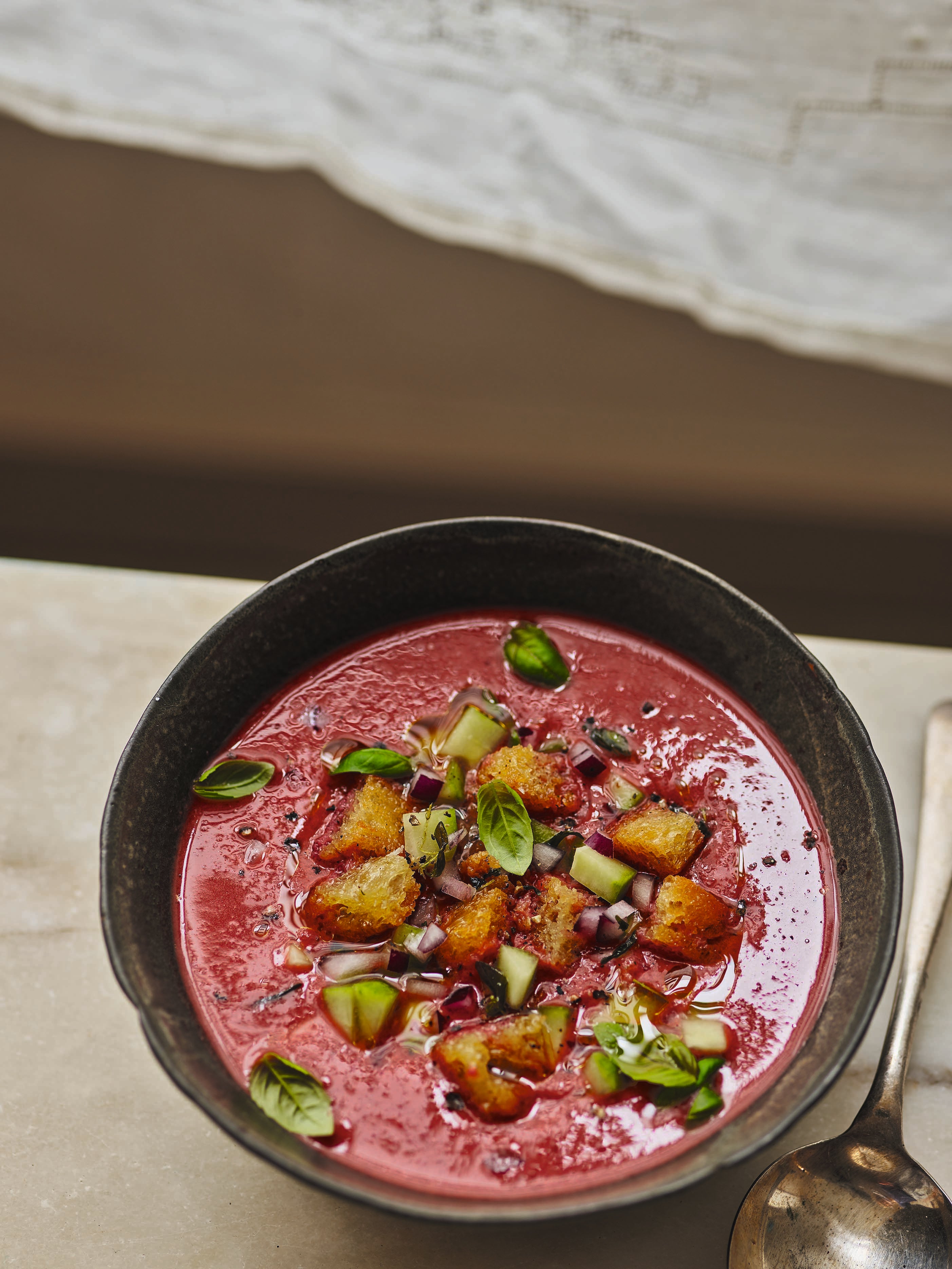
“Many customers and friends are surprised when they learn that gazpacho can be made with such a variety of things,” says José Pizarro – meaning it’s not just about classic tomato.
Gazpacho is essentially a cold soup that can be smooth or textured, thin or thick. “Here, I’m making it with cherries because I grew up with some of the best cherries in the world. They are a remarkably high-quality product of Jerte, just north of my home village in Spain.”
Serves: 4
Time: 20 minutes, plus 2 hours marinating
Ingredients:
For the gazpacho:
1 tbsp olive oil
1 slice of stale white sourdough
2 garlic cloves, sliced
1 red pepper, deseeded and chopped
500g ripe red cherries, stoned
½ cucumber, peeled and diced
300ml tomato juice
2 tbsp sherry vinegar
4 tbsp extra virgin olive oil, plus 2 tbsp to emulsify
For the toppings:
2 tbsp olive oil
1 thick slice of stale white sourdough, cut into small cubes
1 thyme sprig, leaves picked
½ small red onion, very finely chopped
50g goat’s cheese, crumbled
¼ cucumber, peeled and finely diced
A handful of fresh basil leaves
Extra virgin olive oil, for drizzling
Sea salt and freshly ground black pepper
Method:
1. For the soup, heat the olive oil in a frying pan over a medium-high heat and fry the bread on both sides until golden.
2. Put the fried bread into a bowl with the rest of the gazpacho ingredients (except for the two tablespoons of oil) and allow to sit for a couple of hours.
3. For the topping, heat a little of the oil in a frying pan over a medium-high heat. Add the cubes of bread and the thyme and fry until you have golden croutons. Drain on a plate lined with paper towels and season.
4. Blitz the soup really well with a hand-held blender, then push it through a coarse sieve into a jug. Whisk in the two tablespoons extra virgin olive oil. Pour into four bowls and top with all the toppings, along with a drizzle of extra virgin olive oil.
Tip: You can can roast the peppers if you’d like the soup to have a softer flavour.
‘The Spanish Home Kitchen: Simple, Seasonal Recipes And Memories From My Home’ by José Pizarro (Hardie Grant, £27).



