6 min readNew DelhiJul 27, 2026 05:00 PM IST
Bang in the middle of India Couture Week, 24-year-old designer Rishabh wasn’t just thinking about couture. Between fittings and final preparations at Tarun Tahiliani’s atelier, he found time to join fellow students from Delhi University protesting at Jantar Mantar over the NEET paper leak. “I balanced my commitment on both sides,” says the young designer, now part of Tahiliani’s team. The veteran couturier himself encourages his young designers to travel, absorb cultures, question conventions and return with ideas that enrich their work. “That was the first thing he asked us during the interview,” recalls Rishabh. “Can you question the status quo and reinterpret what already exists with your own individuality?’ That’s when I realised fashion, too, can be democratic in terms of expression and access, even though it continues to be limited by economic and systemic inequalities.”
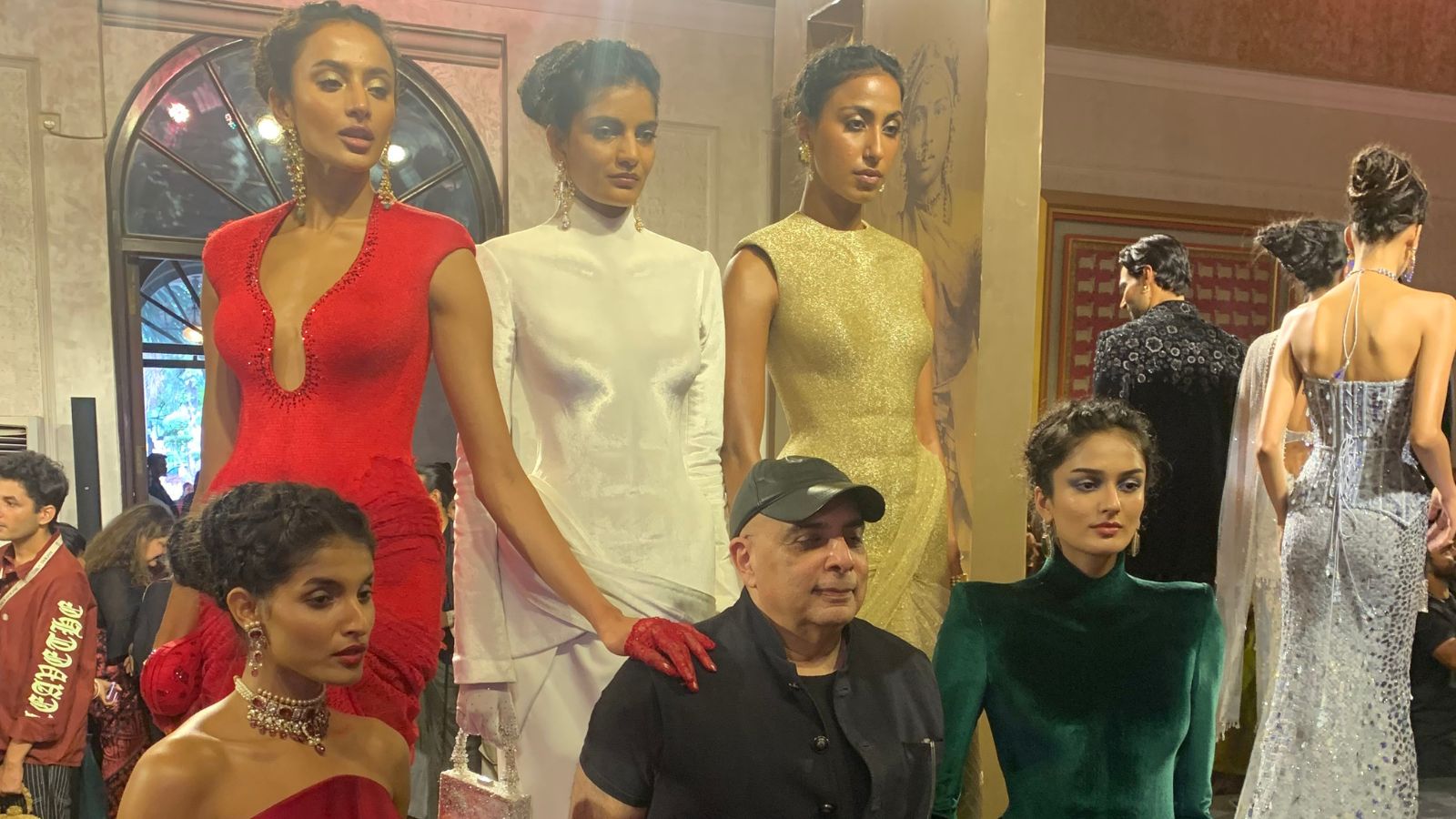 Tahiliani with models
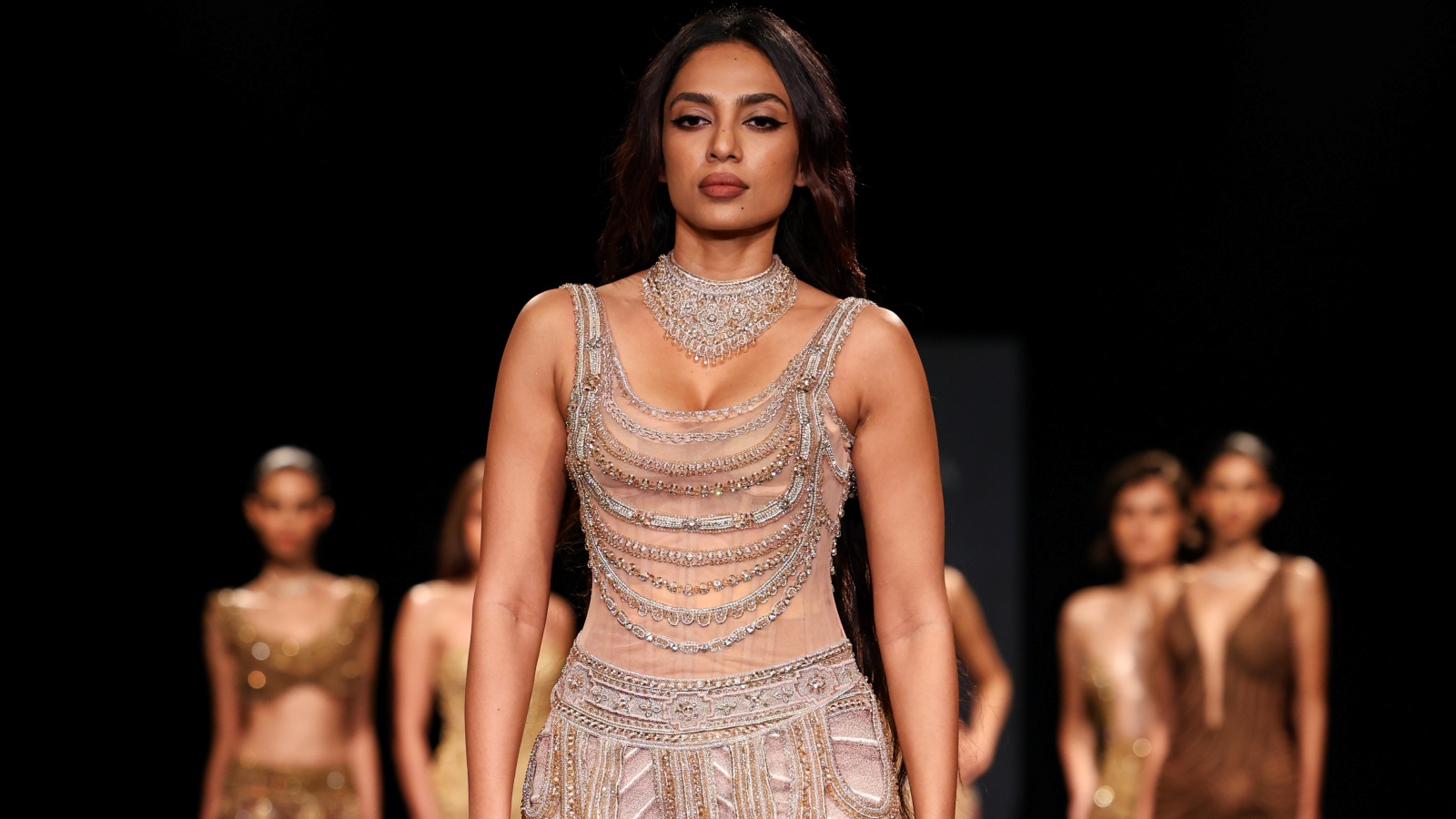
Those conversations seem to have found their way into Tahiliani’s latest couture presentation, Navaratna, unveiled on Sunday at Bikaner House as part of Hyundai India Couture Week. This isn’t just another runway show. It is a statement on how couture itself can be reimagined and experienced differently. “This is something I’ve never done before,” Tahiliani says. “Today’s generation has done what my generation could not, turned the national discourse. So I thought it’s time for reimagining everything,” he adds.

Beyond the runway
For over three decades, Tahiliani has built his reputation on marrying Indian craftsmanship with contemporary design. This year, however, he decided to move beyond the familiar choreography of a conventional fashion show. Inspired by the immersive exhibition style pioneered by Costume Institute consultant Diana Vreeland, who transformed fashion displays at New York’s Metropolitan Museum of Art into theatrical experiences, Tahiliani converted Bikaner House into an interactive couture exhibition.
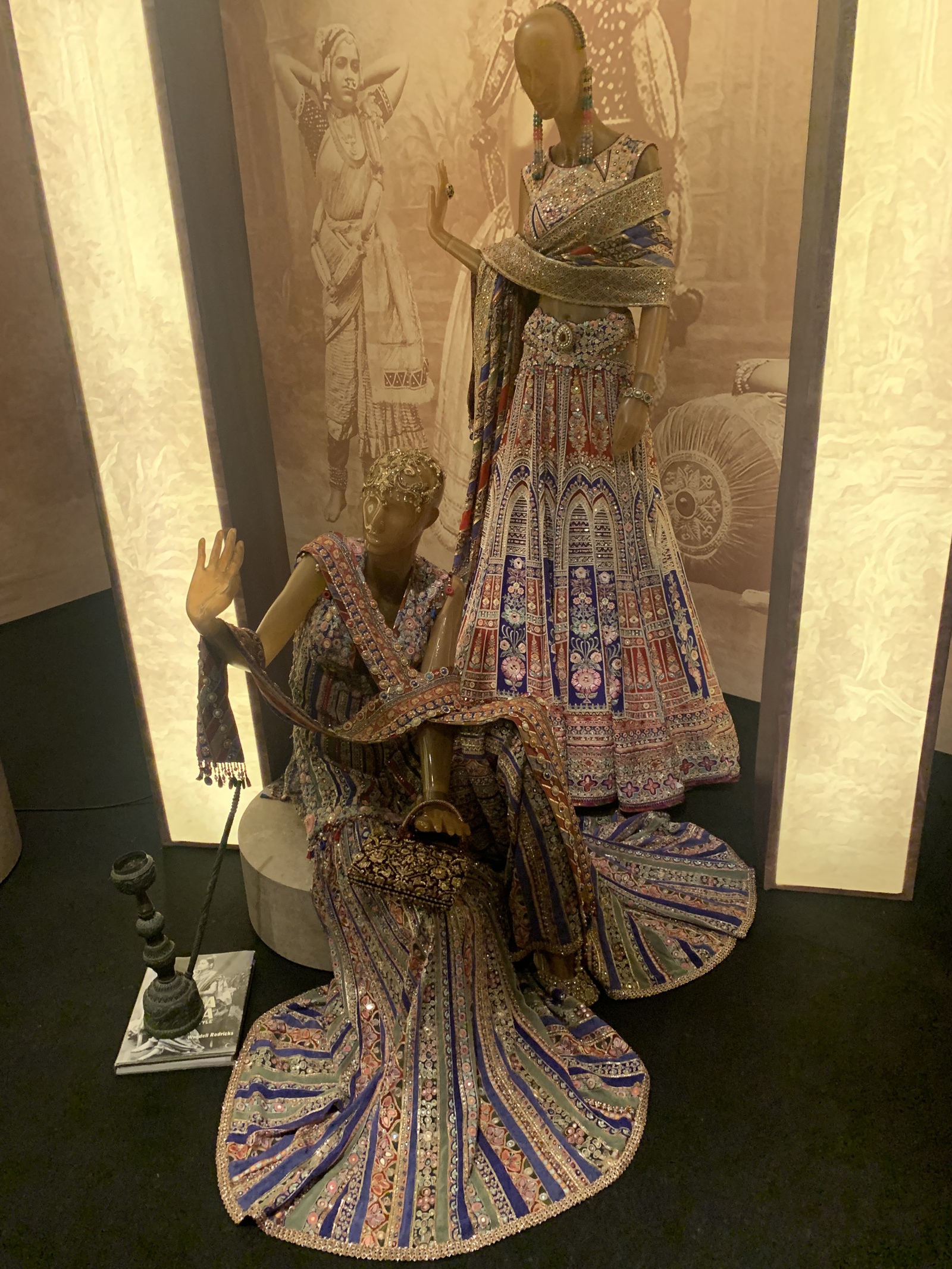 The installations at the exhibit
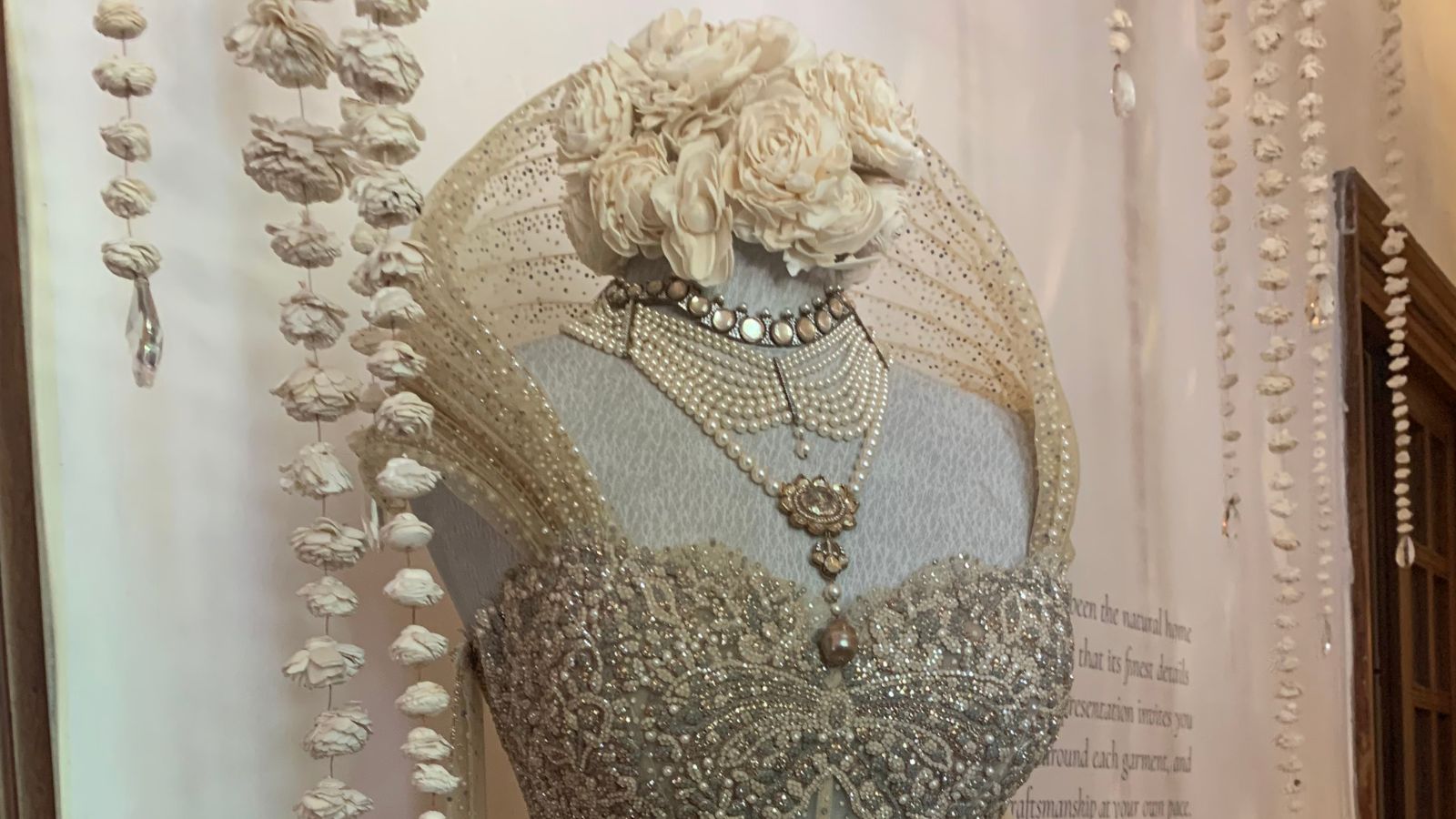
Instead of watching models glide past in seconds, visitors walked through curated spaces where garments, craft, architecture and technology unfolded as one continuous narrative. Projection mapping, multimedia installations and carefully designed scenography replaced the traditional catwalk, allowing guests to pause, examine and understand every detail behind the clothes.
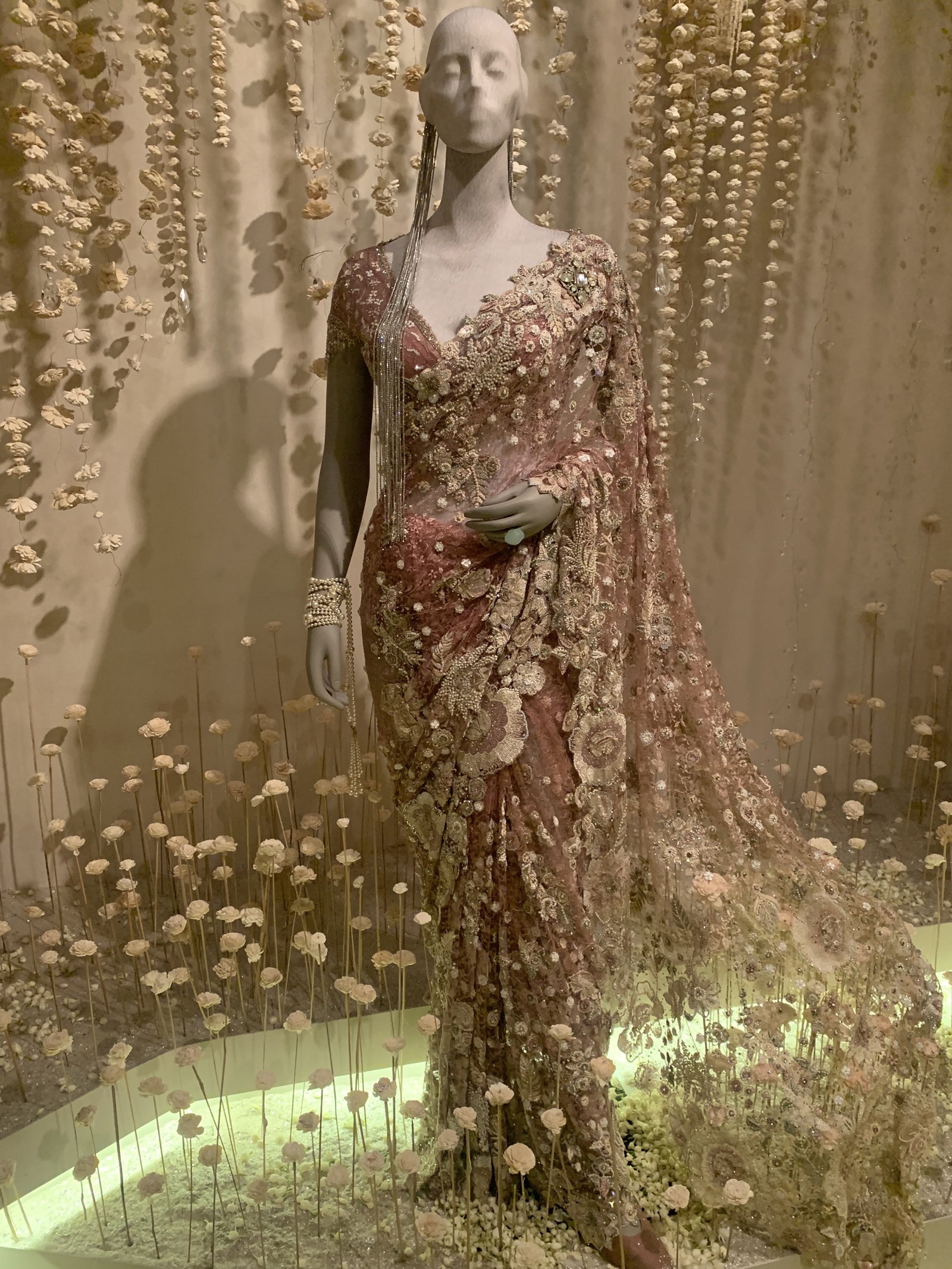 The gossamer sari on lace
Craft takes centrestage
Recovering from ankle surgery, Tahiliani personally led visitors through the exhibition in intimate atelier-style walkthroughs, pausing before almost every ensemble to explain its journey. He pointed to an original Ajrakh textile sourced from Gujarat, its vibrant colours softened into a muted palette before being embellished with delicate mother-of-pearl embroidery.” The idea behind the exhibition was simple,” he says. “A model swishes past in seconds on the runway. Here, people can stop, observe the craftsmanship, understand the months of labour behind each garment and even appreciate the finishing inside the garment —details nobody normally sees.” His sculpted corset gowns, presented in bold solid shades of crimson, emerald and black, add a playful note into the collection. “I’ve even sculpted the belly button and the abdominal contours into the bodice,” he laughs. “It’s all about celebrating the body with structure while allowing the skirt underneath to remain incredibly soft and weightless. “The architectural bodices are balanced by fluid lace, georgette and chikankari skirts that appear almost suspended beneath them — a striking mix of strength and delicacy. I had fun with the mix,” he says.
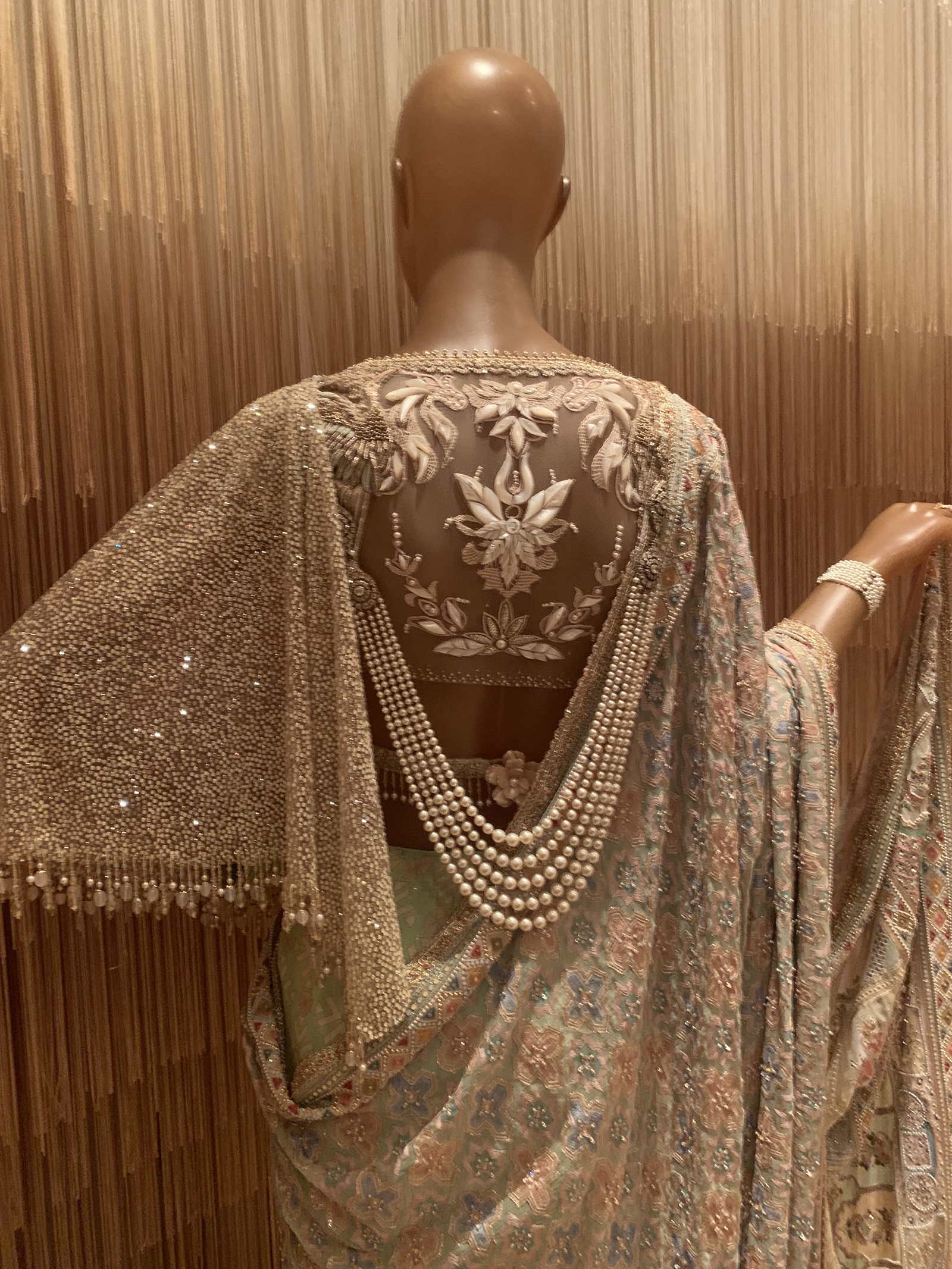 The Ajrakhi sari with a mother-of-pearl encrusted blouse
Where stone meets stitch
One of the exhibition’s most compelling installations explores the jaali, Indian architecture’s most enduring design elements. Far from being merely decorative, Tahiliani reminds visitors how the jaali was historically a sophisticated system of geometry that manipulated light, airflow and space. For more than 30 years, he has translated this architectural language into couture through chikankari, zardozi and intricate threadwork. Arabesque, Moroccan, Islamic, floral and fish-scale motifs have evolved into embroidery patterns that eventually inspired the double “TT” monogram.
Displayed against towering jaali screens, the clothes reflect the same principles of geometry, precision and craftsmanship of the former. “This continuity of heritage, from architecture to contemporary design in my pieces, is India Modern,” says Tahiliani, who has also drawn inspiration from the nautch girls of the 19th century, photographs of which line the installation. “They were sassy, full-bodied women, unafraid to show up with their individual styles,” he says.
Story continues below this ad
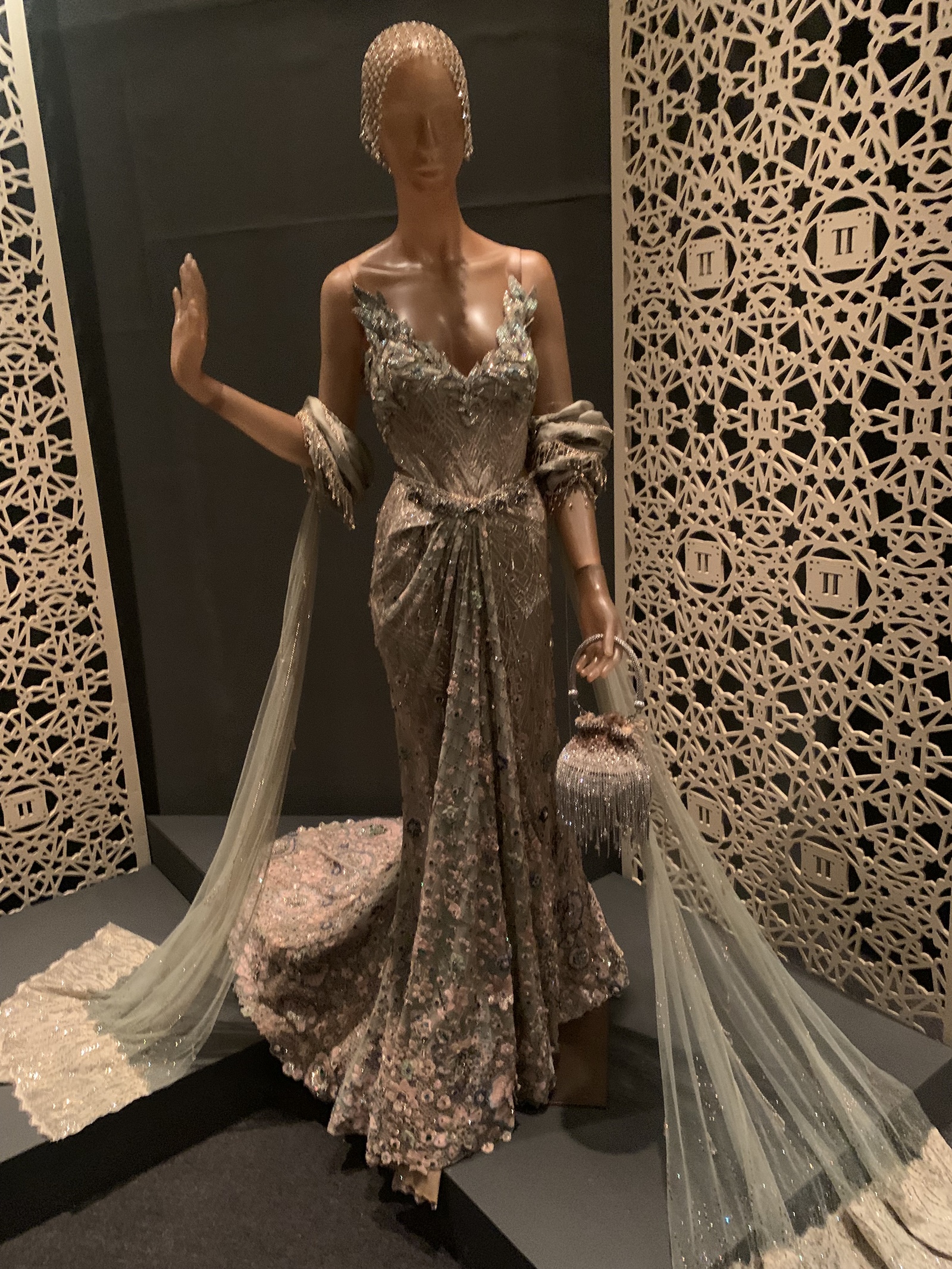 The Jaali inspired garment
The textile heritage trail
Another room celebrates the extraordinary diversity of India’s textile traditions. An Ajrakh sari is transformed through contemporary Kashidakari embroidery. Nearby, a resham chikankari sari on delicate georgette is complemented by an intricately embroidered Kashida border, the minimalism of each blending into richness. “The textile alone required more than eight months of painstaking handwork before opal crystals were individually soldered onto its surface,” says Tahiliani.
Completing the installation is a Kashidakari lehenga enriched with French knots and paired unexpectedly with a sculptural metallic corset beneath a cocoon jacket, reflecting Tahiliani’s continued fascination with juxtaposing traditional craftsmanship and contemporary silhouettes.
If previous India Couture Weeks celebrated spectacle on the runway, Tahiliani’s presentation asks the audience to slow down.It invites them to look beyond embellishment and silhouettes, towards the invisible hours of craftsmanship, the architectural inspirations, the conversations between heritage and technology, and the young designers whose ideas increasingly shape the future of Indian couture. For Tahiliani, the most radical shift this season may not be a new silhouette or embroidery technique. It is the belief that couture need not merely be watched — it can be experienced, questioned, broken and still be understood. In an age of fleeting reels and runway highlights, that may well be the most modern idea of all.