


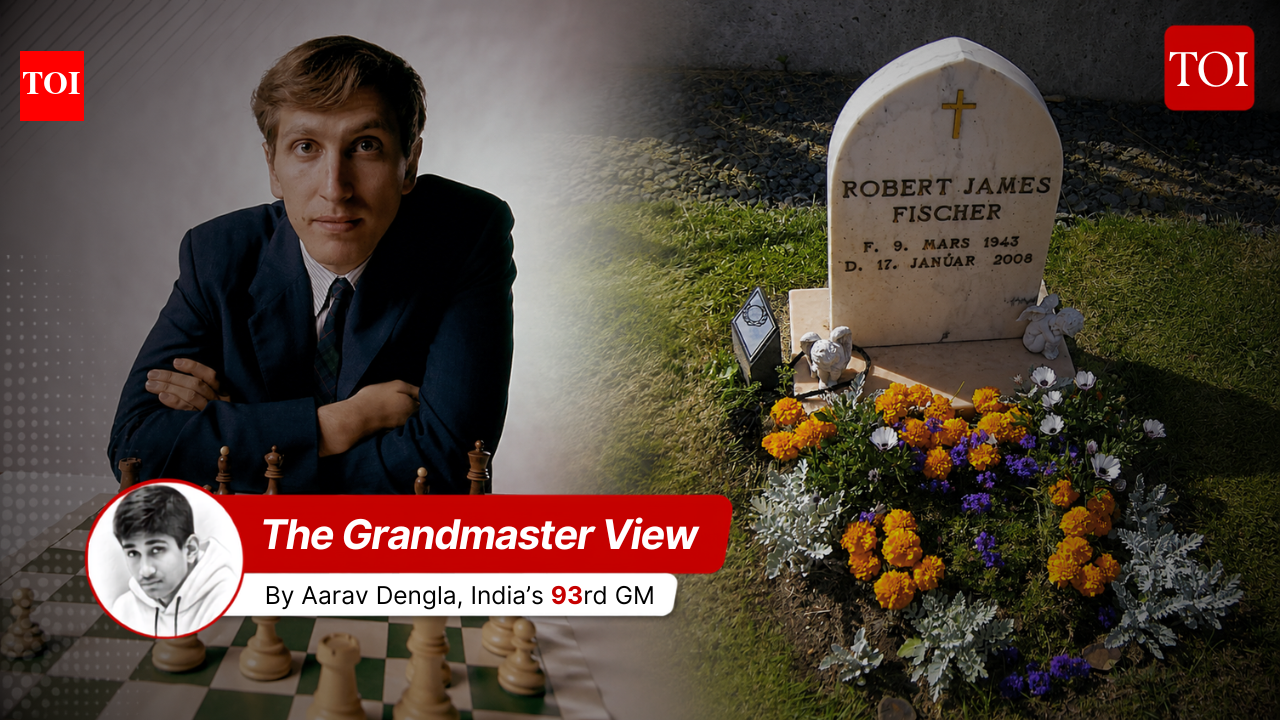
The Laugardælir Church near Selfoss is so easy to miss that I had to find it using Google Maps. A small white timber building and a scatter of headstones in the southern Icelandic quiet, an hour or so from Reykjavík, ringed by nothing but farmland. This is the final resting spot of Bobby Fischer, one of the greatest chess players ever.I went to visit his grave in the summer of 2024—an International Master chasing the rating that would make me a Grandmaster, half hoping the ground might lend me some of what its occupant had. The headstone had a simple cross, his name (Robert James Fischer) and his date of birth and date of death. No epithets, no words. Occasional visitors had left candles and chess pieces at the grave. As I stood in the bone-chilling Icelandic wind, I was moved. Here lay one of the chess’s greatest minds—marked only by a modest stone and a few offerings left by visitors. My brain was a jumble of thoughts about the transience of fame, belonging and life itself. My father, who was accompanying me, eventually nudged me to leave. We drove for the next hour in silence. He was also in a reflective mood. Everyone knows Bobby Fischer for the genius he was. Few fully know the arc of his life and appreciate his impact on chess.Rewind to 1972, and to this same island. In Reykjavík, a twenty-nine-year-old from Brooklyn sat down against Boris Spassky, the Soviet world champion, in a world championship duel. By then chess had become the Cold War condensed onto sixty-four squares, and Fischer very nearly did not play. He quarreled over the money, the cameras and the venue itself. Among those who persuaded him to go was Henry Kissinger, President Richard Nixon’s national security adviser, who reportedly told him: “America wants you to go over there and beat the Russians.” Fischer played. He ended twenty-four years of Soviet dominance and became, overnight, a national hero in America.That aspect of his life everyone knows. It was immortalized in 2014 biopic Pawn Sacrifice where Tobey Maguire played Bobby Fischer. The movie ended on a positive note when Fischer beat Spassky in 1972. But Fischer’s legacy extends far beyond that match.It was Fischer who, in 1989, patented the chess clock that adds time after every move; helping players avoid losing winning positions solely to frantic time scrambles. Versions of Fischer’s increment system are now widely used in elite tournaments, including World Championship matches. It was Fischer who devised Fischer Random Chess (popularly known as Chess960) in which back-rank pieces are rearranged under specific constraints to reduce dependence on memorized opening theory. His primer, Bobby Fischer Teaches Chess, introduced generations of beginners to basic tactical and mating patterns. There is a subtler bequest, the one usually written off as Fischer’s tantrum: his furious demands over prize money and playing conditions before the 1972 championship led to increase in the prize money at chess tournaments. The record purse of 1972, doubled at the eleventh hour to get Fischer to play, was only the start. Every grandmaster who has since made a living from the game owes a little to Fischer.
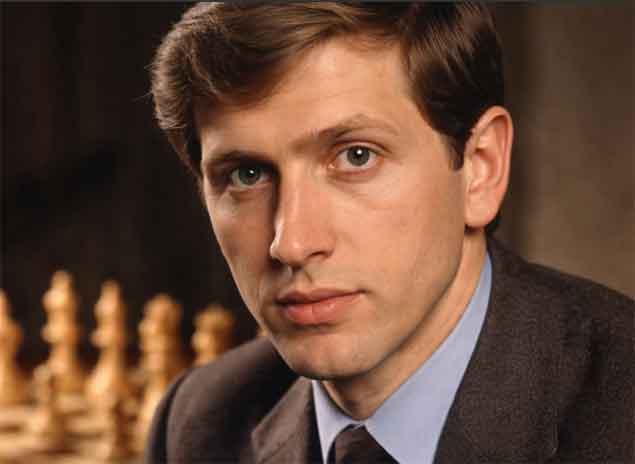
What came afterward is harder to confront. Fischer withdrew into isolation and increasingly expressed paranoid, antisemitic and other hateful views—words that cannot be defended or erased by admiration for his chess. Various writers have speculated about his mental health. Sadly, those utterances eclipsed his achievements.More ignominy lay waiting. Two decades after Kissinger’s call, the same country that had once summoned him to fight Soviets issued a warrant for his arrest. For playing a 1992 rematch against Spassky in Yugoslavia, in defiance of American sanctions. The hero was now a fugitive. He drifted through exile, was detained for months in Japan for attempting to travel on a passport that American authorities had revoked. He faced deportation to United States and possibility of imprisonment there.That his detention did not end in deportation to the United States was due largely to a determined campaign by his Icelandic supporters. A handful of Icelanders, some who still remembered his 1972 triumph, campaigned to free him. The Icelandic parliament voted to grant him citizenship. The small nation that had staged his finest hour would not let him die a man without a country. Iceland took him in, and in time gave him the quiet resting spot where chess players from around the world still leave kings and pawns upon his grave.As I picture that small cemetery in Laugardælir Church near Selfoss, I cannot help thinking about the extraordinary distance, geographical and emotional, between Fischer’s birthplace and his final resting place. Here was a man who, at one of the tensest moments of the Cold War, gave pride and joy to millions of his countrymen, and who in his later years wrestled with demons perhaps not entirely of his choosing. Someone like that was owed more restraint, more understanding, from his own. He deserved a way back, and at last a place to lie among the people he had once made proud.Gens una sumus, chess says of itself: we are one family. Bobby Fischer lies far from home. But he does not lie among total strangers. He died as a citizen of a beautiful country that gave him refuge. The game he transformed, and the small island nation that loved him, made sure of that.(Aarav Dengla is India’s 93rd Grandmaster. He is a keen observer and student of the world history in general and chess history in particular)



