

















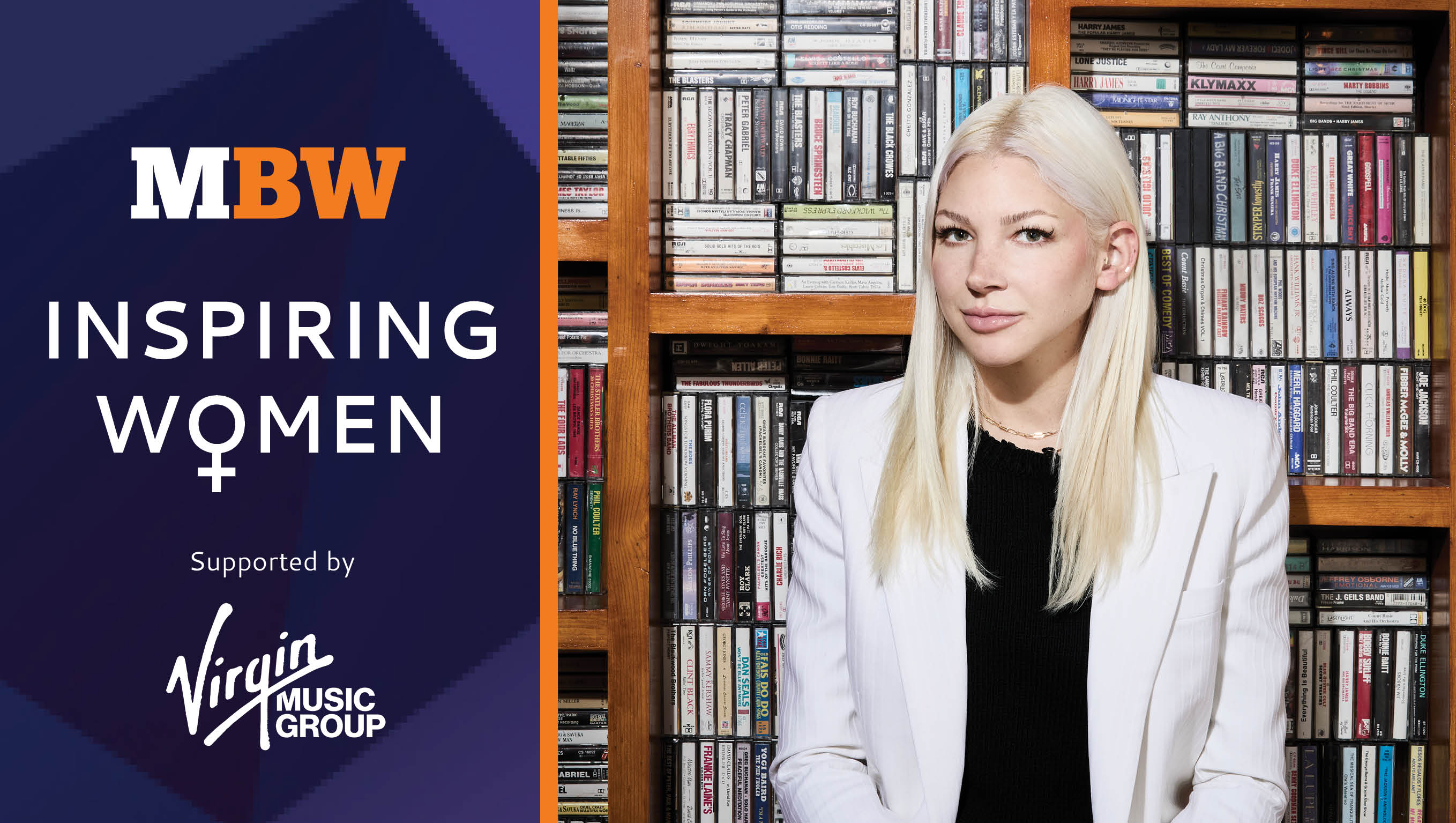
When Kristin Graziani, now President of Los Angeles-based music distribution platform Stem, chose her career path, the music business was at a historic low.
It was at the height of the post-file-sharing fallout, when recorded music revenues in the early 2010s had sunk to their lowest point.
The romantic version of this story would see Graziani’s love of music — forged in her youth, spending her free time watching local bands in Philadelphia’s vibrant pop-punk scene — pull her into the industry regardless. Instead, she chose the more pragmatic path of pursuing a career in venture-backed tech.
That decision led her to roles at two startups: B2B fashion marketplace JOOR and job-search platform Hired. There, she built out client experience, sales, and revenue teams, developing the operational skill set that would help her in her current role.
Eventually, Graziani was introduced to Stem co-founder and CEO Milana Lewis through mutual friends who had invested in the then-nascent distributor. The connection led to Graziani joining the company — and to what she describes as an accidental career in music — just as the industry was beginning to rebound, buoyed by the rise of streaming.
Launched in 2015, the first iteration of Stem was an ambitious, well-funded DIY distributor that cast a wide net, allowing artists to upload music directly to streaming platforms through its site.
Today, the company takes a more curated, “less is more” approach, selectively choosing the artists and labels it partners with after quitting DIY distribution in 2019. Alongside distribution, Stem now offers artist development services and has worked with acts including Brent Faiyaz and Chappell Roan.
Stem was acquired by Concord in March 2025 in a deal MBW sources suggested at the time was somewhere above $50 million. As Graziani explains in the interview below, the acquisition significantly strengthens Stem’s ability to retain artists and label partners long-term, while tapping into Concord’s global infrastructure.
New signings to Stem’s roster include Meek Mill; Big Family — a label, publisher, and management company representing fast-rising artists such as Master Peace and Hope Tala; independent label Giant, which Graziani describes as being run by “some of the industry’s best A&Rs and marketers”; dance label Boom; and multidisciplinary and independent label deadAir, home to Jane Remover, an artist Graziani is particularly excited about.
Here, we speak with Graziani about her career journey, the future of Stem, the state of independent distribution, AI, and much more besides.
Having spent time in other industries before you joined music, was there anything that surprised you about the business upon joining?
The lack of structure around how revenue was generated and retained. From the outside looking in at various music businesses, the way teams were structured was very different from how traditional businesses built experience teams and sales functions.
The fact that I had experience doing that is what made me attractive to Stem. I applied that experience to how we structure our people at Stem today, which is both an art and a science.
Are there any other perspectives or skills that you brought from your earlier career to what you’re doing today at Stem?
When I was working in venture-backed tech, there was so much money pouring in at the time, which meant that finding and retaining good talent was actually really hard because people had options.
“When I was working in venture-backed tech, there was so much money pouring in at the time, which meant that finding and retaining good talent was actually really hard because people had options.”
I learned a lot of best practices around how you lead, manage, and retain sought-after people, how much the employee experience matters, and how critical it is to retention. Finding good people and bringing them along is what makes a business work.
What are some of the ways in which you do that successfully at Stem?
Some of it is stylistic — really understanding how long a leash to give someone, depending on their skill set and appetite for autonomy. Some of it is making sure our managers are thinking about how to get the best work out of each individual, which looks very different for everyone.
We put a lot of time and energy into getting that right, and that’s why we’ve had people who have been with us for eight or nine years. It’s the people that make Stem a special place and help us retain the artists we work with.
As President, you’re in a key leadership role at Stem. What, in your opinion, defines good leadership?
One of the things that’s really important to me is consistency and behavior. We all have bad days — we’re human — but it’s the responsibility of a leader to dig deep and emotionally regulate, even during times of high pressure, personally and professionally.
“We all have bad days — we’re human — but it’s the responsibility of a leader to dig deep and emotionally regulate, even during times of high pressure, personally and professionally.”
That doesn’t mean being robotic, inauthentic, or not showing emotion; it’s about treating people with consistency. People need to know how you’re going to show up because they’re looking to you to steady the turbulence.
Here’s another big question: what would you say are the biggest lessons you’ve learned across your career?
I learned to close the door on optionality. Real strategy requires reducing options — subtraction, not addition. My partner and I learned that lesson early in Stem’s life. We were burning a lot of calories debating where we wanted to sit in the market. There was pressure from our venture partners to build a transactional business, essentially like a DistroKid, but that wasn’t what we wanted to build.
“I learned to close the door on optionality. Real strategy requires reducing options — subtraction, not addition.”
There were endless cycles of analysis around pricing models, segmentation, tiered offerings — do we go upstream? Do we do DIY? Do we do it all? There’s so much noise. When we finally made a clear decision to remove those options and focus on a specific segment of the market, the business actually started to work. The lesson was: how could we have reduced our options faster?
The second lesson is that we knew what we wanted to build all along, and as leaders, we should have done a better job of quieting some of our external partners’ opinions. That did real damage to the team. A lot of time was spent on things that didn’t move the business forward.
The day we made the hard decision, around May 2019 [when Stem quit DIY distribution], there was a lot of negative press. We moved 90% of the long tail off the platform because it was the only way to accomplish what we wanted to do. Many people now reference that decision, and many distributors and other businesses have taken a similar direction because they understand where the market is going.
What’s next in the evolution of Stem?
We’re finally in a place, with our partnership with Concord, where we can win and retain the artists and labels we’ve always wanted to work with. It’s not about going broader at this point; it’s about going deeper. Since 2019, we’ve built the foundation and offering that allow us to serve artists really well. What we didn’t have before was the capital to win and retain those artists over the course of their life cycle.
“We’re finally in a place, with our partnership with Concord, where we can win and retain the artists and labels we’ve always wanted to work with.”
The same is true for entrepreneurs running growing labels. We want to do more of what we believe our artists and labels need, whether that’s more international partnerships or investing in teams.
From a marketing standpoint, we have great data, but we want to go further with the insights we’re delivering. Now that we have the capital, we can put creative solutions in front of artists and labels and invest in them over a longer period of time. One of the things we want to see is volume continuing to go down, which we are seeing since the Concord transaction.
We’re signing fewer artists and fewer labels, but they’re more substantial, and we believe they’ll be the growth engine of the business. Less is more.
What do you think is next in the evolution of distribution more broadly?
Access isn’t enough anymore. In the next few years, the winners in distribution will combine creative capital, real-time strategic analytics, and people who can roll up their sleeves and execute.
That means deploying capital intelligently and knowing how to grow artists. Hands-on distribution is what’s going to win.
“In the next few years, the winners in distribution will combine creative capital, real-time strategic analytics, and people who can roll up their sleeves and execute.”
To do that, you have to be selective. You can’t provide meaningful services to thousands of artists or have hundreds of releases every month. We’re going to see a broader shift toward curation, which will create more competition, but that’s good for the market.
You’ve already spoken about how the Concord acquisition has impacted the business. Is there anything else you’d add?
It’s such an interesting partnership. Concord is a large independent, distributed by Universal, with capital from an independent source.
They see our unique opportunity, which is validating, and they’ve given us enough latitude to preserve what makes Stem, Stem — while supercharging the things we’ve always wanted to do.
Their strategic support and financial sophistication have been incredibly helpful. Having a partner that can think creatively about deal structure is essential today. There’s no one-size-fits-all model — every deal is bespoke.
How would you describe the overall health of the independent sector today?
What part of the independent sector are we talking about? How do you define it?
That’s a good question. I guess I would define it, for the sake of this discussion, as the companies and artists that exist outside of the traditional major label system.
Viewed through that lens, that part of the market is growing faster than the overall recorded music space, especially when you include businesses like The Orchard and Virgin. That’s a strong indicator of health. Independent distribution is now a credible option for artists and labels at every stage of their career, not just emerging artists.
We see that in the fact that we’re part of every conversation — whether an artist is talking to a major label, a major-label-distributed company, or true independents like Stem or EMPIRE. That’s new, and it’s a sign of a healthy marketplace. Artists now have a real choice. We’re seeing incredible success stories, like Shaboozey.
That said, there are headwinds — particularly around release volume and discoverability. Tactics that worked even a few years ago don’t work anymore because of the sheer number of releases and fragmented audience attention.
There are also new entrants offering 0% or near-0% distribution fees while still claiming to provide services. That’s damaging to the market. Distribution isn’t free, and services aren’t free, and it creates unrealistic pricing expectations that everyone has to navigate.
Can you pinpoint some of the tactics that no longer work?
Even something like a playlist add has become less effective in driving consumption and discoverability. Editorial doesn’t carry the same weight it once did. Some marketing costs have come down, but other areas now require significantly more investment, and that’s sometimes overlooked.
What are some of the areas that require more investment?
Constant content creation and sustained marketing spend. You have to keep feeding the machine to stay visible.
Is there anything that needs to change to strengthen the independent ecosystem moving forward?
A lot needs to change, particularly for independents, who are more constrained by capital. DSPs need to continue moving the needle on both sides of the equation — testing consumers’ willingness to pay, improving economics, and ideally passing more value back so per-stream payouts improve.
DSPs also need to invest more in solving the discoverability problem. Platforms like Deezer and Spotify are taking steps in the right direction by rewarding real music, increasing selectivity, and protecting against practices that divert revenue away from career artists.
That challenge will only get harder given the volume. Deezer recently shared that it’s seeing around 50,000 AI-generated tracks uploaded per day [75,000 as of April 2026], which is [nearly] half of all uploads. That’s staggering.
What’s your perspective on AI-generated music and copyright challenges?
From a creation standpoint, we’re focused on human creativity, where the artist is at the center of the work. We recognize that AI tools have long been part of creative workflows — in writing, production, and iteration — but we want an individual driving the creative vision. We’re not policing creation, but we’re choosing to work with artists who have a clear, human-led vision.
From a licensing standpoint, platforms like Suno or Udio could, if structured correctly, increase artists’ share of wallet rather than cannibalize it. That’s a big “if.”
The major labels are doing important work to push remuneration frameworks forward, but there’s a long road ahead. Personally, and at Stem, we want to help find a path forward where partnership is possible, and everyone benefits.
What’s the best career-related advice you’ve ever received, and who gave it to you?
“Fail fast. Make the decision, even if it’s the wrong one.” That came from my dad. I heard it early in life and didn’t fully understand it at the time, but it’s great career advice and great life advice.
You work closely with Stem CEO Milana. What have you learned from her leadership style and vision?
We’re fundamentally different in how we approach the world, and that’s what makes our partnership so strong. What I admire most is her ability to see non-obvious paths. She isn’t constrained by the problem set, which allows her to come up with ideas and solutions others wouldn’t.
That creative, out-of-the-box problem-solving has pushed the business forward and challenged me to think differently.
Do you have advice for people starting a career in music today — both artists and executives?
Your reputation is your most important asset. Be careful not to overpromise and underdeliver — I’ve made that mistake myself. It’s something we emphasize internally. We work hard to do what we say we’re going to do, and when we can’t, we’re clear about it. That consistency and honesty build real relationships and long-term leverage.
“Your reputation is your most important asset. Be careful not to overpromise and underdeliver.”
For artists, the advice is similar: do the work, show up for your partners, and protect your reputation. Be the kind of artist people are excited to work with and want to support in bringing a vision to life.
We’ve talked about focusing on quality over quantity at Stem. Is there anything else you’d add?
We’re excited to finally build the business we’ve always wanted to build because we now have the right resources. We want scale and leverage, but not through sheer volume. Protecting our reputation at all costs is critical. Our goal is to be the most trusted and reputable independent distributor in the market.
Virgin Music Group is the global independent music division of Universal Music Group, which brings together UMG’s label and artist service businesses including Virgin and Ingrooves.Music Business Worldwide



