


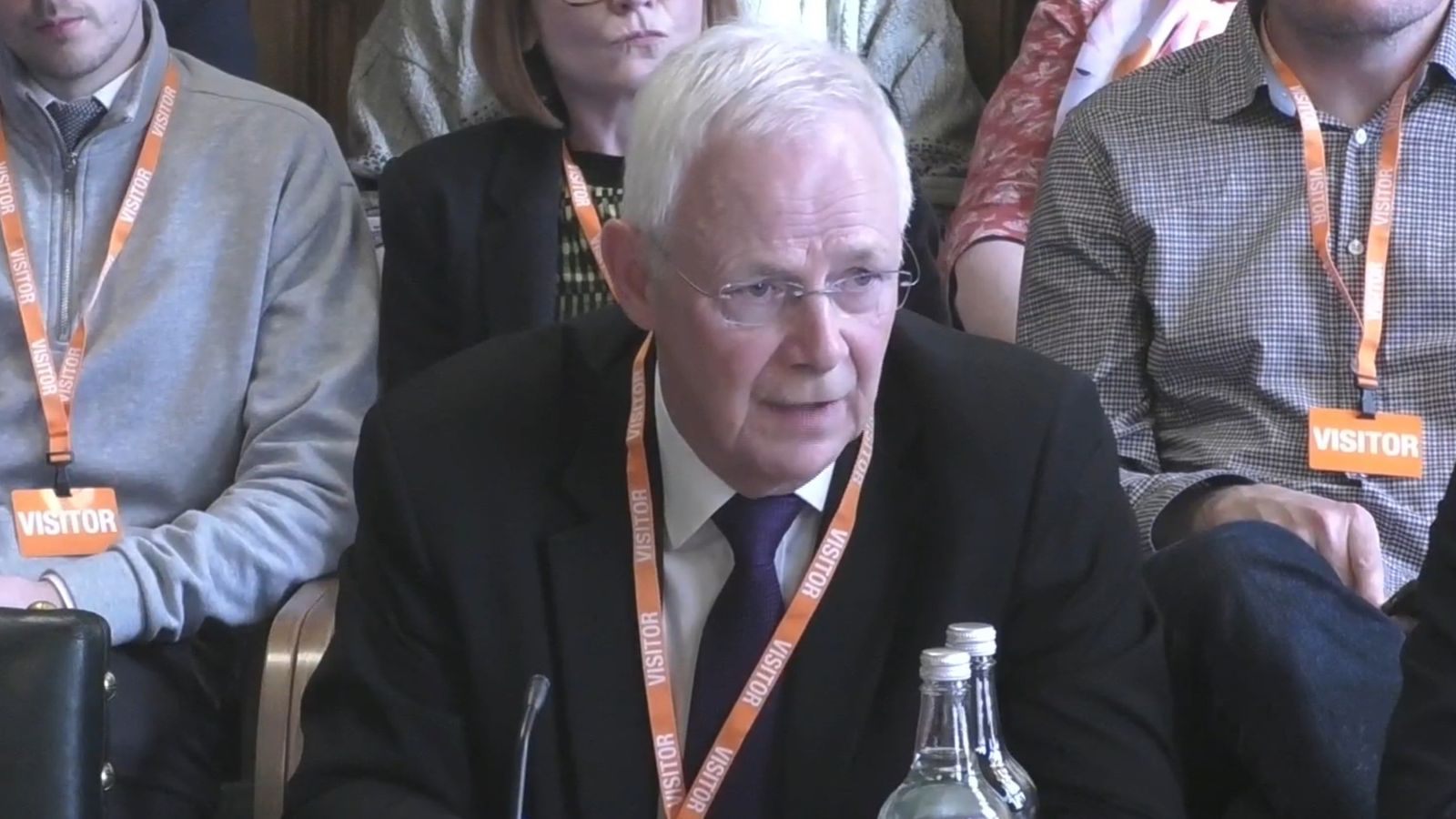
South East Water (SEW) has announced the resignation of its chairman following a critical report.
MPs from a key Commons committee declared they had no confidence in South East Water’s (SEW) leadership to turn the company around after a litany of failures.
SEW on Friday announced the resignation of independent non-executive chairman Chris Train, effective immediately.
The company was described as “devoid of proper leadership” and “riddled with cultural problems” in a new report from the Environment, Food and Rural Affairs (EFRA) Committee.
It criticised SEW’s chief executive David Hinton, and called for a reset of the company’s attitudes – and argued “change at this scale requires SEW’s leadership to change”.
Bosses were questioned twice by the committee over their response to multiple supply interruptions across Kent and Sussex.
Alistair Carmichael, Liberal Democrat MP for Orkney and Shetland and chair of the cross-party committee, said: “Someone in this company needs to take a grip, be accountable for its failings and put them right.”
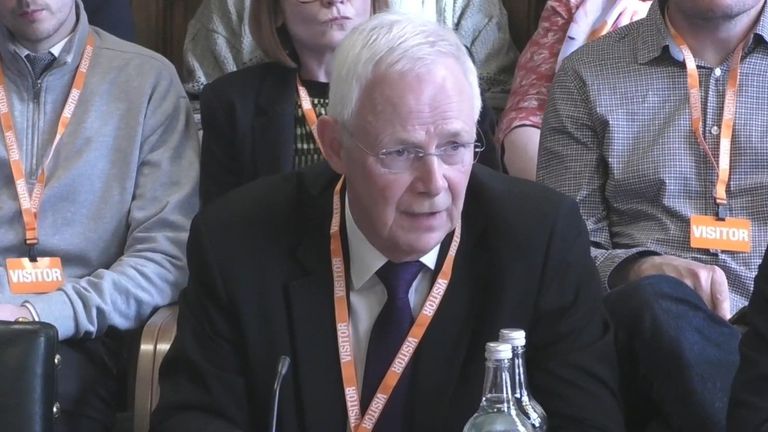
Chris Train has resigned. Pic: UK Parliament/PA
SEW said board discussions had taken place in recent weeks regarding the company’s recovery and transformation plan.
It said: “As part of this, the board and Chris considered the leadership of South East Water and mutually agreed that new independent board leadership is now required to oversee a critical period of positive, transformative change for the company, its customers, and local communities.”
Following the announcement of Mr Train’s departure, Lisa Clement, interim independent non-executive chair, said: “The board thanks Chris for his service to South East Water.
“The company’s focus remains on delivering engineering and operational changes that will strengthen the resilience of South East Water’s network and transform the company for the benefit of customers and local communities.”
The rebuke from MPs followed a major water outage in late 2025, which left tens of thousands of customers in Tunbridge Wells without drinking water for two weeks.
Ofwat, the water regulator in England and Wales, has been consulting on issuing a fine of up to 8% of SEW’s annual turnover (£22.46m) due to significant supply failures and poor customer service between 2020 and 2023.
The committee of MPs also asked shareholders in SEW – Utilities Trust of Australia, NatWest Group Pension Fund and Desjardins Group and associated holding companies – to hold the company to account.
Tunbridge Wells community group Dry Wells Action called for the resignation of Mr Hinton, and for the company to appoint consumers to its board as non-executive directors to ensure their voice is “no longer overlooked”.
Of Mr Train’s announcement, the group said: “Resignation is the correct decision. The real question is how Hinton thinks he cannot follow suit.”
It also called on the government to order regulators to join the board during a probationary period while it was assessed on whether it should retain its licence.
Failure to carry out routine cleaning and water tests
A lack of water jar testing – to ensure water quality – by SEW at its Pembury Treatment Works, where various failures led to the two-week outage in Tunbridge Wells, was highlighted in the report.
Despite having been advised by the Drinking Water Inspectorate (DWI) to carry out the tests, it failed to do so.
This meant the water company was “flying blind” at the time of last year’s water outage.
Alongside this, the DWI said routine maintenance and cleaning were not undertaken at Pembury before the Tunbridge Wells incident.
The committee argued that insufficient resourcing and plans to tackle these problems have been implemented since 2019, despite being costed in many cases.
Read more from Sky News:
Man charged over Golders Green stabbings
UK set to be hotter than Hawaii and Athens
The report was most scathing in its assessment of SEW’s leadership team, saying they had a “clear pattern” of blaming factors outside of their control “despite clear evidence to the contrary”.
“There is also a clear culture of obfuscating responsibility that is seriously inhibiting their ability to analyse problems and learn lessons,” it added.
SEW said in a statement: “The board and executive team reiterate their unreserved apology to those customers impacted by recent operational failures, and the resulting loss of public trust in the company and its services.”
The company said it planned to double investment in the water supply network serving Kent, Sussex, Surrey, Hampshire, and Berkshire over the next five years.



