


A little after 3 pm on Monday, I boarded an eight-year-old Kailash Airways Airbus H125 helicopter alongside my colleagues – Ashwini, our senior cameraperson, and Manogya Loiwal, our senior Hindi correspondent.
Getting access to a chopper had been an uphill task. For days, we had been reaching out to the government of Nepal for clearance, ensuring our requests would in no way impede the ongoing relief flights involving dozens of helicopters across the affected areas.
Advertisement – Scroll to continue
#NDTVExclusive | NDTV’s Vishnu Som (@VishnuNDTV), Ashwini and @ManogyaLoiwal flew in a helicopter to disaster-hit areas in Nepal.
Watch visuals as their helicopter crosses the Kathmandu Valley through intense rain before descending into the disaster-hit Trishuli Valley pic.twitter.com/HtOsnEKotz
— NDTV (@ndtv) September 2, 2026
Finally, just as our hopes were virtually fading, a single WhatsApp message changed everything, “Yes, you can go ahead.” The flight was officially cleared by the Civil Aviation Ministry alongside multiple authorities coordinating the rescue operations.
Advertisement – Scroll to continue
Our plan was to embark on an hour-long sortie originating from Kathmandu, flying up the Trishuli River Valley as far as Rasuwagadhi. Just before the border, we would take a turn within the narrow valley and head back.
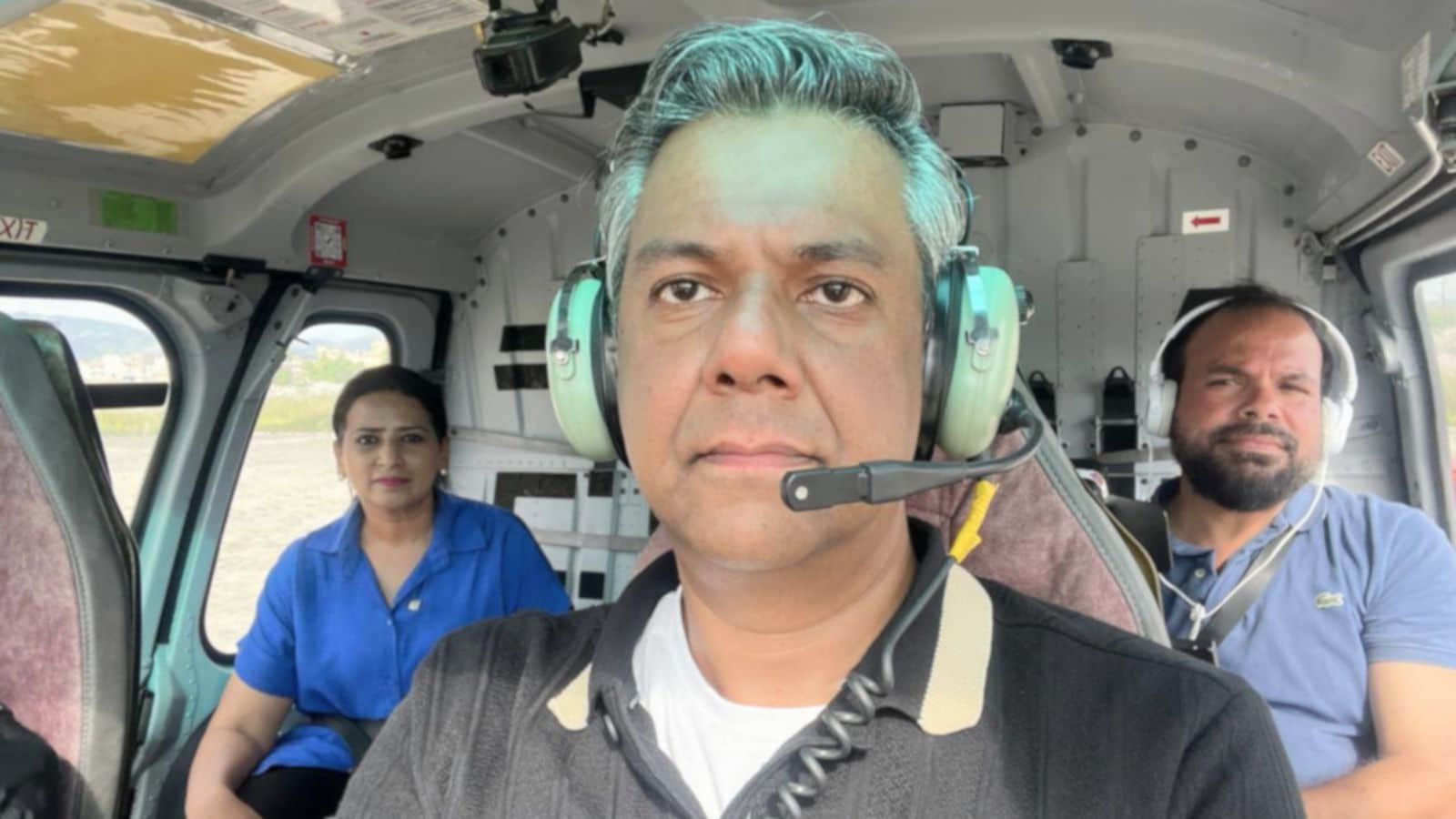
Team NDTV: Manogya Loiwal, Vishnu Som and Ashwini.
Having spent the previous several days reporting from the ground in some of the worst-hit areas, including Bidur, Devighat, Battar and Trishuli Bazaar, I thought I understood the scale of the catastrophe. But viewing it from the air offered an entirely different, humbling perspective on the tragedy.
As we crossed the first ridge surrounding the Kathmandu Valley, heavy rainfall closed in around us, rapidly deteriorating visibility. Our pilot, Colonel Rabindra Basnet, a retired veteran of the Nepali Army, faced a critical decision: push forward or abort and return to Kathmandu.
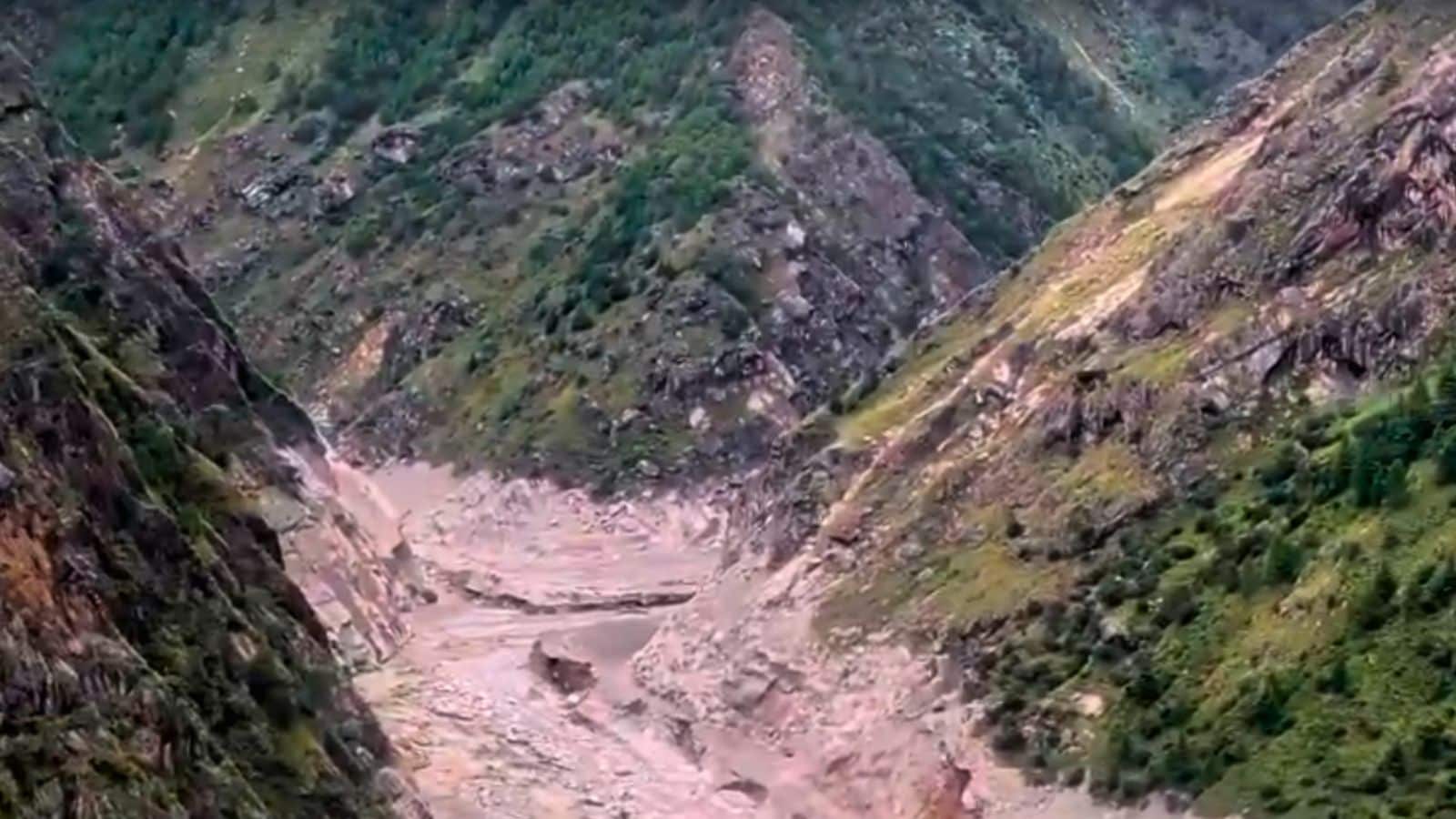
Approaching the Rasuwagadhi border post with China. The devastation is complete – no structure exists.
Relying on his years of experience navigating high-altitude mountain terrain, Colonel Basnet opted to press on. Within just 15 minutes of takeoff, we were hovering over Bidur – a distance that had previously taken us three arduous hours by road during our daily ground reporting.
Bidur serves as a central hub for helicopter operations in this region. Dozens of choppers have been crisscrossing this valley over the past several days, a relentless rhythm we had already seen from the ground. From the air, the heavy congestion of the airspace was striking; we counted at least six helicopters landing and taking off from Bidur simultaneously.
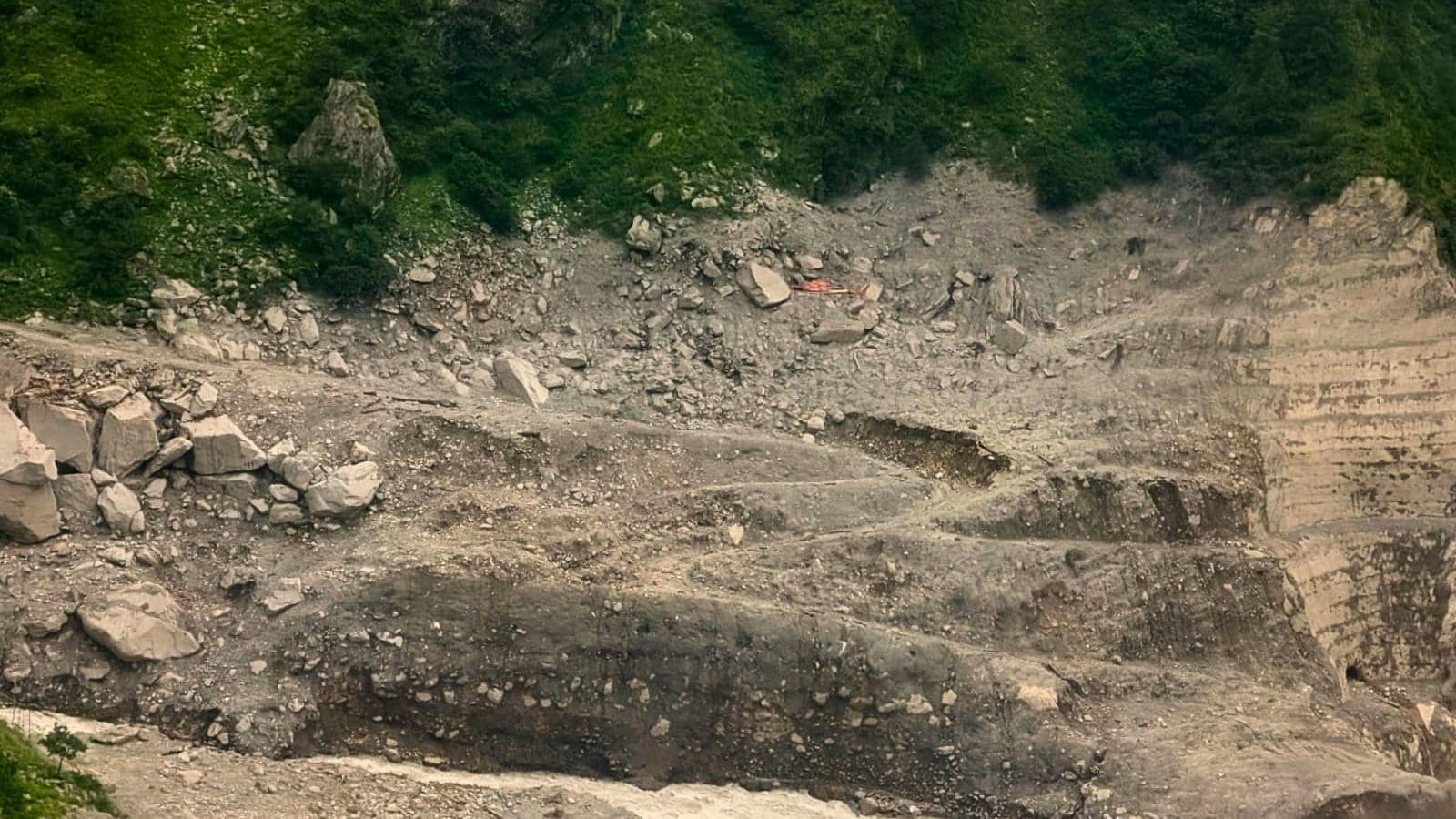
Betrawoti mud flats where houses and shops existed over a week ago.
To maintain order in such tight quarters, pilot protocols are strict: choppers traveling north stay to the left of the valley, while those heading south fly along the right.
After receiving clearance to proceed north, we took off from Bidur and charted a course toward the Trishuli 3A tunnel rescue site. This corridor is packed with run-of-the-river hydropower projects – more than a dozen line the river system – and virtually all of them have been decimated or critically damaged by the floods.
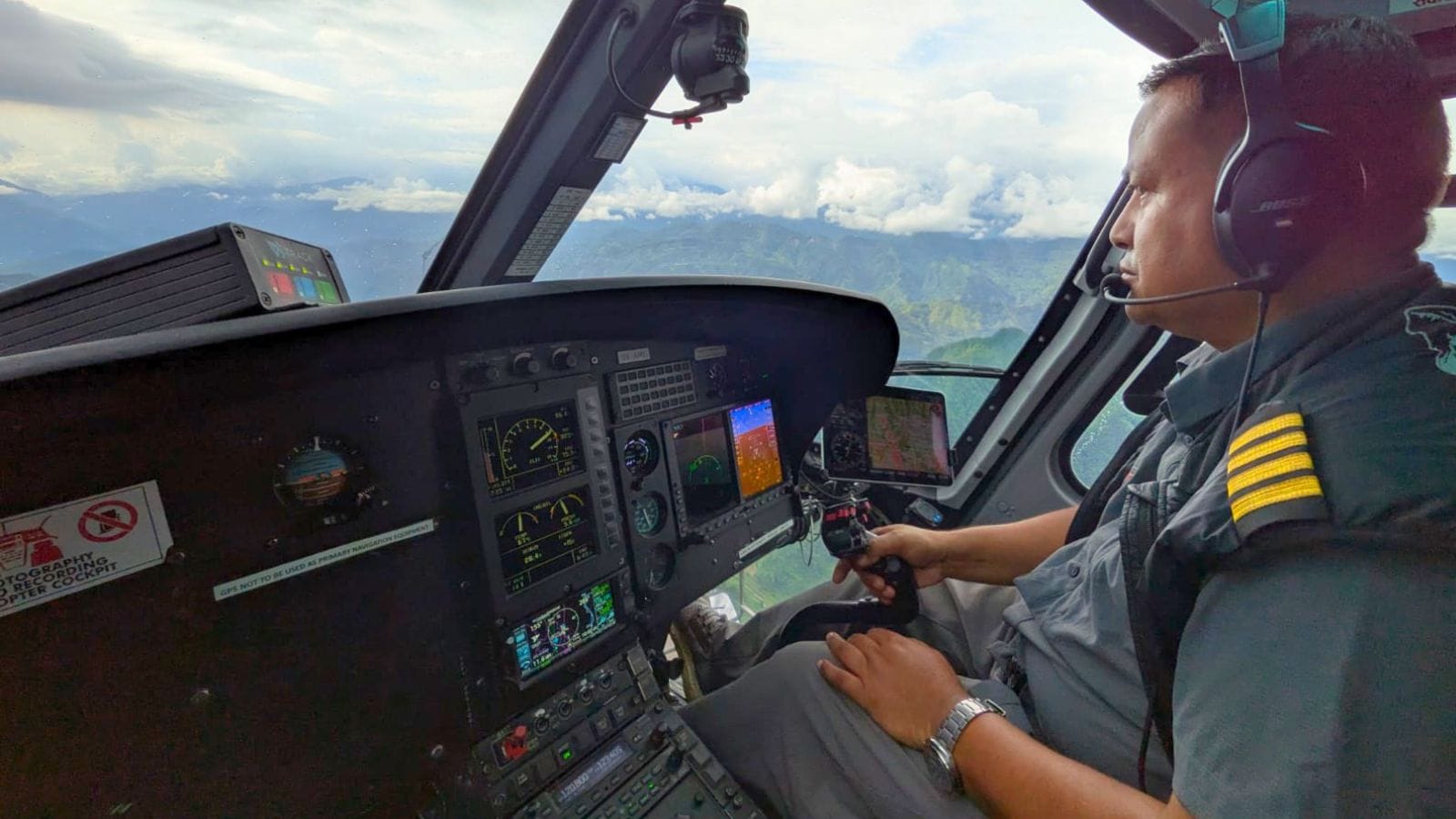
Colonel Rabindra Basnet (retired) at the controls of our helicopter.
The resulting toll on Nepal’s power grid is severe. While Nepal typically operates with an electricity surplus, the destruction of these major facilities has drastically eroded that margin. Yet, my primary goal from the air was not merely to reflect on the economic damage but to see firsthand the human and physical devastation left in the flood’s wake.
Within minutes, we arrived over the Trishuli 3A tunnel rescue site, one of the run-of-the-river hydropower projects hardest hit by the disaster. Here, as across all these impacted plants, rescuers are locked in a desperate race against time. They are fighting to penetrate deep into the subterranean structures and hidden mazes of infrastructure to search for any signs of survivors. With every passing hour, the hope of finding anyone alive grows increasingly remote, given the staggering volume of mud and silt choking the access tunnels.
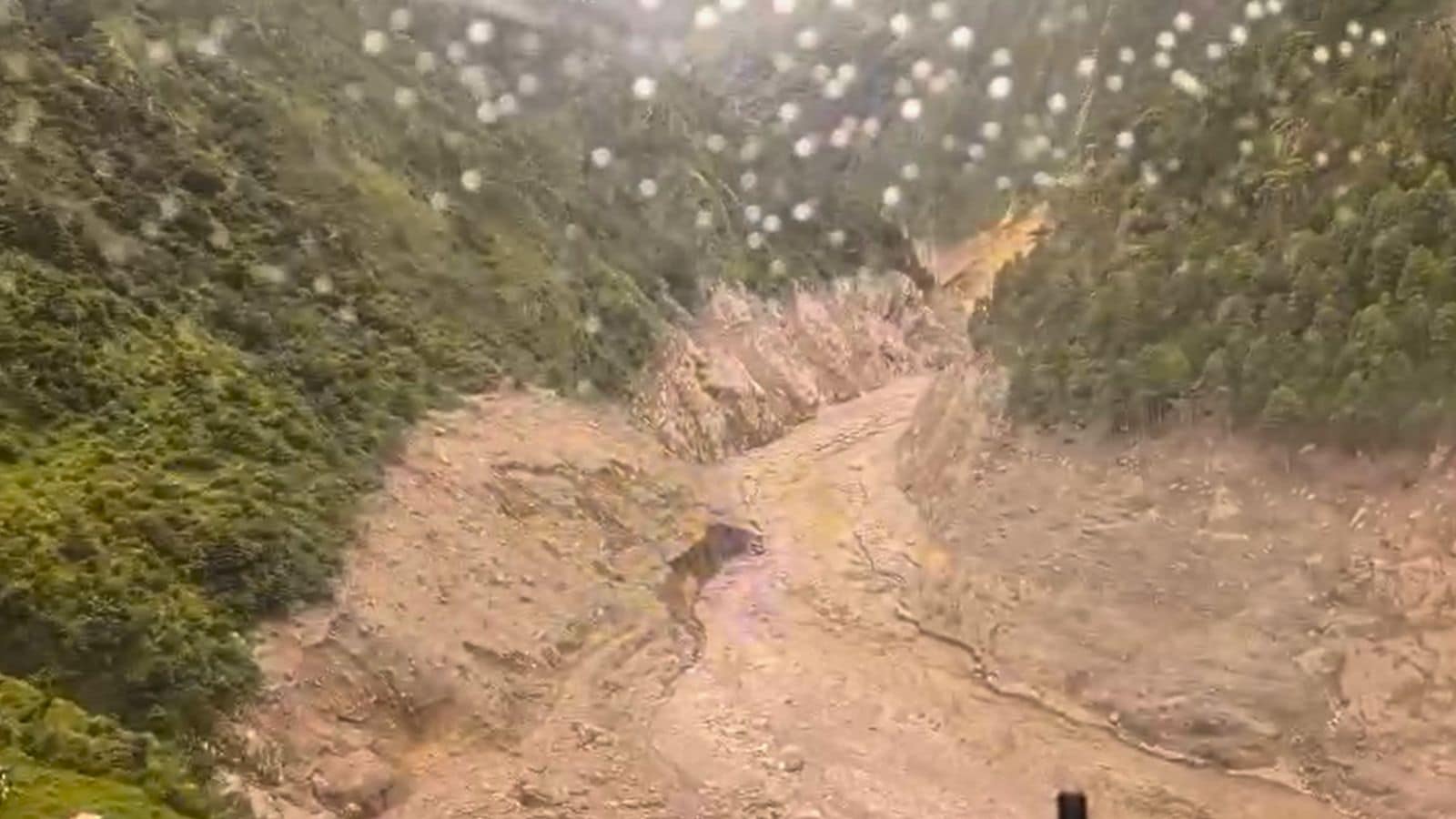
Flying low over mud tracts where houses used to exist.
When our helicopter touched down at the site, I stepped out and spoke with a geotechnical expert, who confirmed there had been no progress yet in reaching those trapped inside. Desilting operations were underway, with an excavator steadily digging through the mud.
The sheer nature of this mud demands explanation: it is incredibly deep and thick.
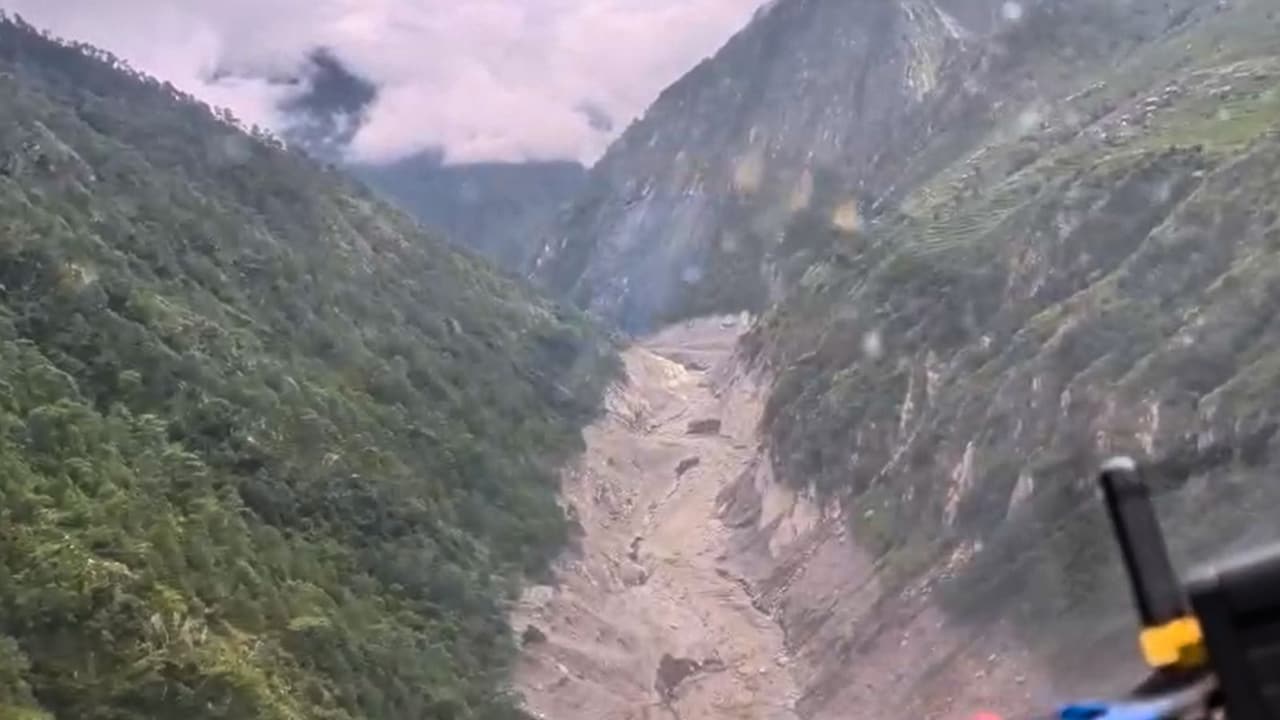
Flying up the Trisuli River Valley. The scars of the damage caused by the flood are evident on both banks of the river.
During our earlier ground reporting along the banks of the Trishuli, stepping carelessly meant instantly sinking up to your knees. When the flood surge hit last week, the water rose three stories high, completely submerging and destroying buildings across the region. The sheer volume of mud and debris barreling down the river has fundamentally altered the entire geography of the landscape.
We quickly reboarded the helicopter and flew north over Betrawoti, Dharapani, Ghumti Bazar, Ramche, Dhunche and Timure, tracking toward Rasuwagadhi just short of the border with China.
As we pushed further north, what I saw from the air was startlingly different from the ground reporting we had done in Bidur and Devighat.
#NDTVExclusive | Watch: NDTV’s helicopter touches down at the Trishuli-3 tunnel rescue site, bringing you ground-zero visuals from the heart of the operation#NepalFloods pic.twitter.com/4AJZcRMOma
— NDTV (@ndtv) September 2, 2026
In many places, there were no ruined buildings left to see. There were no mangled structural remains or demolished foundations. In areas that had been thriving settlements just days before, there was simply nothing left – only vast, featureless mud flats that seemed to appear out of nowhere. Where dozens of homes, commercial buildings, roads, bridges and infrastructure stood just a week prior, today there was total emptiness.
Had the pilot not informed me that we were flying over once-inhabited towns, I would have assumed these mud flats extending along both sides of the Trishuli River were just a natural part of the riverbed.
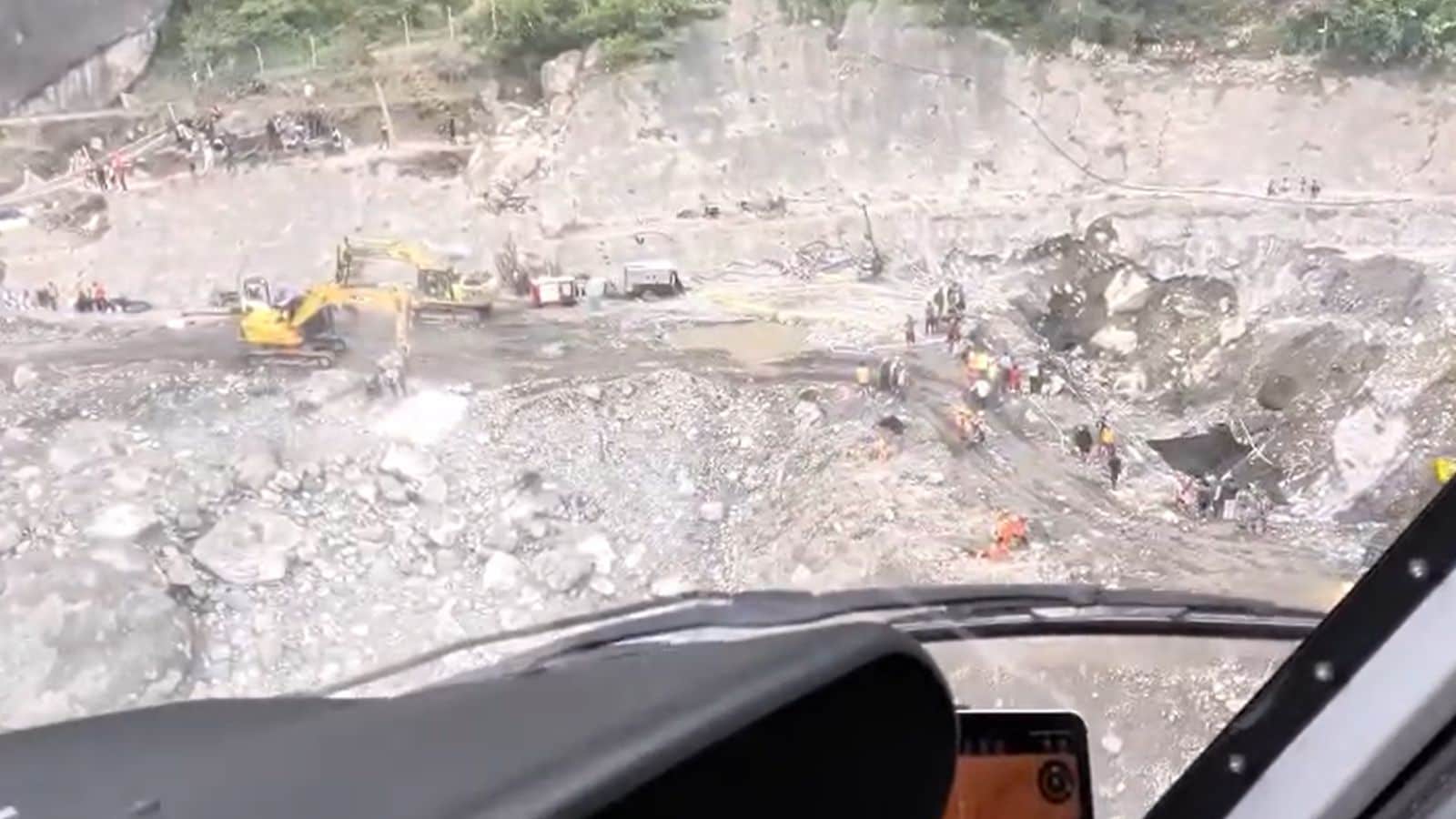
Landing at the Trisuli 3 tunnel rescue site.
A little while later, Colonel Basnet informed us that we were approaching the end of the river valley and would need to turn south, as the Chinese border at Rasuwagadhi lay just ahead. Flying a circuit or two just short of the border, I was able to film the devastating toll on this vital outpost, capturing the destruction left at what was once a thriving border crossing.
With fuel levels progressively dropping, it was time to turn south toward Kathmandu. Colonel Basnet needed to preserve a fuel reserve in case weather conditions forced us to hold or manoeuvre en route.
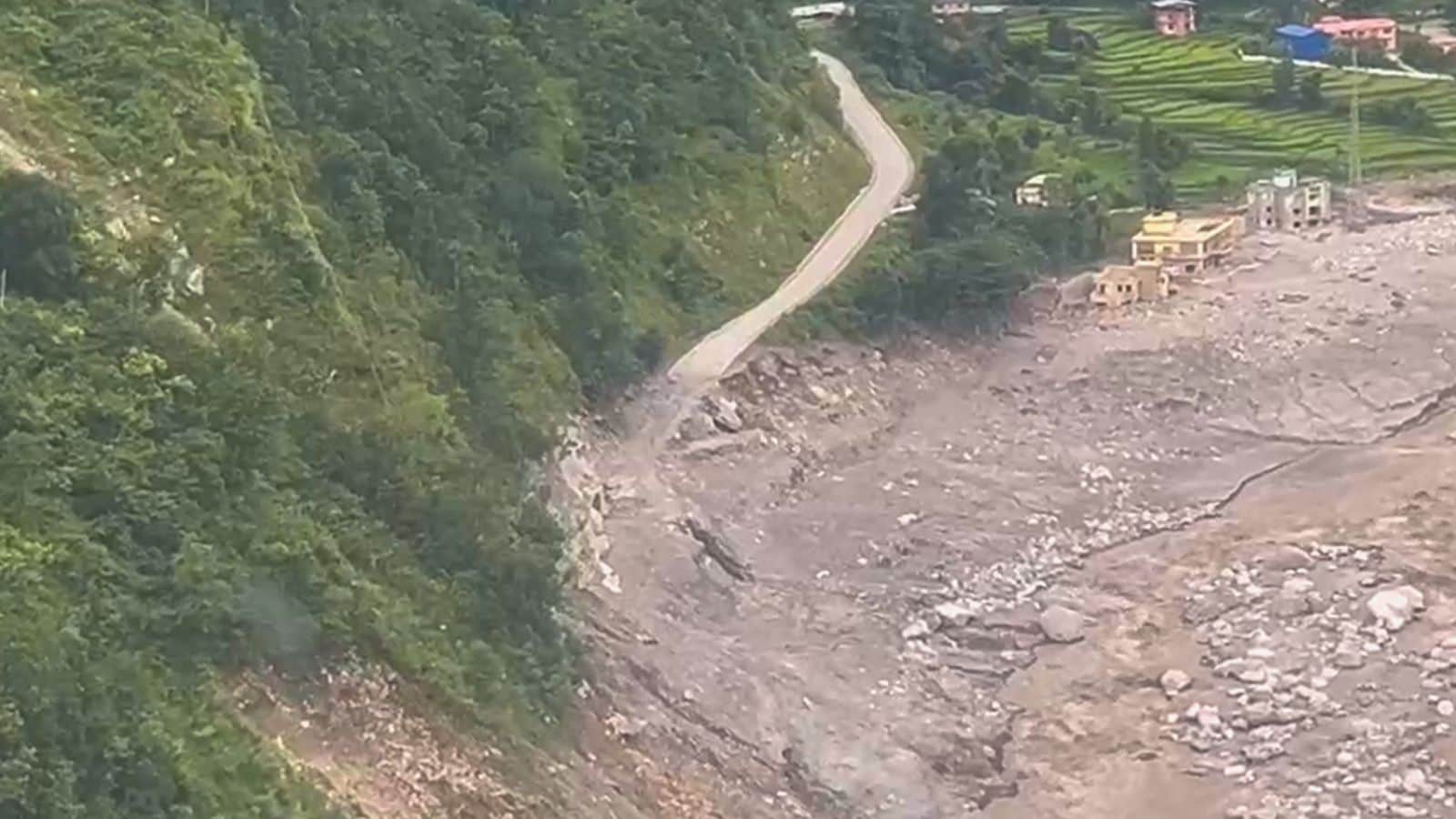
Roads completely cutoff
As we retraced our path down the valley, my mind raced with memories of past assignments. Over the years, I have covered conflicts and natural disasters across the world – from the tsunami in Sendai, Japan, to the Indian Ocean tsunami from Great Nicobar Island, the Bhuj earthquake, the 2015 Nepal earthquake and the devastating floods in Bihar.
In many ways, reporting on natural disasters is far more harrowing than covering modern war.
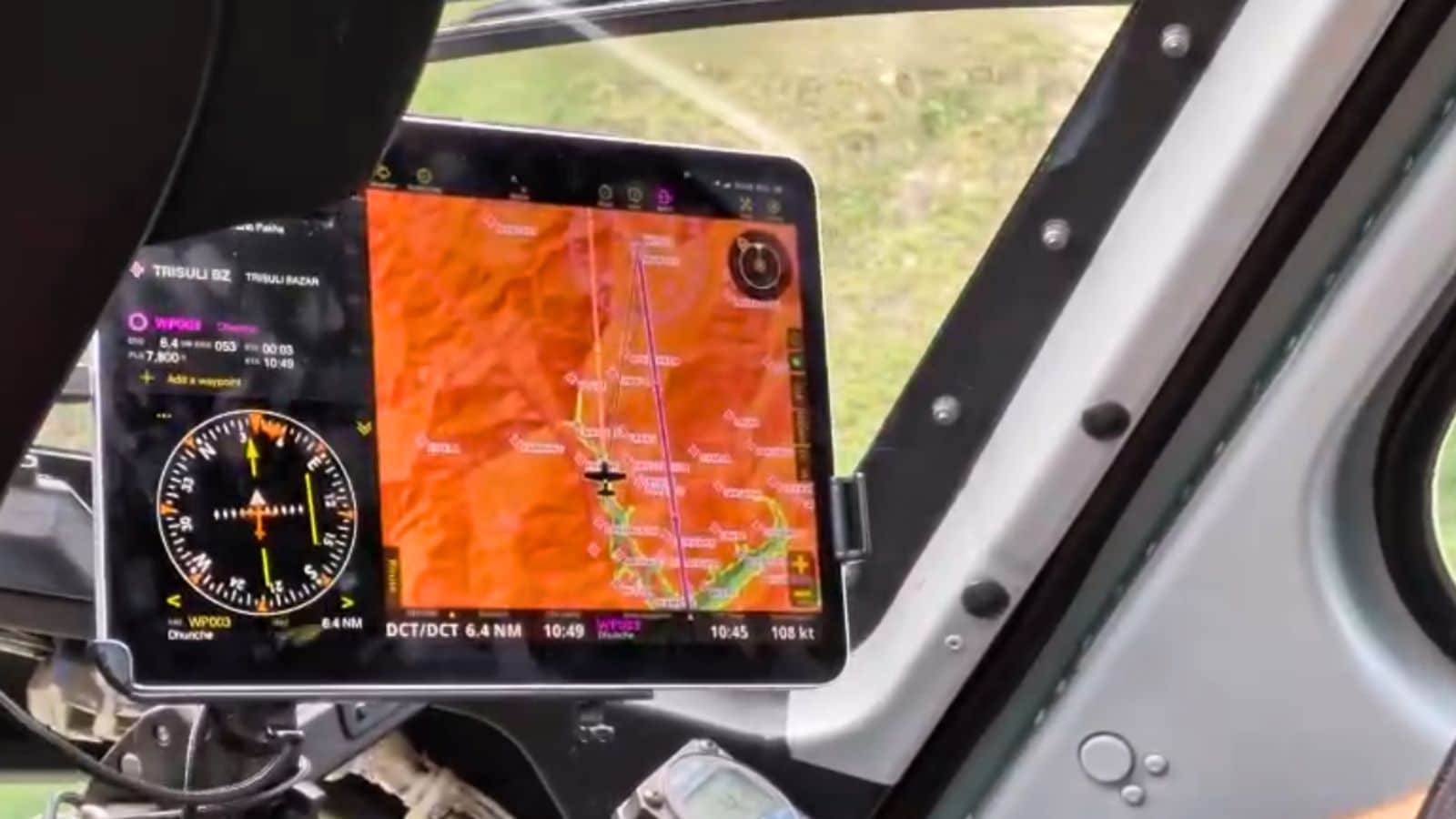
Digital map in the chopper showing the route.
In modern warfare, efforts are often made to avoid collateral damage. But nature holds back nothing. When a river rages in full surge, hurling massive boulders, rock and sediment downstream at speeds exceeding 200 kilometres per hour, it wipes out everything in its path. The destruction is indiscriminate, covering vast swathes of land and the loss of life often far exceeds what we see on battlefields.
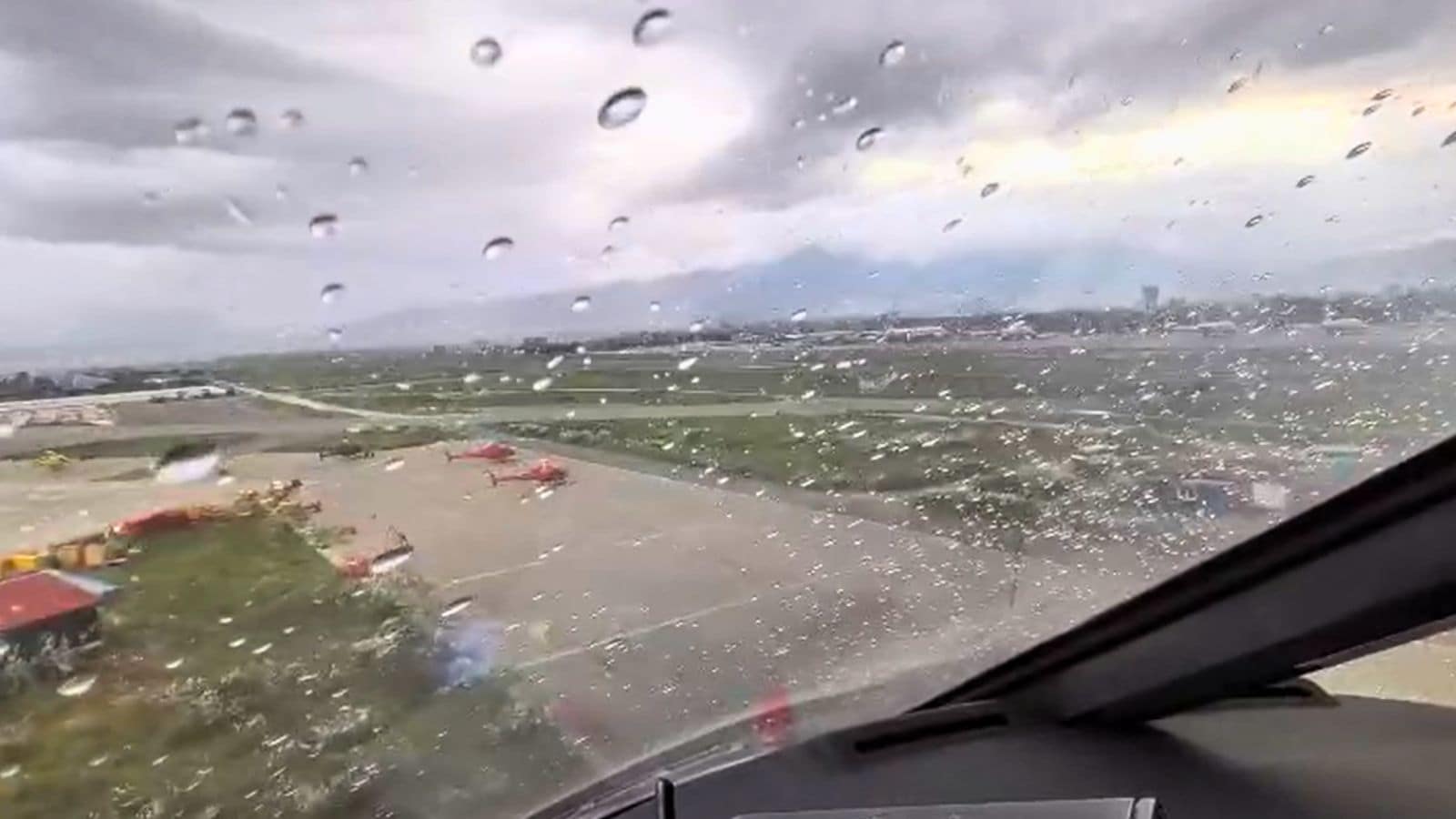
Landing upon return in Kathmandu
For the grieving families, the closure they so desperately seek will not come easily. Recovering the bodies of their loved ones – many buried deep beneath tonnes of suffocating mud – could take weeks, months or may never happen at all.
What remains agonizingly clear is that the death toll will only continue to rise. Hundreds are confirmed dead, thousands remain missing and no one truly knows when these numbers will reach a final count.
#NDTVExclusive | Watch: The final leg of NDTV’s Helicopter Report as our team lands in Kathmandu after an aerial survey of Nepal’s flood-ravaged regions#NepalFloods @VishnuNDTV @manogyaloiwal pic.twitter.com/a217KmFd11
— NDTV (@ndtv) September 2, 2026
For now, across the scoured banks of the Trishuli Valley, the closure that so many families pray for remains devastatingly out of reach.


