


Nana Patekar had a whole TED Talk before TED Talks were even a thing. He just needed a gallows, a corrupt political system, a crowd that had lost its conscience, and approximately zero patience for nonsense. And if you thought the internet invented the art of turning outrage into a monologue, Mehul Kumar’s Krantiveer (1994) would like a word.
Three decades later, watching Nana Patekar confront a society that seems determined to destroy itself is an experience that swings between admiration, exhaustion and the occasional urge to ask everyone on screen to take a deep breath.
With Patekar’s death, revisiting this film feels particularly poignant. It is also an opportunity to separate the legend of Krantiveer from the film itself, because while its leading man remains extraordinary, the movie around him is a considerably more complicated story.
Nana Patekar Was Operating On A Different Frequency
My introduction to Nana Patekar was through the chaotic, meme-worthy brilliance of Uday Shetty in Welcome. (2007). His performances in Parinda and Ab Tak Chhappan, however, revealed an entirely different actor: controlled, unsettling and capable of making silence feel more threatening than dialogue.
Krantiveer brings yet another version of Patekar to the table, one who wears his anger like a second skin but occasionally lets a surprising amount of vulnerability slip through.
He plays Pratap Narayan Tilak, a man who has spent so much of his life witnessing injustice that he has stopped expecting anything better from the world. Thrown out of his home as a young man, Pratap grows up on the margins and eventually works as a debt collector for chawl owner Laxmidas Dhayal (Paresh Rawal). He sees poverty, exploitation and corruption up close, but rather than immediately becoming a crusader for the oppressed, he develops a cynical, almost darkly comic relationship with the misery surrounding him.
Pratap is not interested in saving the world. In fact, he appears thoroughly irritated by the suggestion that he should even try.
That is what makes his character interesting. His indifference is not necessarily ignorance, it feels like a defence mechanism developed by someone who has seen enough suffering to know that outrage rarely changes anything.
When journalist Megha Dixit (Dimple Kapadia) attempts to awaken his revolutionary spirit, his responses are less inspirational than dismissive. He would rather be left alone than listen to another lecture about changing the system.
For a film that eventually places its protagonist at the centre of a revolution, this initial reluctance is one of its more compelling ideas. Pratap does not begin as a man who believes in the power of the people. He begins as someone who has given up on them.
Patekar understands that distinction beautifully. His sarcasm is sharp, his body language carries the weariness of someone perpetually unimpressed, and even his moments of humour feel like extensions of his disillusionment.
He does not play Pratap as a conventional hero waiting for the right moment to reveal his greatness. For much of the film, he seems almost determined to prove that greatness is a pointless pursuit.
The performance, however, also shows that intensity can be a double-edged sword. Patekar is so committed to Pratap’s anger that the character occasionally feels stuck at the same emotional pitch. His outbursts are effective individually, but when nearly every confrontation threatens to become a shouting match, the impact begins to diminish. A little restraint would have made some of those explosions hit harder.
Still, there is something undeniably magnetic about watching an actor commit so completely to a character who is neither conventionally charming nor particularly interested in being liked.
The Anger Has A Point, Even When The Plot Loses Its Own
At its core, Krantiveer is about the machinery of corruption and the people crushed beneath it. Politicians, builders and criminals exploit the poor, while communal divisions become convenient tools for those who benefit from keeping ordinary people at each other’s throats.
The film’s central argument is that the people who suffer most from these systems are often persuaded to fight one another instead of questioning who profits from their suffering.
It is a strong premise, and one that gives Pratap’s cynicism a purpose beyond making him look cool.
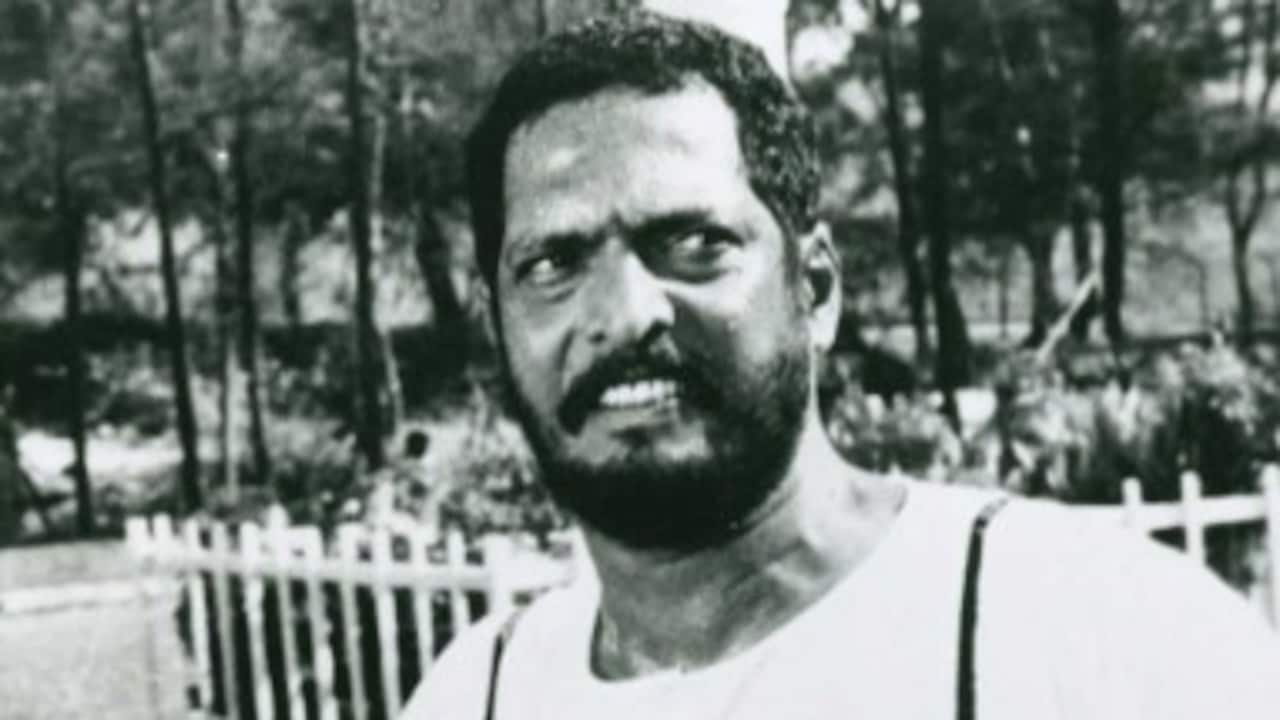
The film is particularly effective when it exposes how easily religious identity can be weaponised. When a crowd is consumed by communal hatred, Pratap challenges the very logic of the violence, asking how anyone can distinguish Hindu blood from Muslim blood.
It is a straightforward argument, but its simplicity is precisely what makes it land. The people fuelling the hatred have complicated motives; the human cost, however, is painfully uncomplicated.
A still from the film.
Watching the film decades after its release, the sequence still carries considerable force. It does not feel powerful because the dialogue is particularly subtle. It feels powerful because the absurdity of the situation is impossible to ignore.
The same cannot be said for every social issue the screenplay attempts to tackle.
Krantiveer has corruption, land grabbing, communal violence, poverty, criminality and a media ecosystem that frequently appears more interested in spectacle than accountability. Each subject could sustain an entire film. Here, they are often squeezed into the same narrative, with the result that some of them receive little more than a dramatic introduction before the story rushes towards its next crisis.
The film wants to say everything, everywhere, all at once. Unfortunately, it does not always give its ideas enough room to breathe.
There is a difference between a film that has a lot to say and one that knows how to say it. Krantiveer frequently understands the urgency of its subjects but struggles to find the right balance between them.
Its politics are most effective when they emerge naturally from Pratap’s experiences. They become less convincing when the screenplay appears to pause the story so that another social problem can be presented to the audience.
The Supporting Cast Deserved A Better-Written Film
Pratap may be the film’s emotional centre, but the world around him is not nearly as well developed as it could have been.
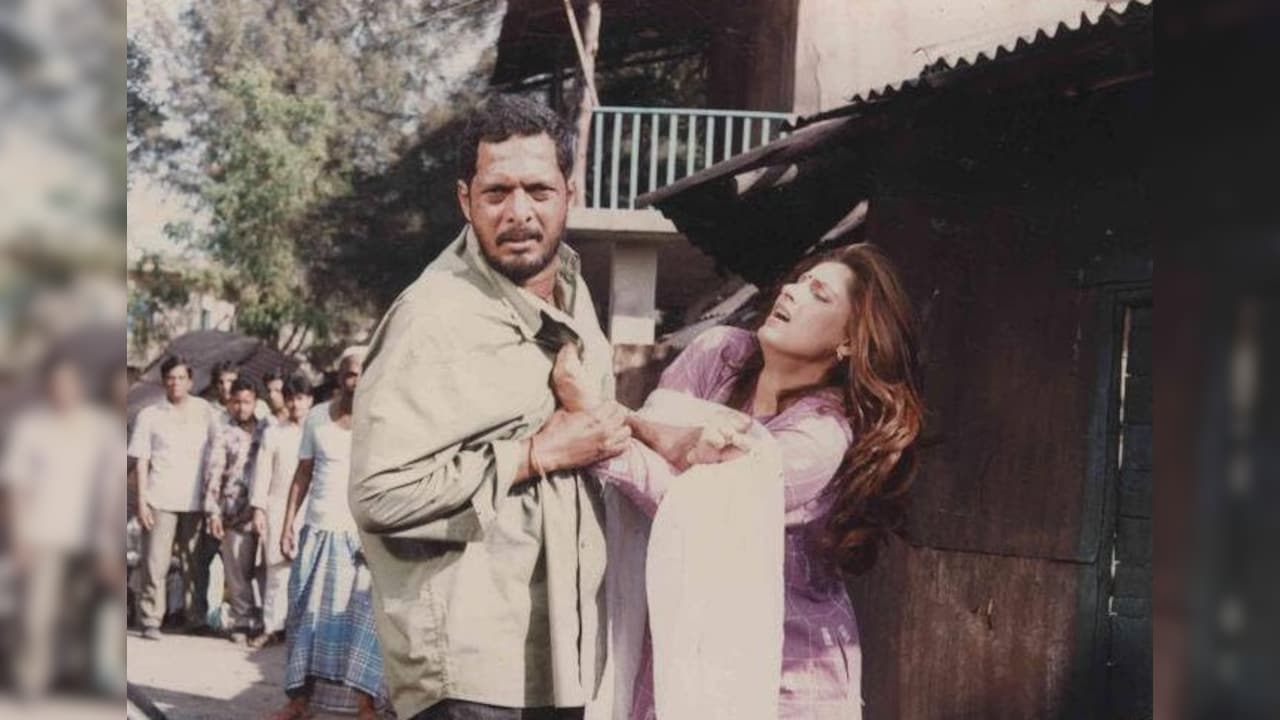
Megha Dixit, played by Dimple Kapadia, is introduced as a journalist determined to expose corruption and challenge the powerful.
In theory, she could have been a fascinating counterpoint to Pratap: someone who still believes that speaking up matters, even when the system appears designed to silence her. Instead, she too often becomes the person who exists to provoke, explain or redirect the protagonist.
The irony is that a film concerned with giving the powerless a voice does not always know what to do with its own female characters. Megha has convictions, but her character is frequently reduced to advancing the plot or delivering the next argument.
Other women receive even less room to exist beyond familiar melodramatic roles, romantic complications and scenes designed to generate shock.
This is one of the film’s more conspicuous limitations. Its social commentary may be ambitious, but its understanding of women’s agency remains trapped in several conventions of its time.
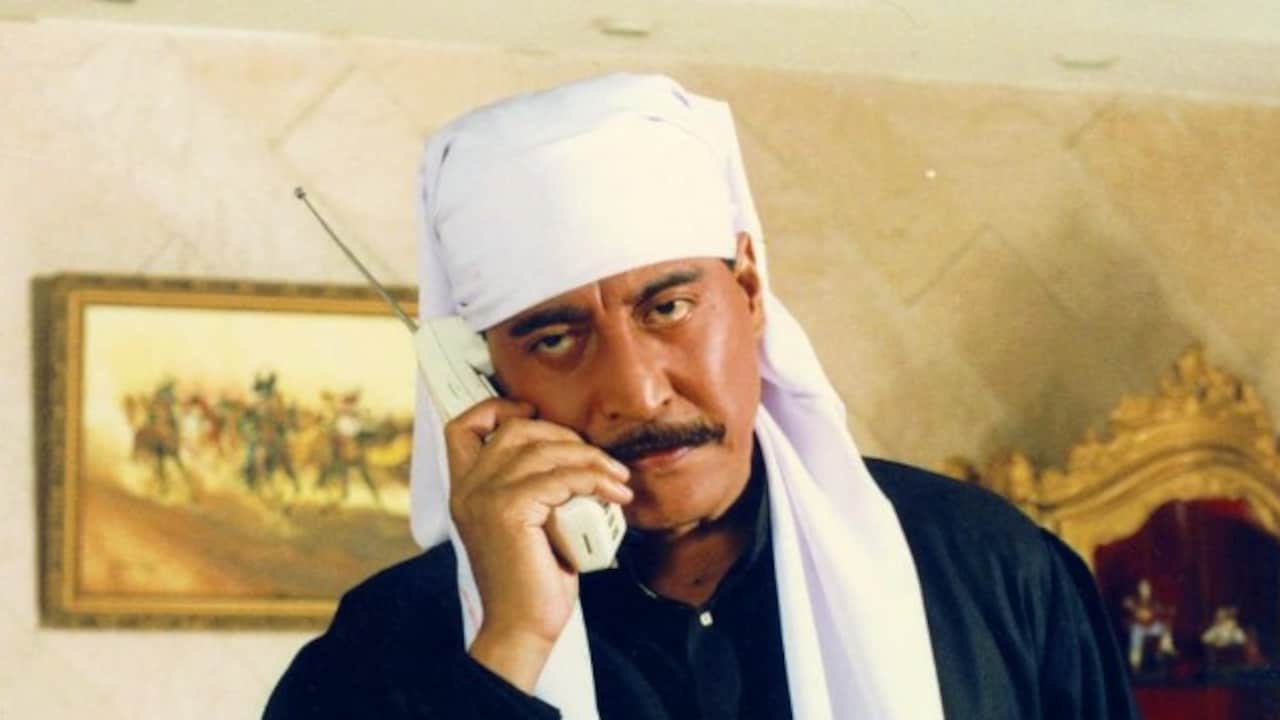
Danny Denzongpa’s Chatur Singh, meanwhile, has the ingredients of a formidable antagonist. He represents the kind of power that operates through intimidation and political influence rather than any meaningful moral authority.
A still from the film.
Yet the character never develops into the consistently intimidating presence the story needs. His threat is often asserted more forcefully than it is established, leaving the conflict dependent on the audience accepting his power rather than fully understanding it.
Paresh Rawal’s Laxmidas adds texture to the film’s world, but the narrative rarely allows its supporting characters to compete meaningfully with Pratap for attention. Almost everyone seems to be waiting for Nana Patekar to take over the scene.
And he usually does. That is both the film’s greatest strength and one of its structural weaknesses.
The 90s Called. They Want Their Melodrama Back.
There is something almost charming about how unapologetically 1990s Krantiveer is. The film begins with family tragedy, moral outrage and an almost immediate escalation of domestic conflict.
It has the righteous elder, the rebellious young man, the corrupt establishment, the journalist determined to expose it, the romantic subplot, the obligatory songs and the dramatic confrontations that appear to operate independently of ordinary human conversation.
Nobody in this film seems particularly interested in underreacting.
The dialogue is frequently delivered as though every sentence has been capitalised, underlined and accompanied by an exclamation mark. Characters do not simply disagree; they confront each other as if democracy itself depends on winning the argument.
Emotional revelations arrive with the subtlety of a fire alarm, and the film’s transitions between romance, comedy, violence and political drama can feel startlingly abrupt.
The songs and dance sequences also interrupt the momentum, particularly when the story is attempting to establish the seriousness of the world its characters inhabit.
Some of the film’s dramatic devices require an especially generous suspension of disbelief. Logic is occasionally invited into the room, only to be escorted out before the next monologue begins.
A still from the film.
And yet, it would be unfair to judge the film solely by how closely it resembles contemporary cinema. Its heightened performances and theatrical dialogue are part of the grammar of the era. The problem is not that Krantiveer is melodramatic. It is that the melodrama sometimes overwhelms the very ideas it wants us to take seriously.
The film also has an interesting relationship with its protagonist’s moral evolution. Pratap’s refusal to become a messiah initially distinguishes him from the usual larger-than-life hero. He does not immediately offer solutions or promise to rescue everyone.
But as the plot progresses, he increasingly becomes the very centre of the action, and the story eventually leans on his transformation into a vigilante.
The man who once mocked the idea of revolution is ultimately positioned as the person capable of delivering it. The contradiction is not necessarily a problem in itself, but the transition could have been more carefully developed.
The film wants to preserve Pratap’s scepticism while also giving audiences the catharsis of a hero who finally takes matters into his own hands. Sometimes, it achieves both. At other times, it seems unsure which version of him it prefers.
The Journalism Problem
As a journalist, I found the film’s treatment of the media particularly frustrating.
Megha’s work is presented largely through the familiar framework of the fearless reporter who exposes wrongdoing and pushes the narrative towards a climactic confrontation.
Journalism becomes a convenient vehicle for the film’s larger message rather than a profession with its own conflicts, compromises, responsibilities and limitations.
There is little room for the more complicated realities of reporting: the difficulty of verifying allegations, the pressure of powerful sources, the distinction between exposing a problem and solving it, or the possibility that the media itself can be flawed without being entirely corrupt. Instead, the film often treats journalism as a dramatic bridge between injustice and public outrage.
Its courtroom-style confrontations and public speeches also suggest that once the truth is spoken loudly enough, the world should be compelled to listen.
That is a satisfying cinematic fantasy. It is not how change usually works.
The contrast with the present is striking, too. In 1994, a public speech or a newspaper expose could be framed as the moment that finally forced society to confront an uncomfortable truth.
Today, the same outrage might be clipped into a 30-second reel, circulated across social media, turned into a meme and buried beneath the next trending controversy before the original issue has been resolved.
The platforms have changed. The attention economy has become faster and more fragmented. But the gap between making people angry and making institutions accountable remains very real.
I do not need Krantiveer to offer a contemporary understanding of journalism. I do wish it had allowed its characters to inhabit a world that was more complicated than good people, bad people and one spectacular speech capable of exposing them all.
And Then Comes That Speech
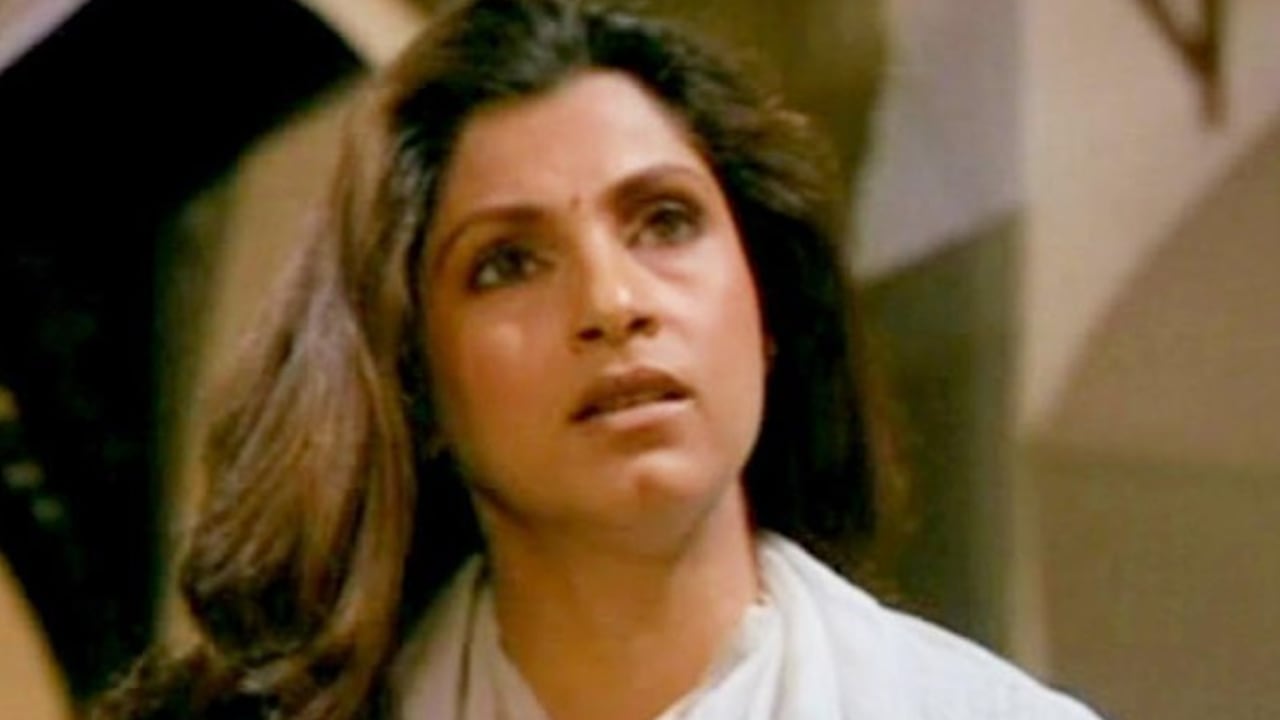
The famous gallows sequence is the moment Krantiveer has been building towards, and it remains the film’s most compelling set piece.
Standing moments before his execution, Pratap addresses the people who have gathered to witness his death.
His opening line, “Aa gaye meri maut ka tamasha dekhne,” is instantly recognisable, even to those who may never have watched the film in its entirety.
For a Gen Z viewer who has encountered countless memes, references and remixes built around iconic Bollywood dialogues, there is an unavoidable moment of recognition. The Internet has made the line familiar in a way that can almost rob it of its original context. Watching the scene in full, however, restores something of its force.
This is not simply a man delivering a punchline that became a meme. It is a character confronting a society that has turned even human suffering into public entertainment.
What makes the sequence work is Patekar’s command of the performance. His voice carries fury, but there is also exhaustion beneath it.
His expressions shift between contempt, disbelief and something resembling grief. He does not merely shout at the crowd; he seems genuinely disgusted by what their presence represents.
The speech is theatrical, certainly. It is also designed to be theatrical. This is a film that wants its protagonist’s final words to overwhelm the spectacle of his execution, turning the condemned man into the only person in the room who appears to understand the gravity of the moment.
The scene’s power lies in the uncomfortable question it asks of its audience: are these people here because they care about justice, or because they want to watch a spectacle?
A still from the film.
That question has acquired an additional life in the age of viral outrage, public shaming and online pile-ons. We consume other people’s suffering in real time, often with the confidence that watching, commenting or sharing automatically places us on the right side of an issue. Pratap’s speech challenges that comfortable distance between witnessing injustice and doing something about it.
There is, of course, a limit to how much contemporary relevance one should read into an older film. But the sequence does not need to predict social media to feel familiar. It understands the human appetite for spectacle, and that appetite has survived every technological upgrade.
The scene is not subtle. It is not supposed to be. And unlike several other stretches of the film, it earns its volume.
Does Krantiveer Hold Up?
Watching Krantiveer decades after its release, I found myself admiring its ambition more consistently than its execution.
The film has a clear understanding of the forces it wants to challenge, and its central character is far more interesting than the conventional angry hero might suggest. Pratap’s cynicism, sarcasm and initial refusal to play saviour give him an edge that many of the film’s other characters lack. Patekar makes that contradiction watchable, even when the screenplay struggles to develop it.
But the film is also overstuffed, uneven and often far too pleased with its own dramatic declarations. Its female characters deserve greater agency, its antagonist needed more depth, and its treatment of journalism feels simplistic. The songs, tonal shifts and occasional leaps in logic do not always help. Some of the dialogue still lands. Some of it feels as though it has been waiting three decades for someone to suggest an edit.
What surprised me most was that the film’s central frustration remains recognisable without every aspect of its storytelling feeling timeless. Corruption and communal hatred are not new subjects, but relevance alone cannot make every scene effective. A film can be right about the world and still be clumsy in the way it depicts it.
With Nana Patekar’s death, the temptation is to revisit Krantiveer only as a tribute to an actor who could command a screen through sheer force of personality. That would be understandable, but incomplete. The more interesting exercise is to return to the film, appreciate what he brought to it, and acknowledge what the film itself could not quite achieve.
Pratap Narayan Tilak may begin as a man who has stopped believing in the possibility of change. By the end, he has become a symbol of resistance, even if the journey between those two points is not always as convincing as it should be.
And Patekar? He makes that journey worth watching.
Krantiveer is not a flawless classic, nor is it a film that needs to be declared perfect simply because its most famous scene still resonates. It is a messy, loud, occasionally exhausting piece of 1990s cinema with a performance that refuses to be contained by its limitations.
He really did deliver a TED Talk before TED Talks were a thing. The film could have used a little less talking and a little more listening. But when Nana Patekar finally stands at the gallows and asks the crowd why they have come, the joke disappears, the memes recede, and the actor takes over.
For those few minutes, Krantiveer remembers exactly what it came to say.


