


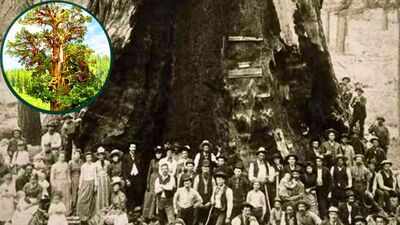
California’s Stanislaus National Forest is home to the Bennett Juniper, a remarkable tree known for its enormous trunk and great age. It is the largest known example of the Sierra juniper, described as the world’s largest juniper species. The tree stands 24 metres tall and has a trunk measuring 389 centimetres in diameter.According to the Journal of the California Native Plant Society, Fremontia, the juniper is at least 2,200 years old, although its exact age remains unknown. Its hollow trunk prevents researchers from obtaining a complete tree-ring record. Despite this limitation, the available evidence confirms that the Bennett Juniper has survived for millennia, making it an exceptional example of California’s ancient trees.
The world’s largest juniper grows in a Sierra mountain meadow
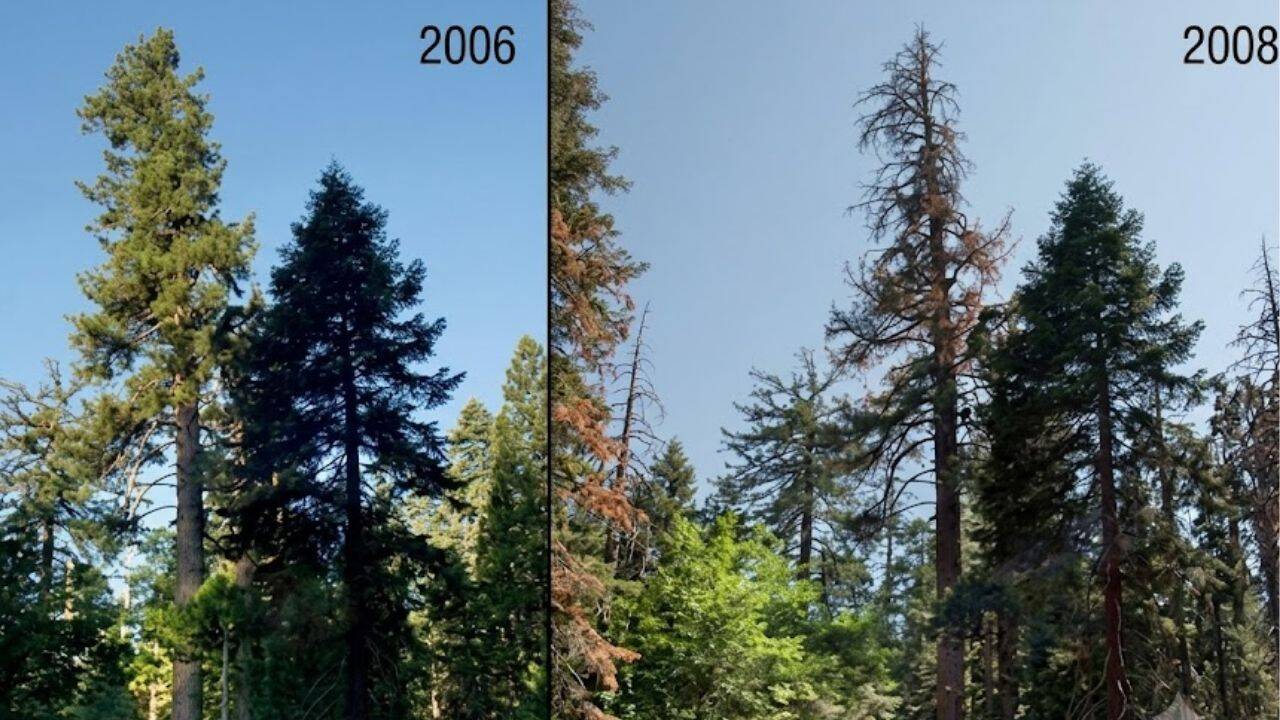
The Sierra juniper, scientifically known as Juniperus grandis or Juniperus occidentalis var. australis depending on the source, is the world’s largest juniper species. The Bennett Juniper is its most imposing example. It grows on a private inholding within the Stanislaus National Forest in Tuolumne County.The Bennett Juniper stands 24 metres tall, while its trunk measures an impressive 389 centimetres in diameter. Robert Van Pelt notes that decades of searching the Sierra mountain region have failed to uncover another juniper of comparable size. Sierra junipers typically grow on steep, rocky cliffs and in other harsh locations where trees struggle to survive. The Bennett Juniper, however, grows in a rolling meadow, making its location unusual for a Sierra juniper in California’s high Sierra mountains.
PC: Journal of the California Native Plant Society, Fremontia
The Bennett Juniper’s journey from local landmark to protected tree
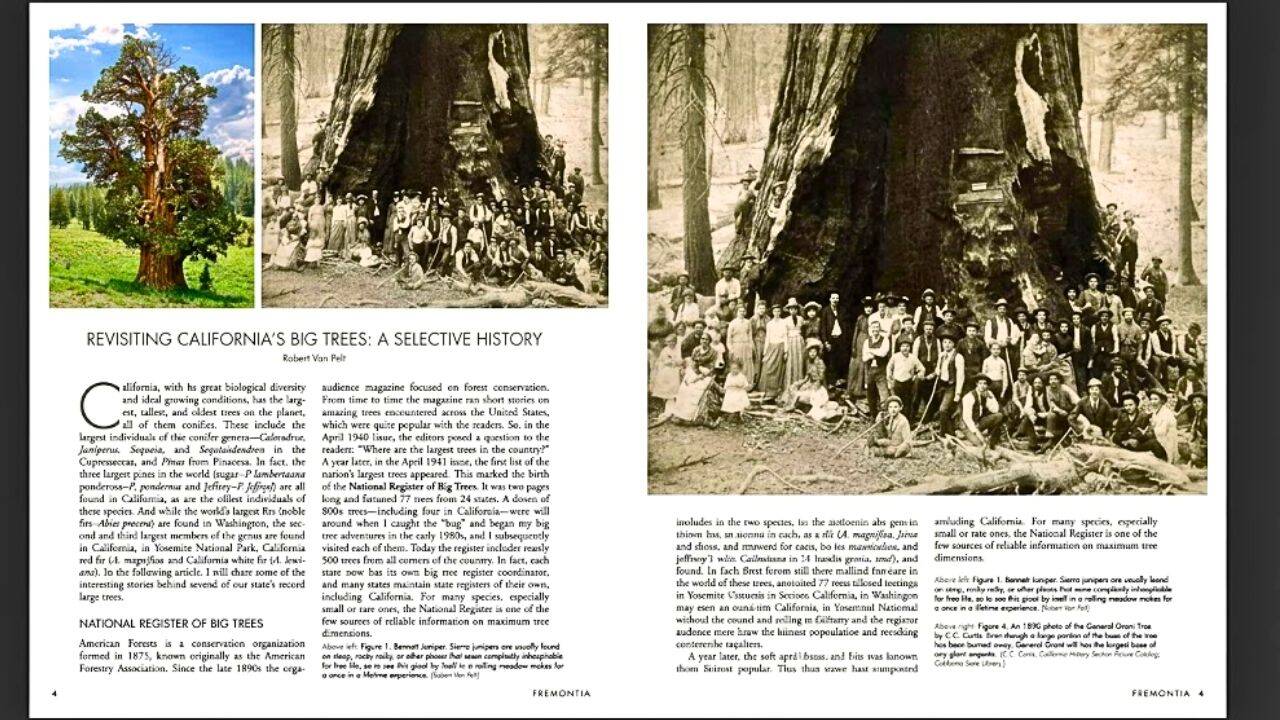
People may have known about the Bennett Juniper for centuries before it appeared in written records. Native American bedrock mortars and obsidian caches found nearby suggest that people used or visited the surrounding landscape long before Euro-Americans recorded the tree.Its first recorded mention dates to the 1920s, when sheepherders told naturalist Clarence Bennett about it. Bennett studied junipers and became a vocal advocate for protecting the tree. In the 1950s, the US Forest Service named it in his honour. Today, the Bennett Juniper is protected by ‘Save the Redwoods League’, helping preserve the tree for future generations.
PC: Journal of the California Native Plant Society, Fremontia
Challenge of determining the Bennett Juniper’s age
Researchers have tried more than once to determine the Bennett Juniper’s age. Dendrochronologists, who study tree rings, took samples in the 1930s and again in 1989. However, the trunk is hollow, making it impossible to obtain a complete record and establish the tree’s full age. The researchers were still able to conclude that it is at least 2,200 years old.That estimate is a minimum rather than a precise age, and because the trunk is hollow, the tree’s full age can never be known. Van Pelt notes that the world’s oldest recorded juniper is another Sierra juniper, the Scofield Juniper, located about 16 kilometres away. Its crossdated age is 2,675 years, even though its trunk diameter is less than half that of the Bennett Juniper.
The point system behind the National Register of Big Trees
Determining which tree is the largest is not as simple as measuring its height. A shorter tree with a thick trunk may be larger overall than a taller, slender one. To compare trees more consistently, American Forests developed a point system for its National Register of Big Trees, based on three measurements: trunk circumference at breast height, tree height, and average crown spread.The system awards one point for every inch of trunk circumference and every foot of tree height, with an additional point for every four feet of average crown spread. When the register was established in 1941, it listed 77 trees from 24 states. It has since grown to nearly 800 entries, helping researchers compare exceptionally large trees and document the size of species whose maximum dimensions are difficult to establish.


