










.jpeg?trim=0,0,0,0&width=1200&height=800&crop=1200:800 "British tourists warned over spike in deadly mosquito viruses in holiday hotspots")




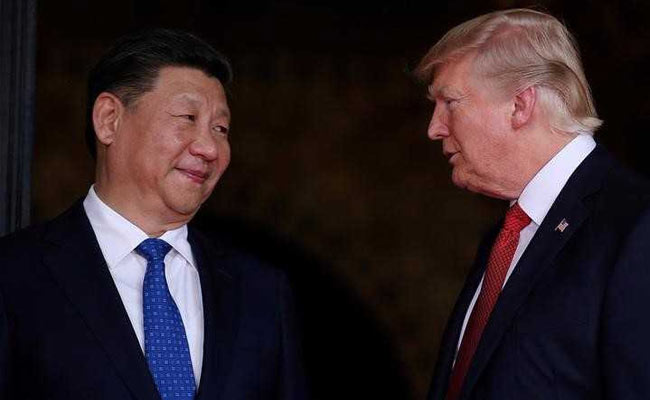
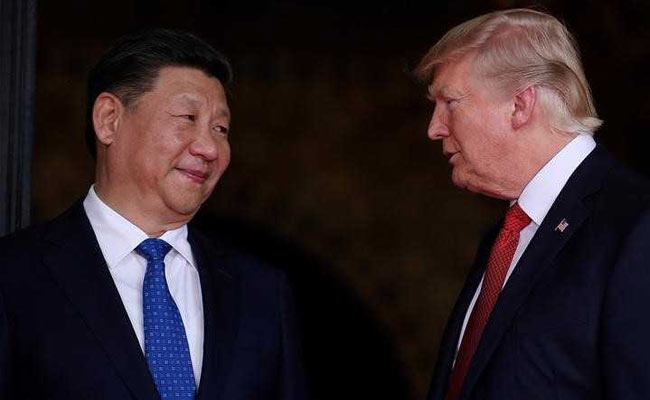
Trump’s visit to China has been less successful than what he might have hoped for. This is surprising, but not altogether so.
Surprising because the visit was long in preparation, and there was ample time, therefore, for the two sides to agree in advance on some concrete outcomes to project success. This is normal in diplomacy.
Trump has been giving a boost to his planned visit by talking about his admiration for Xi Jinping as a leader, his close personal relationship with him, and how the two could together help solve the problems of the globe.
Advertisement – Scroll to continue
That Trump took along with him America’s most powerful corporate heads suggested that he expected some important business-level understandings to emerge on issues of investment, trade and technology. There would normally be little sense in organising such a high-powered accompanying business delegation without expectation of some deliverables. China, too, could have been expected to use the opportunity of Trump’s visit to reset ties that were sliding into a progressively confrontational phase.
As Was Expected
If the visit has produced much less than might have been expected, it is not surprising. The Chinese and others have long sized up Trump. As a person, he does not inspire trust and confidence. His transactional approach means that he pursues short-term goals. His erratic behaviour, inconsistency, ego-driven approach, use of brutal pressure tactics, and so on, make him an unreliable interlocutor.
In his first term, Trump targeted China on the trade front, accusing it of unfair trade practices and subsidies, intellectual property theft, forced technology transfer, currency manipulation, and used tariffs as a weapon to reduce the massive bilateral trade deficit, and bring manufacturing jobs back home. China imposed retaliatory tariffs in return.
In his second term, Trump imposed “emergency” tariffs and has targeted China’s steel, aluminium, and other manufactures. He tied several of his trade and other restrictions to the flow of Fentanyl precursors from China to the US. He has also targeted China’s maritime and logistics dominance. China’s access to US technology and natural resources was restricted, and its ties with academia and research were sought to be blocked because of a suspected PLA connection.
Tit For Tat Sanctions
In the lead-up to Trump’s visit, the US and China have engaged in tit-for-tat sanctions triggered by US restrictions on companies facilitating Iranian oil shipments to Chinese “teapot” refineries, and China enforcing its anti-foreign sanctions laws to block US actions. The US has targeted Chinese firms and suppliers in the defence and aerospace sectors. In return, China has sanctioned US defence firms for arms supplies to Taiwan.
China also imposed in April and October 2025 sweeping export restrictions and strict licensing requirements on seven critical rare earth elements and related magnet products in response to US tariffs and technology curbs, impacting the global defence and electronics supply chains, including American defence companies. This led later to a bilateral agreement between the US and China to suspend further expansions of these export controls.
The atmosphere in US-China relations had steadily deteriorated before Trump’s visit, with China, both in official statements and actions, responding strongly to US pressures, signalling China’s growing confidence in its own capacity to stand up to America’s bullying actions.
Trump’s hand was weakened before the visit by his failure to decisively win his war on Iran. Not only that, the US could not even protect its military bases or its allies in West Asia. This has raised a question about the future security architecture of the region and the US role in it. The inability of the US to force open the Strait of Hormuz with either diplomacy or military force would have weighed in the scales of diplomacy in Beijing.
China’s Upper Hand
China kept the upper hand during Trump’s visit by, amongst other things, Xi Jinping retaining his poise and distance while Trump tried to ingratiate himself with flattery and body language. At the opening of the formal delegation-level talks, the lining up of the top-most American corporate leaders behind Trump suggested a homage being paid to Xi’s China, reminiscent of the kowtowing to the Chinese emperor in the past, with a solicitation for market openings. After the discourse of decoupling, de-risking supply chains, on-shoring, forcing US corporations to invest in America and creating jobs at home, Trump was messaging a willingness to explore possibilities of renewed economic interdependence with China.
Addressing Trump at the formal talks, Xi was sententious and demanding. He called on the US to be “partners, not rivals” with China. He asked if China and the US could overcome the so-called ‘Thucydides Trap ‘and create a new paradigm of “major-country” relations.
Xi’s reference to the “Thucydides Trap” was very pointed this time. He has referred to it on occasions in the past (2013, 2015, 2023), saying that the world was big enough to fully accommodate China and the US’s “respective development and common prosperity”. In the past, Xi may have wanted to blunt growing concerns about China’s rise to keep open the international economic and political space for it. This time, the motivation may have been different, as China feels that it has already become a formidable economic, technological and military power and can challenge the US.
A G-2 Paradigm
Xi may want recognition of this by the US in shaping its future policies towards China. The concept of a ‘China-US Constructive Strategic Stable Relationship’ that emerged during Trump’s visit is another way of discarding the notion of a Thucydides Trap. China wants to steadily move towards its goal of becoming the pre-eminent power by 2049. It is facing many domestic challenges and would want to avoid a confrontation with the US, but it also feels sufficiently strong because of its control over critical raw materials and technologies, which it is weaponising, coupled with the relative decline in US power, to shape the terms of their bilateral engagement. Xi believes that China and the US are the principal powers today and therefore bear a shared responsibility for maintaining global peace and prosperity. This is a G-2 paradigm.
The summit ended without a joint statement, which means that differences over many issues were too wide to attempt agreed formulations and no binding agreements were reached on trade matters. Both sides issued their own readouts of the discussions.
The US readout is unusually subdued, given the superlatives that Trump usually uses to announce his success in negotiations. The readout merely says that Trump “had a good meeting” with Xi. The two sides discussed ways to enhance bilateral economic cooperation, including expanding market access for American businesses to China and increasing Chinese investment in US industries, but without mentioning any specific agreements. Increasing Chinese purchases of American agricultural products finds mention, but, again, specific products and figures are missing.
Trump said in his public remarks that China had agreed to buy 200 Boeing jets and US oil, without the Chinese side confirming this. That the US has deprived China of Venezuelan oil and has sanctioned China’s “tinpot refineries” buying Iranian oil casts doubt on the oil claim. Critics say that the figure of 200 is a climb-down from a past figure of 500. Treasury Secretary Scott Bessent has told the American media that the US and China have discussed forming a “Board of Trade” and “Board of Investment” to oversee commerce between the two countries, which means that progress will depend on the political state of relations between the two countries. Xi has, accordingly, talked prospectively of China’s “door to opening up will only open wider”.
The US didn’t mention Taiwan in its readout of the meeting. China, however, seems to have brought up Taiwan forcefully in talks. Trump acknowledged this in his interaction with the US press, saying that he heard Beijing’s position, including on US arms supplies to Taiwan, but preferred not to react. He added later on that both China and Taiwan should “cool it”. In his press comments, he has also been equivocal about defending Taiwan and approving $14 billion of US arms aid to it cleared by the US Congress.
A Tough China
The Chinese readout of the Xi-Trump summit is unusually tough in tone, with Xi making the US’s handling of the Taiwan issue central to future ties and warning that it must be treated with utmost caution. If handled well, Xi said, the bilateral relations could maintain overall stability, but if handled poorly, they could lead to confrontation and even conflict, pushing the entire relationship into a very dangerous situation. This is Xi drawing a clear red line for the US.
Consistent with China’s tactics not to admit its role in creating tensions, Xi has put the onus on the US to establish a “constructive and stable relationship between China and the US”. To assert equality between China and the US, Xi affirmed that faced with differences and frictions, equal consultation was the only correct choice.
The Chinese side has been cautious in its statements on the economic and trade front. Some general but fluid understandings seem to have been reached, but nothing major as Xi speaks of the economic and trade teams having reached a generally balanced and positive outcome.
Read Between The Lines
That both sides agreed that the Strait of Hormuz must remain open to support the free flow of energy is fine in principle, as China’s sources a good deal of its energy from the Gulf. That both countries agreed that Iran can “never” have a nuclear weapon, as Trump claims, is very doubtful. Iran has repeatedly disclaimed any intention to pursue a nuclear weapon programme, and China was part of the JCPOA. Therefore, China can take a supportive position on Iran not going nuclear, but the word “never” implies giving Trump a free hand to continue using US military power against Iran. Trump’s claim that Xi stated during their summit that China would not provide military equipment to Iran is doubtful, too, as the implication would be that Iran was doing so earlier and had yielded to US pressure.
Trump’s claim that Xi Jinping offered China’s help in reaching some kind of settlement with Iran has been heavily nuanced by the Chinese Foreign Ministry, which has stated that China recognises that the conflict has put a heavy strain on global economic growth, supply chains, international trade order and the stability of global energy supply. But it rebuffed the US by stating that there was no point in continuing this conflict, it should not have happened in the first place, that dialogue and negotiation was the right way forward, and that the use of force was a dead end. China wants the concerns of all parties to be accommodated, a comprehensive and lasting ceasefire established as soon as possible, and the foundation for building a sustainable security architecture for the region laid, which is a repudiation of the actual US policy towards Iran.
The Chinese media did not give top billing to Trump’s visit, which shows how the equation between the two countries has changed.
(Kanwal Sibal was Foreign Secretary and Ambassador to Turkey, Egypt, France and Russia, and Deputy Chief Of Mission in Washington.)
Disclaimer: These are the personal opinions of the author