MBW Explains is a series in which we dig behind the headlines, via data and context, to improve your understanding of key stories. Only MBW+ subscribers have unlimited access to these articles. MBW Explains is supported by Reservoir.
Neither artist performed on it, and cloning a voice is not clearly copyright infringement – a gap the NO FAKES Act aims to close.
The Nurture Originals, Foster Art, and Keep Entertainment Safe (NO FAKES) Act goes before the US Senate Judiciary Committee on Thursday (June 18).
It would create, for the first time in US federal law, an intellectual property right in a person’s voice and visual likeness.
This is its third attempt.
A version introduced in July 2024 ran out of time before that Congress ended, and a 2025 reintroduction stalled in the Senate Judiciary Committee as sponsors negotiated with big tech and free-speech groups warned it swept up protected speech.
Here are five things the music business needs to know before the vote.
1. It would create a federal right to your own voice and likeness
The bill, which you can read here, would give every individual a federal right to authorize – or block – AI-generated replicas of their voice and likeness.
In the bill, a digital replica is described as “a newly created, computer-generated, highly realistic electronic representation that is readily identifiable as the voice or visual likeness of an individual.”
It covers fully synthetic tracks and real recordings whose fundamental character has been materially altered, but exempts parody, commentary, news and authorized sampling.
The right would survive death for up to 70 years, with heirs able to inherit and license it.
“Today, too many artists have had their intellectual property, likenesses and livelihoods stolen by online pirates and AI artists.”
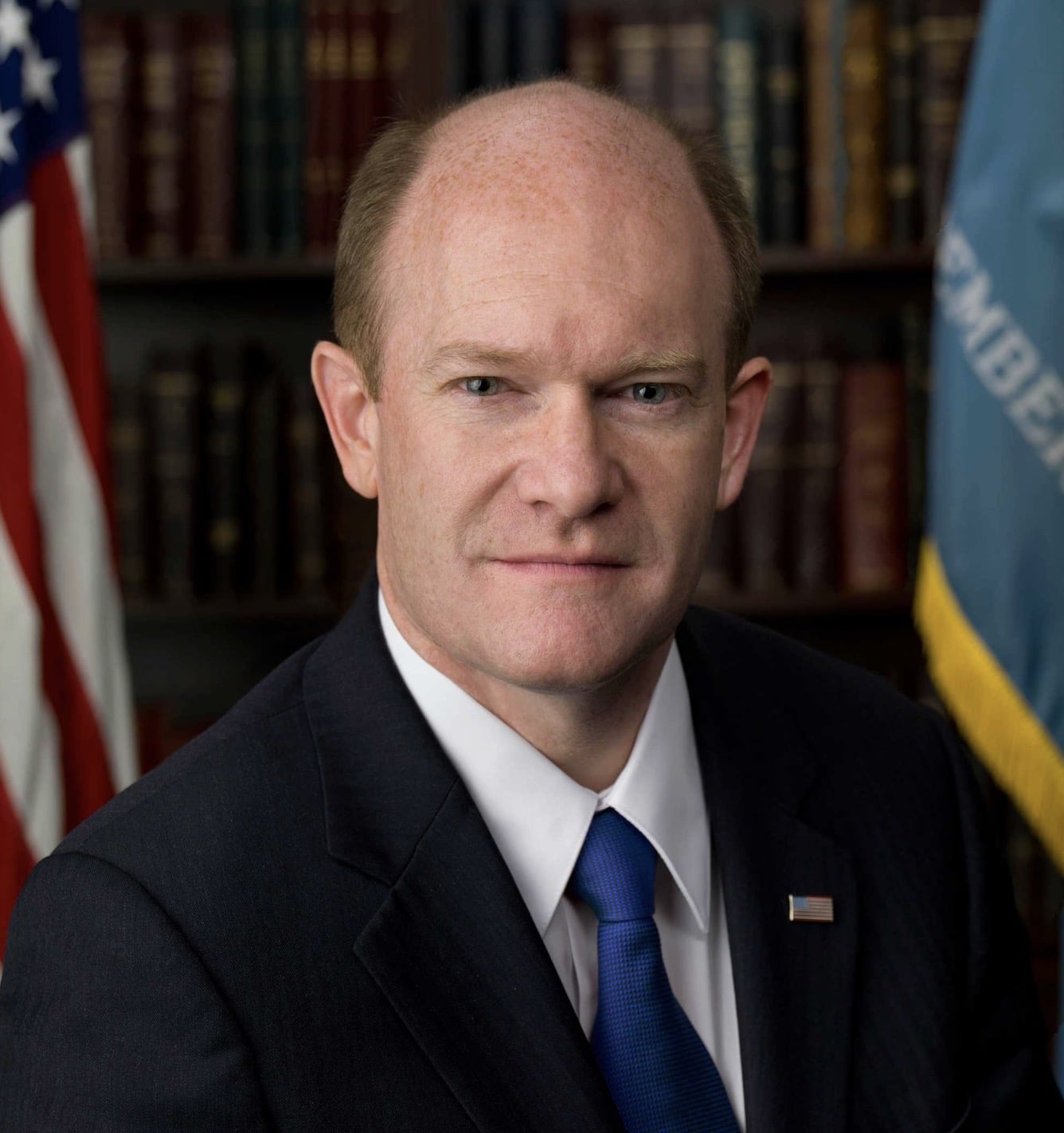
Senator Chris Coons
Anyone replicated without permission could bring a civil claim.
“Today, too many artists have had their intellectual property, likenesses and livelihoods stolen by online pirates and AI artists,” said the bill’s lead sponsor, Senator Chris Coons (D-DE).
Country artist Martina McBride, a 14-time Grammy nominee who testified before the Senate Judiciary Subcommittee, put it simply: “My voice is my art form.”
2. Platforms could face up to $750,000 per track
The bill’s financial teeth are aimed squarely at online platforms.
Penalties are tiered: $5,000 per work for an individual, $25,000 per work for a company that creates or distributes the replica, and up to $750,000 per work for an online service that fails to comply.
To keep a safe harbor, a platform must take a flagged replica down “as soon as is technologically and practically feasible” – the bill sets a standard, not a fixed clock.
It works through a notice-and-takedown system modeled on the DMCA.
The revised bill adds a counter-notice procedure and technical fixes for streaming services, aimed at the objections that stalled the earlier versions.
That $750,000 ceiling is also the flashpoint for the bill’s critics, who say it dwarfs the real-world harm.
3. It builds on Tennessee’s ELVIS Act – but makes it national
The NO FAKES Act follows Tennessee‘s ELVIS Act, the first US state law of its kind, which took effect in 2024.
That law was the first to treat a person’s voice as a protected right, and to hold liable the makers of cloning tools, not just their users.
But it applies only in Tennessee, and right-of-publicity laws vary from state to state.
A federal right would cover everyone, nationwide, and would bind the online platforms that operate across every state at once.
The Recording Industry Association of America (RIAA), the American Association of Independent Music (A2IM), the American Federation of Musicians, and the artist-led Music Artists Coalition have signed on, as have songwriter group the Nashville Songwriters Association International and the performing rights organizations ASCAP and BMI.
“Artists need these protections now.”
Ron Gubitz, Music Artists Coalition
“Artists need these protections now,” said Ron Gubitz, executive director of the Music Artists Coalition.
The performers’ union SAG-AFTRA says more than 16,000 people have signed an open letter urging Congress to pass the bill.
But the Electronic Frontier Foundation has urged Congress to reject the bill, warning it could become a tool for internet censorship that sweeps up parody, news and criticism.
The Computer and Communications Industry Association, a tech trade group, says damages of up to $750,000 per work run far beyond the likely harm.
5. It lands as AI floods streaming – and detection still isn’t reliable
Deezer reported in April that around 44% of the tracks uploaded to its platform each day are AI-generated – roughly 75,000 a day.
The same company says 97% of listeners cannot tell AI-generated music from the human-made kind.
Both the NO FAKES Act and the EU AI Act rest on the same premise: that the AI can be identified in the first place, by a platform, a rightsholder, or a court.
The EU rules take effect on August 2, with fines of up to EUR€15 million (approx. USD $17 million) or 3% of global turnover.
Last summer, an AI band called the Velvet Sundown racked up more than 1 million monthly listeners on Spotify and topped its daily Viral 50 in three countries before admitting that its music, members, and backstory were all generated with the AI music tool Suno.
Deezer flagged some of its tracks as possibly AI; Spotify did not. The project was exposed by online sleuths and the press, not by the platforms themselves.
That inconsistency is the norm across the DSP landscape: Deezer tags the AI its system detects, while Spotify’s “AI credits” and Apple‘s “Transparency Tags” flag AI only in a song’s credits, and only when the artist chooses to declare it.
The majors are building their own tools regardless: Warner Music Groupacquired AI attribution startup Sureel AI on June 10, and Sony Music co-led a $16 million round for AI licensing platform Vermillio in March 2025.
NO FAKES is also one half of the industry’s AI agenda in Washington.
The two share much of the same coalition and some of the same sponsors, including Madeleine Dean and Marsha Blackburn.
If the NO FAKES Act clears the committee on Thursday, it would still face the full Senate, the House, and the President‘s desk before becoming law.
Reservoir (Nasdaq: RSVR) is a publicly traded, global independent music company with operations across music publishing, recorded music, and artist management.Music Business Worldwide