


Bhopal:
Ten leopard skins and banned hunting equipment were recently recovered from an alleged poacher, Bhagwan Singh, in Uttar Pradesh’s Agra. However, within the secretive underworld where wildlife informants, poachers, and anti-poaching operatives intersect, Singh had acquired a fake identity: Salim. Forest Department sources allege that this false identity was cultivated by individuals linked to a prominent non-profit organisation to inject a communal angle into the investigation should he be caught by authorities carrying out illegal activities.
The sources have said that people linked to Wildlife SOS, the NGO, had allegedly helped Singh acquire his fake identity.
Investigators are now trying to verify who gave Bhagwan the alias, where and how it was used and what exactly his relationship was with people associated with the NGO.
“It was revealed that the accused had links to an NGO, Wildlife SOS, through which these activities were being facilitated,” Madhya Pradesh PCCF-Wildlife Dr Samita Rajora said, citing the accused’s statement and digital evidence.
According to the sources, the name of Kartick Satyanarayan, CEO and co-founder of Wildlife SOS, came up during the interrogation of two accused. He was summoned to appear before the investigating authorities to record his statement.
What’s Wildlife SOS And Why Is This Allegation Extraordinary?
Wildlife SOS is a Delhi-based conservation organisation that says it has spent more than 32 years working in wildlife rescue, rehabilitation and conservation across 19 states and has assisted forest departments in rescuing more than 5.31 lakh animals. Its operations also include acquiring and providing anti-poaching intelligence.
The allegation investigators are examining is extraordinary because it raises a question that cuts to the heart of undercover wildlife enforcement. Were suspected poachers being cultivated as sources to help catch wildlife criminals?
In a strongly worded statement, the NGO “vehemently” rejected the allegations, warning that treating legitimate anti-poaching intelligence work as wildlife crime could frighten informants and whistleblowers away from helping enforcement agencies. The NGO called “attempts to vilify it a total travesty of justice”.
It said it possesses records and substantial proof to rebut the allegations, and stressed that it is fully cooperating with the investigation. “This is shocking, and we are deeply concerned,” Satyanarayan said in the organisation’s statement.
Wildlife SOS says the incident is linked to anti-poaching intelligence gathering.
Here’s What Happened?
The story began in Agra. According to Rajora, an operation resulted in the arrest of four accused and the seizure of 10 leopard skins. What happened next transformed a trafficking seizure into a much wider investigation. “Following discussions with the Wildlife Crime Control Bureau and the UP Forest Department, our teams were immediately sent there,” Rajora told NDTV.
Madhya Pradesh and Uttar Pradesh personnel began working together. Information emerging from the accused was then matched against digital evidence collected during the investigation.
The trail led straight back into the Cheetah Landscape in Madhya Pradesh.
According to the Forest Department’s official account, the investigation ultimately established the poaching of 10 leopards: six in Kuno Wildlife Forest Division, two in Sheopur Forest Division and two in the Chambal Sanctuary in Morena.
Rajora said coordinated probes were launched in Shivpuri, territorial forest divisions across the landscape, Kuno and Morena. An intelligence network was activated. The accused confessed and told investigators where they had placed the traps to catch wild animals.
But investigators had noticed something else in their communications. A word kept appearing: “Cheetah.”
The men were allegedly operating in the very landscape where India has reintroduced cheetahs after their extinction from the country more than seven decades ago. And sources associated with the investigation claim the poachers could not reliably distinguish between a leopard and a cheetah.
The heavy iron traps hidden in these forests do not recognise species. And if a cheetah stepped into one, investigators fear the result could have been the same — their death.
The Banned Traps Came From Outside MP
There was another mystery: where did the traps come from? Such leg-hold traps are banned, and according to Rajora, Madhya Pradesh had not witnessed an incident of this nature for around a decade.
“The accused took our teams to the places where they had concealed the traps, and we recovered them,” Rajora told NDTV. The preliminary trail, she said, points to Haryana.
Investigators are now trying to establish who manufactured or supplied the traps, how they entered Madhya Pradesh and whether their movement reveals another layer of the interstate network. The investigation is therefore no longer confined to the men who allegedly placed the snares. It is probing the roles of suppliers, accomplices, and handlers.
As investigators interrogated the accused and examined their digital trail, the case took its most unexpected turn. According to Rajora, links emerged between the arrested men and Wildlife SOS. On August 11, a joint STF-Wildlife Crime Control Bureau team arrested an accused in New Delhi based on what the Forest Department describes as scientific evidence. Then, on August 13, investigators arrested Wasim Akram, son of Naseem Ahmed, of Uttam Nagar in Delhi. Wasim Akram was working with Wildlife SOS.
Investigators say the two arrested individuals named Kartick Satyanarayan, who was later summoned for questioning.
The investigation will now seek to establish who else was involved, why the alleged operation was being conducted so secretly and why it was taking place inside such a sensitive Cheetah Landscape.
Sources have further alleged that wildlife killings may have been occurring for around a year for this purpose. Wildlife SOS categorically disputes the larger premise of the allegations.
What About Wildlife SOS’s Relationship With MP Forest Department?
There is another reason the investigation is sensitive. Wildlife SOS has had an association with Madhya Pradesh’s Forest Department, including work at Van Vihar in Bhopal. Could anyone within the department itself be under suspicion? Rajora categorically separated the two. She said the Van Vihar arrangement concerned bears rescued from Kalandars, and stressed that neither the facility nor its staff had any connection with the present investigation.
Modus Operandi- A Death Trap Laid in the Forest
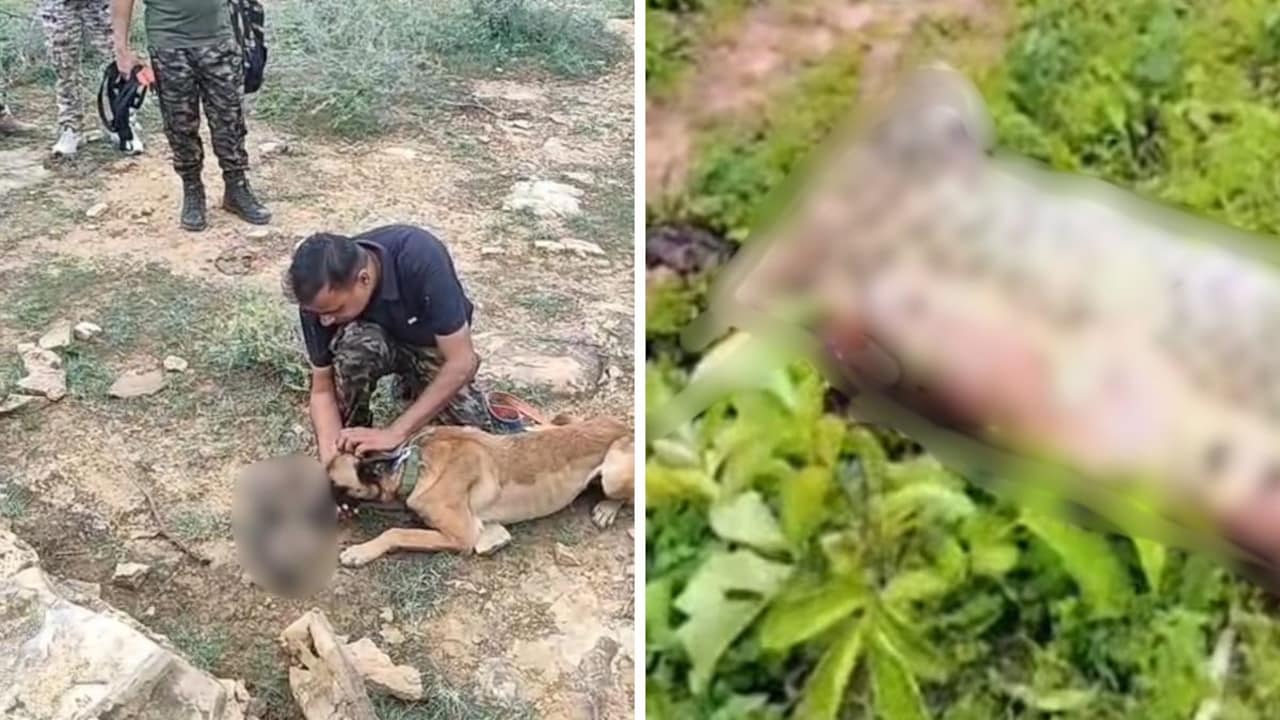
Investigators say they uncovered during interrogation a chilling picture of how the poaching network allegedly operated. The poachers used concealed iron traps, poison, muzzle-loading guns and systematic dismemberment of animals. Heavy leg-hold traps and iron clamps were recovered from the forests of Sheopur and Morena. The devices were allegedly concealed along routes routinely used by wild animals while moving in search of water or prey. Once an animal stepped on the mechanism, the iron jaws would clamp around its leg, leaving it trapped and unable to escape.
Lethal poison was also allegedly added to water sources or placed on livestock carcasses that could be consumed by leopards or tigers.
The operation allegedly continued even after the animal was dead. Investigators say the skin would be carefully removed and dried, while bones, teeth and claws were separated. The different body parts were then allegedly concealed until they could be moved or sold.


