


China has revived a decade-old connectivity dream which may have major implications for India as well. The China-Myanmar-Bangladesh Economic Corridor (CMBC) promises Beijing a new route to the Bay of Bengal. But it runs straight through one of the world’s most active war zones.
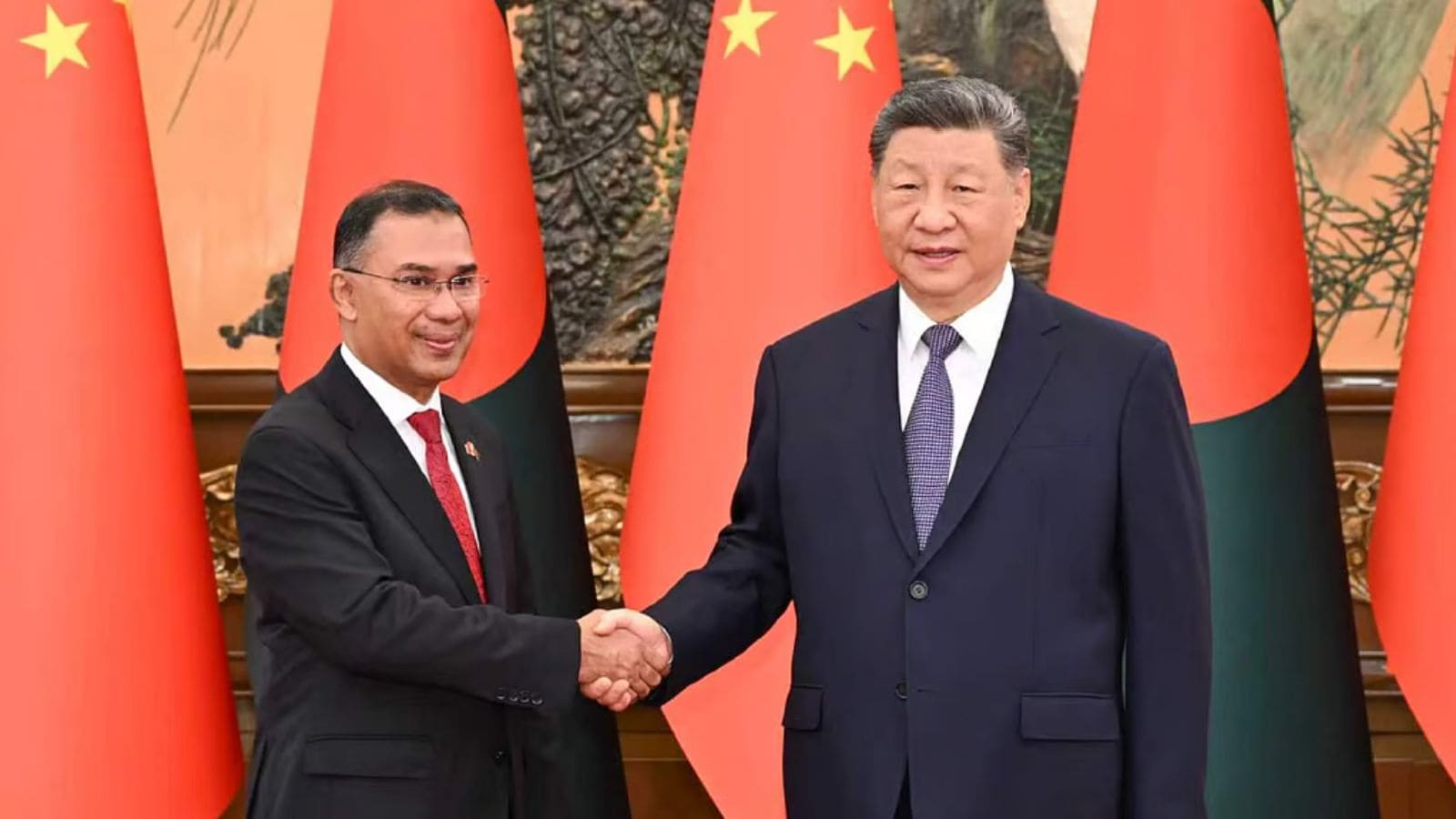
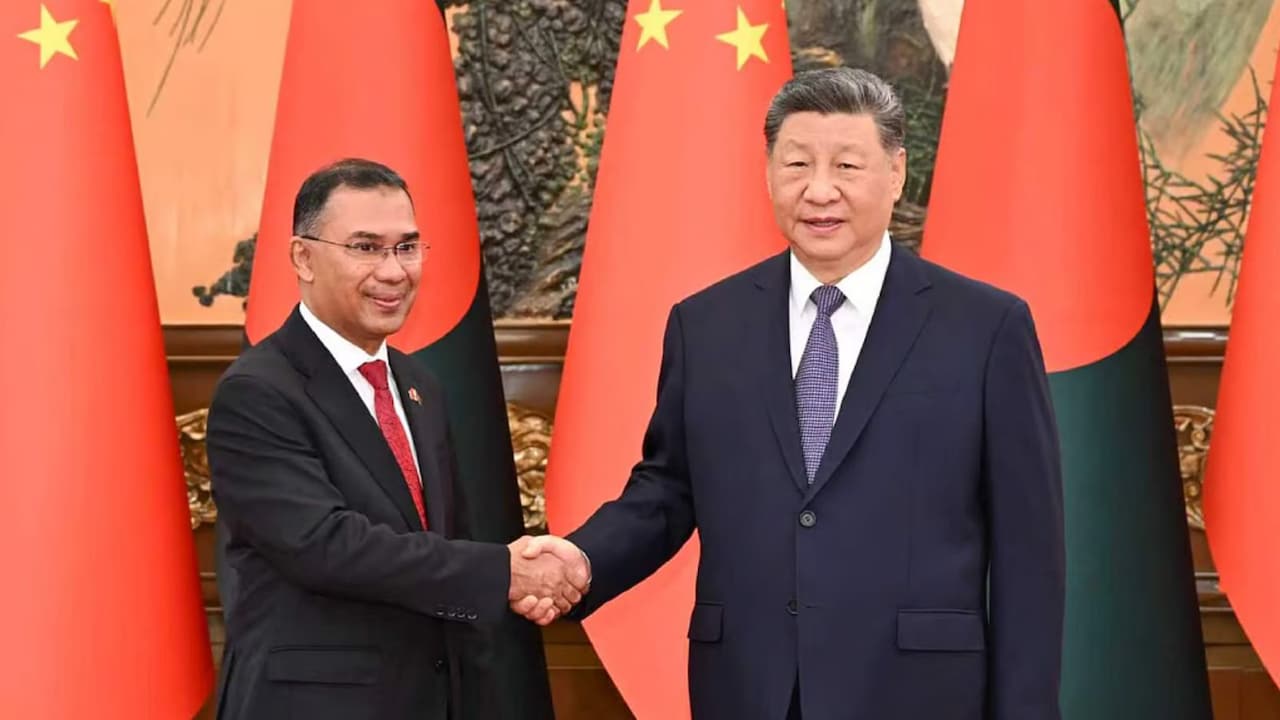
The China-Myanmar-Bangladesh Economic Corridor came up during Bangladesh Prime Minister Tarique Rahman’s four-day visit to Beijing, which began June 22. Meeting Chinese President Xi Jinping at the Great Hall of the People, the two sides discussed advancing the corridor “for greater regional connectivity”, according to China’s foreign ministry.
“We proposed the Bangladesh-China-India-Myanmar Economic Corridor about 15 years ago and achieved some progress. But due to various reasons, we have not achieved the results China had expected,” Chinese Ambassador to Bangladesh Yao Wen said on Thursday.
When asked whether India could join the corridor, he said that it is open to other countries “if they are willing to join”.
The ambassador said that the only idea of the corridor is connectivity and regional economic cooperation.
The proposed corridor would start in Kunming, capital of China’s Yunnan province, and run to Mandalay in Myanmar. From there it splits, one branch heading to Yangon and another to the Kyaukphyu deep-sea port in Rakhine State. China wants to extend this further into Bangladesh via Rakhine, linking up with Chattogram and Cox’s Bazar, giving Beijing a direct road to the Chattogram and Mongla ports on the Bay of Bengal.
The Old Bangladesh-China-India-Myanmar Corridor Plan
The CMBC is a rebrand of an older, more ambitious plan. In the 1990s, the Bangladesh-China-India-Myanmar (BCIM) corridor was proposed to connect Kunming to Kolkata via Mandalay and Dhaka.
But BCIM never survived India’s growing wariness of the Belt and Road Initiative and the broader deterioration in Sino-Indian relations. By 2019, BCIM was quietly dropped from the official list of BRI corridors altogether.
What’s The Catch?
The corridor’s backbone runs roughly 1,700 km from Kunming to Myanmar’s coast, cutting straight through Rakhine State, among the most fought-over regions in Myanmar’s ongoing civil war.
Per a 2026 UN Security Council briefing, Myanmar’s junta now controls only around a fifth of the country’s territory. Resistance forces and ethnic armed groups hold an estimated 42 per cent, with the rest contested or under active fighting. The related Mandalay-Kyaukphyu railway, a 2021 MoU between Myanmar and China, has seen no construction timeline emerge in the years since.
Bangladesh Has Not Signed On
Bangladesh Foreign Minister Khalilur Rahman told reporters on June 27 that Bangladesh is “currently examining” the proposal and has “taken no position” on it and explicitly conditioned any overland link through Myanmar on the restoration of peace in Rakhine State.
Impact Of China-Myanmar-Bangladesh Economic Corridor On India
The plans about the corridor to India’s east come after China got access to the Arabian Sea with the China-Pakistan Economic Corridor to the west. India strongly objects to the CPEC corridor because it runs through Gilgit-Baltistan, which is a part of Pakistan-occupied Kashmir.
This is China building Indian Ocean access on India’s eastern flank, mirroring what CPEC and Gwadar do on the western flank via Pakistan. Coming just weeks after Xi and Pakistan’s Shehbaz Sharif reached a “new broad consensus” on expanding CPEC and turning Gwadar into a regional hub, the CMBC push reads as part of a wider pattern of China moving to secure Bay of Bengal and Arabian Sea footholds simultaneously, bypassing New Delhi’s traditional sphere of influence on both coasts.
The Rahman-Xi meeting also produced a raft of side agreements, such as the Teesta river management plan, flood mitigation, irrigation, and cooperation in the green economy and digital sectors, alongside Bangladesh’s reaffirmation of the one-China policy.



