


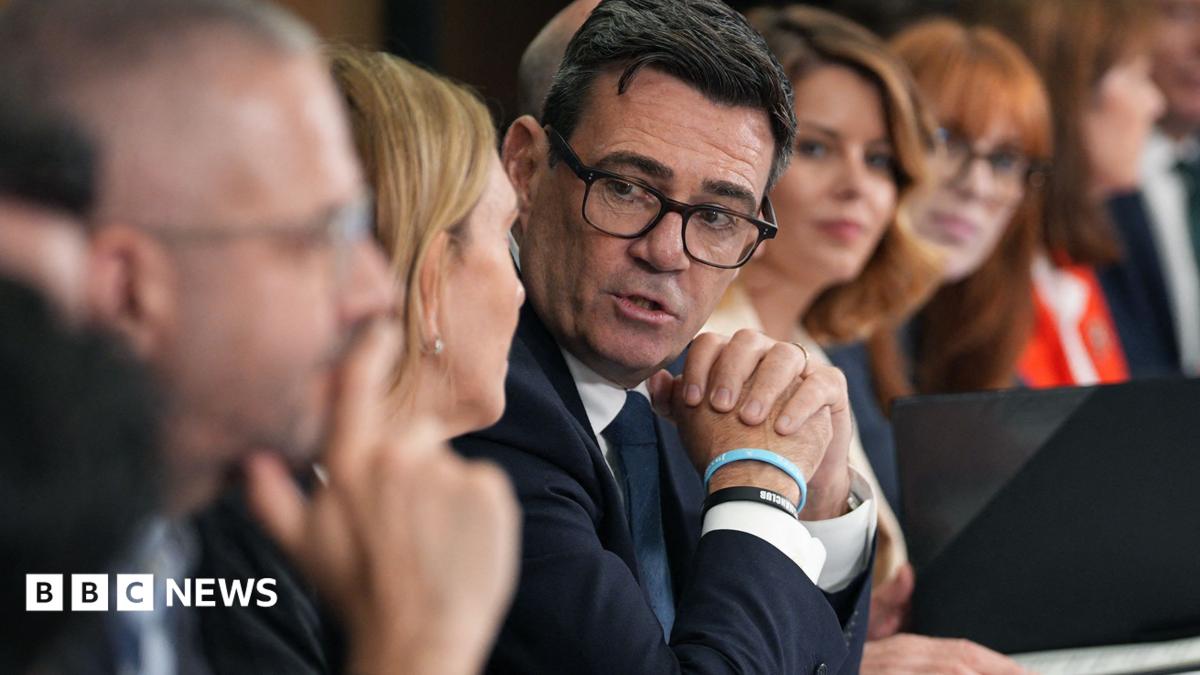
Prime Minister Andy Burnham will give all mayors of city regions in England a share of income tax revenue for the first time, as part of his drive to transfer power from Westminster to local leaders.
Burnham will also allow mayors of English strategic authorities to keep some cash from business rates collected in their areas, and gain greater control over services such as housing, transport, skills.
The government has not yet decided the exact portion of taxes mayors will get, with more details to be announced when Chancellor John Healey delivers his first budget in the autumn.
Opposition parties said the plans lacked detail and could lead to areas with weaker economies losing out on funding.
But Burnham said the move would “make good” on his pledge to “bring power home” to “every postcode in the country”.
“Under our plans, more of the taxes raised in a community will stay in that community,” the prime minister added.
Speaking to BBC Radio 4’s Today programme, First Secretary of State Louise Haigh said areas would not need mayors to benefit from investment.
She said: “We won’t be imposing mayors to areas that don’t want it but we will be creating strategic authorities in every area of England and they will be able to hold these powers and resources as well.
“They don’t need to have mayors in order to control them or in order to retain a share of their income tax and business rates.”
Strategic authorities bring together local councils to control regional issues such as transport and economic development, with decisions taken collectively by council leaders rather than a single elected mayor.
For example, the Lancashire strategic authority will take in Blackburn with Darwen Borough Council, Blackpool Council and Lancashire County Council, which form the Lancashire Combined County Authority area, despite the area not having a mayor.
Haigh added: “Vast swathes of England don’t have strategic authorities or mayors and today’s blueprint will set out that roadmap for every area of England to be covered by strategic authorities that will ultimately be able to retain a proportion of their income tax, business rates and set an overnight visitor levy should they wish, so they can generate revenue and really reinvest it in their local area.”
The power to raise and control tax revenues is highly centralised in the UK, making the country an outlier by international standards.
The share of national taxes collected at a local level in the UK is 5.8%, the lowest in the G7, according to the OECD, external, a global policy forum.
That share is far below that of other countries with large economies such as France (20.4%), Japan (36%), and the US (45.7%).
As it stands, mayors of strategic authorities in England receive most of their funding from central government grants.
During his time as Greater Manchester mayor, Burnham pushed for greater control over tax revenue, rather than having to rely on government grants.
The UK government had already been exploring whether a share of revenue from national taxes could be distributed to metro mayors, before Burnham became prime minister earlier this month.
But in a major speech on devolution in June, Burnham said he would “oversee the biggest rebalancing of power our country has ever seen” if he became prime minister.
Burnham has put devolution at the heart of his plan for government, arguing that metro mayors are best placed to boost economic growth across the country.



