


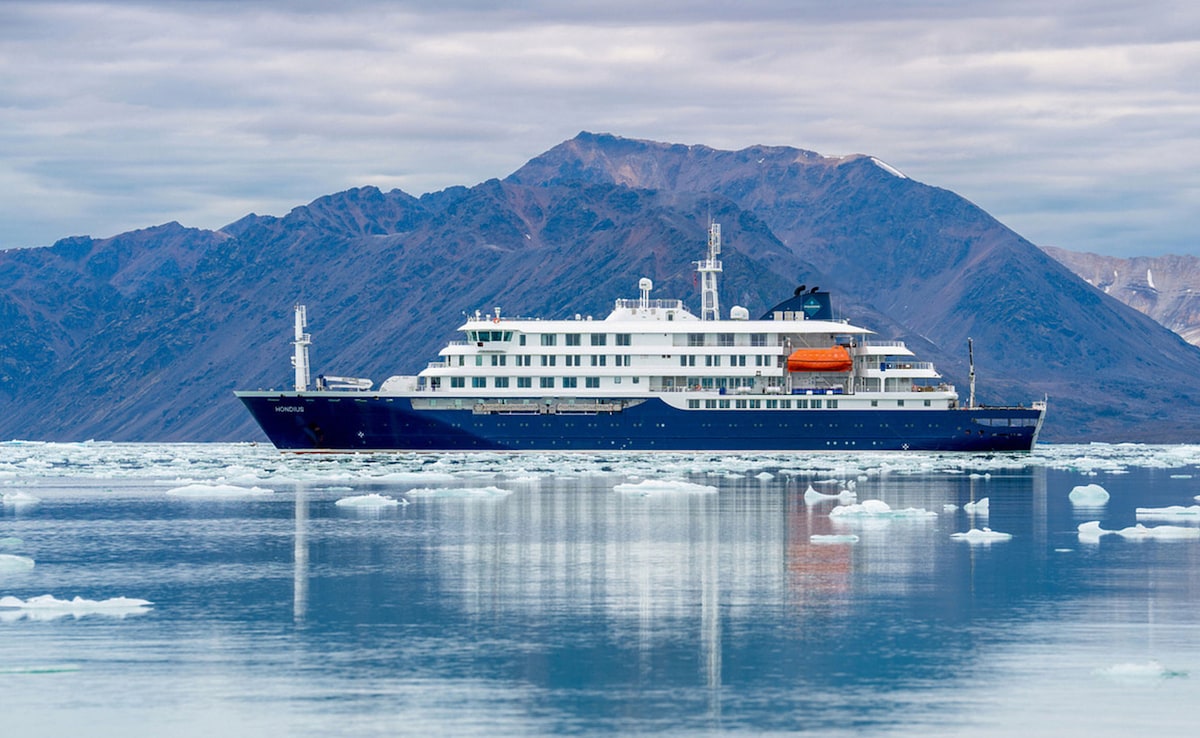
A rare and potentially concerning development has emerged from the ongoing hantavirus outbreak aboard an Atlantic cruise ship, where at least three people have died and several others have fallen ill. According to a recent update from the World Health Organization (WHO), investigators are examining the possibility that human-to-human transmission may have occurred, a phenomenon considered extremely uncommon for hantavirus infections. The outbreak, linked to the expedition vessel MV Hondius sailing between Argentina and Cape Verde, has prompted a coordinated international response involving multiple countries.
While hantaviruses are typically transmitted to humans through exposure to infected rodent urine, droppings, or saliva, this cluster has raised questions about whether a rare strain capable of limited human transmission may be involved. Early findings suggest that the Andes virus strain, known to circulate in South America, could be responsible, one of the only hantavirus variants ever linked to person-to-person spread.
As investigations continue, health experts emphasise that the overall public risk remains low, but the implications for global health surveillance are significant.
#Hantavirus cluster linked to cruise ship travel:
Since 1 April when the boat set sail, of the 147 passengers and crew, 7 people have become ill, among whom 3 have died, 1 is critically ill and 3 are reporting mild symptoms.Based on the current information, including how… pic.twitter.com/KDKwmrNeBt
— World Health Organization (WHO) (@WHO) May 5, 2026
What Happened On The Cruise Ship?
The outbreak occurred on the MV Hondius, carrying around 150 passengers and crew. According to WHO updates, one case has been laboratory-confirmed, with multiple suspected infections and three fatalities.
Passengers began developing symptoms such as fever and respiratory distress during the voyage. Some were evacuated to medical facilities in South Africa, while others remained in isolation onboard as authorities conducted epidemiological investigations.
Crucially, WHO has flagged the possibility that the virus may not have spread solely through environmental exposure.
Hantavirus latest: The UN World Health Organization (WHO) says human-to-human transmission aboard cruise ship in Atlantic Ocean cannot be ruled out, although it is rare. Seven of 147 passengers and crew have fallen ill and three have died. https://t.co/mY3ZwGQGsW pic.twitter.com/VhCVHzAvk6
— UN News (@UN_News_Centre) May 5, 2026
Can Hantavirus Spread Between Humans?
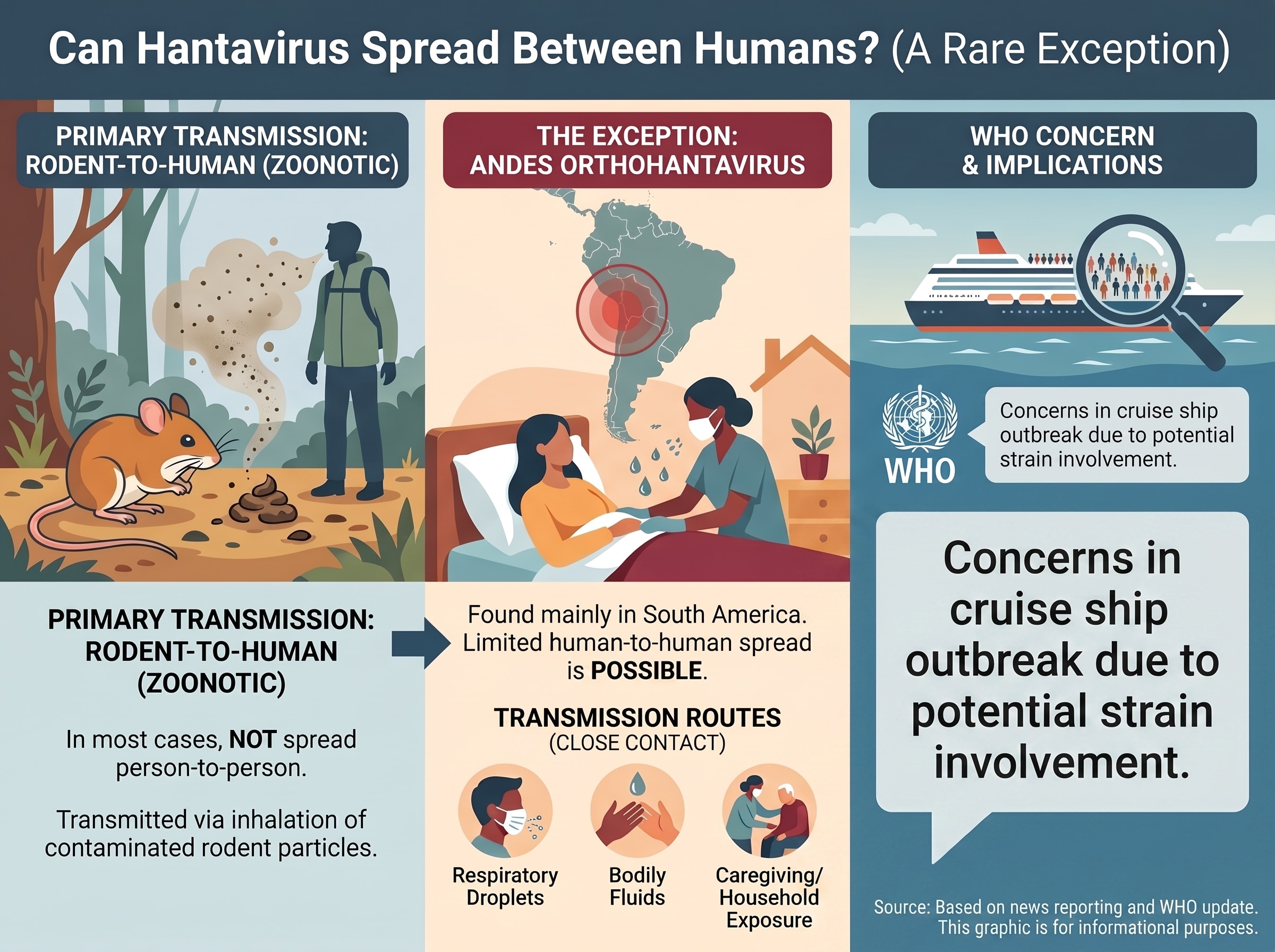
In most cases, hantavirus does not spread from person to person. It is primarily a zoonotic disease, transmitted through inhalation of particles contaminated with rodent excreta. However, there is one important exception: the Andes orthohantavirus, found mainly in South America.
Studies and outbreak investigations have shown that:
- Limited human-to-human transmission is possible
- Transmission typically occurs through close contact, such as caregiving or household exposure
- Spread may involve respiratory droplets or bodily fluids
WHO’s concern in the cruise ship outbreak stems from the possibility that this specific strain may be involved.
Why This WHO Update Matters
The suggestion of human-to-human transmission, even if rare, has important public health implications. Most containment strategies for hantavirus focus on environmental control, such as reducing rodent exposure.
But if person-to-person spread is confirmed, it could require:
- Enhanced isolation protocols
- Contact tracing measures
- Greater surveillance in confined environments
The cruise ship setting, where passengers share close quarters, provides a unique environment where even rare transmission pathways can become more visible.
How Likely Is Wider Spread?
Despite the concern, health authorities stress that the overall risk to the general public remains low.
There are several reasons for this:
- Human-to-human transmission of hantavirus is extremely uncommon
- It typically requires prolonged close contact
- There is no evidence of sustained community transmission
Even in previous Andes virus outbreaks in South America, chains of transmission have been limited and self-contained.
Symptoms And Severity
Hantavirus infections can be severe and sometimes fatal. The most serious form, Hantavirus Pulmonary Syndrome (HPS), can progress rapidly from flu-like symptoms to respiratory failure.
Common symptoms include:
- Fever and fatigue
- Muscle aches
- Headache and dizziness
- Shortness of breath as the disease progresses
The mortality rate for severe cases can reach up to 40%, making early detection and supportive care critical.
As of 4 May 2026, since 1 April when the ship set sail, there have been seven #hantavirus cases (two confirmed and five suspected), including three deaths.
Based on current information, @WHO assesses the risk to the global population as low and will continue to monitor and… pic.twitter.com/uHVMhxnnoL
— Tedros Adhanom Ghebreyesus (@DrTedros) May 5, 2026
Why Cruise Ships Amplify Health Risks
The current outbreak has also revived concerns about infectious disease spread in maritime settings.
Cruise ships are particularly vulnerable due to:
- High population density
- Shared indoor spaces and ventilation
- Limited access to advanced medical care
During the Covid-19 pandemic, similar conditions led to rapid outbreaks onboard ships, highlighting the challenges of containment in such environments. In the hantavirus case, even a rare transmission pathway could become more visible due to these conditions.
Also Read: Hantavirus Outbreak: Does Quarantine On A Cruise Ship Minimise Disease Spread?
What This Means For Future Public Health
The WHO update underscores a broader shift in how experts approach emerging infectious diseases.
Key takeaways include:
- Zoonotic viruses can evolve, sometimes gaining new transmission pathways
- Rare events, like human-to-human spread, must be carefully monitored
- Early detection and global coordination remain essential
- The outbreak also highlights the importance of the “One Health” approach, which integrates human, animal, and environmental health to predict and prevent future outbreaks.
The hantavirus outbreak on the Atlantic cruise ship is a stark reminder that even rare infectious diseases can present unexpected challenges. While human-to-human transmission of hantavirus remains extremely uncommon, the possibility raised by the WHO adds a new dimension to how this virus is understood.
For now, experts emphasise that the risk to the wider public is low. However, the incident reinforces the need for vigilance, rapid response systems, and continued research into zoonotic diseases. As global travel and environmental changes continue to reshape disease patterns, understanding these rare transmission events could be key to preventing future outbreaks.
Disclaimer: This content, including advice, provides generic information only. It is in no way a substitute for a qualified medical opinion. Always consult a specialist or your own doctor for more information. NDTV does not claim responsibility for this information.



