


Last Updated:
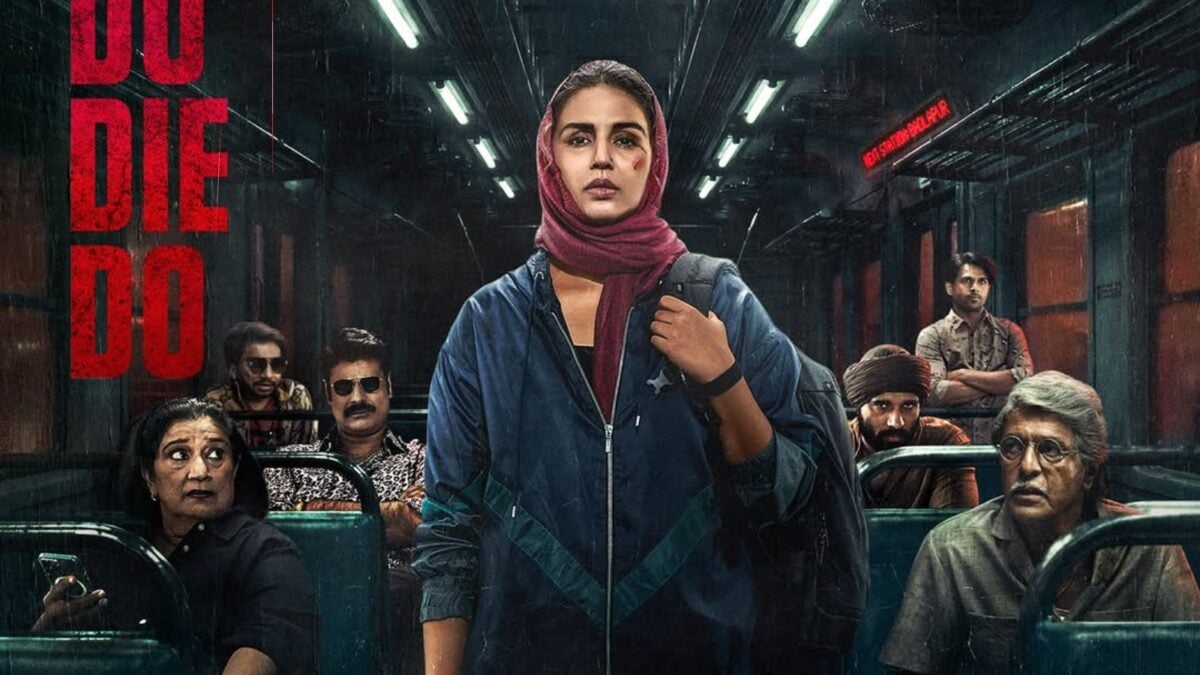
Baby Do Die Do review: Huma Qureshi shines as a deaf-mute hitwoman in Nachiket Sawant’s stylish black comedy thriller, but the film falters later.




Baby Do Die Do is a fast-paced black comedy thriller led by a terrific Huma Qureshi. The film is stylish and inventive but loses its grip in the second half.
Baby Do Die DoA
3/5
Starring: Huma Qureshi, Chunky Panday, Sikandar Kher, Arun Kushwah, Rachit Singh, Marudhar Shekhwat, Himanshu Malik, Seema Pahwa, Vidya Malavade, Rupesh Bane, Mangal Kenkare, Kailash Waghmare, Samaira Vijay, Shanaya Vijay, Saqib SaleemDirector: Nachiket SawantMusic: Arjun Iyer, Lijo George
Baby Do Die Do Review: Fast-paced, atmospheric, cheeky and perpetually thrilling, Baby Do Die Do may, at first glance, sound like an offbeat title looking to startle curiosity. But this Nachiket Sawant directorial, which transforms Jasmeet K Reen’s story into a thrilling and entertaining watch, is sautéed with all the delectable ingredients that make a black comedy thriller not just gripping, but visually appetising too. The film, which deftly blends the eccentricities of indie filmmaking with the recognisable markers of a typical commercial movie, may perhaps seem jarring in the beginning. But the deeper you sink into its strange, neon-streaked world, the more you develop an appetite for this new breed of storytelling, where something fresh keeps surfacing beyond the usual clichés that so often inundate this genre. But is everything truly hunky-dory enough for the film to set itself apart from others? Let’s find out.
Two little twin girls wander into a partially constructed five-star hotel somewhere in Mumbai as rain lashes the city with relentless fury. One of the girls is deaf and mute, while the other narrates the story, lamenting the poverty-stricken world they come from and observing how a sprawling place like this is big enough for anyone to disappear into. As the two explore the skeletal structure of the building, they unexpectedly witness a murder.
With their gaze frozen on the grisly occurrence, the pup in one of the girls’ arms lets out a whine. The sound diverts the killer’s attention towards them. The twins run for their lives, the deaf and mute sister wearing an anklet so she does not get separated from her sibling. The sound of the anklet is her assurance that her sister is nearby.
The murderer follows them, crawling surreptitiously, his face obscured by a handkerchief, whistling ominously like a predator announcing doom through a nursery rhyme. As one of the sisters scurries into a room, the murderer follows her inside and locks the door. The scene then cuts to the dead body of one sister, while the other stands just a few feet away from her. It is then revealed that the deaf and mute sister is alive, and the one who died was the sister who could speak.
We return to the present, where a woman wielding an umbrella enters a local train. She eyes a man across the crowd who is speaking to someone on the phone. She secretly clicks his picture and forwards it to a contact saved as “Papa.” A thumbs-up emoji flashes on her screen. She walks up to the man, stands next to him, mildly presses the umbrella against him and then pulls a trigger, killing him before silently getting off at the next station.
The woman is none other than Baby Karmarkar, played by Huma Qureshi, the same deaf and mute sister who had lost her twin in that hotel years ago. She is now a hitwoman working for PM Jain, played by Chunky Panday, whom she refers to as Papa, because after her sister’s death, he took her under his wing and groomed her. Baby too took up these hit jobs so that, one day, she could come face to face with the person who killed her sister and finally avenge her.
PM Jain, aka Papa, carries out this killing business on behalf of Zafar Katekar, played by Sikandar Kher, a powerful Mumbai builder who has constructed one of the tallest towers in the city after his younger brother Lucky, played by Arun Kushwah. Zafar has a very particular way of getting things done. He either talks people into submission or removes them from the face of the earth with PM Jain’s help.
Coming back to our protagonist, Baby Karmarkar, when she is not executing people, she returns to her house, where her mother keeps venting and repeatedly tells her what a good-for-nothing woman she is, and that she should have died that night instead of her sister. The monologues of her dead sister also keep resurfacing as Baby stands on her rooftop, silently observing the world around her.
On another rooftop, she sees two lovers, and through her expressions, we glimpse her yearning to love and be loved. The voice of her dead sister exclaims how Baby, in her search for a murderer, became a murderer herself.
Just across the building lives another interesting character named Amandeep Singh Siddhu, played by Rachit Singh, a singer who arrived in Mumbai with soaring aspirations but now teaches music as a tool to reform children with criminal dispositions. He is also secretly in love with Baby. We see this through a very creative music montage of him crossing paths with her in his day-to-day life, as the two quietly acknowledge each other and he falls for her even more.
Baby too craves love and the tenderness of being loved. Her sister’s voice, floating in the background like a ghostly conscience, motivates her to drop the idea of revenge and perhaps experience love once in her life.
However, Baby’s story takes a turn when Zafar asks PM Jain to eliminate another builder named Mikky Murjhani, played by Himanshu Malik. Manu, played by Marudhar Shekhwat, who also works alongside Baby, wants to do this job himself. However, when he fumbles, Baby finishes the job, only to become increasingly dissatisfied with the kind of life she is leading.
To her surprise, Amandeep directly asks Baby’s mother for her hand, and Baby too agrees to marry him. Papa is evidently not happy with her decision, but he masks his displeasure with a smile and participates in her wedding festivities. Soon after her marriage, PM Jain, who is being blackmailed by a broker, tries to reach out to Baby so the man can be eliminated. But when he is unable to contact her, he gives the job to Manu, who shoots the wrong person inside the court premises. Coincidentally, the man he shoots is the father of Faizu, one of Amandeep’s disciples. Baby eventually kills the broker with a sniper. But as soon as he falls to the ground, she sees Amandeep with him. He had earlier told her that they needed a bigger place, and perhaps he had come to speak to the broker for that very reason. Realising the consequences of her work and how it can place her husband in harm’s way, she tells Papa that she will no longer be his hitwoman. PM Jain, though unhappy, respects her decision. But from that point onwards, things begin to crumble around Baby as her secret life slowly comes into the fore. What she does next is what the film explores.
Good things first, Baby Do Die Do is a creative film and does not shy away from employing unique aspects of editing and cinematography to tell its story. Whether it is the intertitle montage used to depict Amandeep’s crush on Baby, straight out of the silent film era, or other interesting visual and editing flourishes, this Nachiket Samant directorial genuinely has some smart storytelling moments that keep the viewer engaged.
On top of that, the pulpy, neon-esque portrayal of Mumbai, while not entirely unprecedented, fits neatly into the mould of the screenplay and feels rather apt. The dark humour, which mostly hits more than it misses, will draw chuckles out of you. Some characters, such as Baby’s mother or Lucky, Zafar’s dwarf but equally egotistical brother, bring a certain kind of understated comic relief to this fast-paced thriller. They contrast nicely with more grounded characters like the lovesick Amandeep or the incompetent Manu, played by Marudhar Shekhwat, making for a versatile bunch.
The film also excels in a few plot twists that throw your predictions off the charts, along with the musical score by Arjun Iyer and Lijo George, which accentuates what is happening on screen. There is also a double entendre song, “Alpha Q”, featuring a very queer item number with Saqib Saleem at the helm, something we do not often get to see in the otherwise heteronormative landscape of Indian cinema. The song is not only interesting but has also been choreographed quite tastefully, coalescing well with the movie’s plot.
But that is the extent of Baby Do Die Do’s exuberance.
The film, which feels smart and intelligent in the first half, nosedives tragically in the second half. Not even the technical embellishments or strong acting can save a story that collapses under the weight of its own cleverness. While the first half establishes the premise exceptionally well, the second half falls prey to the usual clichés, where some plot twists do not come as a surprise because you had predicted them long ago. Some promising characters, like Anjum Khan, played by Seema Pahwa, are reduced to the periphery. The climax feels too rushed, ordinary and tame, and even the big reveal that arrives soon afterwards is not something that would make you leap out of your seat in surprise.
On the acting front, Huma Qureshi as Baby Karmarkar hits it out of the park with her portrayal of an intense deaf and mute hitwoman. Rachit Singh as Siddhu exudes the Golden Retriever energy of a lovesick man and embodies his character’s innocence authentically. Chunky Panday as PM Jain, mentor to Huma Qureshi’s Baby, also plays his character well, portraying a man who is a father figure but is also bound to the business of killing people. Sikandar Kher as Zafar, an emotionally volatile builder, brings a sinister energy to his portrayal, while Arun Kushwah’s Lucky is at his comic best, as always. Meanwhile, Seema Pahwa, Vidya Malavade, Himanshu Malik, Rupesh Bane, Marudhar Shekhwat, Mangal Kenkare, who plays Baby’s mother, Kailash Waghmare, Samaira Vijay, Shanaya Vijay and others are incredible in their roles.
Having said that, Baby Do Die Do could have been a lot more than what it eventually turns out to be. While it is not the smartest thriller out there, it is certainly different and has an unfamiliar edge that makes it partly entertaining and partly sloppy. The film does have its redeeming moments and will come across as entertaining, but in the larger scheme of things, it barely scratches the surface. With a sharper second half and a more rewarding climax, it could have hit the jackpot.
About the Author

Yatamanyu Narain is a Sub-Editor at News18.com with a passion for all things entertainment. Whether he’s breaking the latest Bollywood news or chatting with rising stars in the OTT world, he’s always …Read More



