


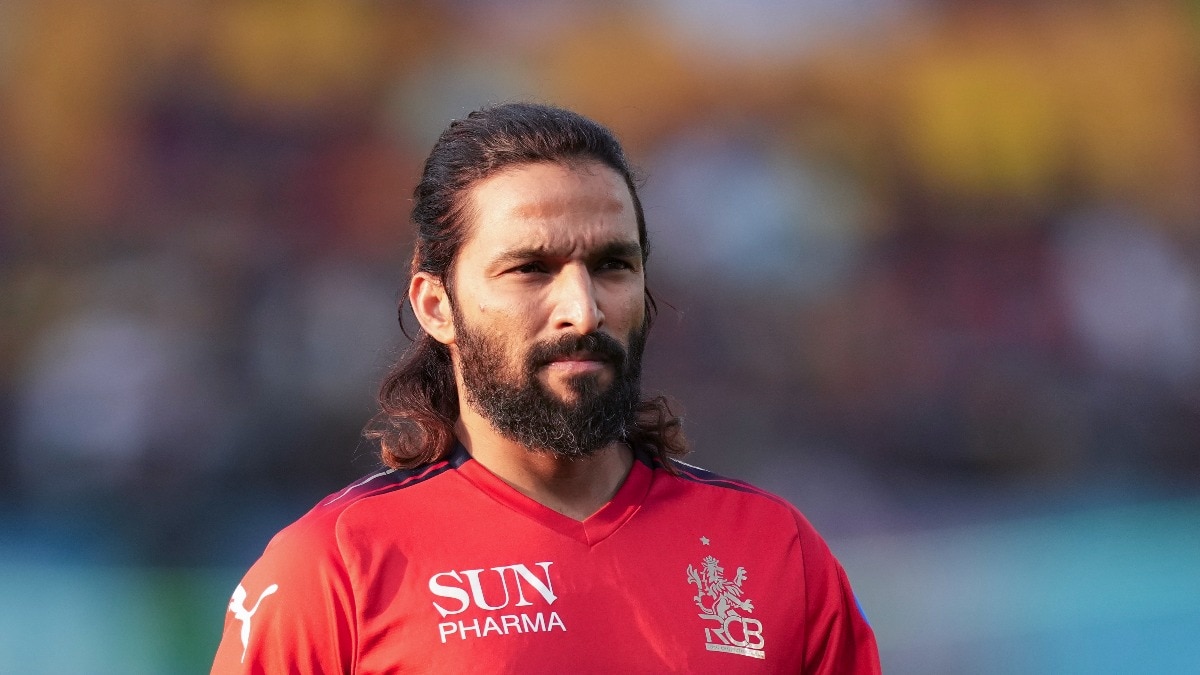
When the Board of Control for Cricket in India (BCCI) announced its new-and-improved T20I squad for the fresh two-year cycle, they didn’t just unveil a roadmap for the future. They quietly shut the door on one of the most remarkable redemption stories in the modern game. In drawing a firm line between franchise loyalty and international transition, the selectors effectively ensured that Rajat Patidar might never play a T20 International for India.
The headline is as jarring as it is cruel: consecutive IPL crowns, zero international caps.
THE CORPORATE TRAP
At 33 years old, Patidar has run directly into a structural bias that exists far beyond the cricket boundary. In any typical corporate setup, organisations naturally gravitate towards younger individuals. Youth is equated with runway; it represents potential, a long-term asset that can be moulded, and a higher return on investment over time.
But in prioritising the horizon, organisations often overlook what the veteran brings to the table: immediate maturity, hard-earned experience, and a fully realised, unflappable skillset.
Indian cricket is currently brimming with that exact brand of hyper-youthful talent. Every single season of the IPL unearths a new prodigy, each one younger and flashier than the last—personified perfectly by the selection of 15-year-old Vaibhav Sooryavanshi. Yet, this abundance has created a hyper-saturated ecosystem.
Much like how India views the Indian Institutes of Technology (IITs) as the absolute pinnacle of academic scarcity, the Indian senior cricket team has become an elite, nearly impenetrable fortress. There is a staggering surplus of world-class talent within the country who would comfortably walk into the starting eleven of almost any other cricketing nation on earth. In India, it doesn’t even guarantee you a ticket to Dublin.
THE STOIC CHAMPION
Yet, the most fascinating layer of the Rajat Patidar story isn’t the selection committee’s coldness; it is his own warmth. Speaking on RCB’s YouTube channel, Patidar’s general vibe regarding national selection revealed a man completely detached from the toxic anxiety of expectation:
“I never think about that as such. Because I never thought that if I played well here, I can also go and play T20s for India. If they want to select me, I’ll play—otherwise don’t do it.”
To some, this attitude might look like a defence mechanism or a lack of ambition. In reality, it screams self-confidence and immense emotional security. Patidar is acutely aware of the variables outside his control. He knows the system is designed to look past him. By relinquishing the need for validation from Mumbai, he has freed himself to conquer Bengaluru.
THE TACTICAL MASTER
What makes his omission a bitter pill to swallow for purists is that his snub cannot be chalked up to a lack of tactical utility or format suitability. In a format where batsmen usually specialise, Patidar has developed a rare, lethal equilibrium over the last two seasons, dismantling both pace and spin with equal venom. Over his roaring 2026 campaign, he plundered 501 runs in 14 innings at an astonishing strike rate of 192.69.
The selectors have proven they aren’t afraid to wield the axe. Even Suryakumar Yadav—a captain who famously did not lose a single bilateral series and successfully defended the T20 World Cup crown in Ahmedabad earlier this year—was dropped due to his recent batting woes. Chief Selector Ajit Agarkar explicitly hinted that Suryakumar’s snub was form-based, paving the way for Shreyas Iyer to assume the throne.
But if Iyer ticked the boxes, Patidar ticked them with a gold star on top.
While Iyer’s Punjab Kings fell into a chaotic spiral of off-field franchise controversies this season, Patidar’s RCB remained an oasis of calm. He walked into a high-pressure franchise, completely cemented his spot as a premier middle-order batsman, took on the captaincy with absolute clarity, and defended a championship in dominant fashion.
THE BRUTAL MATH
The decision ultimately came down to a binary choice between two tactical minds. As legendary batsman Sunil Gavaskar noted on India Today:
“I think it would possibly have been a close call for captaincy between Rajat Patidar and Shreyas Iyer… But one man got it, and that is Shreyas Iyer. Maybe Shreyas’ experience as a captain across three or four franchises has been that much greater than Patidar’s. Again, unlucky to miss out, Rajat Patidar. But that’s how it is. There are only 16 players in a squad and only 11 can play.”
Agarkar echoed this sentiment during the press conference, hiding behind the brutal math of selection: “There will always be players who miss out, but you can only pick 15.”
AN IMMORTAL LEGACY
Ultimately, Patidar’s international snub must never be framed as a personal failure. He has achieved something that 99 per cent of cricketers who wear the India cap will never do: he took the most heavily scrutinised, historically starved franchise in cricket history and led them to back-to-back championships.
Rajat Patidar might never play a T20I for India. His name may never sit on an international honours board. But as he stands at 33, secure in his skin and clutching consecutive IPL trophies, he doesn’t need international validation. He has already achieved immortality in the eyes of millions. And sometimes, that is more than enough.
– Ends



