


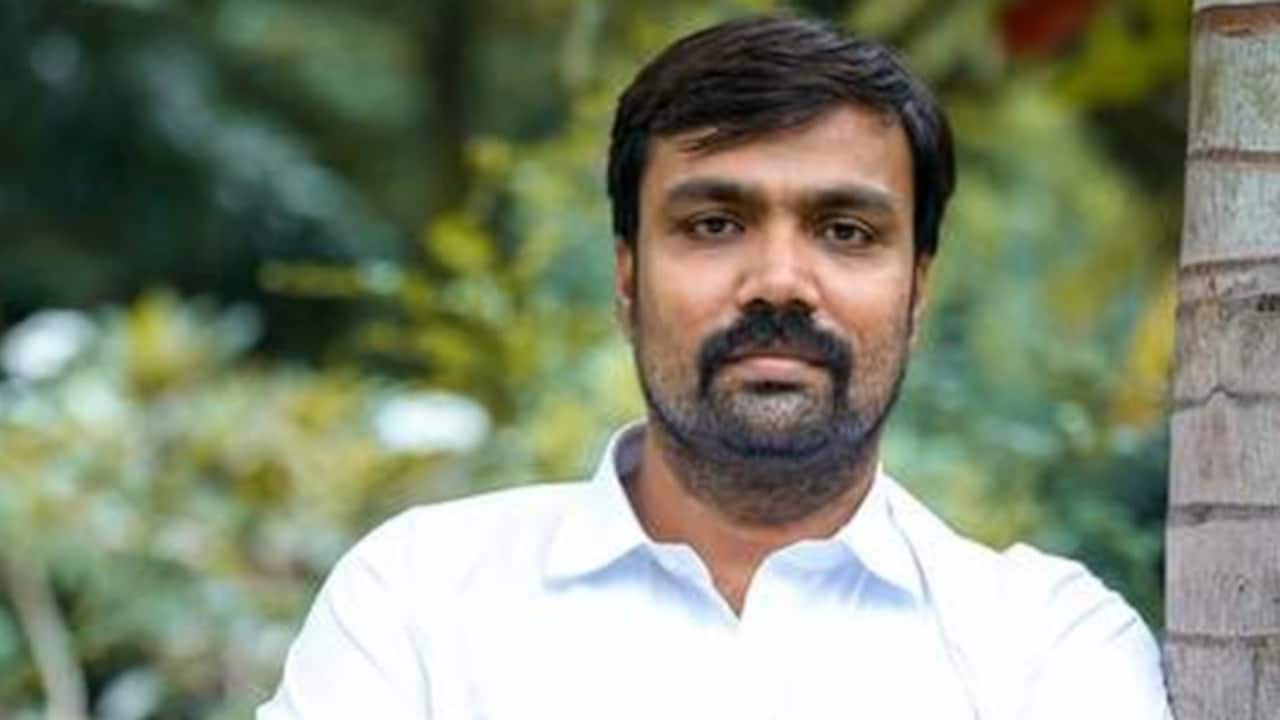
When his debut feature film, Naduvula Konjam Pakkatha Kaanom, starring Vijay Sethupathi, released in 2012, it went on to become a comedy cult classic that continues to be spoken about even today.
Director Balaji Tharaneetharan formed a friendship with Vijay Sethupathi during the making of the film, and that relationship has continued over the years, with the Tamil star now featuring in his latest film, Baththa. Produced by acclaimed filmmaker Atlee, Baththa has received praise from both audiences and critics.
In this exclusive conversation with NDTV, Balaji Tharaneetharan talks about what drew him to the story of a gangster and a young boy, working with Vijay Sethupathi again and more.
A gangster being feared is a familiar trope in Tamil cinema, but Baththa turns that idea on its head by presenting a feared gangster who himself experiences fear. This role reversal is at the heart of Balaji Tharaneetharan’s film. Speaking about his approach, the director said, “I wanted to tell the story of a gangster (Baththa) without glorifying the violence or turning him into another larger-than-life hero. This is a grey or dark area and more than being about the gangster’s power, I wanted to explore the anger, ego, insecurity and fear that often accompany such a life.”
The story follows Baththa (Vijay Sethupathi), a gangster who inadvertently gets locked inside a school toilet by a young boy during the summer holidays, when the school is closed. What follows is an unlikely relationship between the feared gangster and the boy, which gradually subverts the power equation and eventually changes Baththa.
“I wanted to tell the story of a gangster (Baththa) without glorifying the violence or turning him into another larger-than-life hero. This is a grey or dark area and more than being about the gangster’s power, I wanted to explore the anger, ego, insecurity and fear that often accompany such a life,” he said.
Recalling an incident from his own childhood, Balaji explains how the idea took shape. “When I was a young boy studying in school in Triplicane (Chennai), I remember throwing a kite stone, and it fell on a small shop. The shopkeeper threatened me. What stayed with me from that incident was the fear of the shopkeeper, and this incident played on my mind. I then elaborated that line into Baththa, where the young boy is scared of the gangster and runs away from the school when Baththa is locked inside the toilet,” he added.
“I didn’t want to make this into a conventional gangster action film but wanted it to be a drama.”
The toilet eventually becomes a prison – and even a psychological one – for Baththa, who remains trapped inside for days. “Even if he doesn’t go to jail, it’s like a prison. He can’t come out because he’s caught inside. He has to think about his life and how he treated his wife and child. He goes on an internal journey, and this gives us insight into why Baththa became a gangster. The most interesting relationship then becomes not between the gangster and his rivals, but between him and the young boy who is frightened of him. Baththa can face another rowdy, but how does he face an innocent boy?”
Baththa relies heavily on sentiment towards the end, but Balaji says this was not a conscious decision. Instead, it developed organically while he was writing the script. The same was true of his decision to set the story in the 1980s.
“I like the 1980s – it was a world without mobile phones. I wanted that world as it also connects to my childhood. Vijay Sethupathi spent considerable time understanding the character and his world, and he played Baththa in a way that was deliberately different from his previous roles. I am glad that the audience has loved the film,” he says with a smile.
Ask the director what he considers his biggest challenge today, and his answer is simple: “Myself.”
“It is not about budgets, stars or release strategies. The biggest challenge is my inner conflict. The first challenge as a writer is discipline. You need discipline to write. You have to write with conviction and write a story that you will enjoy watching on screen. Don’t write a story that you think the audience will like – if you don’t like it as a writer, then it will never work. If a story is good, it will reach the audience. People are waiting for good content.”
The conversation then moves beyond Baththa to the larger question of writing in Tamil cinema. Unlike industries such as Malayalam cinema, where writers and directors often operate as separate creative forces, Tamil cinema has traditionally seen directors write and direct their own films. Does Tamil cinema need more writers today?
“Yes, it’s good to have a space for writers and I think Tamil cinema needs it too. We had many dedicated writers earlier when the studio system existed in Tamil cinema. But when a director writes his story, he is more personally connected to it. That’s why many directors choose to write their own stories. If you see director Akira Kurosawa’s films, for instance, you’ll find his name along with another writer’s. It’s good to have space for writers in the industry,” he concluded.
ALSO READ: Baththa X Review: Vijay Sethupathi Is ‘Soulful’, Child Actor Sai ‘Major Plus’


