


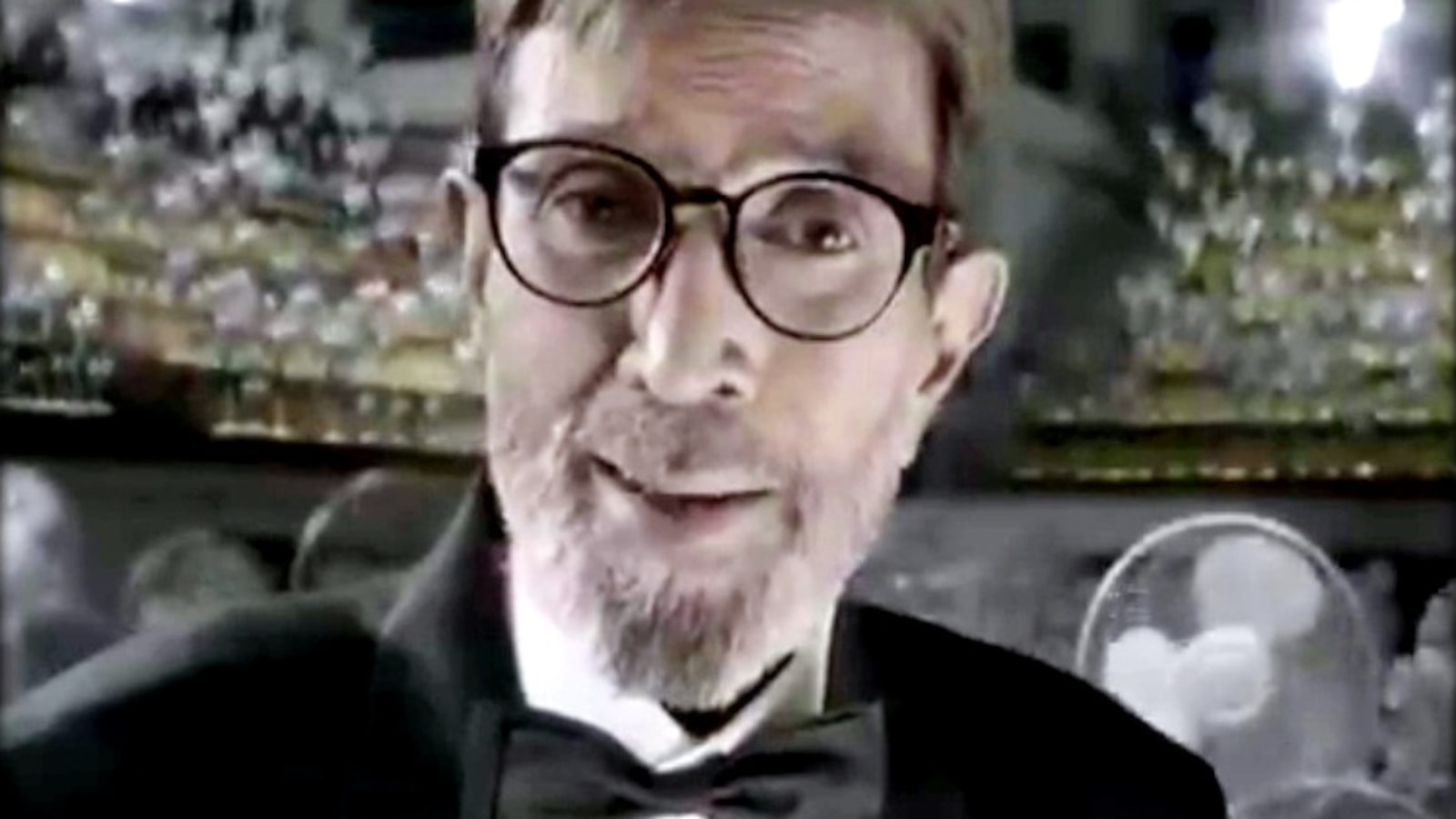
“True, I have fallen down, and that hurts . . . If I’d enjoyed moderate success, it would have been easier to adjust to . . . But falling from that height has bruised me and left me internally bleeding. The hurt is much more because I fell from Mount Everest,” India’s first superstar, Rajesh Khanna, famously said while reflecting on the arc of his career.
While writing his biography, I had the privilege of seeing his life through the memories of those who knew him closely. Much has been written about his meteoric rise and the years when he ruled Hindi cinema. But on his death anniversary today (18 July), I found myself drawn to something quieter.
His last day before the camera.
The last shot of India’s first superstar
When Hindi Cinema Belonged To Rajesh Khanna
We have all heard the stories of Rajesh Khanna’s fifteen consecutive hits and how the word “superstar” was coined for him. From 1969 to 1974, he ruled Hindi cinema like no one before him.
Advertisement – Scroll to continue
Screenwriter Salim Khan, of the legendary Salim-Javed duo and father of Salman Khan, told me: “I have no hesitation in stating that the heights of stardom he reached have never been achieved by any other star in the world of Hindi cinema. His success was exemplary. Today, my son Salman Khan is a big star. People often come to me and say that they haven’t seen such a craze for any star before this. But I tell these people that just a small distance away from here, on Carter Road, I have witnessed many such sights in front of Aashirwad. And I have never seen that kind of mass adulation for any other star after Rajesh Khanna.”
Then, almost as suddenly as it had arrived, the magic began to fade.
Cut to the early 2000s.
While Amitabh Bachchan was scripting one of Hindi cinema’s greatest comebacks, Rajesh Khanna had almost disappeared from the industry’s imagination. The man who had once defined superstardom found himself with barely any work.
Actress Dia Mirza once captured that loneliness in a memory she shared on social media: ‘I saw him [Rajesh Khanna] one day standing alone in a white kurta pyjama by the gate [of Aashirwad] . . . a nation that was crazy about him was now just passing him by . . . [sic],’ very poignantly summing up the last few years of Rajesh Khanna’s life.
“I feel that fate also played its part… when his star faded, I feel that in his heart he could never accept this,” said screenwriter Salim Khan.
Those close to him often said that Rajesh Khanna never stopped longing for the camera. He wanted to work. He wanted to face the lights one more time. But the industry that had once revolved around him no longer had producers willing to take that chance.
Then, in June 2011, he fell gravely ill. Tests confirmed cancer.
“It’s time to go . . . I’ll have to go.”
When oncologist Dr P. Jagannath of Lilavati Hospital (Mumbai) told him the diagnosis, Rajesh Khanna fell silent. He took a long moment to absorb it. Then he collected himself together and bravely looked straight at Dr Jagannath and said with a weak smile, ‘I am destined to live like Anand.’
It was as if the line between the actor and his most beloved character had finally disappeared. The man who had immortalised Anand was now living his final act. Fiction had quietly become life.
In these difficult times, his family returned to stand by him. He wanted to spend more and more time with his daughters. On his 69th birthday, they travelled together to Goa. His friend Bhupesh Raseen, who joined them, remembered, ‘This was supposedly his birthday celebration, but we all knew the reality: that he was not going to be with us for a long time. Sometimes, while talking to him, our eyes would brim with tears.” He was in acute pain, and his body had been reduced to a skeleton almost.
A close friend and astrologer, Bharat Upmanyu, recalled one of their last conversations in Lilavati Hospital. ‘Initially Kakaji hoped for a miracle for some time. Then gradually it dawned upon him that the time had come. When he was admitted to Lilavati I went to meet him. He asked everyone to leave us alone. We used to talk about spirituality and astrology. That day we discussed the Bhagwad Gita for long. Then I asked him, “Kakaji, darr lag raha hai?” [Kakaji, are you scared?] He went silent for a few moments as if lost somewhere, then looked at me and replied, “Nahi yaar . . . darr-varr nahi lag raha” [No, my friend, I am not scared], but I wanted to do some more good work. Good times were about to come; financially, better times had already come . . . I wanted to make some good films . . . but what to do . . . it’s time to go . . . I’ll have to go.”‘
Rajesh Khanna had never stopped longing for the camera. And fate, in its own mysterious way, was about to grant him that wish.
The Circle Of Destiny
Rajesh Khanna had distanced himself from the world. But then, around this time, came an offer from the famous advertising agency Lowe Lintas. This was an ad for Havells fans, with a novel concept. He had never worked in ad films, even in his heyday, so there was little chance of doing it now at a junction when he had given up on life and cut himself off.
The well-known ad-film-maker and director of the award-winning movie Paa, R. Balki, came on board to direct the ad. Balki strongly felt that there was no other person who could match the profile of Khanna to suit the concept they had in mind.
The storyboard of the ad film was shared with Khanna. It was about a man who was surrounded by a huge fan following and ended with the star reminiscing about his glory days with the punch line: ‘My “fans” can never leave me’, with a special emphasis on the word ‘Fans’ as a pun with an obvious reference to the fan brand in the background. For the shoot, they needed a huge stadium, and the organisers had been able to book this in Bangalore.
Surprisingly, Rajesh Khanna agreed to do the ad. Against all odds and against medical advice, he confirmed his availability and willingness to travel to Bangalore.
What was it about the shoot in Bangalore that the ex-superstar surprisingly couldn’t say no to?
When the production team called Rajesh Khanna to confirm the shooting dates, his condition had further worsened. But the bigger problem was that he had suffered a hairline fracture in his leg. There was so much pain and swelling that he couldn’t even wear his shoes. It was nearly impossible for him to even stand.
Bhupesh Raseen recalled, ‘I asked Kakaji, “Would you be able to do it?” He said, “Now that I have committed, I will do it. You give him a date after two days.” I said, “Kakaji, this is impossible, you can’t even stand.” He replied, “Bhupesh, this fracture will not heal at home. Take me to the hospital.” So we took him to the hospital. For two days, he was on heavy painkillers and complete bed rest. After two days, he didn’t go home from the hospital, but straight to the airport to catch the next flight for Bangalore, where the shoot had to take place in the stadium.’ Bhupesh Raseen accompanied Khanna to Bangalore for the shoot.
Rajesh Khanna went fully prepared and had taken along a hairstylist and a helper boy. Director R. Balki reached Bangalore the same night. Post dinner they sat down to discuss the script. It was decided that Khanna would use his trademark mannerisms to the chorus of the famous song ‘Yeh Shaam Mastani‘ (from his movie Kati Patang), playing like an anthem in the background. Rajesh Khanna loved the idea.
In a way, the ad film was a salute to Rajesh Khanna’s magical superstardom. It very movingly took the viewers down memory lane when Rajesh Khanna was the uncrowned king of the film industry, and ended with the superstar stating what he always believed-that his fans would never leave him. Khanna very sportingly took the tongue-in-cheek humour in the right spirit. Before leaving for his room, a limping Khanna showed Balki his famous walk that was to be used in the film. Seeing his courage, Balki just said, ‘Hats off to him.’
Limping from a fracture injury, not being able to stand up straight and constantly fighting cancer with every ounce of remaining energy, the ghost of a superstar was preparing for his last shoot in Bangalore’s stadium with the same enthusiasm as he had for perhaps his first shoot. What was it about the city that almost called out to him?
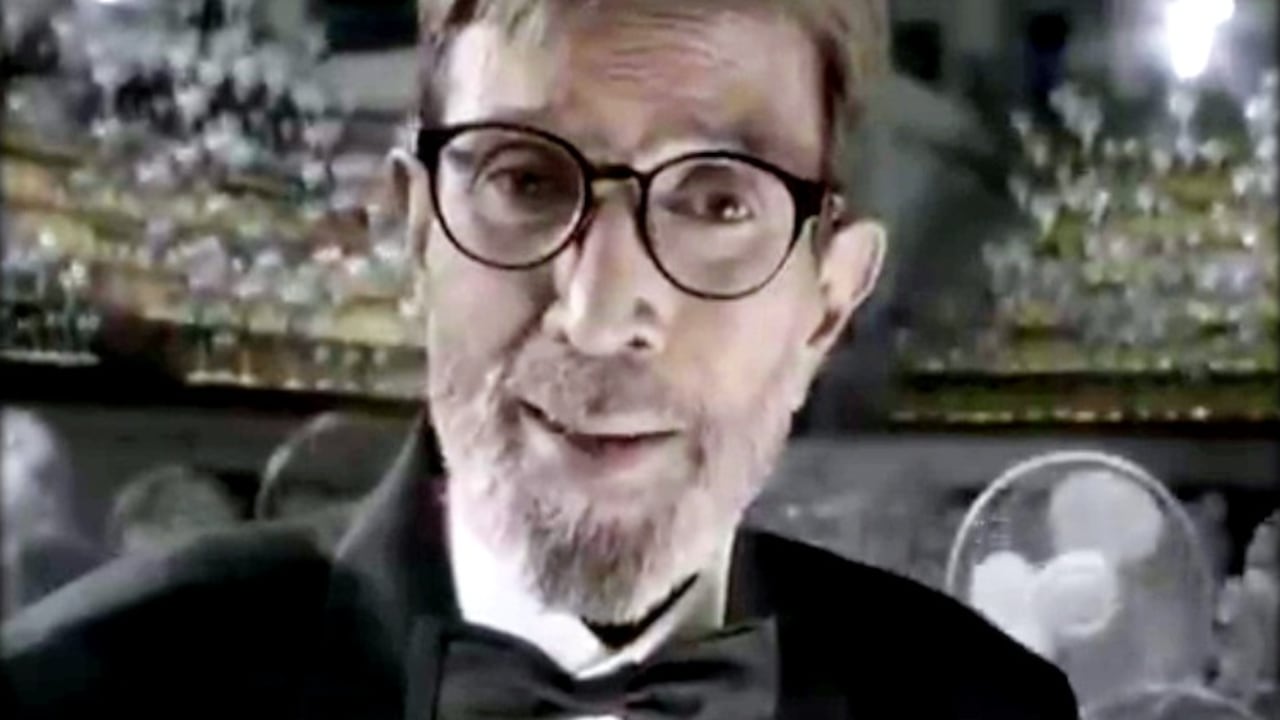
The next day was the shooting. Khanna came to his vanity van and got ready, put on make-up and donned a tuxedo with a white collared shirt and bow. The shoot was to take place inside the stadium, and his vanity van was parked at the gates.
As it was difficult for him to walk, he travelled the distance in a wheelchair.
As he entered the stadium, a smile played on his lips. In these moments, perhaps he was transported back to the day in Bangalore, forty years ago, when the godly might of his stardom had dawned on him. He had said then, ‘I still remember the exact moment when, for the first time, I became aware of how mind-blowing success can be. It was just after Andaz (1971) . . . in Bangalore . . . and there was just one echo of the voices-“Haaaaa” . . . You know, it was like a stadium from the time of the Romans. I wept like a baby.’
Almost four decades later, fate had brought him back for his last shoot to this place. Bangalore.
In the ‘making’ of the ad film, Rajesh Khanna said, ‘Jahaan pehli baar meri pehchaan bani . . . mere audience ne mujhe sweekaar kiya, main yeh mehsoos kar raha hoon ki aaj main ussi hisse mein aaya hoon . . . unke saath aaya hoon . . . unke liye aaya hoon . . . unke pyaar ki khaatir. Woh sammaan jo main chahta tha, unhone mujhe dono haathon se diya.’
Perhaps this was why he had agreed to and hurried for the shoot of this ad film. With his failing health, he wished to give his last shot at the place where it all had started for him.
The circle of destiny was complete.
The Final Performance
‘Light, sound, camera, action!’
The words echoed in the stadium all through the day. R Balki recalled, ‘In front of me was the man who had seen stardom like nobody else .’
The ad film opens with Rajesh Khanna’s silhouette walking through the darkness towards a door glowing with light. A nostalgic soundtrack sets the mood.
A sepia-toned montage follows: fans chasing his car, asking for autographs, waving posters, and shots from his iconic films. As the sound of cheering crowds fills the air, Rajesh enters a stadium and looks around, recreating the overwhelming love of a superstar meeting his fans once again.
The stadium appears packed with fans standing on every seat and in every corner. But the final reveal is the clever twist-those “fans” are actually Havells fans placed across the stadium.
Khanna shows no hint of physical pain on screen . . . as he delivers the dialogue, ‘Fans kya hote hain mujhse poocho . . . pyaar ka woh toofaan . . . mohabbat ki woh aandhi . . . woh jazbaat . . .woh junoon…hawa badal sakti hai…lekin fans…yeh sab mere rahenge. Babu Moshaye. . . mere fans mujhse koi nahi cheen sakta.’
Balki said, ‘He loved the camera…Some portions of the commercial that could not be used had Kaka doing a small jig on the song ‘Achcha Toh Hum Chalte Hain‘ as if he was bidding goodbye to the camera.’
Around seven in the evening, director R. Balki’s voice pronounced, ‘Pack up!’ The entire unit gave a standing ovation to Rajesh Khanna as he waved his hands in his unique style. Amidst the applause, Khanna reached his wheelchair. Then he turned around for a last look at the stadium, and his eyes seemed to be looking at a time long past.
His last shooting had been packed up.



