


Last Updated:
Lokesh Kanagaraj is a confident surprise in DC. For a full-fledged acting debut, he brings lots of brooding intensity. Wamiqa Gabbi finally gets a role with meat and she impresses.



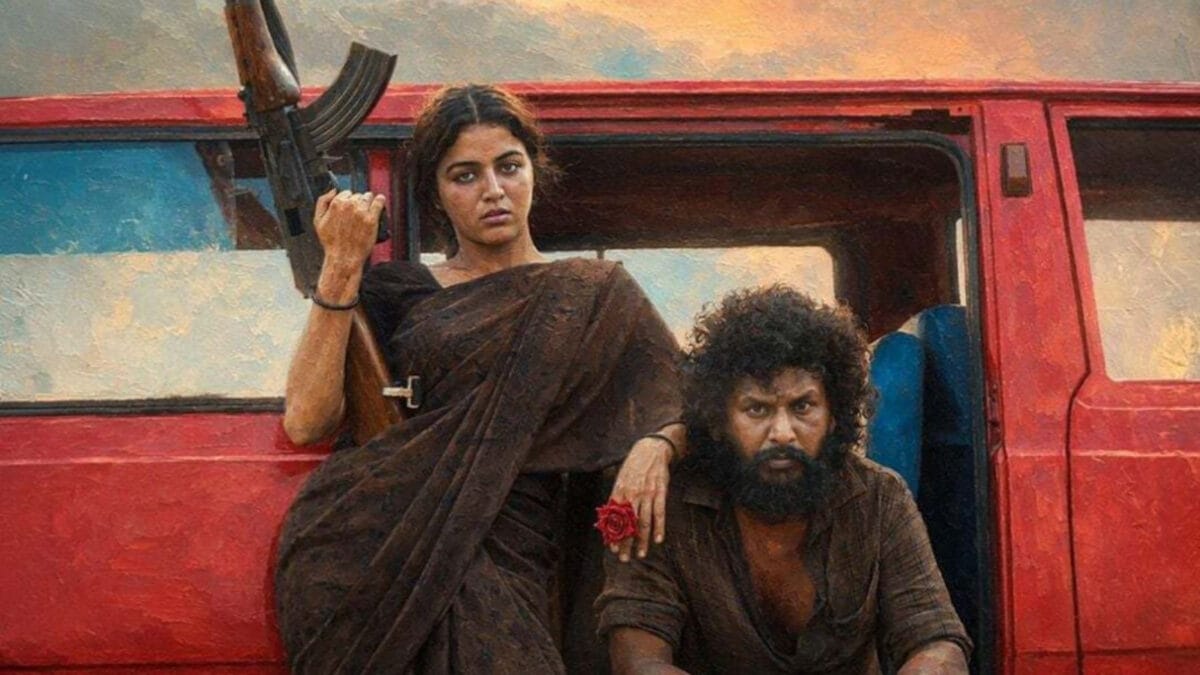
Lokesh Kanagaraj (in his acting debut) and Wamiqa Gabbi starrer DC is now running in cinemas.
DCA
3.5/5
Starring: Lokesh Kanagaraj, Wamiqa Gabbi and Sanjana KrishnamoorthyDirector: Arun MatheswaranMusic: Anirudh Ravichander
DC Movie Review: In the pre-interval block of DC, there’s a graphic and sensational fight sequence with Anirudh Ravichander’s Rage Of Revenge playing in the backdrop. It’s cinematic and almost poetic in its visual treatment. We see Lokesh Kanagaraj’s unhinged and angry Das wielding a bloody knife and that gets interspersed with shots of Chandra and the plastic red rose she wears in her hair.
It creates a literal juxtaposition of guns and roses, which emerges as an interesting representation of masculine rage and feminine vulnerability and how the two coexist within the film’s violent world. The scene plays out like a violent ballad. And that’s precisely what the Arun Matheswaran directorial attempts to be, at least in its first half. And the tone is set right from the opening credits.
It unleashes a pulpy, sketchbook-style montage backed by a banger soundtrack. With guns, roses and graphic illustrations flashing across the screen, it instantly immerses you in the film’s gritty world. Loosely adapted from Sarat Chandra Chattopadhyay’s classic novel Devdas, DC follows a rebel named Das as he navigates a violent world of survival, betrayal and revenge against corrupt cops.
When a police offer illegally extracts Rs 7 lakh from a poor villager and murders him, Das and his gang take it upon themselves to deliver justice to the grieving family. In the process, they end up killing police officials. With the murder of uniformed officers hanging over their heads like the sword of Damocles, the gang also finds itself on the run for stealing police weapons to sell to Naxals.
As they find shelter at a lodge in Chennai, Das meets Parvathy, a bar singer. Sparks fly, childhood traumas get exchanged and some heartfelt conversations later, she gets killed in a showdown between cops and Das’ gangs. The episode deeply scars Das and he can’t get the visual of Parvathy groaning in pain as she fights for life out of his head.
As they’re on the run again, Das encounters Chandra, a sex worker, at a brothel. She immediately reminds him of Parvathy. Impulsive as he is, Das ends up killing all the men in the brothel who take advantage of women and film them while being raped. Eventually, Chandra join forces with Das to escape to Andhra Pradesh and thus begins their high-stakes quest for survival.
At 2 hours 22 minutes, DC rarely drops pace. The film that’s high on heavy action blocks also intertwines a tragic and intense love story, that almost forms the emotional core of the narrative and then doesn’t. For a film that’s loosely based on Devdas, the love story should’ve been its strongest suit and its beating heart. But the problem arises when it tries to become more than that.
In the second half, especially, the narrative suffers due to its own lofty aspirations. It tries to be too many things at the same time – a love story, a vigilante suspense drama and a survival thriller – and forgets what it had set out to be. Das ultimately becomes a larger-than-life Robin Hood, causing the post-interval block to shed its pulpy swagger as it gets weighed down by social messaging.
Having said that, a couple of sequences in the first half stand out, elevating DC beyond its familiar beats. One particularly striking montage intercuts Das being brutally beaten by the police with Parvathy’s slow death while simultaneously introducing Chandra in slow motion. Set to Bum Baa Diga Diga, the sequence juxtaposes grief, violence and swagger with remarkable flair.
It bears a testament to Arun’s command over visual storytelling. He makes sure that even amid gore and gunpowder, he never loses sight of cinematic aesthetics and framing. When Das meets Chandra for the first time in the brothel, there’s a painting of Vincent Van Gogh’s The Starry Nights in the backdrop, that highlights the co-existence of chaos, beauty, turmoil and longing in their world.
But what becomes the strongest link of DC is Anirudh Ravichander’s tunes. It leans heavily into a Western, English-infused soundscape, complementing the film’s pulp motif. Electric guitar riffs, synth-heavy arrangements and bass drum flourishes give DC an edgy aesthetic that amplifies its swagger. Anirudh’s music becomes an extension of the film’s rebellious personality.
Performance-wise, Lokesh is a confident surprise. For a full-fledged acting debut, he brings plenty of brooding intensity and owns the screen. While on the surface, this is a man who believes every problem can be solved with one more bullet, there’s a vulnerable boy hiding deep within. He shares a complicated relationship with his father and is still grieving the death of his mother.
The fear of losing another loved one constantly haunts him, leaving him emotionally guarded and unable to pursue a romantic relationship. However, these emotional complexities largely remain unexplored. But thankfully, the women here aren’t decorative props waiting for the hero’s cue. They’re bruised, they’re broken but they keep fighting.
They have agency, they make choices and the film gives them space to exist beyond the men around them. Wamiqa Gabbi finally gets a role with substance and she grabs the opportunity with both hands. As Chandra, she beautifully transitions from a broken woman who has succumbed to her destiny in a brothel to someone, who reclaims her dignity through intimidation and bullets.
She brings palpable vulnerability to a character constantly shamed for her profession. She’s impressive in quieter moments too. Her overwhelming reaction to seeing the sea for the first time in years after being caged speak volumes. In a scene, she even turns saviour for Das, shooting guns and causing mayhem at a police station.
Her Chandra turns the plastic rose in her hair, a symbol of how she sees herself as artificial and discarded, into a powerful weapon of defiance. Sanjana Krishnamoorthy, on the other hand, may have limited screen time but she lights up the screen with her presence, becoming the emotional spark that drives Das into an even bloodier mission.
DC isn’t perfect. It sometimes mistakes ambition for balance. But when it locks into its rhythm, it’s stylish, gripping and visually unforgettable. This is Devdas with a lot of gore and gunpowder, a lot less self-pity and a slowly-fizzled out love track. The winner, however, is Anirudh, who turns up with one of his best scores in recent memory.
About the Author

Titas Chowdhury is a Special Correspondent at News18 Showsha. She writes about cinema, music and gender in cinema. Interviewing actors and filmmakers, writing about latest trends in showbiz and bringi…Read More
August 07, 2026, 15:17 IST



