


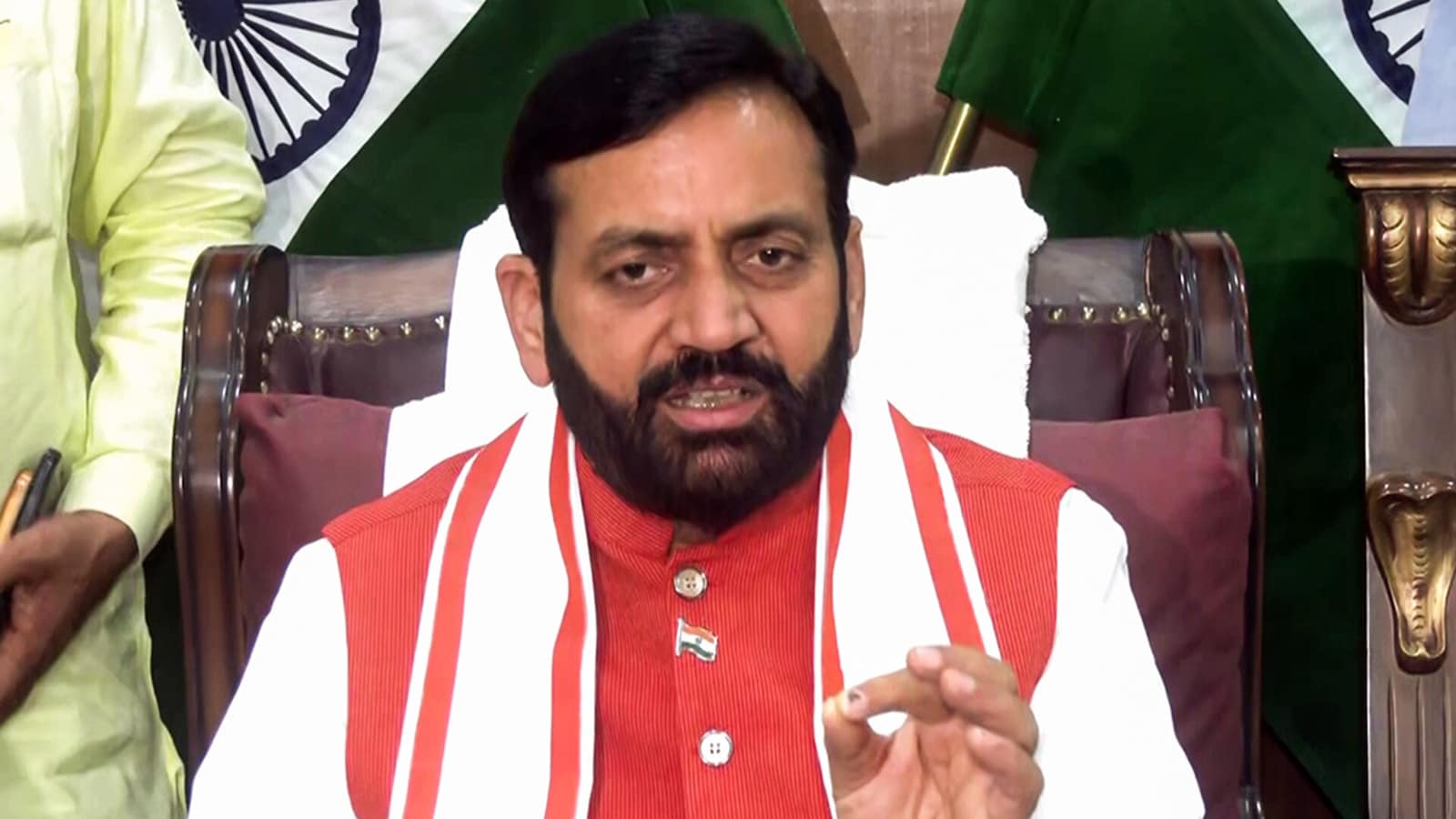
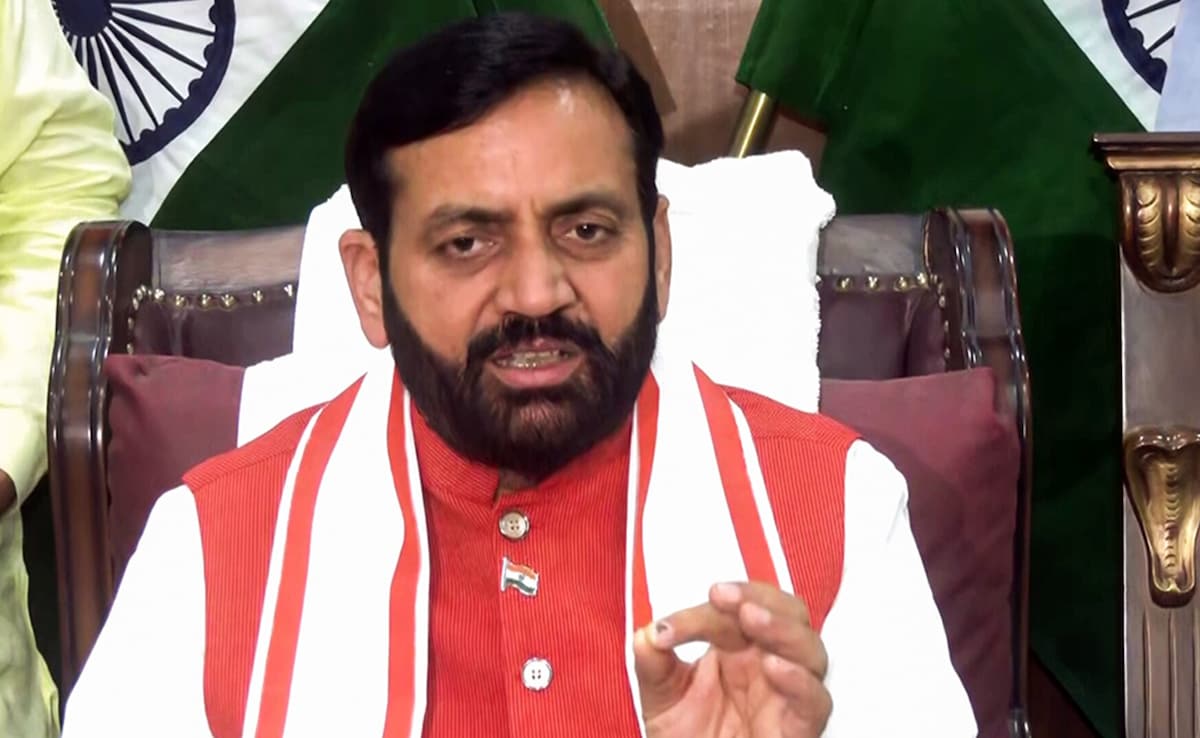
With the Punjab Assembly elections approaching, the Bharatiya Janata Party (BJP) has intensified its political outreach in the state, banking heavily on Haryana Chief Minister Nayab Singh Saini to build an independent support base among Punjab’s influential OBC and rural communities.
Since 2025 onwards, Saini has attended nearly 70 political and community events across Punjab — a move political observers see as part of a calculated BJP strategy to expand beyond its traditional urban Hindu voter base in a state where the party currently holds only two seats in the 117-member Assembly.
At the heart of this outreach lies Punjab’s evolving caste arithmetic.
BJP’s OBC Push In Punjab
Punjab’s politics has long been dominated by the agrarian Jat Sikh leadership, particularly across the politically crucial Malwa region. But the BJP now appears keen to challenge that entrenched structure by mobilising non-Jat Sikh communities, especially OBC groups such as Sainis, Ramgarhias and Kambojs.
The outreach gains symbolic weight because Saini himself belongs to the OBC community and is fluent in Punjabi — a cultural advantage BJP leaders believe could help bridge the party’s trust deficit in rural Punjab.
The political messaging is significant. Since Punjab’s reorganisation in 1966, only two of the state’s 13 chief ministers have come from outside the dominant Jat Sikh fold. Giani Zail Singh, an OBC leader from the Ramgarhia community, served between 1972 and 1977, while Charanjit Singh Channi, a Dalit Sikh, remained in office for just 111 days between 2021 and 2022.
The remaining chief ministers largely emerged from the powerful Jat Sikh agrarian establishment concentrated in the Malwa belt.
Why Malwa Holds The Key
Punjab’s electoral map is sharply divided across three regions, each shaped by distinct caste and political dynamics.
The Malwa belt — stretching from Patiala and Ludhiana to Bathinda and Ferozepur — accounts for 69 of Punjab’s 117 Assembly seats, making it the state’s biggest political battleground. Traditionally dominated by Jat Sikh politics, the region also contains sizeable Saini-Kamboj-Mali population pockets around Mohali and Rupnagar.
For the BJP, making inroads into Malwa is essential if it hopes to emerge as a serious contender in Punjab politics.
Doaba’s Dalit Equation
The BJP’s calculations also extend to the Doaba region, the NRI-heavy belt between the Beas and Sutlej rivers that contributes 23 Assembly seats.
Districts such as Jalandhar, Hoshiarpur, Kapurthala and Shaheed Bhagat Singh Nagar have one of the highest Dalit concentrations in Punjab, with the population crossing 40 percent in several constituencies. The region also has a strong Ravidassia-Ramdasia social presence, making caste mobilisation particularly significant.
Punjab overall has nearly 32 percent Dalit voters — among the highest proportions in any Indian state — but the community remains fragmented across multiple sub-castes, including Sikh SCs, Mazhabi Sikhs and Hindu SCs.
This fragmentation is precisely what the BJP hopes to navigate through targeted outreach and community representation.
Haryana’s Political Ripple Effect
The BJP’s third consecutive victory in Haryana has further boosted its confidence in neighbouring Punjab.
Interestingly, several districts in Punjab and Haryana share not just borders but also deep social, linguistic and economic linkages. Punjab districts such as Muktsar, Mansa, Sangrur and Patiala directly border Haryana districts including Sirsa, Fatehabad, Jind, Kaithal, Kurukshetra, Ambala and Panchkula.
Political trends in Haryana often influence voter sentiment in Punjab’s bordering districts, especially among farming and OBC communities with cross-border family and trade ties.
The BJP appears to be leveraging this overlap by projecting Haryana’s governance model — particularly farmer welfare schemes and OBC representation — as a template that could resonate in Punjab.
Can BJP Break Punjab’s Traditional Political Structure?
Despite the aggressive outreach, Punjab remains a difficult political terrain for the BJP.
Around 57 percent of the state’s population is Sikh, while Hindus constitute nearly 38 percent. Both communities are internally divided across caste, sectarian and regional lines. Jat Sikhs continue to wield disproportionate political influence, especially in rural constituencies.
Moreover, the memory of the farmers’ protest still shapes political perceptions among sections of Punjab’s agrarian community, many of whom have historically remained wary of the BJP.
Yet the party appears determined to alter the state’s political narrative by positioning itself as a platform for non-dominant caste groups and underrepresented communities.
Whether Nayab Singh Saini’s outreach can translate into electoral gains remains uncertain. But one thing is increasingly clear: the BJP is attempting its most serious social engineering experiment in Punjab in years — one that seeks to challenge the long-standing dominance of Jat Sikh politics by stitching together a broader coalition of OBCs, Dalits and non-traditional voters.



