


New Delhi:
The Trinamool Congress’s arguments that a central government employee would necessarily go against them has a fallacy, the Supreme Court said today. That fallacy, the court pointed out, is the assumption itself and instead, the Trinamool should “give the government employees some credence”.
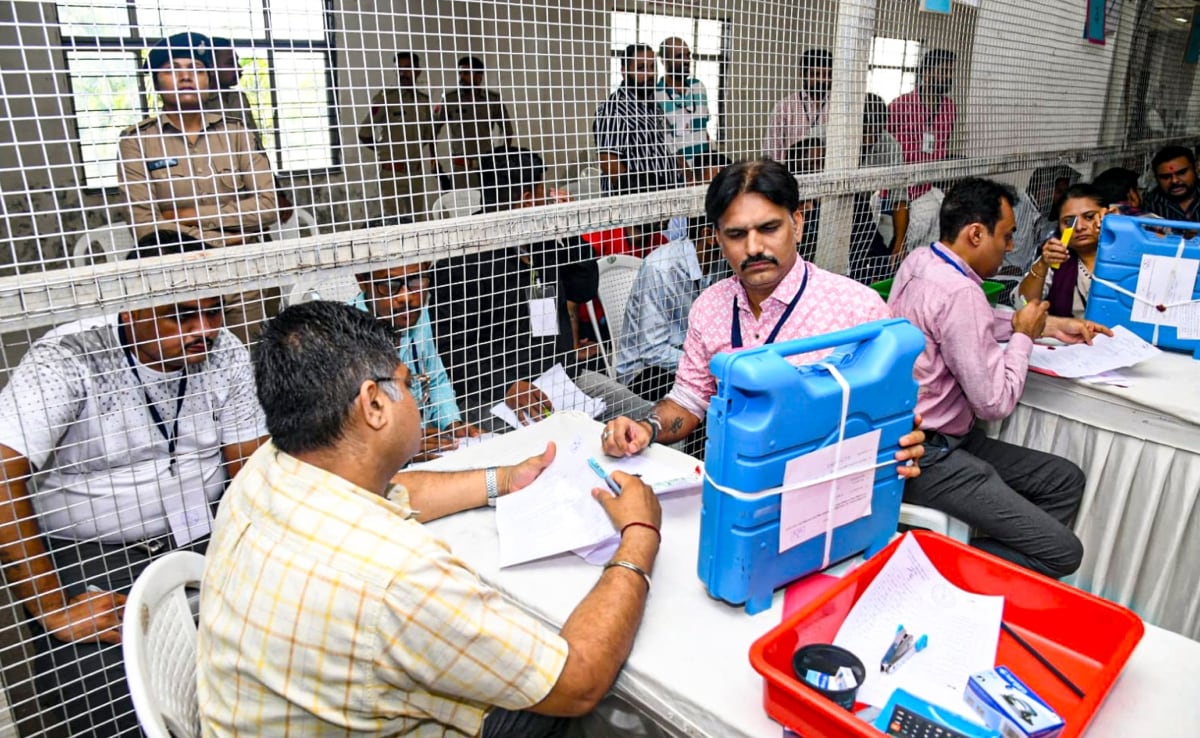
The Supreme Court’s observation comes just days after the Calcutta High Court upheld the decision of the Election Commission (EC) to appoint central government and public sector unit (PSU) employees as counting supervisors and assistants, dismissing a petition filed by the Trinamool.
Senior lawyer Kapil Sibal, representing the party led by Chief Minister Mamata Banerjee, referred to a circular issued by the EC and said, “It says there has been apprehension from various quarters regarding discrepancy. They want another central government nominee. Is this not pointing a finger at the state?”
Justice Joymalya Bagchi replied, “It hardly matters if he is a central government nominee or not. It is to the subjective satisfaction of the EC. Your counting agents will be there and so will others. Then counting assistant, counting supervisor and microobserver who is a central government officer.”
“We cannot hold that this notification is contrary to the regulation since one is a central government officer, but the others are not. To choose wholly from one pool cannot be said to be incorrect,” Justice Bagchi said.
Counting in the West Bengal assembly election is scheduled on Monday.
Justice PS Narasimha also questioned Sibal’s line of reasoning: “What is this proportionate representation concept? All of them are employees of the government.”
“But the state government nominee has not been appointed,” Sibal said.
“So have you written to them. You were challenging the circular and now you are saying to follow it,” Justice Narasimha replied.
The EC told the Supreme Court that the state government’s apprehensions are wrong because state government officers would also be part of the process and present at the counting booths.
Even in the Calcutta High Court, the observations had said such appointments fell within the exclusive discretion of the EC and did not suffer from any illegality or lack of jurisdiction. Similar to today’s Supreme Court’s observation, the high court had said there was no restriction mandating selection only from state government employees, and authorities were free to appoint personnel from central or state services, including PSUs.
Appearing for the EC, senior lawyer DS Naidu said the returning officer is a state government employee with overarching power to deploy personnel from any pool of government employees.
Sibal then said he wants the circular to be implemented as it is. It was in this context that the Supreme Court asked the question: if he wants compliance of the circular, then why is the Trinamool before the court?
The Supreme Court following the hearing disposed of the petition, saying no more action is needed.



