


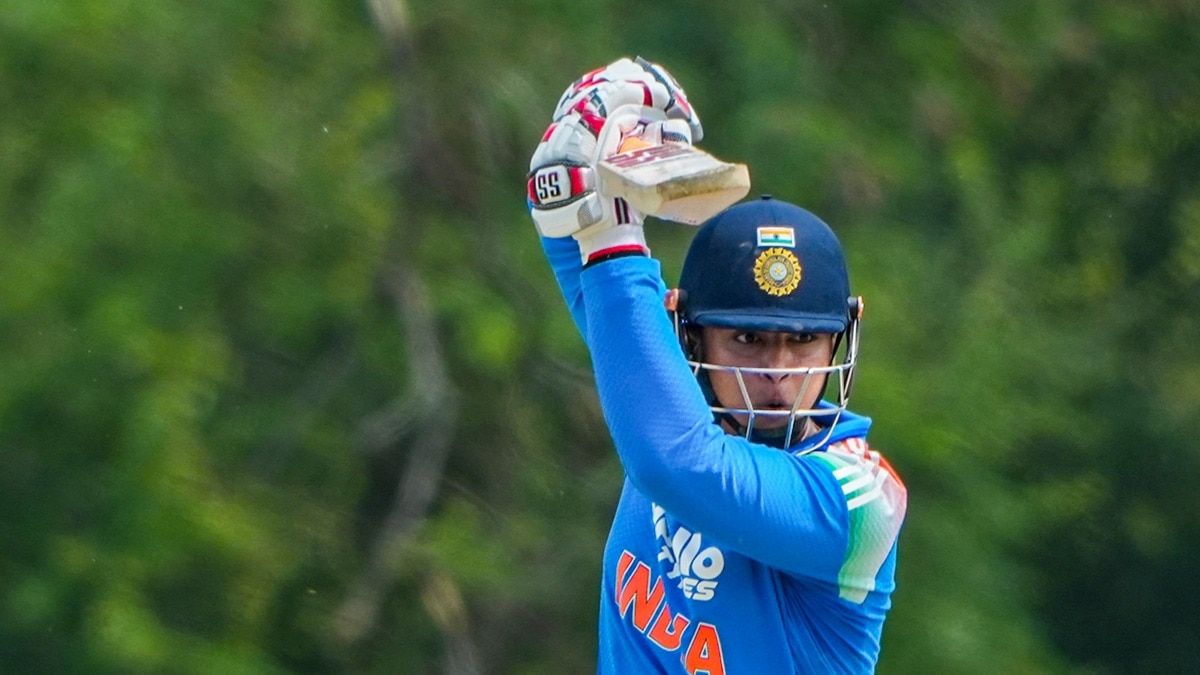
Cricket’s polite vocabulary has settled on a word for what happened to Vaibhav Sooryavanshi in Belfast: delayed. It is the comfortable word. It lets India sound prudent rather than wrong. But delayed for what, exactly, and delayed by whom?
When dealing with a 15-year-old prodigy like Sooryavanshi, the temptation for team management is always to wrap their conservatism in the language of caution, arguing that time is entirely on the youngster’s side. Yet on cricketing merit alone, this reads less like a mature postponement and more like a debut denied.
To be clear: the historic series defeat to Ireland in Belfast is not the reason to question Sooryavanshi’s omission. The result merely exposed the cracks in a flawed process. Historically, India has used these peripheral assignments against lower-ranked sides precisely for this purpose: to blood youth into the international arena without the suffocating weight of public expectation. Ideally, the left-hander should have played in the series opener, allowed to express his natural flair in a pressure-free environment. Instead, once India dropped the first T20I, a familiar panic set in. Hesitant to drop underperforming incumbents while chasing the series, the management made an almighty mess of a straightforward transition.
The hierarchy, including captain Shreyas Iyer and the coaches, sought comfort in the familiar, arguing that they wished to back their T20 World Cup-winning core. If continuity was truly the gold standard, though, why was Suryakumar Yadav, the World Cup-winning captain, omitted from the squad? The selection committee and the Gautam Gambhir-led team management has left itself open to charges of inconsistency.
Sunil Gavaskar, for his part, made an even simpler case while speaking to AajTak: form, not hierarchy, should have settled this in Belfast.
“For a month, I had been saying that Vaibhav Sooryavanshi could have played both games because of his form,” Gavaskar said.
“In one match, you could have had Abhishek Sharma opening the batting and Sanju Samson in the other with Sooryavanshi. But, it has not happened. I am not saying Vaibhav would have won you the match. Even he might have gotten out after scoring 10-15 runs. But, if you had to try a young player, these two matches were the ideal opportunity.”
‘PLAY HIM IN ENGLAND’
It is an uncompromising ultimatum, yet it raises an immediate tactical question: how do you blood the prodigy without dismantling an opening pair that actually held its own in Belfast? Gavaskar’s answer lies in flexibility rather than a straight swap at the top.
“No [you can’t wait any longer]. You should play him from the first game in England. It’s as straightforward as that. Keep the out-of-form batters on the bench and play Sooryavanshi. That’s it. Either you play him as the opener or at No. 3, but he has to play the first match of the England series, which is on July 1.”
“It can happen. The opening partnership of Sanju Samson and Abhishek Sharma have played really well. So, dropping them after two matches is not right. But, you can drop a batter from the middle-order. So, you can play Sooryavanshi at No. 3. But, on July 1, you have to play him. If you want to shock England, then you have to play him. He might fail, but if he gets going, England will be rattled.”
Sooryavanshi’s claim, in any case, was never built on hype alone. He arrived in Ireland having won the Orange Cap and the MVP award in IPL 2026, taking apart some of the format’s best bowlers along the way. He followed that with a stint in Sri Lanka with India A, where pitches rarely favour visiting batters, and signed off with a 94 off 29 balls in the final in Dambulla, built around an 11-ball fifty. This was not a case of reputation outrunning runs. The runs had already been scored.
THE PUNDITS ALIGN
Gavaskar is far from a lone voice. Former India batter Mohammed Kaif was equally scathing on his YouTube channel, calling out what he saw as outright inconsistency in the selection logic.
“If you were making the best XI, Vaibhav Sooryavanshi’s name should have been there,” Kaif said.
“The logic that was given was that this is a World Cup-winning team and we would play the same XI. And Vaibhav has to wait. Okay, that’s your logic. Is that the right logic? Well, Rohit Sharma was the Champions Trophy-winning captain. He was removed from the role in the next series and it was told at that time that the team was moving towards youngsters. We need a young captain. Suryakumar Yadav, another World Cup-winning captain, was dropped. It was said we are looking at youngsters. If you are looking at youngsters, there is a 15-year-old waiting in the wings. First is logic and then Sooryavanshi is heading into the series after winning the Orange Cap in the IPL. He dominated the best bowlers. In the best XI, Sooryavanshi should have been there. So, don’t have different rules for different players. It was shocking that Vaibhav did not play in the XI.”
Former Bengal captain Manoj Tiwary went further still, accusing the coaching staff of clinging to pre-conceived notions rather than reading the form in front of them.
“How can we not see Vaibhav in the XI?” Tiwary said.
“One of the assistant coaches said ‘just because we need an opportunity for a youngster, we can’t make our players sit out’. But, the point is, Vaibhav Sooryavanshi is coming into the team on the back of good form. Rather, you went with players who did well in the T20 World Cup, which happened before the IPL. And your so-called part-timers obsession has not lived up to your expectations. So, you are not consistent in your decision making.”
THE OTHER VIEWPOINT
Former India spinner R Ashwin, characteristically, broke from the pack. On his own YouTube channel, he made the case that there was simply no room for Sooryavanshi in this XI, not because he lacks the runs, but because Samson and Abhishek Sharma do not play Test or ODI cricket and need the T20 format to stay relevant within the team structure.
“There is no place for Vaibhav Sooryavanshi right now,” Ashwin argued.
“If he has to play, then selectors should send him to the Zimbabwe tour, where these incumbent openers will not be there. But it seems difficult. Sanju Samson is not in the Test or ODI teams, and the same goes for Abhishek Sharma. Earlier, one player used to play in all three formats. This is the ODI cricket World Cup preparation year, and if the T20 cricketers do not get a chance, then where will they play. So it’s not fair. Whatever happened, it was right. On merit, Vaibhav Sooryavanshi demands a place. But then not at the cost of the incumbent openers. Purely, if you have to make a place for Vaibhav Sooryavanshi, it should come in case of loss of form or an injury replacement.”
That tension is now India’s problem to solve in public. Ireland offered the gentlest possible runway to debut a 15-year-old: low stakes, beatable bowling, nothing to lose. India left it unused and lost anyway. England arrive next, five matches, considerably less forgiving, and the easy version of this decision no longer exists.
Sooryavanshi, for what it’s worth, has shown no sign of needing India to be ready on his behalf. Whether India are ready to be asked the question again, on July 1, is a different matter entirely.
– Ends



