


New Delhi:
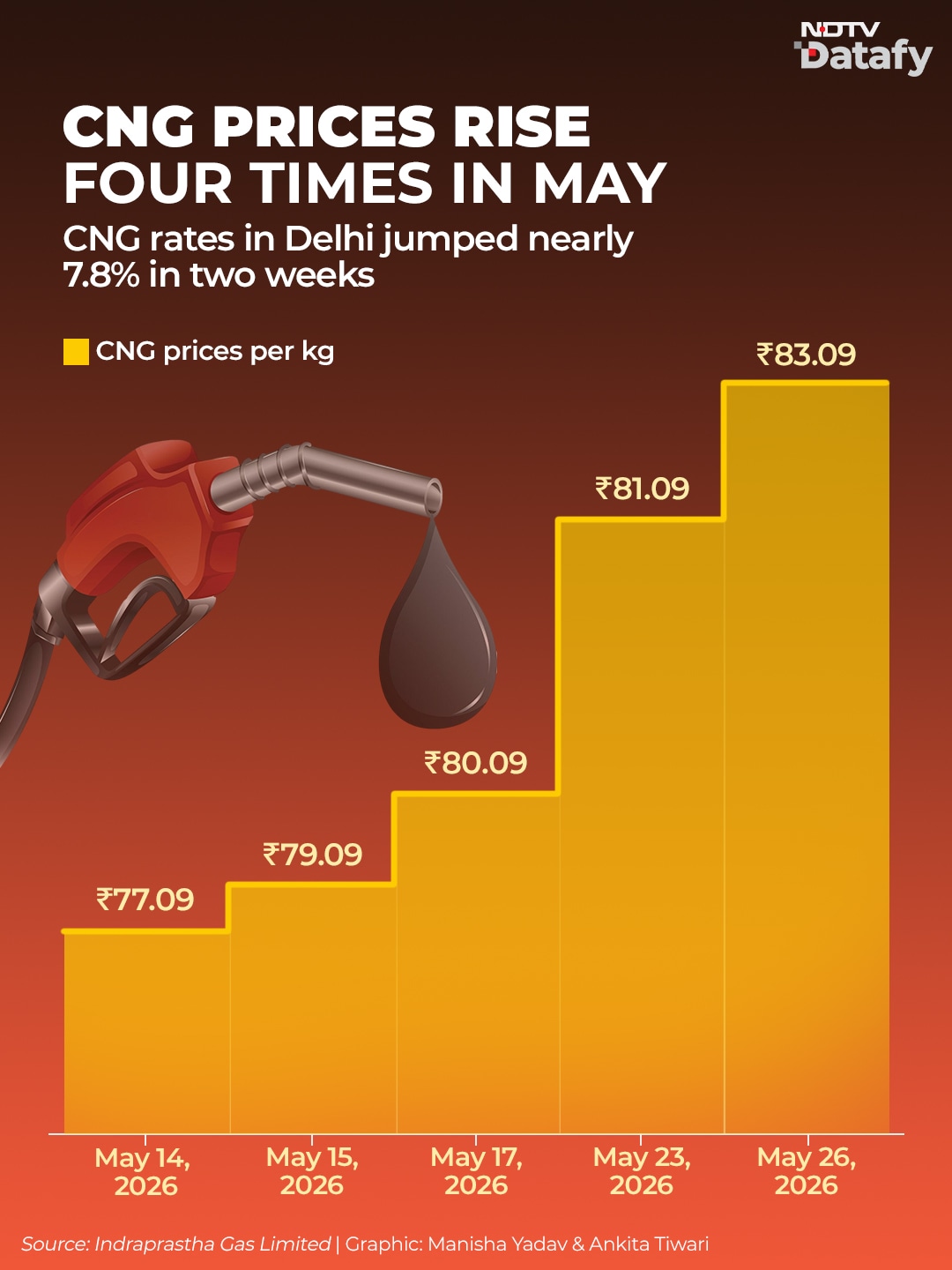
Delhi’s CNG prices were hiked again on May 26, marking the fourth increase in just 11 days as disruptions in global LNG supplies continue to push up costs.
The latest revision raised CNG prices by Rs 2 per kg.
Earlier, prices were increased by Rs 2 per kg on May 15, Rs 1 per kg on May 17, and another Rs 1 per kg on May 23.
With the latest hike, CNG prices in Delhi have risen from Rs 77.09 per kg before May 15 to Rs 83.09 per kg on May 26, an overall increase of Rs 6 per kg, or nearly 7.8 per cent.
Why Prices Have Gone Up
The latest increase comes amid disruptions in the global LNG supply chain linked to tensions around the Strait of Hormuz.
Qatar, India’s largest LNG supplier, has reduced exports following attacks in the region, affecting LNG cargo movement globally.
LNG deliveries fell 10 per cent year-on-year in the first 20 days of April, while Asia’s LNG imports declined 7 per cent year-on-year in March 2026.
India remains heavily dependent on imported LNG.
Nearly 60 per cent of India’s LNG imports, and around 30 per cent of the country’s total gas supply, are linked to the Hormuz route. As supplies tightened, the pressure began reflecting in gas imports, domestic consumption and retail CNG prices.
LNG Imports Started Falling After January
India’s LNG imports were growing strongly at the start of 2026 before the trend reversed.
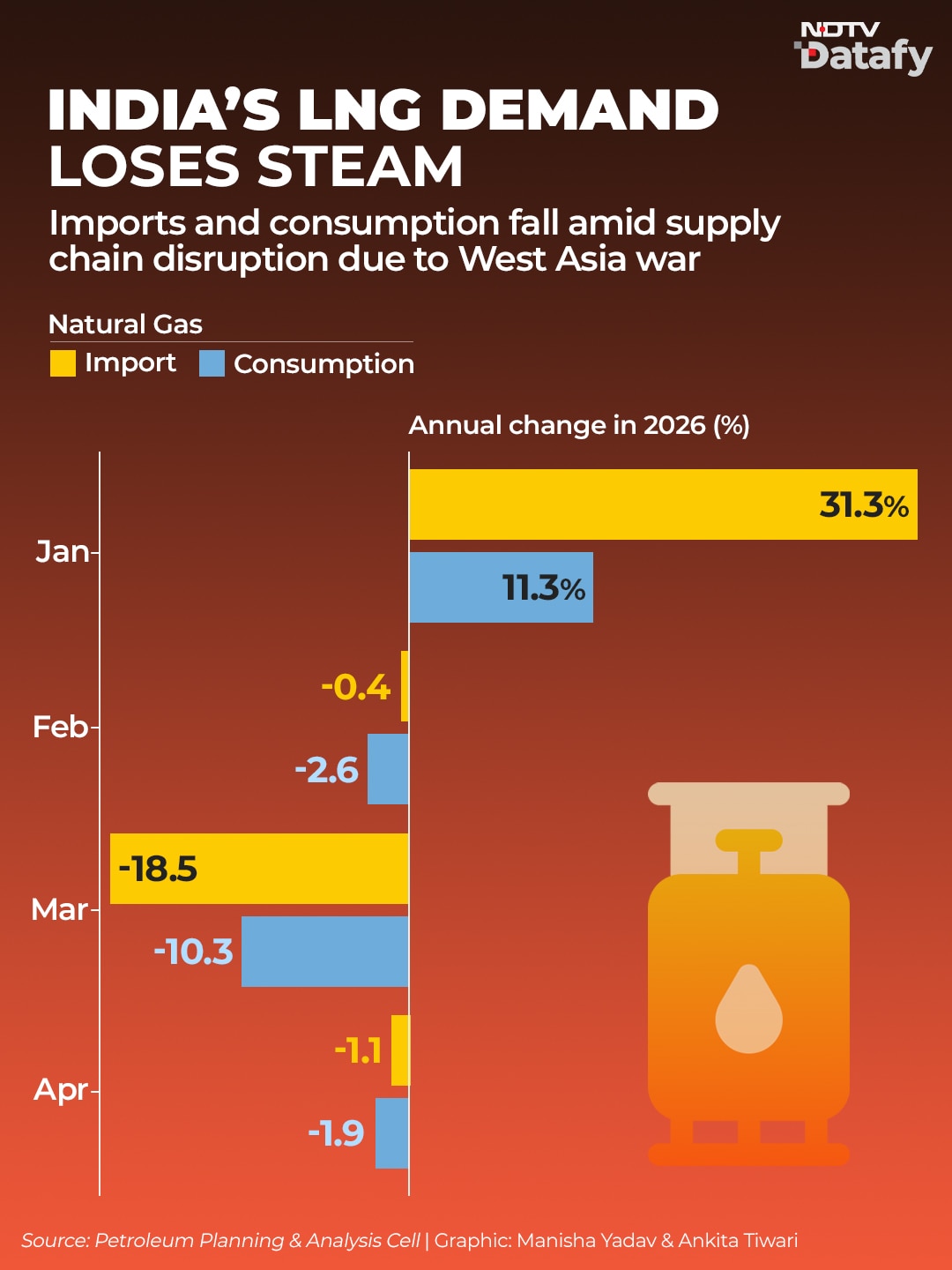
Imports rose 31.3 per cent year-on-year in January 2026. February remained largely flat, with a marginal 0.4 per cent decline, before imports dropped sharply by 18.5 per cent in March.
In April, LNG imports remained lower than a year earlier, with a 1.1 per cent decline.
The steepest drop came in March, when the impact of supply disruption became more visible in the global LNG market.
Natural Gas Consumption Also Weakened
India’s natural gas consumption followed a similar trajectory.
Demand rose 11.3 per cent year-on-year in January to 6.1 billion metric standard cubic metres.
However, consumption fell 2.6 per cent in February, before declining sharply by 10.3 per cent in March to 4.8 billion metric standard cubic metres.
In April, consumption remained 1.9 per cent lower year-on-year.
The slowdown reflected both weaker supply availability and higher imported LNG prices.
While overall gas demand weakened, the pressure was sharper on PNG consumption than CNG demand, largely because the government continued prioritising supplies for transport CNG and domestic PNG users.
CNG consumption remained relatively stable during the period.
Consumption stood at 940 million metric standard cubic metres in January, dipped to 891 million in February, and rose again to 946 million in March.
PNG demand, which includes domestic, commercial and industrial use, showed a steady decline, falling from 564 million metric standard cubic metres in January to 529 million in February and 505 million in March.
Why Natural Gas Matters In India
Natural gas remains a key transition fuel for India, supporting multiple sectors while producing lower carbon emissions than coal and oil.
India’s total gas consumption stands at around 165-170 million standard cubic metres per day, but domestic production meets only part of this demand.
As a result, LNG imports account for roughly 45-50 per cent of total consumption, making global price shocks quickly visible in domestic fuel markets.
Fertiliser production accounts for nearly 28-30 per cent of gas consumption, followed by industry at 22-25 per cent, city gas distribution including CNG and PNG at around 18-22 per cent, and power generation at 12-15 per cent.
India’s city gas network has expanded rapidly, with more than 8,600 CNG stations nationwide and over 7 million CNG vehicles as of 2025-26.
Delhi-NCR remains the country’s largest CNG market, with more than 600 stations.
India also has more than 1.6 crore PNG household connections, underlining how deeply natural gas is embedded in both industrial activity and everyday urban life.



