


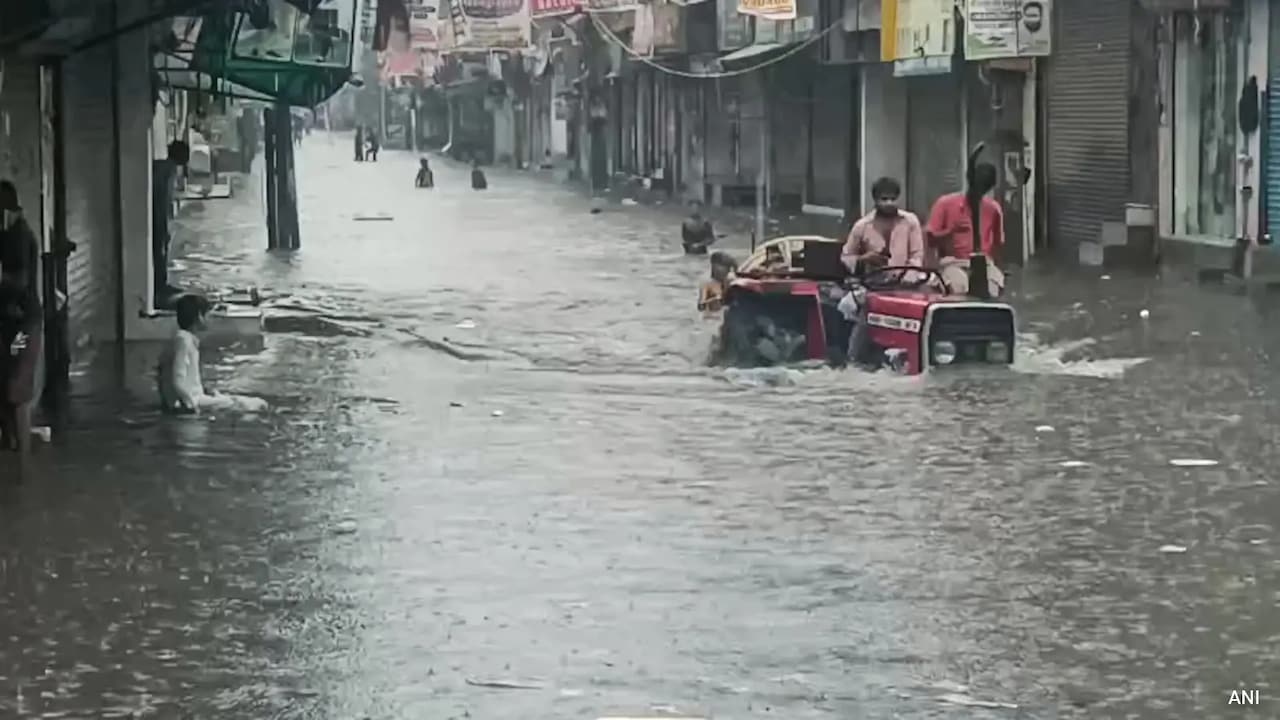
Scenes from a few days ago showed how quickly parts of Delhi can turn into flooded stretches after heavy rain.
Commuters waded through waist-deep water in parts of Sangam Vihar and Sadar Bazar, while shops and goods were submerged in the Old Delhi market. Waterlogging was also reported around Zakhira, ITO, Mathura Road and other parts of the capital, with traffic crawling on several key roads.
Now, the Delhi Public Works Department (PWD) has sent its top officers to 139 waterlogging spots across the capital to find out what is causing the problem and what can be done before the next spell of heavy rain.
The Delhi Traffic Police had identified 113 waterlogging locations during rainfall up to August 20 and another 26 after the August 24 rain, taking the total to 139.
Top PWD Officers Hit The Ground
The Principal Secretary, Special Secretary, Engineer-in-Chief, Chief Engineers and Superintending Engineers have been assigned different stretches for the inspections.
Among the locations being checked are Mehrauli-Badarpur Road, MG Road, Old Delhi-Gurugram Road, Mahipalpur Bypass Road, Nangloi-Najafgarh Road, Jahangirpuri Metro Station, Model Town and Lala Jagat Narain Marg.
Other recurring waterlogging spots include New Rohtak Road and 100 Feet Road in Burari, Balbir Singh Sidhu Marg, Prembari Underpass, Palla, Dabri Nala Road, RTR Marg and Najafgarh-Kapashera Road.
Officials are checking drainage arrangements, outfall points, silt and blockages, pumping systems and encroachments or other obstructions that could be contributing to water accumulation.
They have also been asked to identify measures that can be implemented immediately, along with longer-term fixes for locations where waterlogging keeps returning.
139 Spots, One August 31 Deadline
The inspections follow a review of Delhi’s waterlogging situation chaired by Lieutenant Governor Taranjit Singh Sandhu on August 25 after heavy rain caused waterlogging and traffic disruption across the city.
The PWD has asked its Chief Engineers and Superintending Engineers to submit location-wise findings and recommendations to the Principal Secretary by August 31.
The report will include short-term measures as well as longer-term solutions for the identified locations.
PWD Minister Parvesh Verma said the department was sending senior officers to the affected areas rather than waiting for another spell of rain.
“For us, every waterlogged road means inconvenience for a family, a worker, a student or someone trying to reach home. That is why we are taking the issue directly to the ground. Our senior officers have inspected every identified location, understood the reasons behind the waterlogging and assessed immediate corrective measures wherever possible,” Verma said.
“We will not wait for the next spell of rain to expose the same problem again. Every recurring waterlogging point needs a clear assessment and a practical solution. Accountability, quick response and continuous monitoring will remain our priority,” he added.
Who Will Be Held Responsible?
The PWD has also issued jackets and raincoats bearing its logo to pump-house operators, PTO pump operators and field engineers.
The department said the move will help fix responsibility in case of any laxity.
With more rain possible during the monsoon, officers have been asked to continue monitoring the identified locations and follow up on problems found during the inspections.


