


New Delhi:
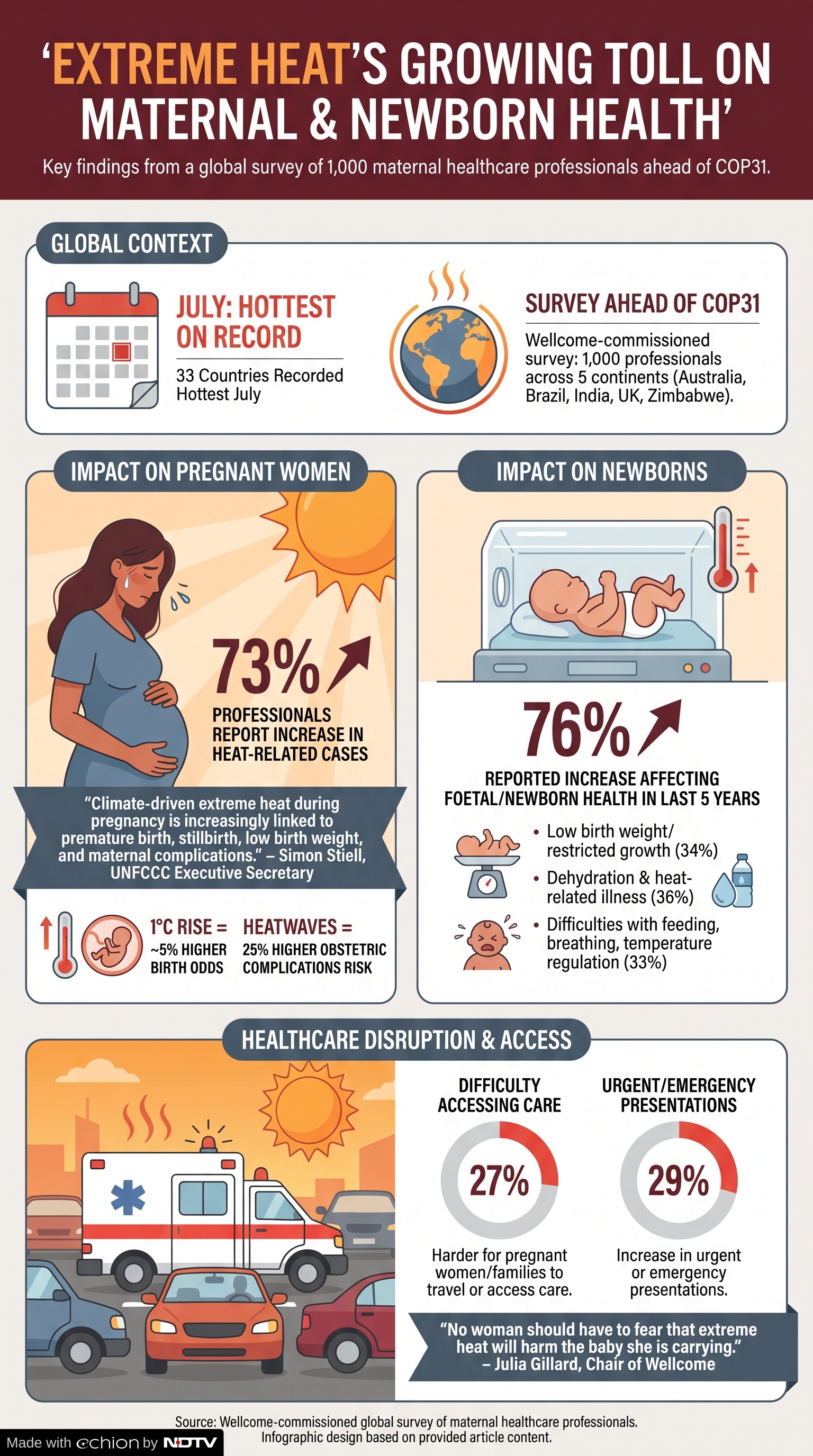
Extreme heat has been exerting growing pressure on pregnant women, babies and maternity services across the world, a new survey ahead of COP31 has said. This finding comes in a year when 33 countries recorded their hottest July on record, underscoring the
growing threat that extreme heat poses to health systems and communities globally.
The study commissioned by the global charitable foundation, Wellcome, said that 73 per cent of maternal healthcare professionals reported an increase in heat-related cases or complications linked to extreme heat affecting pregnant women.
At least 76 per cent reported an increase affecting foetal or newborn health in the last five years, the study said.
The report also comes at a time when the UN climate chief warned that extreme heat is increasingly linked to problems like premature births or underweight babies, as Fiji hosted talks ahead of the larger UN-sponsored global climate summit – COP31 – to be held next month in Turkey.
READ | Earth Set To Overshoot Paris Agreement’s 1.5 Degree Threshold Of Warming: UN
Simon Stiell, Executive Secretary of the UN Framework Convention on Climate Change (UNFCCC), cited the survey showing more than two thirds of health professionals across five continents had seen complications caused by intense heat in the past five years.
“Climate-driven extreme heat during pregnancy is increasingly linked to premature birth, stillbirth, low birth weight, and maternal complications,” he said.
A statement of the key points from the report shared with the press said the survey covered 1,000 maternal healthcare professionals across Australia, Brazil, India, the UK and Zimbabwe.
Nearly all respondents had personally cared for a pregnant woman (98 per cent) or baby (99 per cent) whose health they believed had been adversely affected by extreme heat, the study said.
Pregnant and postpartum women face particular risks from extreme heat. Research has linked heat exposure with preterm birth, low birth weight, stillbirth and maternal complications.
For every 1 degree Celsius rise in heat exposure, the odds of preterm birth increase by around 5 per cent, while exposure to heatwaves is associated with a 25 per cent higher risk of obstetric complications.
Around a quarter of respondents (23 per cent) had seen pregnancy complications requiring additional monitoring or treatment that they believed were linked to extreme heat exposure.
The healthcare professionals also reported low birth weight or restricted growth (34 per cent), dehydration and heat-related illness in newborns (36 per cent) and difficulties with feeding, breathing and temperature regulation (33 per cent).
Extreme heat is also disrupting access to care with more than a quarter of respondents (27 per cent) saying it was making it harder for pregnant women and families to travel to or access care, while 29 per cent reported an increase in urgent or emergency presentations.
“Midwives and doctors from countries across five continents are telling us that extreme heat is affecting the health of pregnant women and newborn babies. No woman should have to fear that extreme heat will harm the baby she is carrying,” Julia Gillard, Chair of Wellcome and former Prime Minister of Australia, said in a statement.


