


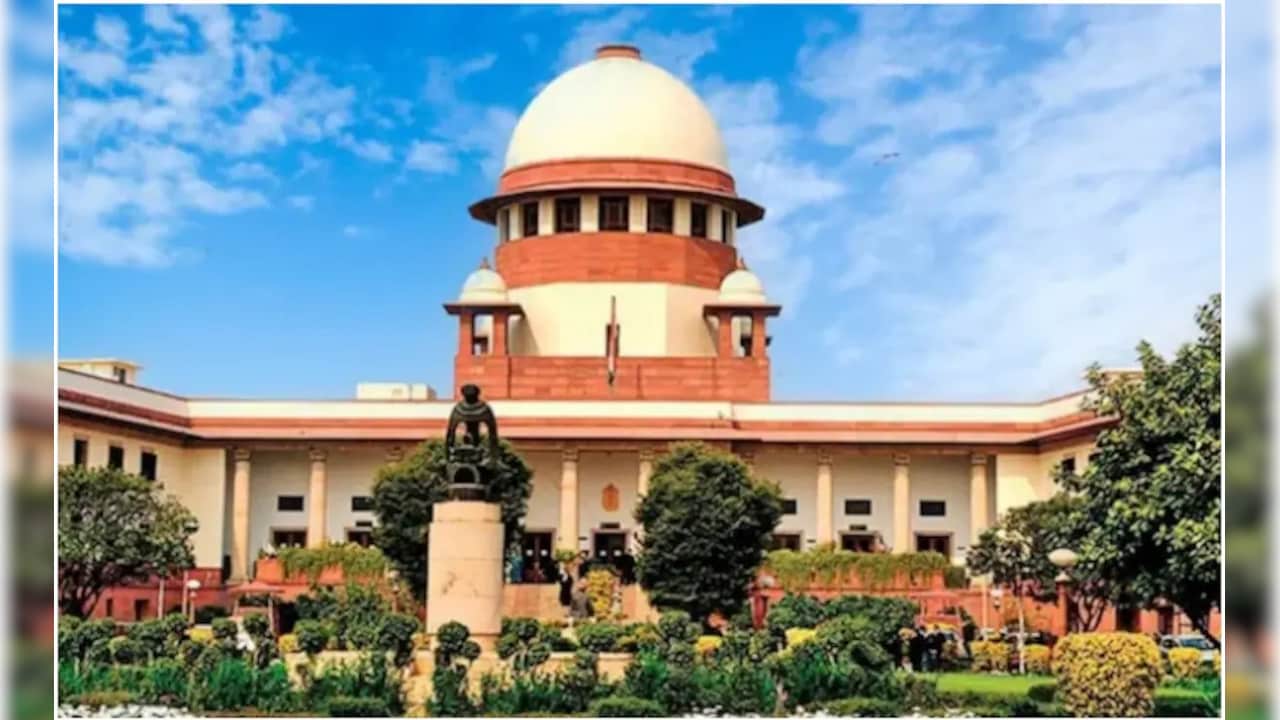
The Supreme Court issued notices to the Centre and the Election Commission of India on Monday on petitions seeking the suspension of Chief Election Commissioner Gyanesh Kumar over allegations of unilateral decision making in matters related to the electoral roll revision exercise.
A bench headed by Chief Justice Joymalya Bagchi and sought the Election Commission’s response to allegations that certain decisions were taken without the concurrence of the other two Election Commissioners, Sukhbir Singh Sandhu and Vivek Joshi. The petitions were filed by Rakesh Kumar Singh and advocate Shailendra Mani Tripathi.
The court, however, did not order the interim suspension of Gyanesh Kumar and indicated that it would first examine whether the allegations regarding the ECI’s decision making process have substance.
Also Read | Layoffs Are Rising In Tech, But These Skills Are Helping People Unlock Better Pay
ALSO READ: CEC Protests: Three Women Journalists Allege Sexual Harassment By Police, Probe Launched
The court stated that after hearing the Election Commission’s response, if it finds that particular decisions were taken without the required unanimity, it could reconsider those elections, according to reports. The court also indicated that it generally proceeds under the assumption that decisions of the Election Commission are lawful but if an ECI decision is found to be contrary to law, the court can annul it.
A major legal issue raised by the petitions concerns Article 324 of the Constitution. The petition filed by Rakesh Kumar Singh argues that Article 324 vests the superintendence, direction and control of the elections in the Election Commission rather than in the CEC acting individually.
The plea points to Article 324(2), under which the Election Commission consists of the CEC and such number of other Election Commissioners as the President may determine. It also relies on Article 324(3), which provides that when other Election Commissioners are appointed, the CEC functions as the Chairman of the Commission.
The petitioner’s argument is, therefore, that being the chairman does not mean that the CEC personally possesses all the collective decision-making powers of the Commission.
The petitions have challenged decisions, guidelines and software-related changes allegedly made under Kumar without the approval of the other Election Commissioners, with the petitioners questioning whether such actions complied with the requirement of collective decision making by the poll panel.
One of the petitions, filed by Rakesh Kumar Singh, has asked the court to determine whether the CEC exercised powers that constitutionally belong to the Election Commission as a whole. Singh has sought Kumar’s suspension until the final disposal of the case.
A separate petition filed by advocate Shailendra Mani Tripathi alleges violations of the statutory requirement of collective decision making and also seeks criminal proceedings against the CEC and other officials.
At the centre of the dispute is the Special Intensive Revision (SIR) of electoral rolls. The controversy gained momentum after reports that Sandhu and Joshi had recorded objections to decisions and orders concerning the SIR. According to the petitions and reports cited in the proceedings, the two commissioners had raised objections at least 14 times between October 2025 and August 2026.
The petitioners argue that the ECI is a multi-member constitutional body, and that powers vested in the Commission cannot effectively be exercised by the CEC alone.
The Election Commission, however, has maintained that differing views and observations are a normal part of institutional deliberations and that its orders have full legal sanction and follow established statutory procedures.
ALSO READ: 700 Detained As Delhi, Mumbai See Protests Demanding Gyanesh Kumar’s Resignation
Essential Business Intelligence,
Sharp Market Insights,
Practical Personal Finance Advice, Daily Fuel, Gold and Silver Prices and Latest Stories — On NDTV Profit.


