


In Britain, “picky bits” can mean anything from olives and crisps to an entire supermarket aisle arranged across a chopping board. At its best, though, this sort of eating is less about assembly than abundance – sharp, smoky, creamy and crunchy things designed to be passed around, dragged through and eaten in no particular order.
It is why dips make such useful summer food. They can be prepared ahead, require little ceremony and turn a loaf of bread and a handful of vegetables into something that feels like a proper spread.
The phrase may be relatively new, but the principle is considerably older: put several good things in the middle of the table and let everyone help themselves. The tradition of serving numerous small dishes stretches across the eastern Mediterranean, the Middle East, North Africa, the Caucasus and Central Asia, although the names, ingredients and customs vary enormously.
Mezze might be served at the beginning of a larger meal or become the meal itself, with yoghurt, cheese, vegetables, nuts, herbs, pickles and flatbreads building layers of flavour rather than following the rigid starter-main-pudding structure familiar in Britain.
These are dishes designed for lingering. Some are cool and creamy, others smoky, sharp or spiced; all make sense alongside bread, grilled vegetables, cold drinks and the kind of meal that unfolds gradually rather than arriving fully formed. It is perhaps no surprise that Britain has embraced its own looser, more informal version just as garden gatherings, grazing boards and heatwave suppers have become fixtures of summer entertaining.
That same spirit runs through Kiln in Newcastle’s Ouseburn Valley. The restaurant began in 2017 in a broken-down former garage, built by founder Rich Cullen and his team with borrowed tools, cold hands and no grander plan than to create somewhere serving good food and proper coffee. At first, it was a pottery studio with refreshments on the side. Gradually, the food and ceramics became inseparable: dishes cooked over fire, served on plates made in the building and shaped by the same attention to patience, texture and craft.
Kiln’s cooking takes its cues from the Middle East and Mediterranean without pretending to reproduce them exactly. Instead, Cullen brings those flavours into conversation with the north east and the British larder, using local produce and homegrown ingredients where they make sense. Apple cider vinegar replaces the more customary red wine vinegar in his tirokafteri, for example, while feta joins yoghurt in a sweet potato borani that Cullen freely describes as his own version rather than a traditional one.
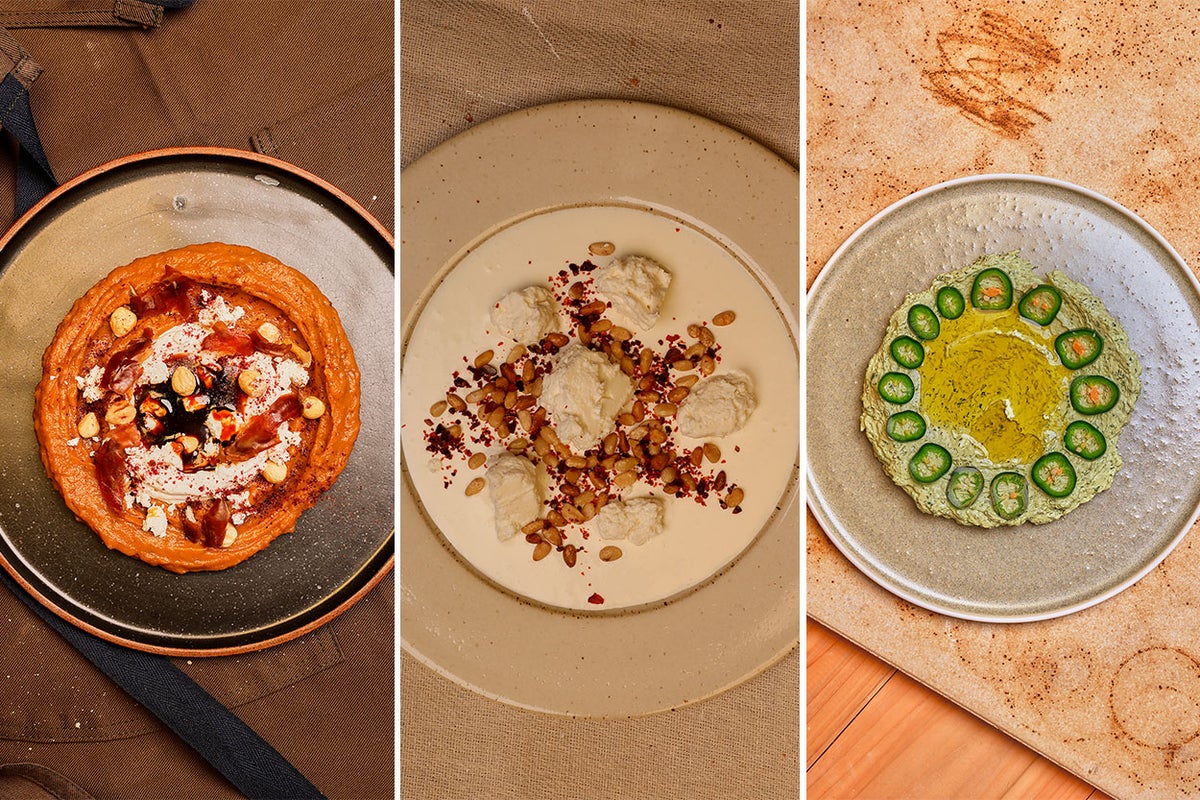
The four recipes here make an excellent case for doing picky bits properly. Sweet potato borani is rich with date molasses, feta and toasted hazelnuts. Muhammara turns charred red peppers, walnuts and pomegranate molasses into something smoky, sweet and deeply savoury. Green labneh, strained until thick and creamy, is bright with dill, parsley and coriander. Tirokafteri, meanwhile, brings feta, chilli and vinegar together in a dip with enough bite to stand up to grilled meat, vegetables or bread.
Make one for drinks, two for lunch or all four for the sort of supper that keeps expanding as people arrive. Just make sure there is enough bread.
Sweet potato borani
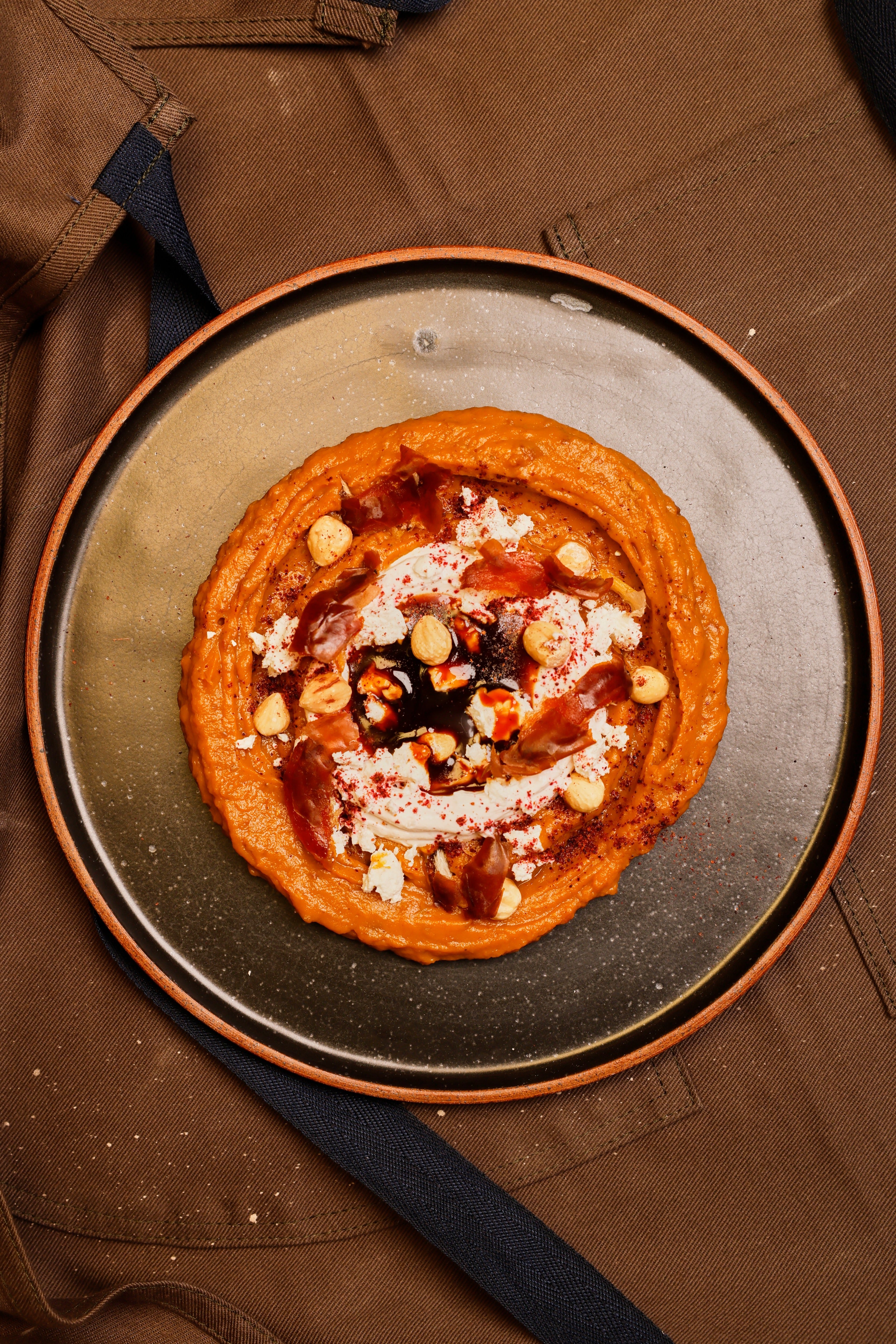
“Borani simply means a yoghurt and vegetable dip. It’s seen traditionally across Levantine, Turkish, Caucasian and Central Asian cuisines, though it’s most often associated with being an ancient Persian dip. Ours isn’t a traditional borani – we use feta alongside the yoghurt, which isn’t typical of the dish.
“I enjoy having borani on the menu because it brings a sweetness and a lightness, and more vegetables to the table, which is always something to be celebrated.”
Serves: 4-6 as a sharing dish
Prep time: 10 minutes | Cook time: 40 minutes-1 hour
Ingredients:
5 sweet potatoes
Olive oil (or extra virgin), for coating and blending
Maldon sea salt, crushed
3 tbsp date molasses, plus extra to plate
1 tsp cumin
50ml lemon juice
4-5 garlic cloves, crushed
Seasoned yoghurt, to plate
Feta, a generous crumble, to plate
A few dates, finely sliced, to plate
Toasted hazelnuts, a nice handful (not too much), to plate
Method:
1. Prick the sweet potatoes all over. Coat them generously in olive oil and crushed Maldon salt, smothering it over the whole surface.
2. Place in a baking dish, uncovered, and roast at 185C for 40 minutes to an hour. Every 20 minutes, take the tray out and rotate the sweet potatoes so each side crisps evenly.
3. However long it takes, what you’re looking for is the sugars starting to bead out through the pricked holes and caramelise on the surface. Squeeze the sweet potato – if it’s soft and squishy all the way through, it’s ready.
4. Put the hot sweet potatoes straight into a food processor, skin on – leaving the skin on gives an extra depth of flavour, and if you blend for long enough you still get a really smooth borani with a deep colour.
5. Add the date molasses, cumin, lemon juice and garlic, then a good dose of olive oil, and blend, blend, blend. Date molasses gives a delicious, complex fruitiness with a treacly edge and a deep caramel note, enhancing the honey-caramel flavour that naturally comes from the sugar in the sweet potato.
6. To plate, spread the purée out on a plate. Add a good dose of date molasses over the top, along with some crumbled feta and yoghurt, then finish with finely sliced dates and toasted hazelnuts.
Red pepper muhammara
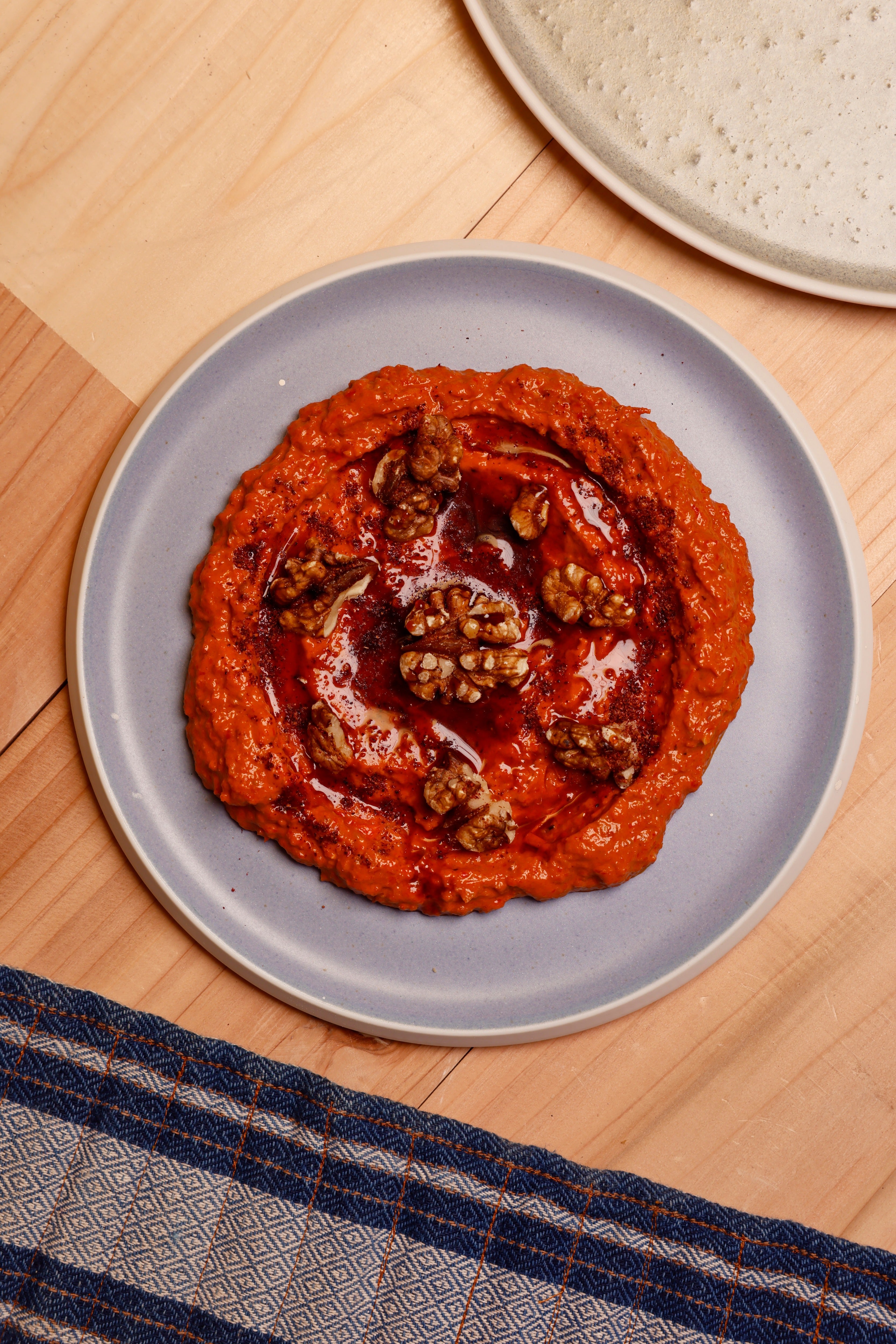
“Roasting the peppers breaks down their structure and caramelises the natural sugars, giving a savoury depth, while charring gives a subtle ash note and a really beautiful aroma. Bringing this to the table is amazing with a good quality sourdough, the tanginess of the sourdough and the pomegranate molasses work really well together.
“Red peppers are great addition to any table and will always be on mine, I love the sweet smoky flavour! Delicious.”
Serves: 4-6 as a sharing dish
Prep time: 15 minutes | Cook time: 20 minutes
Ingredients:
4 red peppers
100g walnuts, plus extra to plate
2 tbsp pomegranate molasses, plus extra to plate
1 tsp ground cumin
½ tsp paprika
Juice of ½ a lemon
Extra virgin olive oil, to roast and to taste
Salt, to taste
Method:
1. Roast the peppers using whichever method suits you:
Blackened on the hob: Char the peppers directly over a gas flame until blackened all over. Transfer to a sealed container for a few minutes to let the steam loosen the skins, then peel, deseed, and blend.
Oven, pre-cut (easiest): Cut the peppers into segments, removing the stem and seeds, then cover in olive oil and salt and roast at 180C for about 20 minutes. Once cool, you can blend them straight away.
2. Blend the roasted peppers with the walnuts, cumin, paprika and pomegranate molasses until smooth, with no large chunks of nut remaining.
3. Season to taste with more olive oil, lemon juice and salt.
4. To plate, add a glug of pomegranate molasses with crushed walnuts, going liberally across the top. Serve with good sourdough.
Green labneh
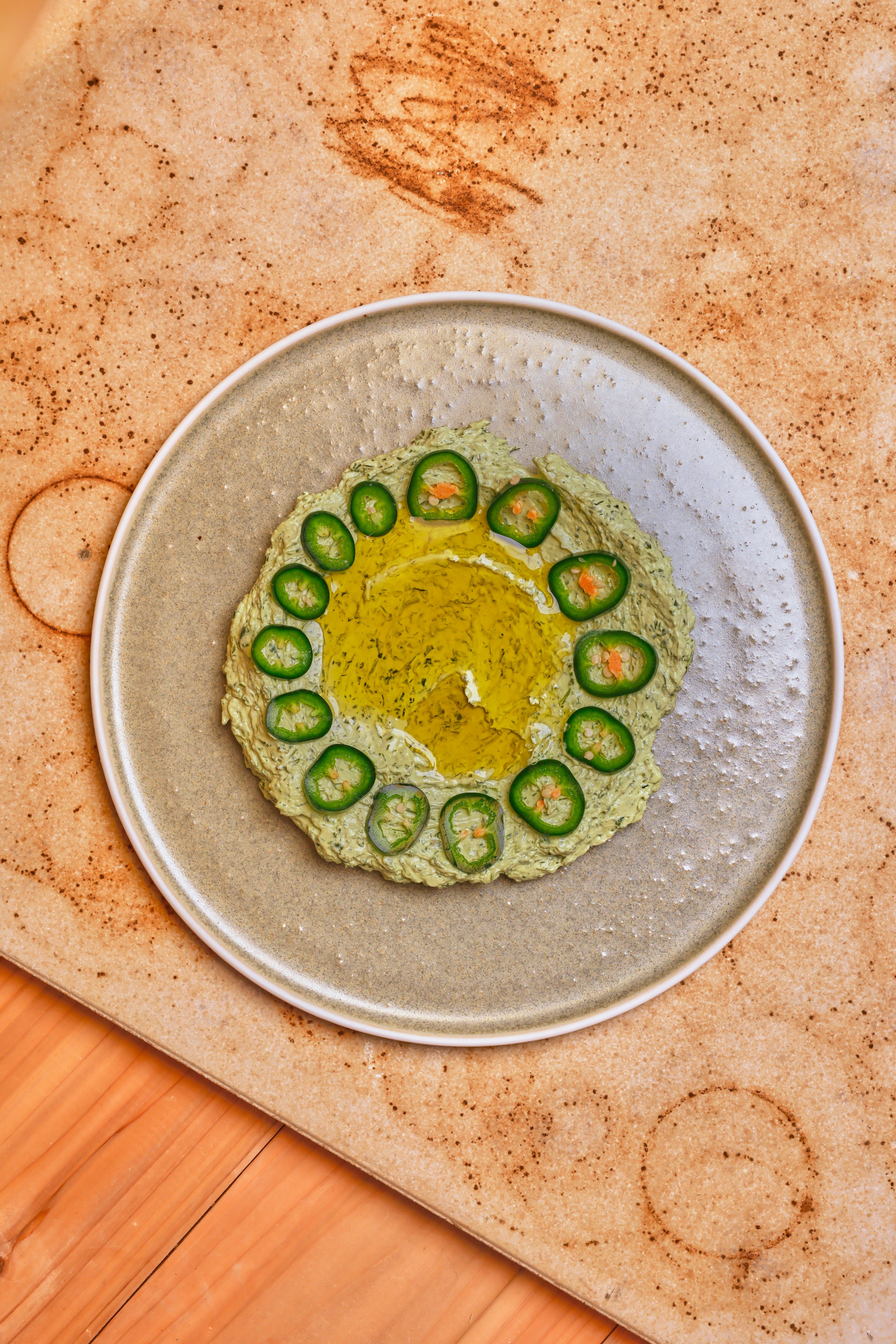
“Labneh is a really good thing to make because it acts as a base for many things. It’s a really thick, strained yoghurt with a creamy consistency – it works well spread, but it also works well dipped. It uses a really good quality Greek yoghurt with a high fat content, along with lemon juice and extra virgin olive oil, all things that are great for your diet, which is why it’s used so frequently throughout the Mediterranean and the Levant.
“For me, I love our green labneh because it takes to dill, parsley and coriander really, really well. And if you get a really good punch of salt in there, it provides a really nice backdrop for any fresh vegetables – especially through heatwaves in the summer sun.”
Serves: 4-6 as a sharing dish
Prep time: 15 minutes | Hanging/straining: 24 hours
Ingredients:
500g Greek yoghurt
Small bunch dill
Small bunch parsley
Small bunch coriander
1-2 garlic cloves
Zest of 1 lemon
Salt, to taste
1 jalapeño, very finely sliced, to plate
Extra virgin olive oil, to plate
Za’atar or fresh herbs, to plate (optional)
Method:
1. Blend the dill, parsley, coriander and garlic with a splash of the yoghurt until smooth.
2. Fold this through the rest of the yoghurt, along with the lemon zest, and season well with salt.
3. Line a sieve with a clean muslin cloth or J-cloth, set it over a bowl, and spoon in the yoghurt mixture. Hang in the fridge for 24 hours -this lets the whey drain off and thickens it into a labneh.
4. To plate, decant onto a plate. A good glug of extra virgin olive oil, with very finely sliced jalapeño around the outside, and some za’atar or fresh herbs, if you like.
Tirokafteri (whipped feta dip)
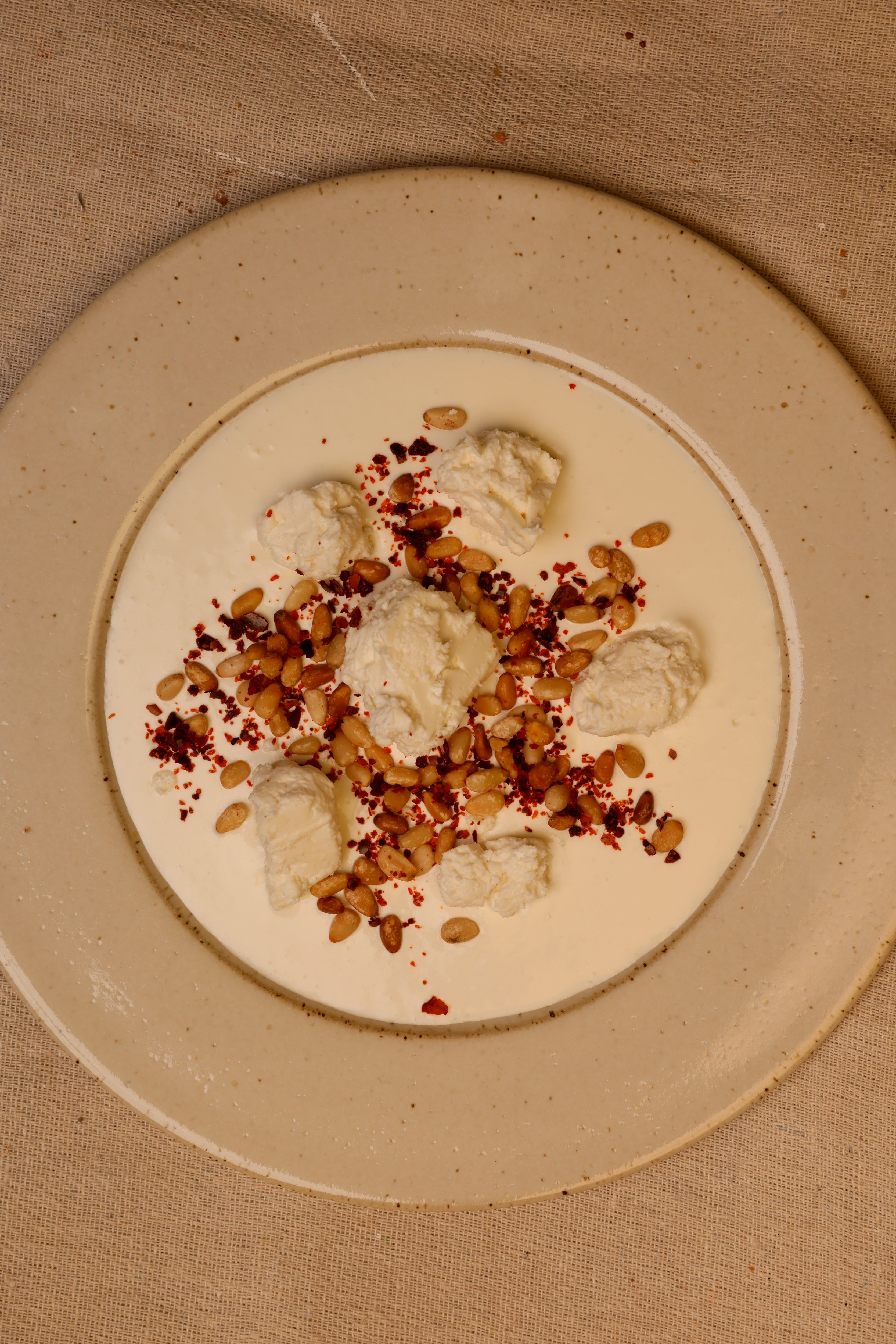
“This is our take on a traditional Greek whipped feta dish. Adding vinegar is really important, but we opt for apple cider vinegar rather than the more traditional red wine vinegar, because there are amazing sources of apple cider vinegar throughout the UK – find a really nice, high-quality one, such as a barrel-aged one.
“My greek friend Demitris who I met in his open fire restaurant in Edinburgh would give me buckets of this stuff alongside meat, bread and oregano. Not to mention a very cold Mythos beer!”
Serves: 4-6 as a sharing dish
Time: 20 minutes
Ingredients:
200g feta, preferably block Greek sheep’s milk feta
100g Greek yoghurt, strained, full-fat
1-2 garlic cloves
1 fresh red chilli or jalapeño (seeds out for less heat, in for more)
¼ cup extra virgin olive oil, plus extra to finish
Juice of ½ a lemon, plus a pinch of zest
1 tsp apple cider vinegar, ideally a good-quality barrel-aged one
Salt, to taste
Pinch of dried Greek oregano and crushed chilli flakes, to taste
Toasted pine nuts, crumbled feta, Aleppo chilli, chilli oil (optional) and a little dill, to plate
Method:
1. Blend the feta, yoghurt, garlic and chilli — but blend it quickly and not for too long, or the cheese starts to break down and you end up with a very runny texture. What you want is a really nice, stiff texture that sits well on the plate and holds up to dipping through.
2. Mix in the olive oil, lemon juice and zest, apple cider vinegar, salt and seasoning.
3. To plate, serve in a small bowl, as it’s very rich. On top, add toasted pine nuts, some crumbled feta, Aleppo chilli, a chilli oil if you’d like, and a little dill for freshness.
These recipes are from Kiln, 4 Hume Street, Byker, Newcastle upon Tyne NE6 1LN. Visit kiln.cafe for more information or to book online.



