


- Improved Quick Share and seven years of software updates.
Google Pixel 11 Pro XL Review: Google has spent years telling us that AI is the future of smartphones. With the Pixel 11 Pro XL, I think the company has finally reached a point where AI feels less like a feature and more like part of the phone’s personality. The Pixel 11 Pro XL is not a radical redesign. It is not trying to reinvent what a flagship smartphone looks like either. Instead, Google has taken an already very capable Pixel formula and gone after the things that matter most in daily use: the camera, battery, display, AI and, finally, zoom.
And yes, there is a 120x zoom mode.
But after spending time with the Pixel 11 Pro XL, I came away with a slightly more interesting conclusion. The best thing about this phone isn’t actually the 120x zoom, the Tensor G6 or even Gemini. It is how effortlessly all of these pieces come together.
There are still a few things Google needs to fix, particularly HiLight, which feels like a brilliant idea that has been launched far too early. But the Pixel 11 Pro XL is increasingly starting to feel like the flagship Google has wanted to build for years.
ALSO READ: Samsung Galaxy Z Fold 8 First Review: Samsung Brings The Joy Back To Smartphones
Google Pixel 11 Pro XL: How Does It Feel In Your Hand?
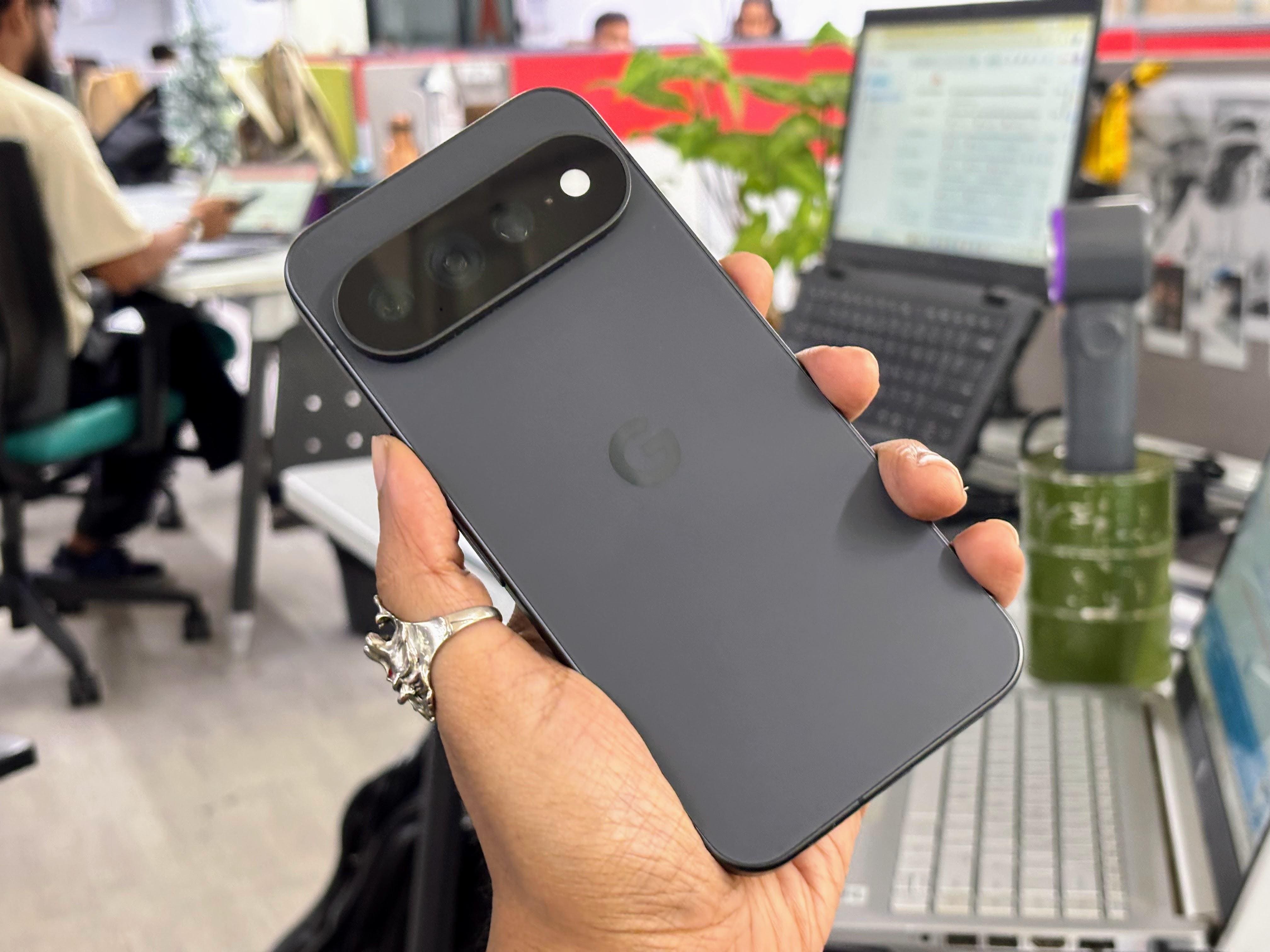
The Pixel 11 Pro XL is a big phone. There is no getting around that. It measures 162.7mm in height, 76.5mm in width and 8.5mm in thickness, while weighing 226g. Those numbers initially sound pretty hefty, but there is an interesting comparison to be made here.
The iPhone 17 Pro Max measures 163.4mm tall, 78mm wide and 8.75mm thick, while weighing 231g. So despite having a 6.8-inch display, the Pixel 11 Pro XL is 0.7mm shorter, 1.5mm narrower, 0.25mm thinner and 5g lighter than Apple’s largest Pro iPhone. That may not sound like much on paper, but you can actually feel the difference.
The Pixel is still a large flagship, but it doesn’t have the slightly unwieldy feeling that some ultra-sized smartphones can develop. It sits nicely in the hand, and the narrower body helps considerably when you’re trying to operate it without constantly readjusting your grip.
I particularly like that Google hasn’t gone down the absurdly thin route just for the sake of putting a smaller number on the specification sheet. There is something reassuring about the Pixel 11 Pro XL’s proportions. It feels like a big phone designed to be used, rather than a big phone designed to win a thickness competition.
The four colour options also help. Canyon, Olive, Fog and Matte Obsidian give the phone a slightly more personality-driven look, with the matte Obsidian being the obvious choice if you prefer something understated.
And yes, the camera bar is still very much a Pixel.
Thankfully, it no longer feels like Google is desperately trying to make the camera module disappear. It has become part of the Pixel identity, and this year’s design looks considerably more polished.
Google Pixel 11 Pro XL: How Good Is That 6.8-Inch Display?
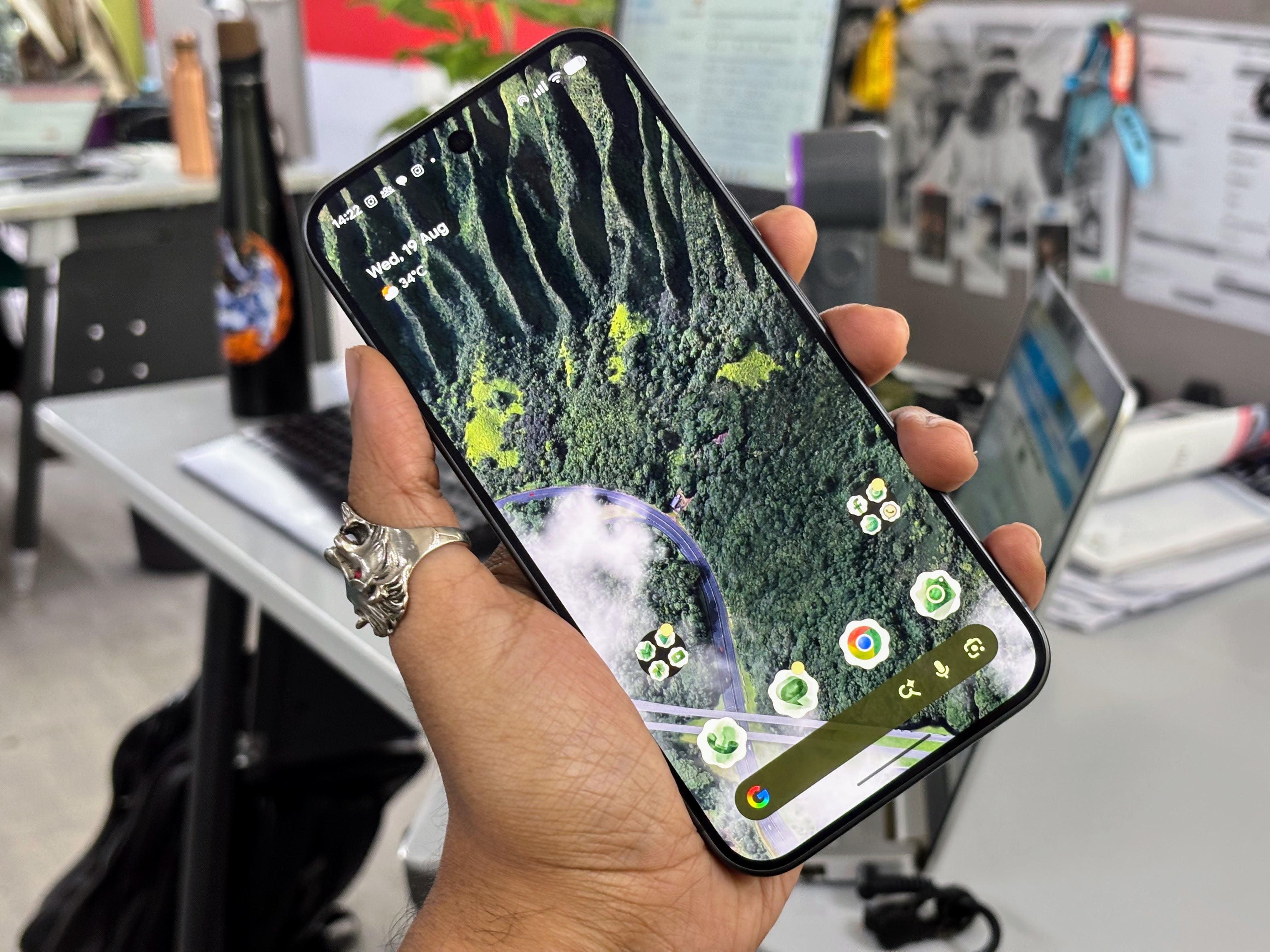
The Pixel 11 Pro XL comes with a 6.8-inch Super Actua LTPO OLED display with a 1344 x 2992 resolution, 486ppi pixel density and a variable 1-120Hz refresh rate. And this is one of those displays where you stop thinking about the specifications after a few minutes. Everything simply looks good.
Text is extremely sharp, scrolling is wonderfully fluid and Google’s colour tuning continues to strike a nice balance between punchy and natural. You also get HDR support, 24-bit colour and a claimed peak brightness of up to 3,600 nits, with HDR brightness reaching 2,400 nits.
The 1-120Hz LTPO panel is particularly useful because the phone isn’t unnecessarily running at 120Hz all the time. It can slow things down when you’re looking at something static and ramp things up when you’re scrolling.
The result is exactly what I want from a flagship display: smooth when it needs to be, quiet when it doesn’t.
The Gorilla Glass Victus 2 cover glass also gets an anti-scratch shield and fingerprint-resistant coating, which should hopefully mean fewer moments of frantically wiping the screen with your T-shirt.
Interestingly, the Pixel 11 Pro XL’s display is slightly smaller than the iPhone 17 Pro Max’s 6.9-inch panel, but Google’s screen is considerably higher resolution at 1344 x 2992 versus Apple’s 2868 x 1320.
But honestly, this isn’t a numbers game.
The Pixel 11 Pro XL’s display is simply one of those components that disappears into the experience. Watching YouTube, browsing Instagram, reading long articles or editing photographs all feel fantastic on it.
And that is exactly what a flagship display should do.
Google Pixel 11 Pro XL: HiLight Is A Great Idea That Needs More Work
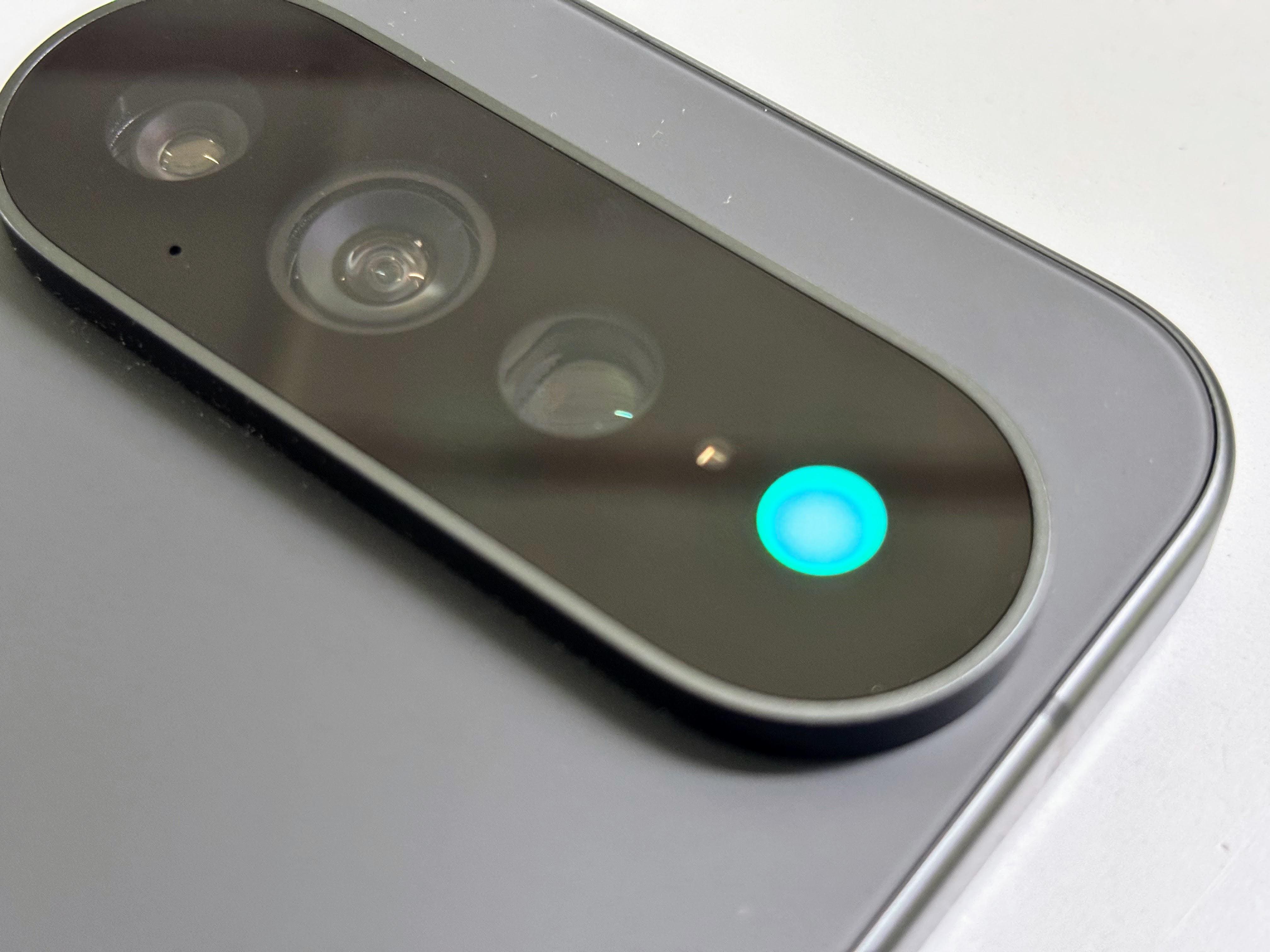
If Google wanted HiLight to be the feature everyone talks about, it has succeeded. Unfortunately, I am talking about it for slightly different reasons.
The idea is genuinely clever. HiLight uses LEDs around the camera flash to provide visual feedback without requiring you to stare at your display. You can assign different colours to favourite contacts, so when someone from your chosen list calls, the phone can visually tell you who it is.
There is also an animation when you interact with Gemini, allowing you to see whether the assistant is listening, thinking or responding. The problem is that this is pretty much where HiLight stops right now. And that feels like a letdown.
I understand the philosophy behind it. The entire idea is to help you stay present without constantly looking at your screen. But if Google is serious about that idea, HiLight needs to become much more deeply integrated into Android.
I want to see specific colours or patterns for different kinds of messages. I want important emails from certain people to trigger something different. I want calendar reminders, delivery notifications, WhatsApp messages and perhaps even selected app alerts to have their own visual language.
Imagine assigning a colour to your boss, another to your family and another to genuinely important work emails. You should be able to create action plans so that certain texts or emails from selected senders trigger a particular HiLight pattern.
That would make this feature genuinely useful. Right now, it feels more like Google has built the hardware first and is waiting for the software ecosystem to catch up.
To be fair, Google has indicated that HiLight functionality will expand, and messaging support is expected in the future. So I am willing to give it some time. For now, though, HiLight is more of a nice party trick than a reason to buy the phone.
Google Pixel 11 Pro XL: The Camera Is Where Things Get Really Interesting
This is where the Pixel 11 Pro XL starts getting properly exciting. Google has given the phone a triple rear camera setup consisting of a 50MP primary sensor, a 48MP ultrawide with autofocus and Macro Focus, and a 48MP 5x telephoto camera with optical image stabilisation.
On paper, that sounds like a fairly standard flagship camera system. Then you start zooming. The 5x optical telephoto is the feature that I suspect will make some iPhone users seriously look at the Pixel.
Google has been playing catch-up with Apple’s ecosystem in several areas, but long-range photography has increasingly become one of the Pixel’s biggest strengths. The Pixel 11 Pro XL pushes this even further with Pro Zoom going all the way to 120x.
And yes, the processing is very AI-driven. You can absolutely tell that the phone is doing an enormous amount of computational work once you get deep into the zoom range. But here is the thing: I don’t particularly care when the final image looks this good.
At 120x, there are obviously limits to what a smartphone sensor can physically resolve. Google is reconstructing and enhancing information using computational photography. But when the final image lands on the screen and you can actually make out the subject, the technical argument becomes somewhat irrelevant.
It works. And sometimes it works ridiculously well.
Google has also improved the speed of Night Sight, while the new camera system is designed to capture more detail and light. Independent hands-on reports have similarly highlighted the upgraded sensors and 120x AI-assisted zoom as some of the biggest camera changes this year.
Google Pixel 11 Pro XL: Magic Capture Is Brilliantly Simple
Magic Capture is probably my favourite new camera feature.
And the reason is incredibly simple: you don’t have to think about it.
You activate Magic Capture and keep shooting. The phone records video while simultaneously grabbing photographs, allowing it to automatically pick out useful still images from the sequence.
That makes an enormous amount of sense at concerts, birthday parties, sporting events or basically any situation where something is happening quickly and you don’t want to keep switching between video and still photography.
Imagine someone blowing out birthday candles.
Do you record a video? Take photographs? Try to do both? With Magic Capture, you can just let the phone handle it.
Google’s implementation can automatically select HDR+ stills from the captured sequence, while Pro models can also use Video Boost for the resulting video.
This is exactly the sort of AI feature I like. It doesn’t exist merely to demonstrate that Google has AI. It solves an actual problem.
Google Pixel 11 Pro XL: Finally, Camera Looks Makes Sense
Another feature I genuinely like is Camera Looks. Google now lets you select the overall look and finish of your photographs before you shoot them. More importantly, these looks are customisable.
That means you aren’t simply picking a filter and hoping for the best. You can decide how you want your photographs to look and make that style part of your shooting process.
The approach is similar to what several Chinese smartphone makers have been doing with their film-inspired colour profiles, but Google’s implementation feels particularly useful because you can customise the look rather than treating it as a fixed Instagram-style filter.
Personally, I like having this kind of control. Smartphone photography has become increasingly computational, and sometimes every phone wants to make the same photograph look brighter, sharper and more dramatic. Having the option to decide how the final image should look before I press the shutter is a welcome change.
Google Pixel 11 Pro XL: How Is The Performance?
The Pixel 11 Pro XL is powered by Google’s Tensor G6 chip, paired with up to 16GB RAM and up to 512GB of storage using Zoned UFS. But once again, Google isn’t really competing with Apple or Qualcomm by shouting about benchmark numbers.
The Tensor G6 is designed around what Google wants the Pixel to be particularly good at: AI. And that becomes obvious almost immediately.
Gemini Intelligence is now much more deeply integrated into the phone, and this is perhaps the first Pixel where I genuinely started thinking of Gemini as the default assistant rather than an AI feature that happens to be installed.
Live Translate is another example of Google’s approach. Instead of asking you to open an AI application every time you want something translated, Google is increasingly putting these capabilities into the operating system itself. That is where the Pixel makes the most sense.
The Tensor G6 also brings Google’s Titan M3 security coprocessor and a multilayer hardware security architecture, while the phone comes with seven years of OS, security and Pixel Drop updates. There is a clear philosophy here. Google isn’t simply selling you a processor. It is selling you an increasingly intelligent and secure Android experience.
Google Pixel 11 Pro XL: Battery Life Finally Feels Like A Flagship
The Pixel 11 Pro XL packs a typical 5,115mAh battery, with Google promising more than 30 hours of battery life. And this is one area where I think the XL name actually earns its place. The combination of the large battery, LTPO display and Tensor G6’s efficiency makes the Pixel 11 Pro XL feel like a phone designed to survive heavy usage rather than merely get through a carefully managed day.
Charging is also faster, with Google claiming up to 75 per cent in around 30 minutes when using a 45W USB-C PPS charger or higher.
You don’t get the charger in the box, naturally.
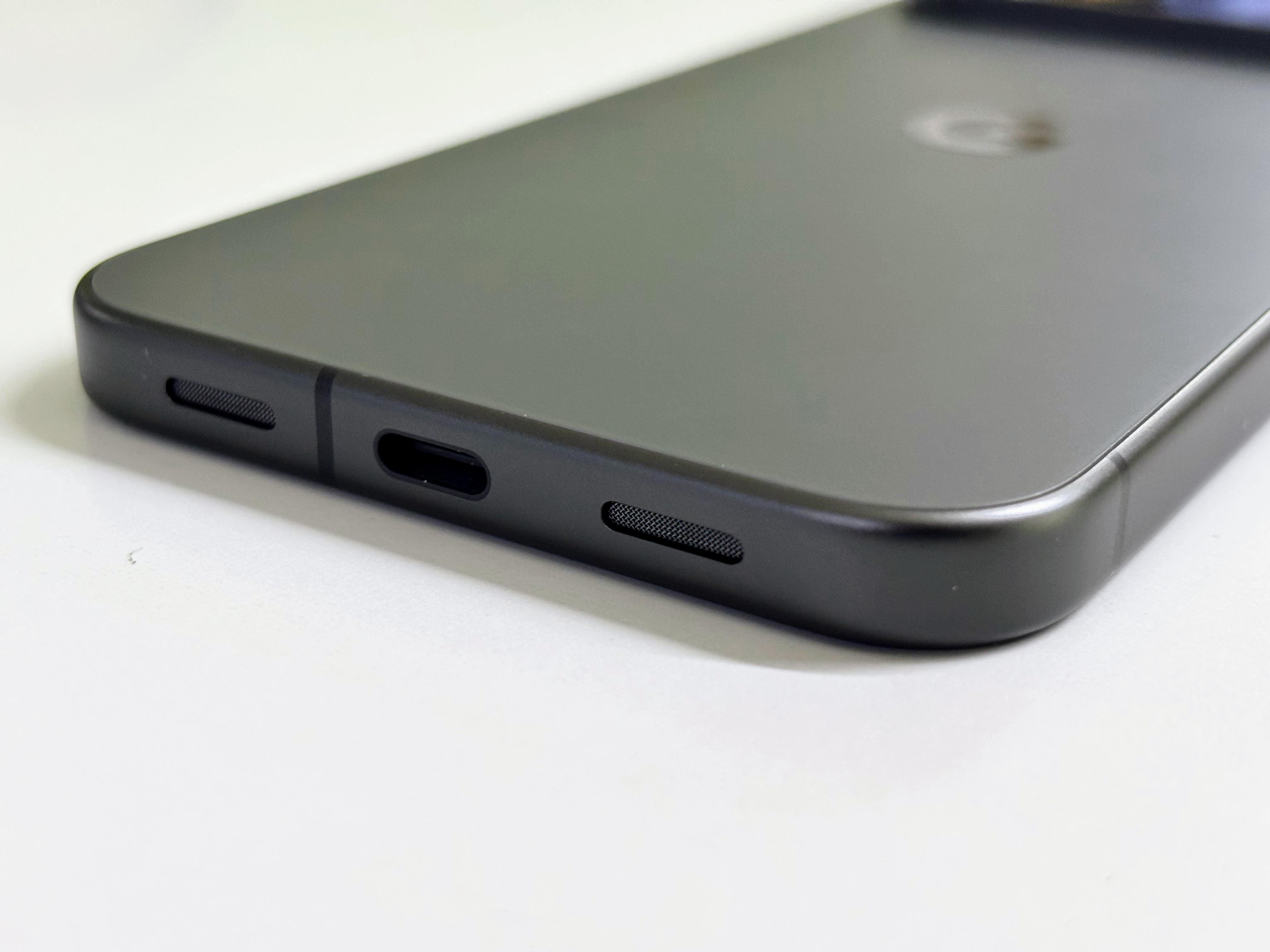
Wireless charging is also upgraded, with PixelSnap supporting Qi2.2 at up to 25W. That combination matters because the Pixel 11 Pro XL is exactly the sort of phone that encourages you to use it more. You have a giant, beautiful display, a camera system that makes you want to keep shooting and Gemini constantly trying to be useful. The last thing you want is battery anxiety.
Google Pixel 11 Pro XL: What About Security?
Google has gone particularly hard on security this year. The Pixel 11 Pro XL combines Tensor G6 with Titan M3, secure boot, the Tensor security core and Trusty, Google’s Trusted Execution Environment. There is also built-in anti-malware and anti-phishing protection, alongside spam and scam protection in Google Phone and Messages.
Security is one of those smartphone features you only notice when something goes wrong. Having Google build the hardware and software security layers together gives the Pixel another advantage, particularly for people who intend to keep their phone for several years.
Seven years of updates also makes the proposition considerably more attractive.
Google Pixel 11 Pro XL: Quick Share Finally Makes iPhone Users Less Annoying
Okay, Appleheads, don’t leave yet.
Quick Share’s ability to work with AirDrop is not technically new to the Pixel family. Google introduced cross-platform sharing with the Pixel 10 generation, allowing compatible Pixel phones to send files directly to iPhones using AirDrop. But the Pixel 11 generation pushes the experience further, including a new tap-to-share function that lets compatible Android devices exchange files and contact cards with a physical tap.
And this matters more than it sounds. For years, one of the biggest annoyances of using an Android phone around iPhone users was the friction involved in sending high-quality photographs and videos. That wall is finally coming down.
No WhatsApp compression. No Google Drive link. No “send it on Telegram”. Just share the file. For someone considering moving from an iPhone to a Pixel, these little ecosystem improvements make the transition significantly easier.
Google Pixel 11 Pro XL: Should You Buy It?
The Google Pixel 11 Pro XL starts at Rs 1,34,999 in India, with the 256GB model, while the 512GB version is priced at Rs 1,49,999 according to launch reports. That represents a Rs 10,000 increase over the Pixel 10 Pro XL’s Rs 1,24,999 starting price.
That is not insignificant. And it makes the buying decision considerably more interesting.
The Pixel 11 Pro XL isn’t a phone I would recommend simply because it has a newer processor or a brighter display. Those things are nice, but they aren’t why this phone stands out. It stands out because Google is finally making its hardware and AI ambitions work together.
The camera system is fantastic. The 120x zoom is ridiculous in exactly the right way. Magic Capture is genuinely useful. Camera Looks gives photography enthusiasts more control. Gemini feels more deeply integrated into the operating system. The display is excellent. Battery life looks promising. And the phone is actually a little more compact and lighter than the iPhone 17 Pro Max despite offering a similarly huge display.
There are compromises. HiLight is the obvious one. I love the idea, but I desperately want Google to open it up to more apps and more types of notifications. Right now, it feels like a feature waiting for its second act.
The other question is whether you actually need the Pro XL. The Pixel 11 Pro gives you the same core Pro camera system, 120x zoom and 3,600-nit display in a significantly smaller body, and several hands-on reviewers have already suggested that the smaller Pro may offer the better balance of features and price.
But if you are someone who wants the biggest Pixel display, the largest battery and the full-sized flagship experience, the XL makes a compelling case.
ALSO READ: Asus Zenbook Duo (2026) Review: The Laptop Equivalent Of Doctor Strange, & I Can’t Complain
Google Pixel 11 Pro XL First Review: Early Verdict
The Pixel 11 Pro XL doesn’t feel like Google trying to reinvent the smartphone. It feels like Google finally figuring out what it wants its smartphone to be.
This is a phone built around photography, AI and Google’s version of Android rather than benchmark bragging rights. And for the first time, those individual pieces don’t feel like separate selling points. They feel connected.
Magic Capture exists because Google understands that people don’t want to think about whether they should be recording a video or taking a photograph. Pro Zoom exists because Google knows computational photography can sometimes produce results that hardware alone cannot.
Gemini exists because Google wants the assistant to become part of the operating system rather than another app you have to summon. Even HiLight, despite being frustratingly limited right now, comes from the same philosophy: tell me what matters without making me stare at a screen. That is what makes the Pixel 11 Pro XL interesting.
It isn’t perfect. HiLight needs more apps, more controls and much more intelligence. And at ₹1,34,999, Google is asking buyers to take the Pixel seriously as a premium flagship rather than an alternative for people who simply want “clean Android”.
But after spending time with it, I think Google has finally built a Pixel that feels less like an Android phone with some excellent cameras and more like Google’s complete vision of what a smartphone should be.
And that 120x zoom? Well, let’s just say I didn’t expect to have this much fun pointing a phone at things that are several hundred metres away.


