


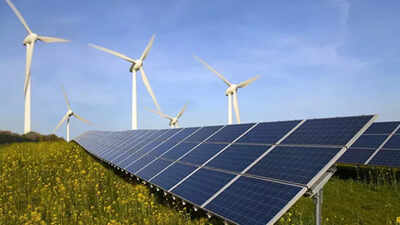
NEW DELHI: The rapid growth in solar and wind power generation, along with rising grid congestion and renewable energy curtailment, has prompted govt to announce a new transmission scheme with the launch of the third phase of the Green Energy Corridor (GEC), which got the Cabinet’s nod on Wednesday.With an outlay of nearly Rs 1.9 lakh crore, GEC-III will strengthen intra-state transmission networks by creating 51,126 circuit kilometres of transmission lines and nearly 229 GVA of transformation capacity to evacuate 135 GW of renewable energy across states and Union territories. The infrastructure will facilitate the transfer of electricity from generating units to the grid and eventually to consumers.GEC is a govt programme to set up dedicated transmission infrastructure to integrate large-scale renewable energy into the national power grid.The scheme also includes deployment of 50 GWh of Battery Energy Storage Systems (BESS), which will help store surplus green energy, provide grid flexibility and meet demand during non-solar hours.The scheme’s outlay of Rs 1,86,405 crore comprises Rs 1,36,378 crore for developing intra-state transmission systems and Rs 50,000 crore for BESS over seven years. It involves total central financial support of Rs 54,082 crore, which will help offset intra-state transmission charges and keep power costs down.Curtailment of renewable energy has emerged as a major challenge due to inadequate transmission networks. More than 8,000 GWh of RE was curtailed in Q1 of 2026-27. GEC-III is expected to address the problem to some extent.Santosh Kumar Sarangi, secretary, ministry of new and renewable energy, said 70% of the scheme would comprise greenfield or new projects, which will be awarded through tariff-based competitive bidding, with transmission service providers building, owning, operating and maintaining the assets. The remaining 30% will comprise brownfield upgrades and network strengthening works, which will be executed on a cost-plus basis, under which the project cost and approved return will be recovered through regulated tariffs. State transmission utilities will be the overall implementing agencies.Sarangi said the last project under GEC-I was expected to be completed by the end of the ongoing financial year, while all projects under GEC-II were likely to be completed by March 2028.To ensure the projects adhere to timelines, Sarangi said a project monitoring committee headed by a joint secretary will regularly review their progress, while he will review them every three months. “There is going to be a steering committee at the level of cabinet secretary, which will monitor the progress of this scheme every six months,” he said. The remaining projects under GEC-II will also be monitored by the steering committee.The ministry has also tied BESS deployment to domestic content requirements (DCR) to spur local manufacturing in the sector. Sarangi said technical consultations will be held to frame guidelines for DCR for locally made components.


