


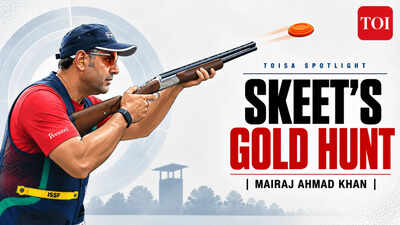
As Mairaj Ahmad Khan prepares for his fourth Asian Games, the medal occupying most of his thoughts isn’t the one on offer in Japan.It is the one that has stayed out of reach for more than two decades.“Olympic gold, which I haven’t got yet. The fight is for that. I won’t leave it until I win. My first dream was to become an Olympian. That dream came true. Now the dream is to become an Olympic champion.”At 50, Mairaj has already rewritten parts of Indian skeet shooting history. He became the first Indian skeet shooter to qualify for the Olympic Games, later became the first Indian to win a men’s skeet World Cup gold, and has represented the country at two Olympics.Mairaj’s first Asian Games came in Doha in 2006, and after missing selection in Jakarta 2018 and Hangzhou 2022, he now returns to the Indian team nearly two decades after his Asian Games debut. The men’s skeet qualification begins on September 21, with the final scheduled for September 23.Away from the range, he has little interest in turning himself into something larger than he is.“Miraj Ahmed Khan is a very normal person. I live my life like a normal person. If I don’t shoot, I don’t think about shooting. I don’t keep talking about shooting all the time. I’m still working to tell everyone Miraj Ahmed Khan is alive and rocking.”
Before skeet, there was cricket
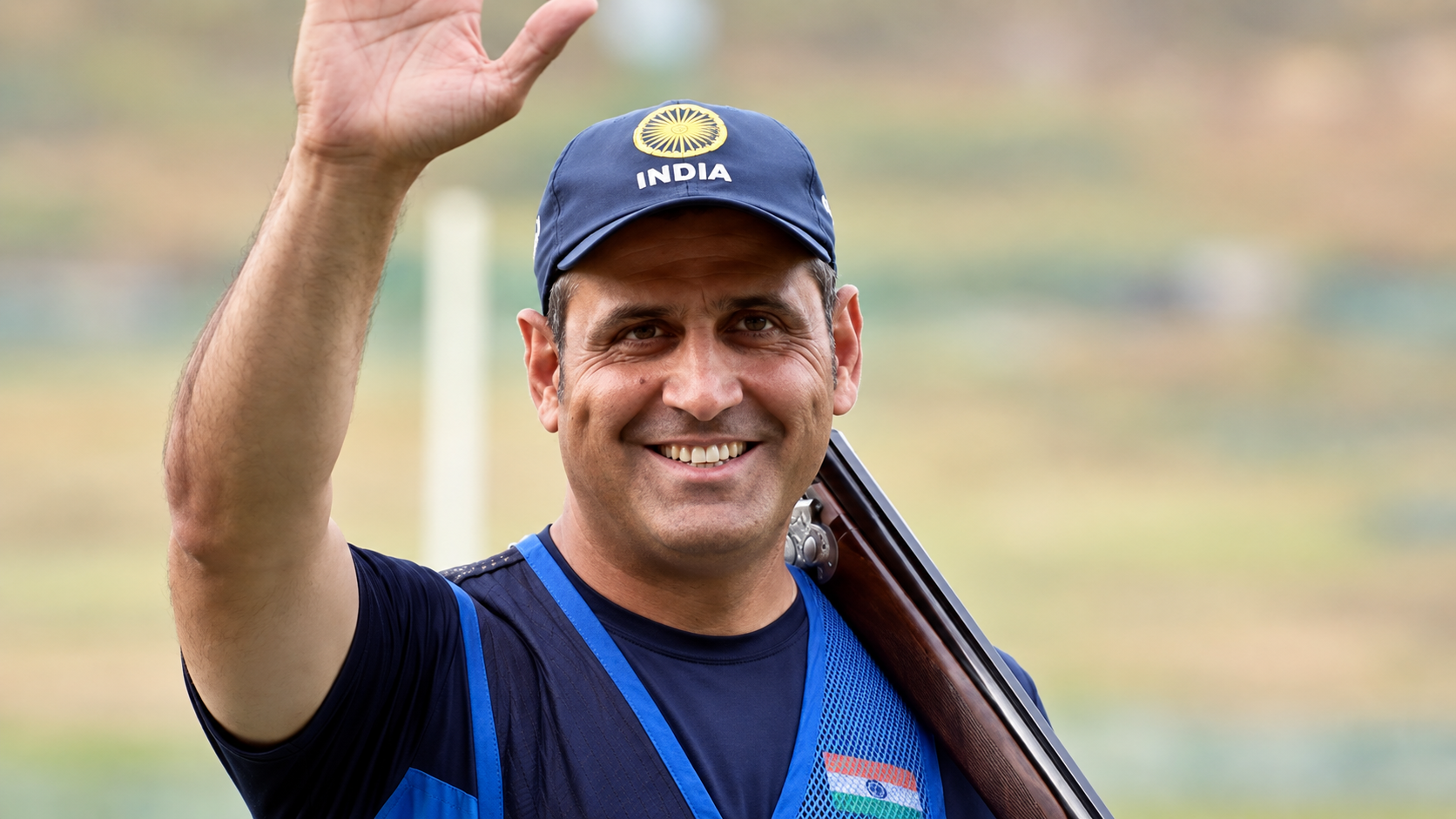
Long before skeet shooting became his profession, cricket had his attention. “Mera pehla pyaar cricket tha. Main cricket hi khelta tha. Shooting toh ghar mein thi kyunki papa shoot karte the, lekin main cricket ke peeche tha [My first love was cricket. That’s all I played. Shooting was always around at home because my father was a shooter, but my heart was set on cricket].”Mairaj grew up in a family of zamindars where firearms were a familiar sight. His father, Late Ilyas Ahmed Khan, competed in trap shooting, and as a youngster Mairaj also tried his hand at air rifle and .22 rifle events. At a district-level three-position competition in Bulandshahr, he won ₹30 in prize money.“I bought a cricket bat with that money,” he said, laughing.There were afternoons spent on cricket fields, also a match alongside a young Virender Sehwag and, like many teenagers, the belief that the game would continue to shape his future. Shooting remained close, but not as a career.“Us waqt shooting ko career ki tarah koi dekhta bhi nahi tha. Main bhi nahi dekhta tha [Back then, nobody really looked at shooting as a career. I didn’t either].”Competitive shooting for Mairaj arrived later than it does for most elite athletes today. While he entered the sport in 1998, he made his international debut in 2003. By then, many of the shooters he would eventually compete against had already spent years on international ranges.But that never troubled him. “Nobody told me that it’s late now. Because at that time, shooting was not very popular in our country, especially shotgun shooting. It was an expensive sport. Only rich people used to shoot – Maharajas and businessmen.”The sport demanded far more than talent. Ammunition, travel, and equipment all came at a price. Staying in it required help.“I was lucky. I found Mr Naveen Jindal at that time. He got me the sponsorship. And if you see, Jindal is still on my jacket. He found me and pushed me, saying, ‘You can do this.'”
‘Empty your cup’
That backing kept him in the sport. The belief that he could stand alongside the world’s best came later; in 2013, when Atlanta Olympic champion Ennio Falco took charge as India’s skeet coach.“Before that, we were just shooting. The mindset was not a winning mentality. The mindset was just go and participate and come back. Being a tourist. Okay, we are going to Germany, we are going to Italy, we are going to South America, USA. Just like a tourist, we were travelling on government expense.”By the time Olympic champion Falco joined, Mairaj had already spent a decade on the international circuit. Falco didn’t ask the shooters to change overnight. He first wanted them to change the way they thought about competition.“You have to empty your cup.”It puzzled Mairaj at first. “At that time I didn’t get it. But after a few months, I understood what he tried to tell me – that I had to empty my cup and refill it.”Two years later, he secured India’s first Olympic quota in men’s skeet. “I reached the Olympic Games in 2015. I won the quota place. Basically, we set our result from this practice.”
Remembering Rio
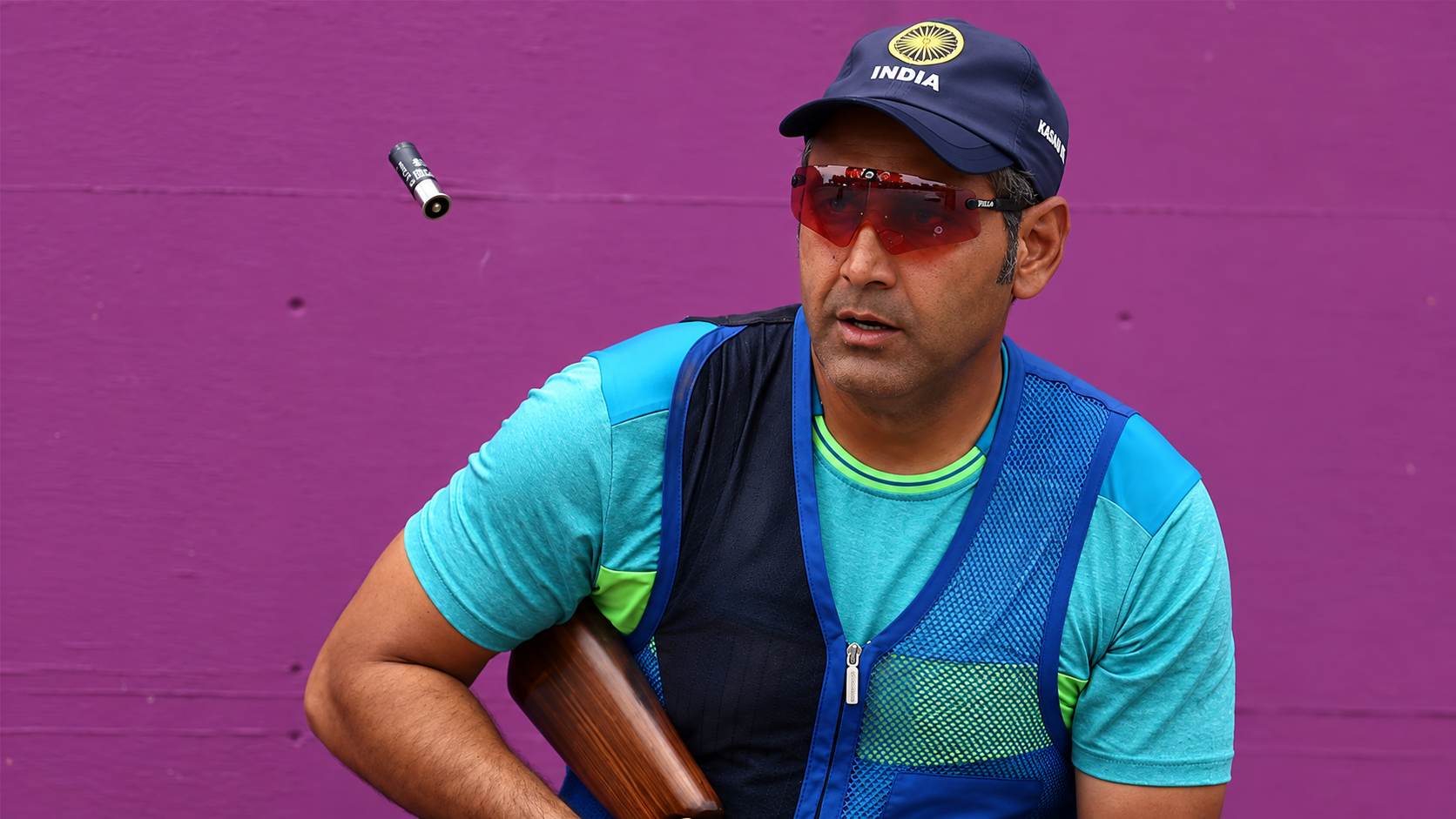
Rio 2016 followed, and he still remembers it target by target. “In Rio, I was very relaxed. If you ask me frankly, and I’m telling you now, it’s been 10 years, I still remember the competition as it happened yesterday only.”“Whenever I close my eyes, I can see myself on that range. I can feel the station still. I will tell you where the low house is and what colour the low house is. Its memory is still like yesterday.”Mairaj finished ninth after a shoot-off, one place outside the final. His near miss in Rio also came against the backdrop of a discipline where India has rarely found individual success at the Asian Games. Before Nagoya, only two Indians had reached the skeet podium – Karni Singh, who won bronze in Tehran in 1974, and Anant Jeet Singh Naruka, who claimed silver in Hangzhou in 2023.“What I realised in the end was that the Olympic Games is just a competition. We basically see that competition differently. But it’s the same competition of 125 targets.”For Mairaj, nothing should change simply because the Olympic rings are on the range.“If you want to see that competition like a normal competition, like a 125-target selection trial or a World Cup or Asian Championship or Asian Games, it must be that way. It’s not like the Olympic Games.”He laughed while listing the promises athletes make to themselves before the Games.“Now I have to work. I have to run. I have to eat only diet food. I have to reduce 20 kilos from my body… No, no, no.”“The gun should be the same. Ammunition is the same. You work the same. Same way like you are preparing for a selection trial. Because you are preparing well for the selection also. If you are not selected in the Indian team, how are you going to win a quota place for the country?”“It should be in the same flow from day one when you win the quota place till the match. In the same flow.”
The years that stood still
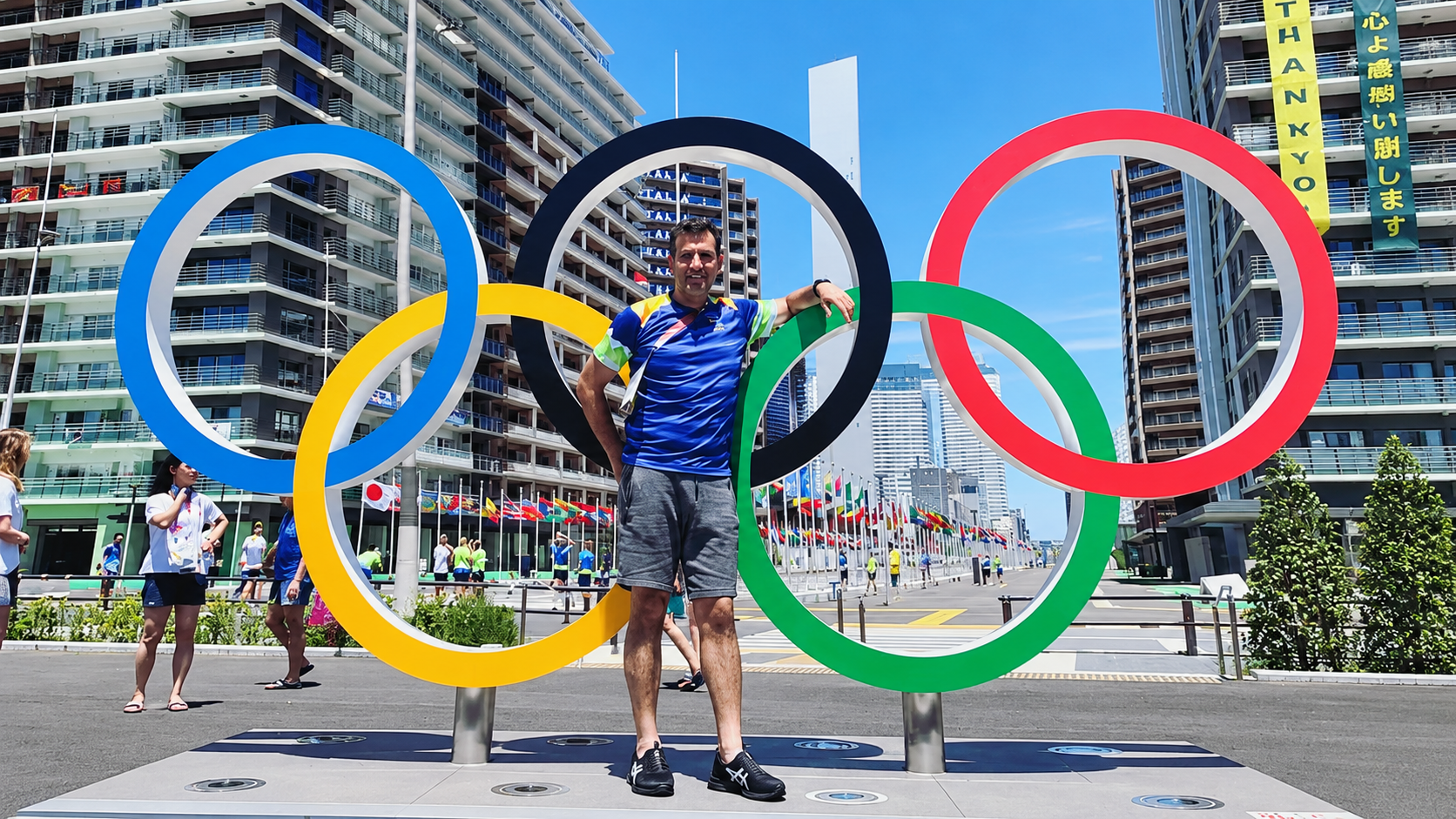
Tokyo arrived under very different circumstances. By the time Mairaj secured another Olympic quota in Doha, he felt he was shooting as well as he ever had.“I was in very supreme form when I won the quota place in Doha. And then immediately we had the national championship here in Delhi. I shot 125 out of 125. I was peaking at the right time.”Then the pandemic pushed the Olympics back by a year. “COVID came. And the Olympic Games moved to the next year, in 2021. You cannot carry your peak for two years.”The ranges shut. “No shooting. Every range was closed. You were inside your home. No physical fitness. Nothing.”A few months before the Games, his father died. “For me, I lost my father in April before the Olympic Games. So, it’s another setback for me.”“For everyone, not just for me, the entire world was suffering with the COVID virus. Everybody was losing somebody – family, relations.”“We were in Italy. It was like zombie land. We were training on the shooting range alone. Because when you are shooting alone, it’s not that feeling. You need somebody to shoot with you. How will you compete when you go there, and there are six shooters in the squad, and you are training all alone?”And that interruption lingered well beyond Tokyo as well for Mairaj. “That was very difficult for me, and I didn’t overcome it, and I didn’t win the Paris quota place. That journey was very, very difficult.”“From 2020… till now, I’m struggling. I started peaking now, slowly, slowly. I won a competition, a small competition. I won the selection. I won a medal in the national championship.”“I’ve changed the gun now. I’ve changed the technique to catch something. But it takes time. In skeet, if you change one bit, you go behind 10 bits.”
The comeback that began in Cairo
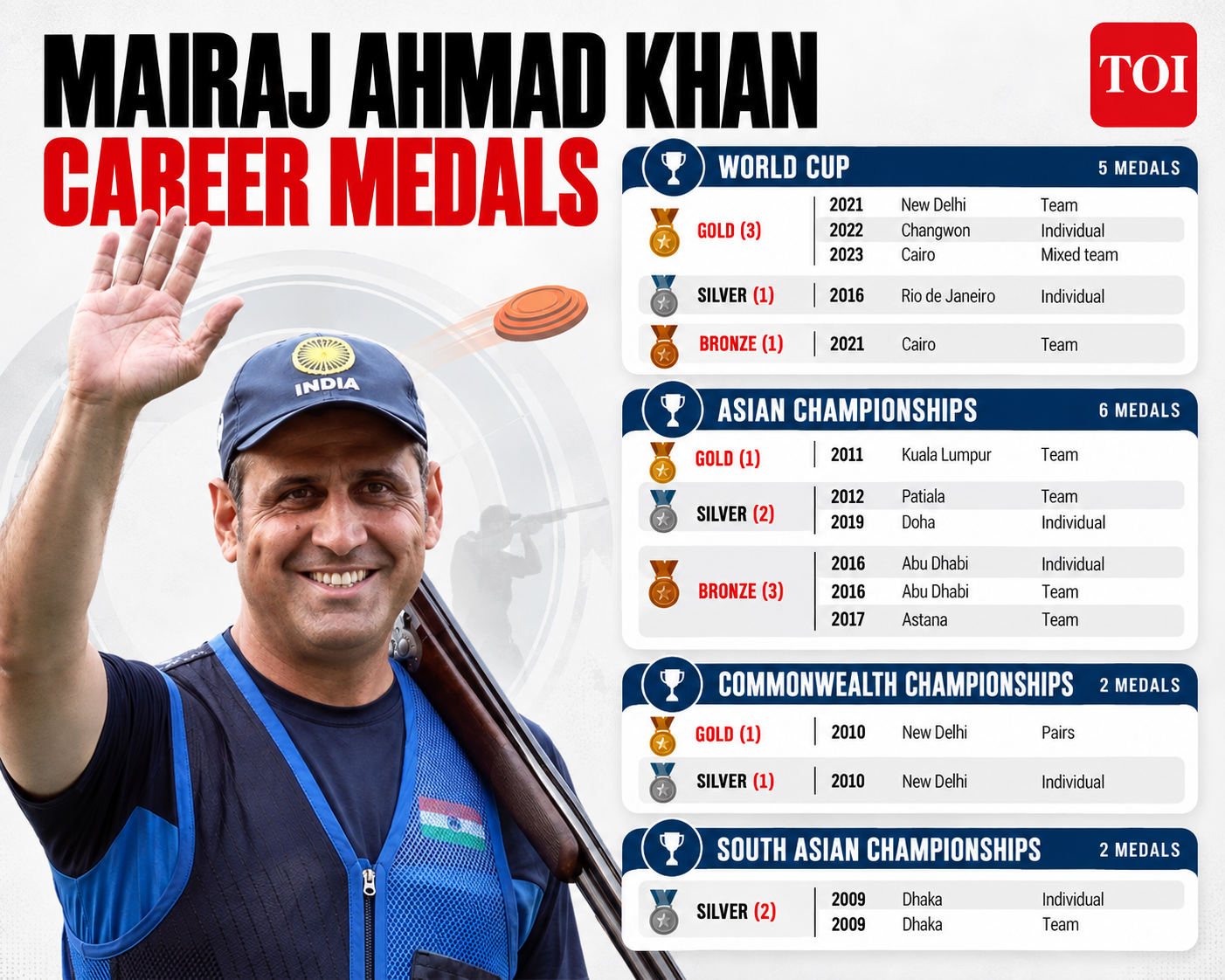
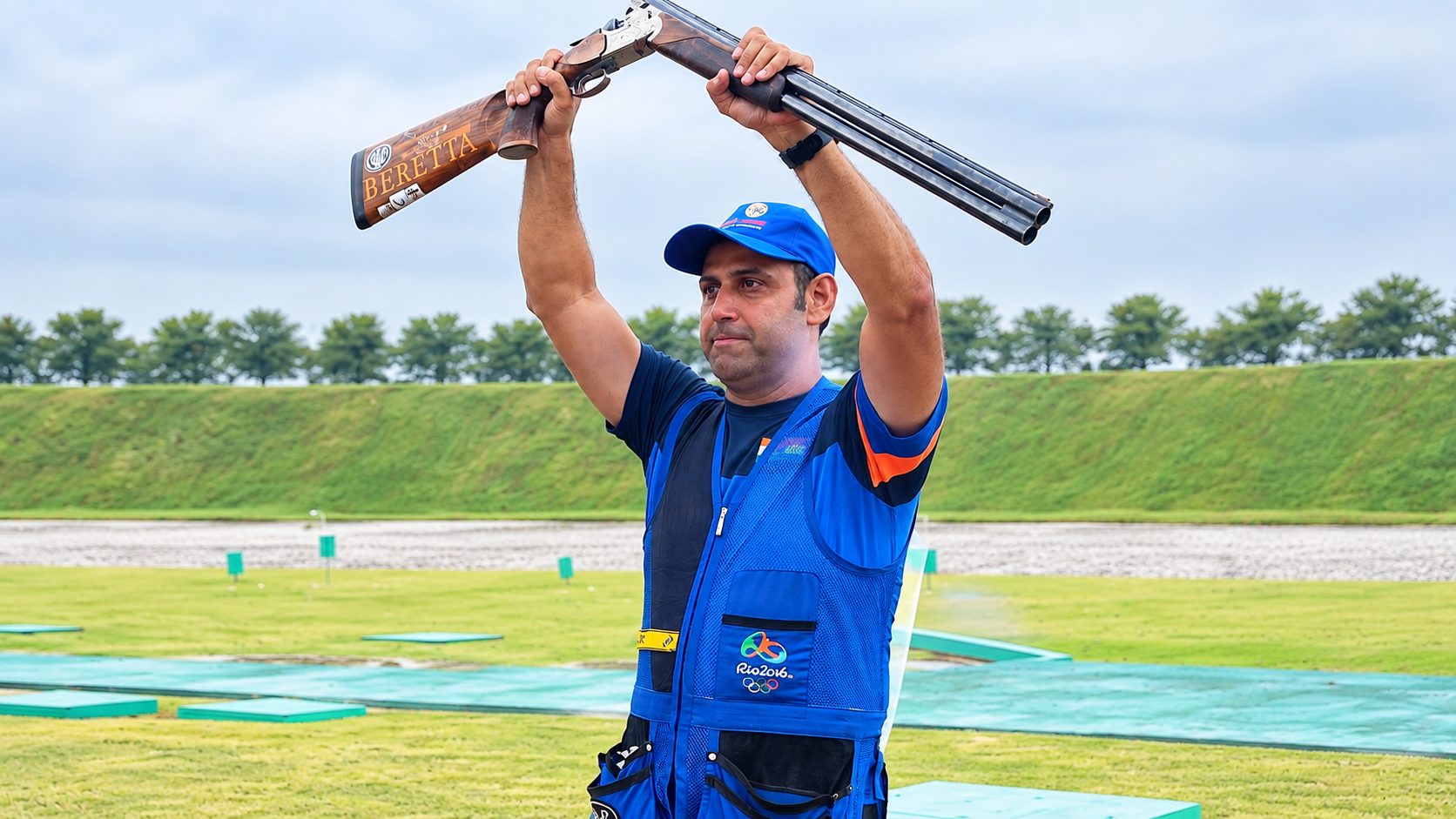
But even in the middle of his struggles, there was a sliver of hope in the form of World Cup gold in 2022 in Cairo, Egypt.The gold was India’s first World Cup individual gold in men’s skeet, a discipline where the country had spent years trying to establish itself internationally, but for Miraj, it wasn’t the biggest medal of his career; rather, it was the one that convinced him he still belonged.“If I didn’t win that World Cup, it would be a different Mairaj. That World Cup gold medal gave me another push.”Cairo wasn’t an isolated success. Across more than two decades on the international circuit, Mairaj has built one of the most consistent records by an Indian shotgun shooter. His resumr includes three World Cup gold medals – team gold in New Delhi (2021), individual gold in Changwon (2022) and mixed team gold in Cairo (2023) – besides an individual World Cup silver in Rio de Janeiro (2016).At the Asian Championships, he has won six medals, including team gold in Kuala Lumpur in 2011 and individual silver in Doha in 2019. Commonwealth and South Asian Championship medals followed as Indian shotgun shooting gradually found a place on the international podium.While the World Cup gold changed how Mairaj looked at himself as an athlete, it has not changed the way he looks at the sport.
One target at a time
“The most important thing in skeet is that it’s an outdoor sport. Sometimes it’s cold, sometimes it’s windy, sometimes it’s raining, sometimes there’s a tree in the background, sometimes there’s a mountain. So visibility keeps changing every time. For you, catching the target is the difficulty.”“Then there is your equipment. Your gun, your stock, ammunition, what kind of spectacles you are wearing, are they enhancing the light? All these things are like pillars of shooting.”There isn’t one correct way to shoot. “There are many coaches in the world. They teach different techniques. You can break a target with three-four techniques. But for me, that technique is the easiest. With that, you are breaking the target easily.”Winning, he says, is usually decided somewhere between the body and the mind. “It’s a combination of mental and physical. Some shooters are mentally very strong but physically not very fit. Some are physically very fit but don’t have a winning mentality. I think it’s a balance.”And for Mairaj, pressure never disappears. “Nervousness is a part of being human. You will feel pressure. But how to handle it at that time- that’s experience.”“Vincent Hancock also misses targets. But the difference between a loser and a winner is that the winner misses fewer targets. The loser misses more targets. Both miss the targets.”“If you miss one or two targets, don’t underestimate yourself. Maybe you miss in the first round. But the next four rounds, you shoot 100 and you make 123. You are in the final. So, never give up. In my diary, there is no word like this. Never give up. I’m 50 years old and still working the same. I didn’t give up. I don’t have the feeling of giving up.”And that process continues as another major championship approaches for Mairaj. “It’s a simple logic. One target at a time. You have five rounds. Round by round. After five rounds, we will see the result. If it’s in the final, we will run the final. If not, we will sit outside and see.”In a few hours, Mairaj Ahmad Khan will return to the skeet range for his fourth Asian Games, but beyond Nagoya, the pursuit remains the same: an Olympic gold that has occupied his thoughts for more than two decades.“We have one Olympic champion in shooting. Abhinav Bindra. What’s wrong if there are two?”


