


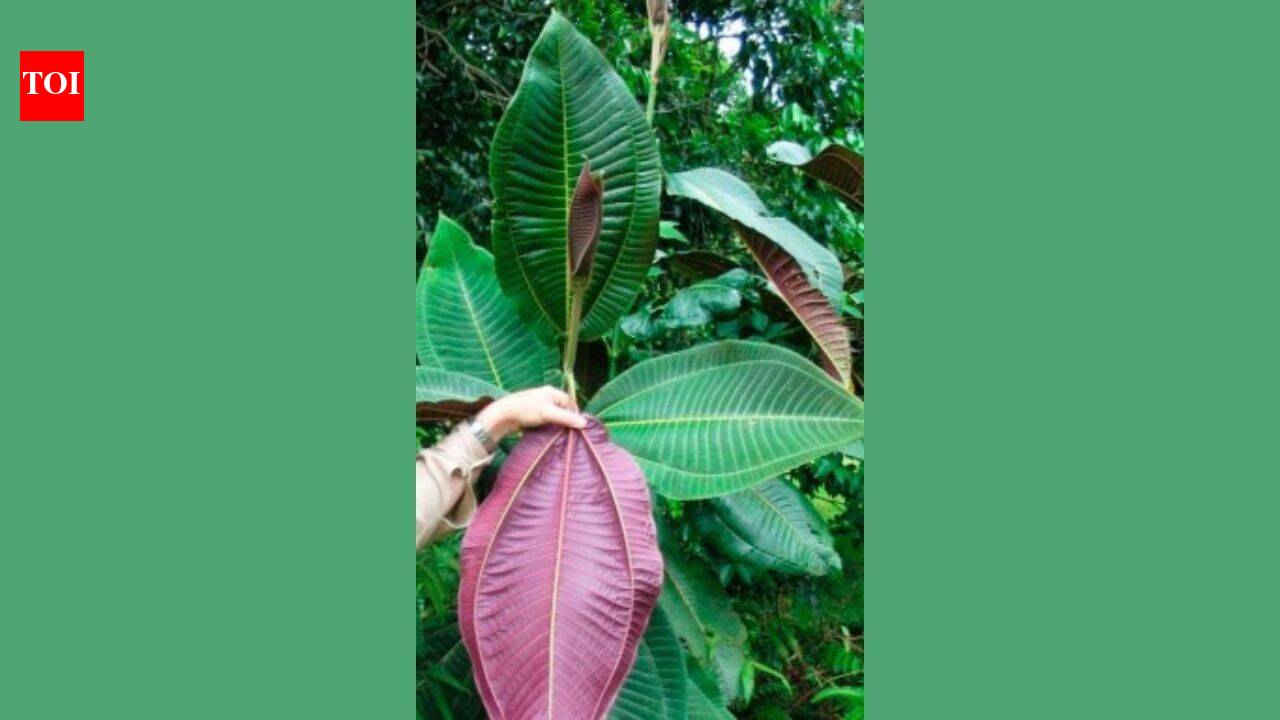
In 1937, a botanical garden in Tahiti planted an ornamental tree that would one day become a warning sign for some of the world’s most vulnerable rainforests. What began as a beautiful landscaping choice has grown into a serious biosecurity threat, with a single mature miconia tree capable of producing more than 8.9 million seeds in one fruiting season and posing a major risk to Queensland’s World Heritage rainforests.
A plant with a dangerous past
The tree in question is miconia, a tropical plant native to the Americas that was once valued for its striking appearance. Its large leaves, purple undersides and lush growth made it attractive to gardeners, and that ornamental appeal helped it spread far beyond its original range. Over time, however, miconia earned a far darker reputation in places such as Tahiti and Hawaii, where it became notorious for invading forests and smothering native vegetation, according to a report by the Department of Agriculture and Fisheries, Biosecurity Queensland.The Tahiti link goes back to 1937, when a botanical garden planted the species as an ornamental tree. From there, the plant escaped cultivation and spread aggressively across the island’s landscapes. In places where it took hold, it formed dense stands that blocked sunlight from reaching the forest floor and pushed out native plants.
Why Queensland is worried
Queensland treats miconia as a high-priority invasive weed for a reason. Biosecurity Queensland says the plant could cause irreversible ecological damage to the state’s subtropical and Wet Tropics rainforests, including World Heritage areas. Those habitats are especially important because they support rare and endemic species found nowhere else on Earth.The concern is not just that miconia grows quickly. It is that one plant can multiply with extraordinary efficiency. According to Queensland’s pest risk assessment, a mature miconia tree with around 200 fruiting panicles can produce over 8.9 million seeds in a single season. That scale of reproduction gives the plant a huge advantage, allowing one parent tree to seed entire invading populations.
How miconia takes over
Miconia is especially dangerous in rainforest environments because of the way it changes the habitat around it. It invades the understorey, the layer beneath the tree canopy where many delicate plants grow. Rare orchids, ferns, shrubs and small native trees are particularly vulnerable because miconia reduces the amount of light they receive.As the plant spreads, it can create barren understoreys and reduce ground cover. That not only harms biodiversity but can also lead to erosion. Queensland’s risk assessment notes that miconia’s shallow, spreading root system can destabilise hillsides, especially after heavy rain. In tropical catchments, that instability can send sediment into streams and, eventually, damage reef ecosystems downstream.This is what makes the weed so much more than a garden escapee. It is a landscape changer. Once established, it can alter the structure of a rainforest, affect water movement, reduce habitat quality for native animals and make the forest far less resilient.
Where the plant can spread
In Queensland, miconia is already treated as a restricted invasive plant under the Biosecurity Act 2014. Three species are currently of concern: Miconia calvescens, Miconia nervosa and Miconia racemosa. Biosecurity Queensland says these species pose a significant threat to local rainforests, and all are targeted for eradication through the National Tropical Weeds Eradication Program.The species is suited to coastal northern Queensland’s climate, which is part of what makes it so worrying. Wet forests, rainforest gullies, forested creek lines and even domestic gardens are considered suitable habitat. Seeds can be spread by birds, water, other animals, contaminated machinery and footwear, meaning the plant can travel quietly and quickly once it is present in an area.
The eradication effort
Queensland is not treating the threat casually. The National Tropical Weeds Eradication Program has been set up to protect World Heritage rainforest in the wettest parts of Australia by surveying and removing invasive weeds from tropical Far North Queensland and subtropical New South Wales. Miconia is one of the five target species in the program.The goal is ambitious but important: stop the weed before it becomes permanently entrenched. That matters because many of these outbreaks begin in gardens or small plantings before spreading into nearby native forest. The program combines surveillance, removal, community reporting and cooperation with local landholders to keep the weed from gaining ground.Queensland also asks the public to help. People are encouraged to report sightings immediately through official channels, because early detection is one of the best tools available when dealing with a plant that can hide under a forest canopy and spread so efficiently.
Why this history matters
The story of miconia is a reminder that ornamental plants are not always harmless. A tree planted for beauty in Tahiti in 1937 has become part of a much larger environmental challenge across the Pacific. In Queensland, the stakes are especially high because the rainforests at risk are not only ecologically rich but globally significant.The problem with invasive plants is often that they are introduced for the right reasons and then reveal their danger only after they have adapted, spread and started changing the land around them. Miconia fits that pattern almost perfectly. It looks attractive, grows aggressively, produces huge numbers of seeds and thrives in the same damp, shaded environments that support some of Australia’s most precious native ecosystems.That is why Queensland’s warning is so urgent. A single tree may seem insignificant on its own, but with the ability to generate millions of seeds, it can become the starting point for a long and costly ecological battle. In the case of miconia, prevention is far easier than control, and the lesson from Tahiti is clear: a plant introduced as decoration can, over time, become a serious threat to entire rainforest systems.



