


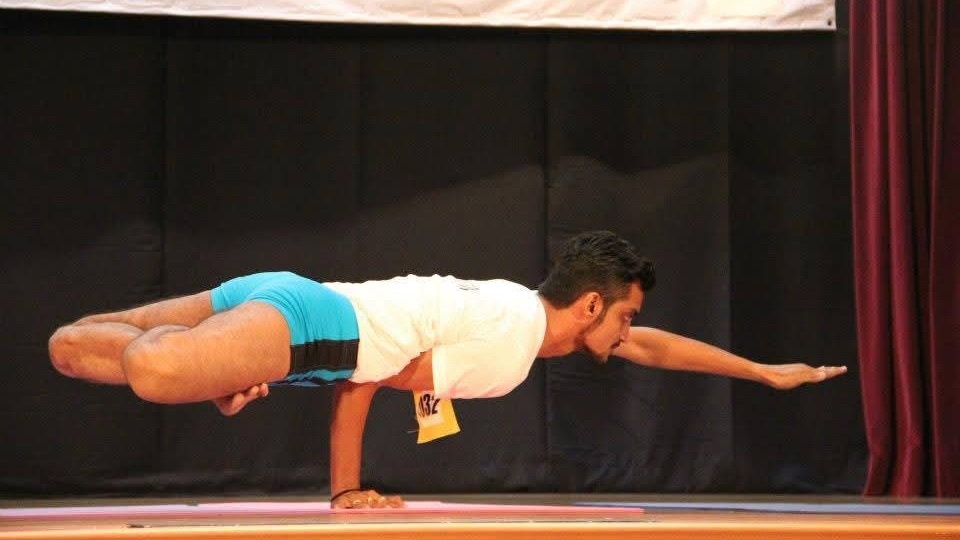
For a long time, yoga was considered more of a lifestyle choice than a competitive discipline. It was about improving flexibility, enhancing breathing ability, and simply living a healthier life. For decades, yoga largely remained confined to that space.
Then came the moment that changed the conversation.
India winning the bid for the 2030 Commonwealth Games suddenly opened a new door for yoga — not as wellness, but as sport.
The news emerged that India was considering introducing yoga, in the form of Yogasana, as an indigenous sport on the global stage in Ahmedabad. And that wasn’t the end of the ambition. The larger push was towards the 2036 Olympics cycle, where India once again hopes to welcome the world to its shores.
Almost instantly, curiosity followed.
How exactly does yoga work as a sport?
The idea grabbed headlines because, for many, yoga had always existed in the realm of calmness and therapy rather than competition. But the moment Yogasana entered the sporting conversation, it sparked a different kind of intrigue.
We started off with celebrity trainer Rakkesh R Uddiyar, who has trained the likes of Aamir Khan and Salman Khan in the past and played a big role in helping Ram Charan for his all-action flick Peddi. Rakkesh was happy to say that he endorses yoga as part of his routine for celebrities. However, one thing stood out immediately — there was no surprise for him when we mentioned yoga’s inclusion as a sport.
For him, the real surprise was why the movement didn’t happen earlier.
“Yogasana has been going on for a long time.”
“I don’t know why it’s not happened earlier. See, I also believe in this form called Mallakhamb. That is also part of yoga only. And I think Mallakhamb itself is a game and correlated with yoga because they can do yoga asanas and everything.”
“So yes, that is considered a game for a long time. I don’t know why this did not happen earlier. It should have happened long back because people abroad use Indian yoga more than Indian people,” said Rakkesh.
Armed with this perspective, we went to chat with Udit Sheth and Umang Dawn.
Udit credited Prime Minister Narendra Modi for giving the initial push while also ensuring that Yogasana evolved into a federated sport.
“Our honourable Prime Minister, the Ayush Ministry and the Sports Ministry together took the lead that our 5000-year heritage has been having a competitive edge through the asana practice.”
“However, if the world has to embrace it and practise it, then we need to have a very structured approach. We need to have a federated system.”
“So in 2019, though the sport was played for many years and decades, it was not structured, and the Modi government took this opportunity to federate it.”
“Now we have 57 countries wanting to participate in the World Championship today and, hopefully, in the next 3 or 4 years, we’ll be able to take it to about 80–90 countries.”
“We got recognised in 2020. Since then, we have done the National Games, Khelo India Games, Khelo India University Games and national championships,” said Udit.
HOW DOES YOGASANA WORK AS A SPORT?
Just as our interview was about to begin, Udit stopped everything for a moment.
Before answering a single question, he wanted us to watch a promo video first. According to him, the clip would answer most of the doubts we had about Yogasana.
The room suddenly fell silent.
What started as an AI-generated sequence slowly transformed into something far more immersive. Athlete after athlete appeared on-screen, holding impossible poses with precision, grace, balance and stillness. It felt less like a presentation and more like poetry unfolding frame by frame.
And somewhere within those visuals lay the defining difference between yoga and Yogasana.
“Yoga is a very vast field. It’s about a complete philosophical and spiritual system originating in India over thousands of years. It’s physical discipline, it’s breath control, it’s meditation, mental balance, spiritual growth, ethical principles, and the Patanjali way of yoga talks about eight petals of yoga, which are yama, nyama, asana, pranayama, pratyahara, dharran, dhyana, and samadhi. That’s yoga,” said Udit.
“What we’ve done is Yogasana refers specifically to the physical postures of yoga, which is the asanas. And when Yogasana becomes a sport, we have athletes that perform these structured asanas as per our code of points. We have judging based on flexibility, stability, strength, balance, grace, precision, synchronisation, and difficulty.”
But Yogasana, Udit stressed, isn’t merely about flexibility.
It is built on scoring systems, timing, precision and execution.
“We have 272 asanas that we have rated into a graded average. We have a judging system which is electronic. The entire sport works on traditional asanas, artistic sequences, rhythmic flow, strength and balance, flexibility demonstrations, and it’s all time-oriented, so we have a shot clock work as well,” said Udit.
“The competitors are judged on control, stability, transitions, difficulty levels. So the entire thing is not only about doing an asana. It is the combination of athleticism, body control, mental composition, and how they present it to us.”
There was also a larger reason behind introducing such a system into the sport.
For Udit, the idea was to make yoga accessible to the world while also making it engaging enough for modern audiences.
“I think what we are trying to do, and this is the conversation with the honourable Prime Minister, that if we have to take yoga to the Olympics, people from different parts of the world have to be part of this programme. Therefore, we have to take it out of spirituality and into sport, which is exciting for the youth,” said Udit.
He then broke down how a Yogasana contest actually unfolds.
It starts with a challenge.
“We are first challenging on a coin toss so that I can do this asana. Can you do it? So there is a competitive framework over there. Of course, the most important thing is that they compete with themselves before they compete with the world.”
“We look at the accuracy of the posture, and we’ve actually done an AI analysis around it so that we can also look at the camera and point out whether the posture is correct or not. Then we look at the stability of that posture. If the person is on a handstand, and they’re shaking, that’s not cool.”
“Then there’s a difficulty level. All these 270 asanas are broken into A, B, C, D, E. E being the toughest, A being the easiest. Then you have to do a transition into the asana. There are many ways to get into the asana and get out of it.”
“Then synchronisation to music, ensuring that, in those 2 minutes or 3 minutes, they adhere to it, so there are no penalties. We give them penalties for time, for shaking, for falling, for instability,” said Udit.
And that, according to him, is where the drama of the sport lies.
Every movement is scored in real time. Every wobble matters. Every transition carries weight.
There is also a deeper reasoning behind bringing in such a system.
“Channel change nahi hona chahiye (The channel shouldn’t be changed),” said Udit.
“If you lose TRP, your sport is dead. That’s why cricket had to go from five days to one day and now to 2.5 hours.”
“If my athletes are performing and you’re trying to measure breath and meditation and kriya, you will not get the TRP. People will change it and go to the music channel or something else.”
WHAT MAKES YOGASANA STAND OUT?
Many would remember how breakdancing made its Olympic debut in 2024. It stood out instantly, despite receiving mixed reactions. Yet it failed to survive the next Olympic cycle and was excluded from Los Angeles.
And that raises the biggest challenge for any new-age sport: identity.
At first glance, Yogasana can easily be mistaken for gymnastics. But according to Udit, the difference lies in one defining word — stillness.
“Gymnastics is very dynamic and kinetic. That is continuous movement. Explosive movement, momentum, inertia, acrobatics, rotation, aerial skills, apparatus performance. We don’t have all of that.”
“Over here, we’re very clear. It is controlled and not explosive. A gymnast conquers gravity through motion. A Yogasana athlete conquers the body through stillness.”
“That is the difference. We take care of stillness, holding time, shot clock, static strength, balance, stability, no vibration. You can see the mind-body control over there and therefore there is a massive philosophical and visual distinction between gymnastics and yoga,” said Udit.
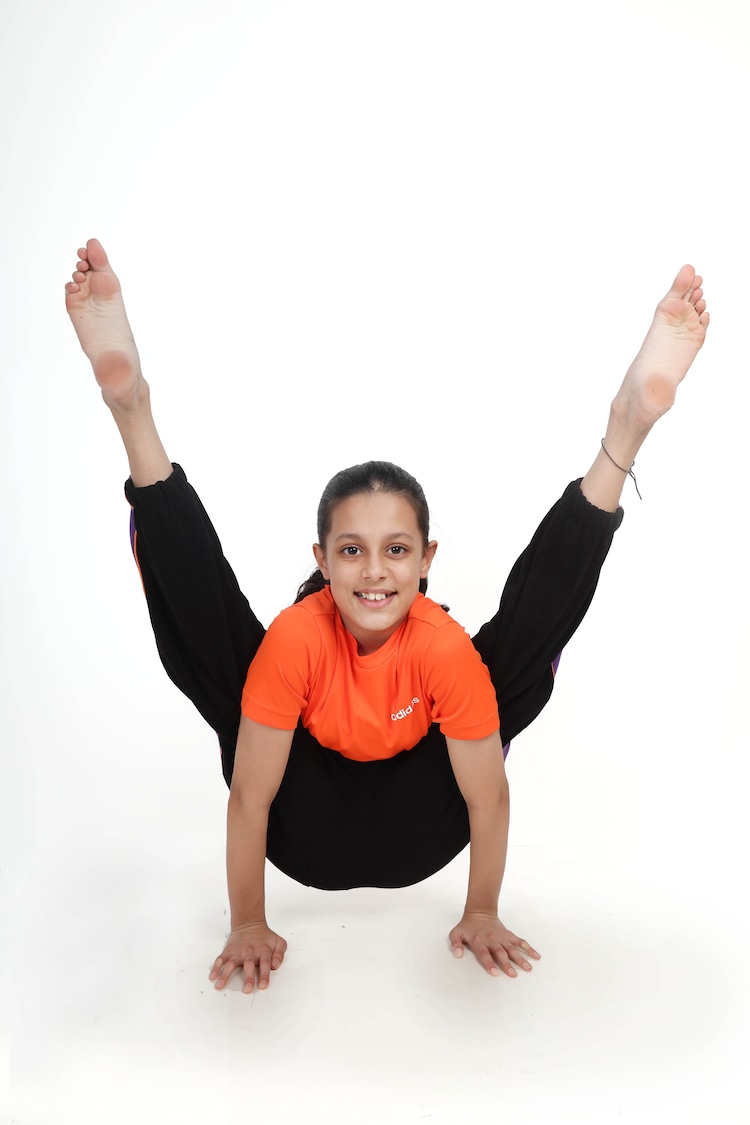
Umang, himself a practitioner of yoga, pointed towards another advantage.
“The best thing about this sport is that it doesn’t require too much infrastructure. In almost any country in the world, everyone is practising yoga or they call it yoga, but 90% if you deep dive, everyone is just doing asana. Asana is the gateway towards yoga,” said Umang.
Udit also believes Yogasana carries another major strength — female participation.
“Yoga as a sport is very women-centric. It has a hybrid identity which is a cross between sport, wellness, mindfulness, and performance.”
PRESSURE OF BEING A YOGASANA ATHLETE
Like every sport, Yogasana too comes with pressure, nerves and razor-thin margins.
Just ask Nitin Pawale.
The Asian Championship medalist chose yoga over kabaddi and volleyball, and still vividly remembers the pressure of the 2022 All India University Games, where he clinched gold by just 0.5 marks.
“Four years ago, we had the All India University Games, and Maharashtra had not won a medal there for the last 20 years. So there was a lot of pressure. It was also my first year. Around 280 universities participate there, with six boys and six girls from each university, plus individual events. So overall there are around 4,000–5,000 players.”
“There was pressure about judging and whether we would be able to perform well because the competition is very close. In yoga, positions can change by half marks. I personally won gold by just 0.5 marks. One mistake becomes very expensive,” said Nitin.
For 15-year-old Deetya Vinod Balgi, the pressure feels exactly the same irrespective of the level.
“The first year I won a national medal, and before the competition I was under extreme stress. My feet started sweating even though the weather was very cold. My coach told me to practice breathing techniques because at this level even the tiniest mistake can cost you a medal.”
“It’s very hard to maintain composure, but I am learning and practising to stay calm before competitions,” said Deetya.
Then comes Komal Verma, assistant coach of the Indian team, who says being a trainer can sometimes feel even more stressful than being an athlete.
Having been a national medal winner and a best Yogasana coach awardee herself, Komal explained how she remains absolutely still while her athletes perform.
“When my athlete performs an artistic routine for three minutes, I stand behind the stage without even blinking. Those three minutes feel like everything. I don’t want them to miss even a small detail.”
“As a coach, you also have to manage the entire team. Here we have 55 female and 55 male athletes. No matter how tired or hungry we are, we don’t show it because we don’t want athletes to feel additional pressure. Managing that emotional balance is one of the toughest parts of coaching in yogasana,” said Komal.
But all three of them agree on one thing — the perception of the sport is slowly changing.
“Earlier, even my own family and relatives thought I was wasting my time. My cousins who were in other sports were always appreciated, while I was not getting that recognition.”
“But as the sport gained recognition, people started understanding it. Now my family’s opinion has completely changed, and they are actually happy that I pursued Yogasana,” said Komal.
They can also see the Olympic dream taking shape, especially if India succeeds in bringing the 2036 Games home.
For Nitin, exposure beyond India will be key.
“We need to go outside India and tell other countries that Yogasana is a sport. Many people internationally practice yoga, but participation in competitions needs to increase. Slowly, that will happen, and then we will participate in the Olympics soon.”
“Gymnastics players and athletes from other sports can also do Yogasana. If they start doing it properly, they can also make a big name in this sport,” said Nitin.
For Komal, however, the belief is already unwavering.
“India is already performing very well at the Asian level. When we prepare athletes for the World Championships, we constantly evaluate their standards against global competition.”
“I can proudly say that India is going to become one of the countries winning the most medals in Yogasana. There will be a time when India has the highest medal tally in this sport,” said Komal.
BEYOND JUST ONE OLYMPICS
The real challenge for Yogasana, however, lies beyond simply reaching the Olympics.
The bigger challenge is sustainability.
India remains a country where several sports struggle for visibility because of the overwhelming shadow cast by cricket and a handful of mainstream disciplines.
For Udit, this movement is also about ensuring India owns its own sporting identity instead of watching yoga return in a repackaged form.
“Yoga definitely belongs to India. It was high time that we packaged it in the right way for television.”
“If we didn’t do it, like in Starbucks, haldi doodh would have become a turmeric latte and been sold back to us,” said Udit.
For Umang, Yogasana’s sustainability lies in the fact that it strengthens other sports as well.
“I think Yogasana is not here to replace any mainstream sports, but it is here to create its own unique ecosystem.”
“Because Yogasana is not only coming as a sport, but it is also promoting all other existing sports. If you remember, Sachin Tendulkar practises yoga, Bhaichung Bhutia practises yoga, other athletes practise yoga,” said Umang.
While it remains to be seen whether Yogasana eventually reaches the Olympics, perhaps the larger ambition behind the movement was best captured in Udit’s closing words.
“While cricket may be India’s biggest sport today, Yogasana has the potential to become India’s greatest sporting contribution to the world, and that’s where we are going.”
– Ends



